
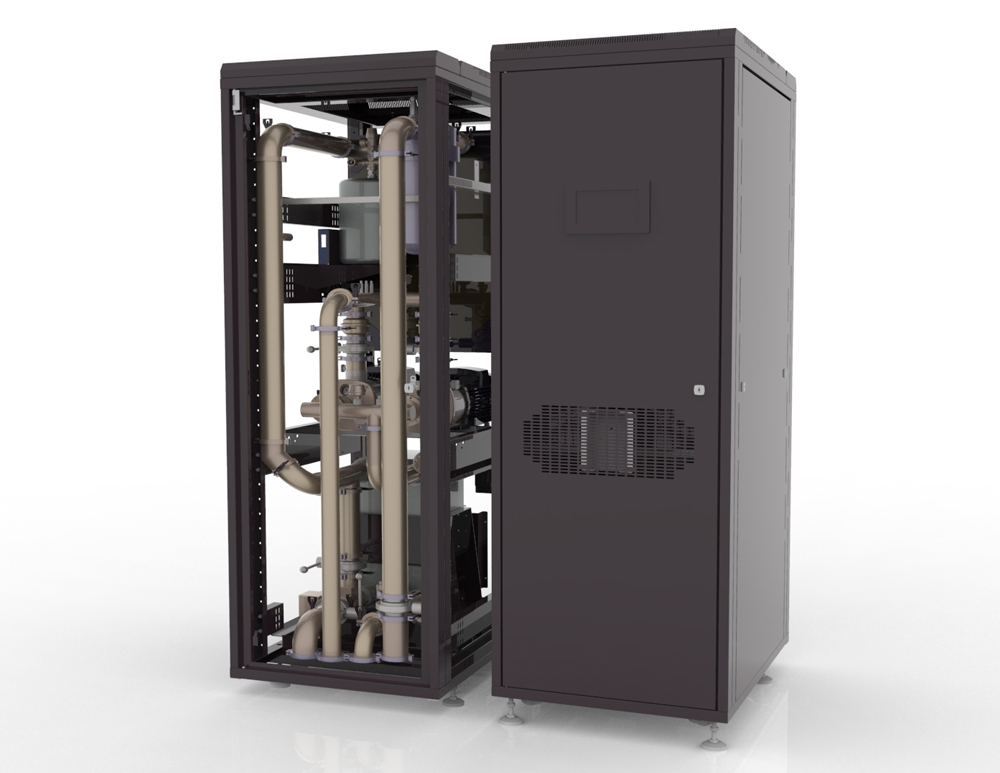
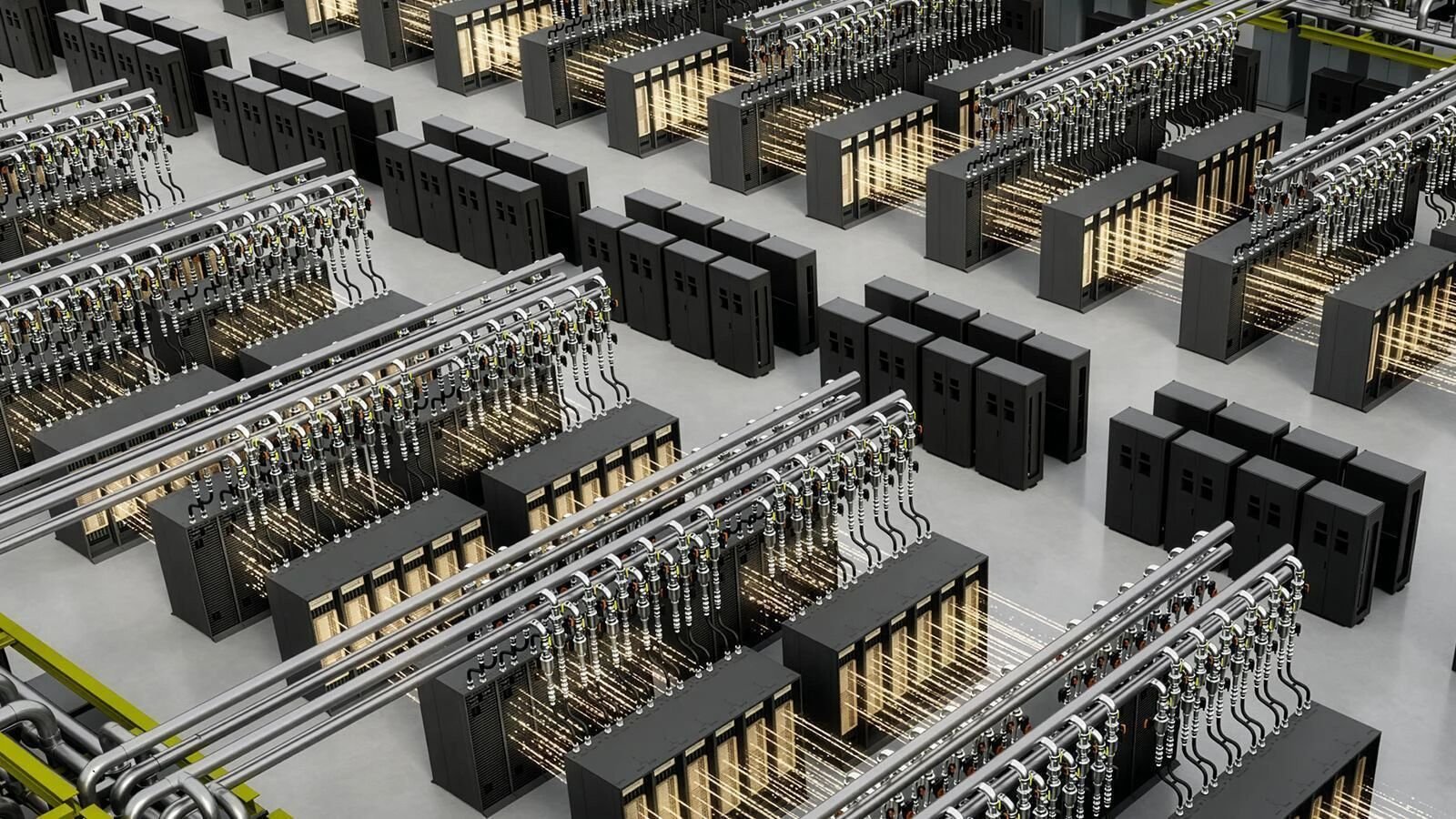



Our high-performance computing (HPC) rack liquid cooling architecture is purpose-built to resolve the thermal bottlenecks of dense CPU-GPU HPC clusters, where sustained floating-point workloads, long-duration simulation cycles and tightly packaged compute nodes push conventional air cooling beyond reliable operational limits. This rack-native thermal framework supports both direct-to-cold-plate and hybrid immersion configurations, engineered to stabilise junction temperatures under full-burn high-throughput computing loads while preserving signal integrity and hardware serviceability. We align the architecture with HPC-specific operational profiles, including batch scheduling patterns, variable power ramps and parallel job scaling behaviour, delivering a thermal foundation that does not constrain computational throughput or introduce performance throttling during critical numerical modelling, computational fluid dynamics and scientific simulation campaigns.
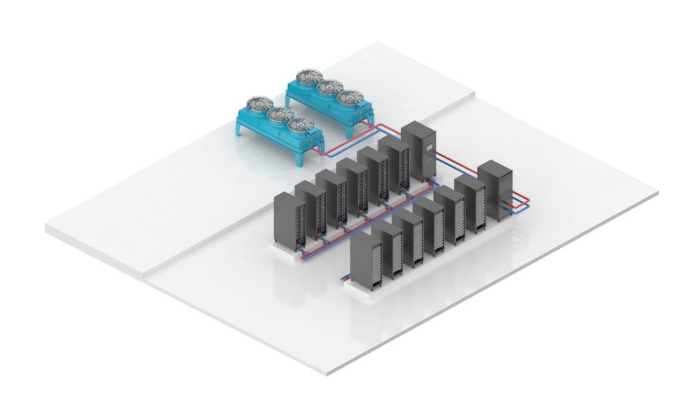
The architecture integrates rack-level manifold distribution, precision flow balancing, local pressure regulation, compatible quick-disconnect fluid interfaces and embedded sensing arrays for temperature, differential pressure, flow rate and leak detection, tightly synchronised with cluster infrastructure monitoring and building management platforms. Each rack is designed as a modular thermal zone, with hydraulic routing optimised to minimise flow maldistribution across node branches and maintain consistent coolant delta-T across all active compute sleds. The design accommodates flexible interface handover to upstream CDU skids and facility heat rejection loops, with redundant fluid paths and isolation logic that enables hot-swap maintenance of individual nodes without disrupting adjacent racks or halting multi-node HPC jobs. All hydraulic and thermal parameters are validated through CFD and thermal-hydraulic simulation prior to fabrication, with design gates tied to uptime classifications, safety standards and site utility boundary conditions.
This structured rack-level cooling design unlocks tangible operational advantages for HPC operators, enabling elevated rack power densities, reduced acoustic emissions and substantial improvement in overall cooling efficiency compared with legacy air-cooled layouts. Stable chip thermal setpoints reduce thermal cycling fatigue on high-power semiconductors and interconnects, extending the service life of costly HPC hardware while lowering failure rates during extended production runs. The predictable thermal envelope also removes one of the major constraints for cluster scaling, allowing phased rack expansion without cascading cooling retrofits or expensive air-handling upgrades. Operators gain granular visibility into thermal performance per rack and per node, supporting data-driven capacity planning, predictive maintenance and accurate PUE forecasting across the full HPC campus.
We deliver the HPC rack liquid cooling architecture as an engineered solution spanning conceptual layout, FEED validation, detailed skid and manifold design, factory acceptance testing, site commissioning and post-handover performance tuning. Our engineering team works alongside HPC system integrators, facility owners and research operators to reconcile cooling requirements with cluster networking layout, power distribution, physical access and safety protocols, whether deployed in new-build supercomputing centres, research laboratory brownfield expansions or modular HPC pod environments. By embedding thermal resilience, maintainability and scalability at rack level, the architecture provides a robust, future-ready cooling backbone that supports continuous advancement in computational science, engineering simulation and large-scale parallel computing workloads.