

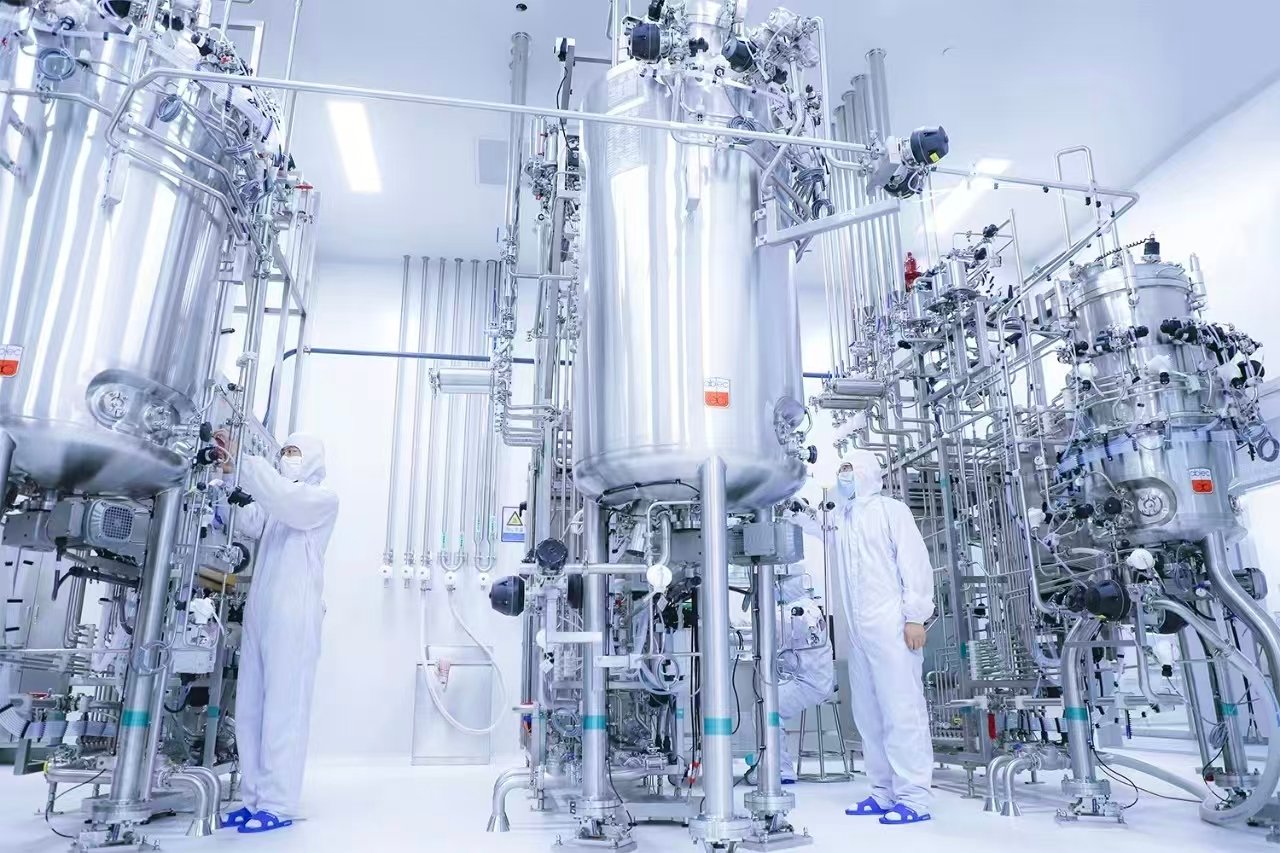
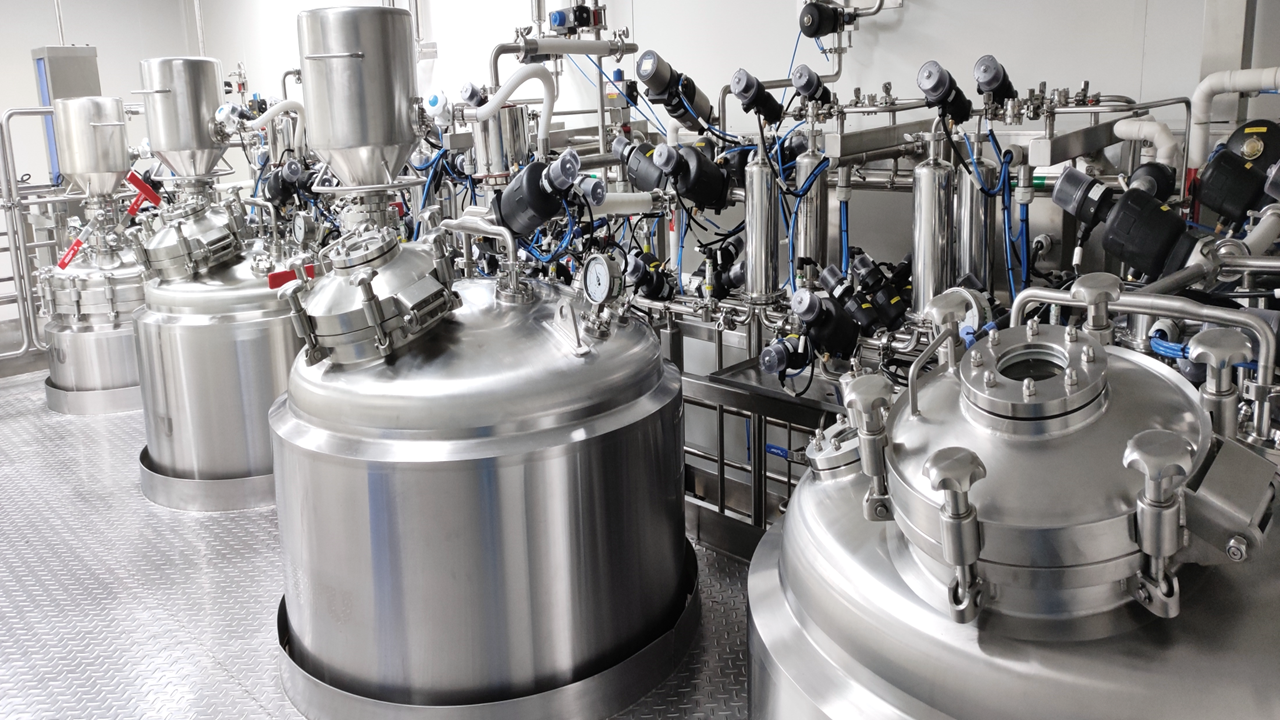
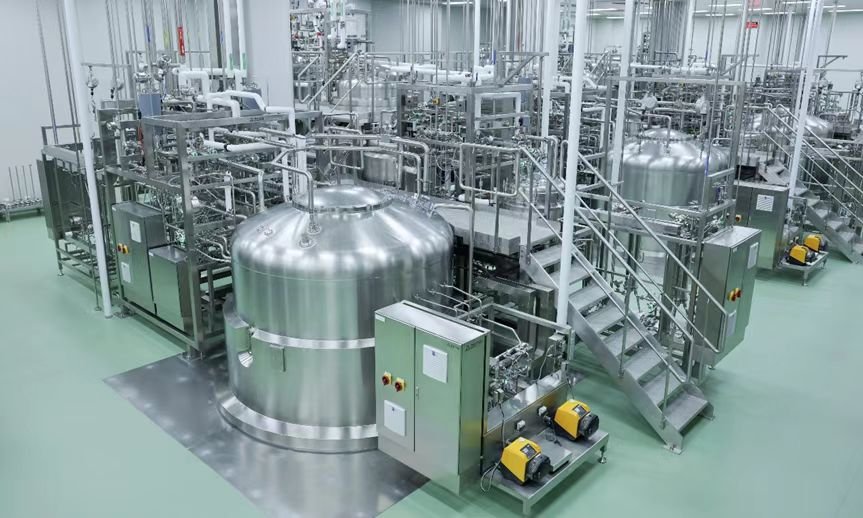
For biopharmaceutical manufacturing processes including monoclonal antibody production, mammalian cell culture and microbial fermentation, stainless steel agitator systems inside bioreactors perform core process functions: material mixing, gas-liquid mass transfer and homogeneous reaction. All product-contact surfaces are exposed to full aseptic production conditions, making agitators a critical control point for contamination prevention. Featuring multiple moving parts, agitators are prone to crevices, dead spaces, abrasive wear and seal leakage, which are frequent root causes of microbial contamination, batch failure and failed validation.
Current industry focus remains largely on overall bioreactor process qualification; systematic technical guidelines dedicated specifically to aseptic design review and operation control of agitators remain limited. From the end-user perspective of biopharmaceutical manufacturers, this paper establishes a full-lifecycle aseptic control framework complying with current Good Manufacturing Practice (cGMP), ASME BPE-2022, EHEDG hygienic design guidelines, 21 CFR Part 11 of the US Code of Federal Regulations, and USP <87> / <88> biocompatibility standards. It systematically breaks down inspection and control points covering agitator selection, installation qualification, validation and maintenance. The study delivers a balanced technical approach balancing regulatory compliance, operational stability and project economy, and provides engineering support for on-site aseptic equipment management in biomanufacturing.
1. Core Risk Assessment Framework for Aseptic Agitators
Pharmaceutical manufacturers shall adopt a three-dimensional risk evaluation model throughout agitator selection, installation qualification, validation and routine maintenance, which serves as the core basis for aseptic risk control.
First, risk associated with product-contact surfaces. Material grade, surface finish and surface integrity directly determine residual product buildup and microbial colonization risk, forming the fundamental prerequisite for GMP compliance.
Second, process zone risk. Agitators are located within the core process chamber, directly contacting bulk drug substances and intermediate products with close proximity to terminal filling operations. Such process areas carry extremely low contamination tolerance and are classified as high-risk aseptic zones.
Third, risk visibility and controllability. Hidden aseptic risks that cannot be visually inspected must be equipped with standardized monitoring and testing methods to make latent risks measurable. Risk monitoring, traceability and closed-loop corrective actions shall be realized via CIP (Clean-in-Place) cleaning challenge tests, SIP (Sterilize-in-Place) sterilization validation, riboflavin residue testing, temperature & pressure monitoring, and a complete electronic data traceability system.
Furthermore, equipment selection requires balanced technical and economic evaluation. Manufacturers shall comprehensively assess process requirements, capital budget and long-term maintenance cost, rather than prioritizing low upfront cost or overengineering. The agitator configuration must match the actual production scale and process conditions.
2. Material Specification & Surface Finish for Aseptic Compliance
Material conformance and precision surface treatment are prerequisites to prevent biofilm formation and meet international aseptic standards. All specifications shall be verified during procurement and FAT (Factory Acceptance Test).
All product-contact wetted parts shall be constructed from 316L stainless steel. All wetted surfaces must undergo electropolishing with a maximum surface roughness Ra ≤ 0.38 μm, meeting ASME BPE SF4 surface finish class. Compared with conventional mechanical polishing, electropolishing eliminates micro-pores, burrs and surface oxidation defects, generating a dense, uniform passive film. This minimizes product adhesion and microbial attachment, and must be formally verified as a key acceptance criterion for hygienic equipment.
Elastomeric sealing components represent the weakest aseptic link. Suppliers must provide full documentation including extractables & leachables (E&L) test reports, biocompatibility data and chemical compatibility certificates complying with FDA 21 CFR, USP <87> and USP <88> requirements. Material compatibility with organic solvents including chloroform, acetone and acetonitrile shall be evaluated during selection to avoid swelling and material degradation. During installation, inspect all gaskets and O-rings for damage, burrs and elastic integrity; ensure proper fitting without protrusions or bulges to eliminate assembly-induced dead spaces.
Secondary contamination of seals must be strictly controlled during routine cleaning. Only purified water or ethanol wiping is permitted for seal cleaning. Lubricants such as petroleum jelly and silicone grease are strictly prohibited. Repeated high-temperature SIP cycles will cause grease degradation and seal deformation, resulting in persistent riboflavin test yellow staining and failed aseptic validation.
3. Structural Optimization to Eliminate Hygienic Dead Spaces
When drafting URS (User Requirement Specification) and performing FAT inspection, agitator design must adhere strictly to three hygienic principles: zero dead volume, full self-drainage, and complete CIP/SIP accessibility, aligned with international hygienic design codes.
Structural design must avoid dry-run abrasive wear. Impellers and shafts bear combined loads from liquid buoyancy, self-weight and hydrodynamic pressure. Low-liquid-level high-speed operation easily causes uneven force distribution and shaft deflection. This operational constraint must be documented within the site SOP (Standard Operating Procedure). Current agitator designs can reliably support 30-ton scale mammalian cell culture production.
4. Seal System Design & Aseptic Validation Control
The seal assembly forms the critical sterile barrier isolating the bioreactor interior from the external environment and maintaining positive aseptic conditions. It shall be thoroughly reviewed during procurement, FAT and validation activities.
For top-entry mechanical agitators, specify double mechanical seals with dual gas/liquid barrier fluid configuration. The barrier fluid provides double-layer protection against product leakage and microbial ingress, enabling long-duration continuous aseptic production.
Bottom-mounted magnetic agitators feature two base plate configurations: fully welded and removable. The fully welded base eliminates external sealing elements, requires zero maintenance and contains no cleaning dead spaces. However, large-size welded plates carry inherent risks of welding distortion induced by uneven vessel wall thickness, which may lead to poor sealing fit and incomplete sterilization post-fabrication; welding quality must be fully assessed upfront. Removable base plates avoid welding defects. Although periodic seal replacement is required, this design delivers superior operational stability and validation controllability, widely adopted in high-end aseptic biomanufacturing projects overseas. Domestic manufacturers may select the configuration based on internal maintenance capacity.
Aseptic risks must be quantified and visualized via formal validation protocols. Conduct riboflavin residue testing to identify hidden cleaning dead legs; establish temperature and pressure monitoring points across all SIP piping and wetted zones to verify that sterilization temperature and hold duration meet process lethality requirements and achieve full steam penetration throughout the system. In addition, suppliers shall provide CFD (Computational Fluid Dynamics) simulation reports including mixing homogeneity and volumetric mass transfer coefficient (kLa) modeling, to predict CIP coverage and fluid distribution prior to installation, identify potential process gaps, and ensure full GMP validation compliance.
5. Full-Lifecycle Operation & Compliance Management
Long-term stable aseptic operation depends on standardized maintenance covering the entire equipment lifecycle. Implement tiered inspection schedules with daily, monthly and annual checkpoints, assign dedicated accountability, and enforce closed-loop risk remediation.
During daily operation, operators monitor agitator noise and vibration to address abnormal conditions promptly. Monthly inspections focus on seal integrity to detect micro-leakage risks. Annual overhaul includes bearing and seal wear measurement, performance calibration, and corrective action documentation with complete maintenance records. Regular preventive maintenance effectively reduces contamination incidents, extends service life, maximizes equipment uptime and improves overall production efficiency.
Complete technical documentation shall be stipulated within URS and supplier delivery terms. The handover package must include operation manuals, full BOM (Bill of Materials) including spare parts lists, engineering drawings and component exploded views, material test certificates for wetted 316L stainless steel, welding procedure specifications (WPS), weld inspection reports, surface finish certification, FDA/USP compliance documentation, mechanical seal datasheets, and technical manuals for motors, reducers, couplings and bottom bearings. Full traceability must be maintained from design and installation through validation and maintenance.
Comprehensive documentation supports SOP development, spare parts inventory setup, component interchangeability assessment, and supplier audits. Material certificates, weld records, surface finish reports and regulatory compliance files serve as objective evidence for QA/QC qualification activities, routine regulatory audits and supplementary validation work.
Conclusion
Aseptic control of stainless steel bioreactor agitators constitutes a systematic program covering material qualification, structural review, model selection, seal design, validation execution and long-term maintenance; it cannot rely solely on hardware parameters. Biopharmaceutical companies constructing aseptic production lines should avoid over-low cost or over-specification, and select equipment configurations matched to process characteristics, regulatory standards and internal maintenance capacity.
Strict technical specifications during procurement, thorough verification during installation, rigorous validation testing, and standardized cyclic maintenance collectively eliminate agitator-related aseptic hazards. Establishing a full-lifecycle aseptic control system improves production line reliability and GMP compliance, delivering robust engineering assurance for the safe manufacturing of monoclonal antibodies, cell culture products and microbial fermentation biologics.
As a leading process-oriented engineering company, Sino Bioengineering delivers professional bioengineering solutions and comprehensive technical services to clients worldwide.
For more products and solutions: https://sinobioengg.com/category/solution/
For more service: https://sinobioengg.com/category/service/