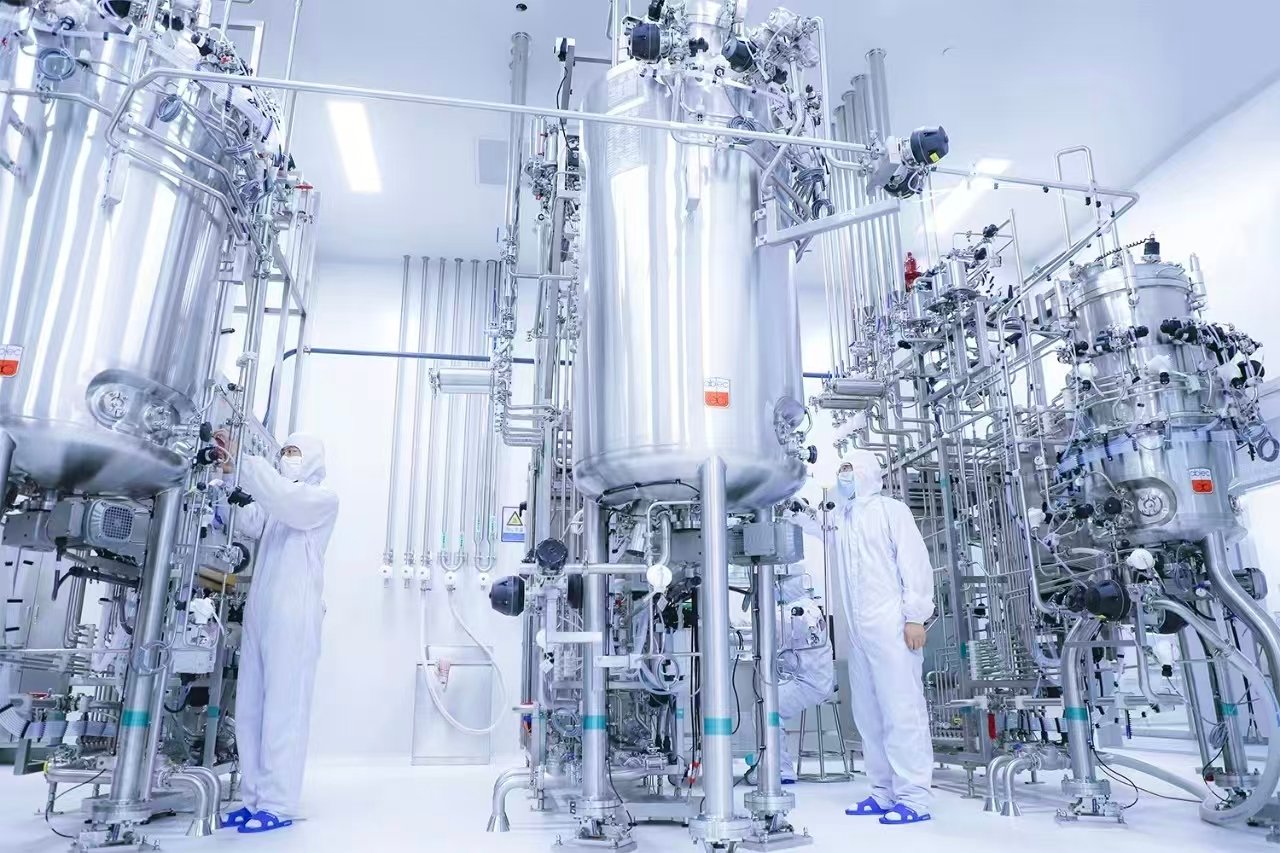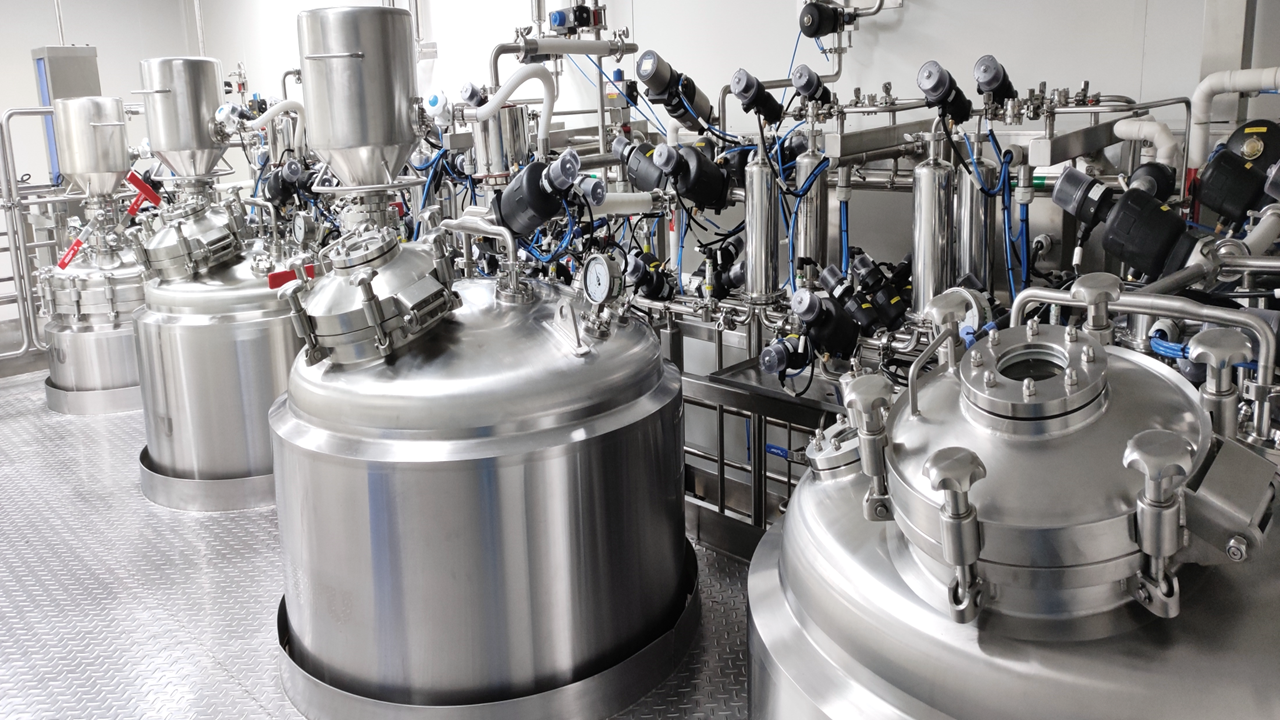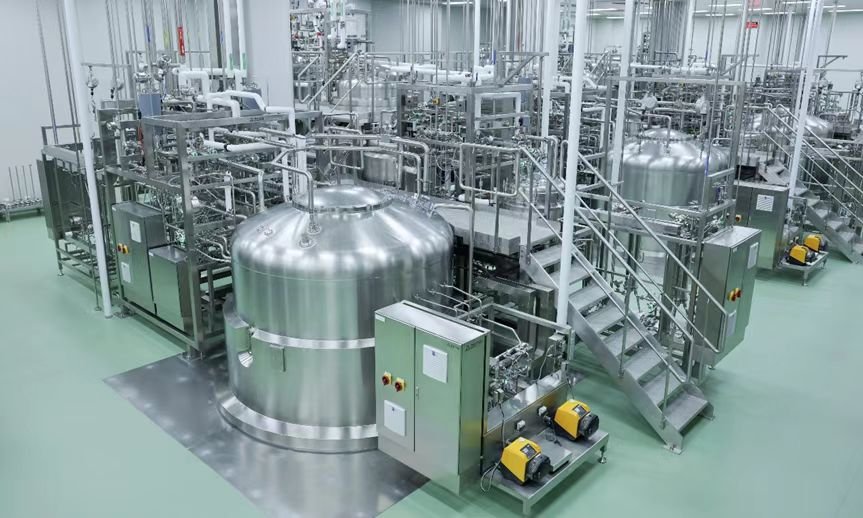
Driven by the rapid advancement of biopharmaceutical technologies, sustained growth in the biologic drug market has raised stringent requirements for the productivity, quality and cost-effectiveness of fermentation manufacturing. As the core unit operation vessel for microbial fermentation, the system design and process control of fermentors exert direct impacts on microbial growth and metabolism, product biosynthesis efficiency and final product purity. Conventional fermentation workflows are plagued by inherent challenges, including inadequate precision in microenvironment regulation, poor matching between structural configuration and process demands, suboptimal equipment performance and escalating operational expenditures. Following the logical framework of process requirements — microenvironment characterization — structural design — economic optimization, this paper systematically investigates key technologies and optimization strategies for fermentor systems. Emphasis is placed on identifying process and design limitations as well as corresponding mitigation strategies, aiming to deliver technical foundations for large-scale fermentation production.
Fermentor Process Perspective: Microbial Culture Requirements and Quantitative Microenvironment Characterization
A fermentor is engineered to maintain a favorable microenvironment for microbial propagation and target product biosynthesis. Common host organisms such as Escherichia coli and yeast exhibit high sensitivity to fermentation conditions. Microenvironment quality can be quantified by characteristic parameters, which serve not only as fundamental control variables for bioprocess operation but also as critical design inputs for mechanical configuration.
1.1 General Requirements for Microbial Cultivation
Bioprocess design is fundamentally oriented toward satisfying four core cultivation requirements. First, robust mass transfer to facilitate homogeneous nutrient distribution and timely removal of metabolic inhibitory by-products, thereby sustaining unimpeded microbial proliferation. Second, stable physical conditions, where culture temperature, pH and dissolved oxygen are precisely regulated to preserve cell viability and support product formation. Third, well-defined hydrodynamic conditions to mitigate shear-induced cellular damage and ensure uniform dispersion of fermentation broth. Fourth, rigorous aseptic containment to prevent adventitious microbial contamination, avoid batch failure and guarantee product quality and safety. These four pillars are mutually coupled and collectively define the intrinsic characteristics of the fermentation microenvironment.
1.2 Core Parameters for Quantitative Characterization of Fermentation Microenvironment
For E. coli fermentation, quantitative microenvironment characterization spans four dimensions: hydrodynamics, mixing performance, mass transfer performance and shear effects. Relevant parameters and their target operating envelopes are outlined below.
Hydrodynamic parameters encompass impeller tip speed, superficial gas velocity, Reynolds number and power number. These metrics characterize agitation intensity, gas flow regime and power dissipation, and govern mixing and mass transfer performance.
Mixing performance parameters include Taylor scale and Kolmogorov microscale, representing macro-mixing and micro-mixing homogeneity respectively. They ensure uniform nutrient and oxygen distribution across both macroscopic and microscopic domains to achieve consistent cellular physiological states.
Mass transfer performance is primarily described by volumetric mass transfer coefficient (\(K_L a\)), complemented by mass transfer driving force, oxygen transfer rate (OTR), oxygen uptake rate (OUR) and carbon dioxide evolution rate (CER). Among these variables, \(K_L a\) dictates oxygen transfer efficiency and constitutes the primary process control parameter. Optimal fermentation performance is attained when OTR and OUR reach dynamic equilibrium.
1.3 Weighting of Microenvironmental Parameters and Optimization Strategies
For E. coli fermentation, the ranked impact weighting of microenvironmental parameters follows: \(K_L a\) > shear > mixing > hydrodynamics > auxiliary mass transfer parameters. As the dominant variable, insufficient \(K_L a\) restricts oxygen supply and triggers anaerobic metabolism, leading to diminished product titers. Shear stress ranks second; excessive shear causes cell lysis and increases downstream purification burdens. These parameters demonstrate strong interdependence. Elevated agitation speed and superficial gas velocity enhance \(K_L a\) and mixing uniformity yet amplify shear stress. Improved homogeneity optimizes mass transfer and reduces spatial shear heterogeneity. Increased mass transfer driving force enables OTR enhancement without raising shear levels.
Accordingly, the optimization paradigm for E. coli fermentation prioritizes maintaining \(K_L a\) within the qualified operating window, imposing strict control over shear variables, improving mixing quality, secondarily tuning hydrodynamic and auxiliary mass transfer parameters, and dynamically compensating for the nonlinear evolution of microenvironment conditions throughout the cultivation lifecycle.
Fermentor Design Perspective: Design Logic Linking Microenvironment Characterization and Mechanical Configuration
The mechanical architecture of a fermentor establishes the physical basis for microenvironment formation. Critical components including vessel body, jacket, agitation assembly, baffles and gas sparger determine the achievable range and stability of microenvironmental parameters. Mechanical component design shall prioritize microenvironment performance optimization.
2.1 Design Specifications
As the primary containment body, fermentor working volume, height-to-diameter ratio, material selection and sealing configuration directly affect microenvironment stability. A height-to-diameter ratio of 2.5–3.5 is selected to balance mixing performance, mass transfer efficiency and carbon dioxide stripping, ensuring compliance of Reynolds number, \(K_L a\) and other key indicators. 316L stainless steel is adopted as the construction material with high-quality internal surface finishing, with electropolishing preferred to minimize cell adhesion and biofilm formation. Agitation sealing employs mechanical seals; aseptic water-lubricated seals or magnetic drive systems are preferable. Combined with sterile inlet/exhaust gas filters and valve manifolds, a slight positive pressure is maintained within the vessel to sustain aseptic integrity and stable gas dispersion.
The jacket serves as the core thermal control component and indirectly influences broth viscosity, \(K_L a\) and other microenvironment variables. A coil-type jacket configuration is implemented to maximize heat transfer area and eliminate thermal stratification. Temperature control accuracy reaches ±0.5 °C, with ±0.2 °C as the optimal target. Cooling water is utilized as the heat removal medium, and stroke control valves enable closed-loop dynamic regulation to stabilize broth temperature and preserve cellular activity. High-heat-load processes such as methanol induction in Pichia pastoris fermentation require customized thermal design to achieve heat balance.
The agitation assembly is the dominant component governing microenvironment characteristics, directly defining shear stress, mixing and mass transfer behavior. A combined impeller setup integrating axial-flow and radial-flow impellers is deployed for E. coli fermentation. The bottom radial impeller achieves gas dispersion and micro-mixing, while intermediate axial-flow impellers drive bulk circulation and macro-mixing. The impeller-to-vessel diameter ratio and agitation speed are coordinated to constrain tip speed within target ranges. This design ensures shear, mixing and \(K_L a\) meet specifications while limiting agitation power consumption to improve economic performance.
Baffles disrupt circumferential broth flow and intensify turbulence. For E. coli fermentors, 4–6 baffles are installed with predefined baffle width-to-vessel diameter ratios and wall clearances. This configuration increases Reynolds number and \(K_L a\), and enhances mixing uniformity.
A ring porous gas sparger is implemented. Pore size and pore density determine gas dispersion uniformity, maintaining target superficial gas velocity and elevating mass transfer efficiency.
2.2 Summary of Integrated Design Philosophy
Individual component performance must be synergistically matched. The vessel defines the baseline hydrodynamic and mixing characteristics; the jacket secures thermal stability; agitation modulates shear and mass transfer; baffles and gas spargers further improve mixing and mass transfer. Collectively, these subsystems sustain microenvironmental parameters within target operating windows. Moreover, design shall accommodate bioprocess scale-up. Coupled CFD simulation and physical tank validation are adopted to preserve microenvironment consistency across lab, pilot and production scales, mitigating yield and quality fluctuations during scale translation.
Fermentor Economic Perspective: Process and Design Limitations and Balancing Strategies
The economic performance of fermentor systems relies on reconciling bioprocess requirements and mechanical design capacity. Bioprocess optimization boosts productivity and reduces operational costs, while rational equipment design controls energy expenditure. Nevertheless, large-scale fermentation faces inherent trade-offs between diversified process demands and design constraints, which limit economic gains.
3.1 Process-level Limitations
Process limitations arise mainly from intrinsic conflicts between multi-faceted operational demands and cost-effectiveness. First, the challenge of multi-product campaign compatibility. Although single-vessel multi-product operation improves equipment utilization, different bioprocesses impose divergent microenvironment requirements. Parameter adjustment exhibits hysteresis and mutual interference, which readily induces product quality variability and prevents all campaigns from reaching optimal operating states. Second, the energy consumption inflection point for specialized bioprocesses. For instance, heat balance management during methanol-induced Pichia pastoris fermentation deviates from the conventional economy-of-scale principle. Larger fermentors deliver enhanced heat transfer and product titer, yet energy and consumable costs rise sharply. Beyond the inflection point, productivity gains cannot offset incremental operational expenses.
3.2 Design-level Limitations
Core design trade-offs exist between structural adaptability and economic efficiency, manifested in three dimensions. First, the contradiction between standardization and customization. Standardized design reduces capital investment yet cannot precisely accommodate bespoke requirements of diverse fermentation workflows. Customized configurations deliver superior process matching but sacrifice versatility and increase upfront costs. Second, the trade-off between design redundancy and cost containment. Redundant components including backup filters and exhaust-side plate heat exchangers improve process disturbance tolerance. However, capital expenditure increases with redundancy level, and the required redundancy margin is difficult to quantify due to variability in operator experience and bioprocess maturity. Third, mismatch between equipment service life and bioprocess iteration speed. Fermentors are designed for a service life of 15–20 years, while biotechnological processes evolve rapidly. Legacy hardware may become incompatible with novel strains and innovative workflows, and retrofitting or decommissioning incurs additional capital costs.
3.3 Synergistic Impacts and Economic Balancing Strategies
Process and design limitations interact reciprocally. Multi-product flexibility and continuous bioprocess iteration exacerbate design challenges, whereas hardware constraints restrict the scope of bioprocess optimization. Three balancing strategies are proposed.
1. Optimize bioprocess development to establish generalizable workflows, define safe operating parameter boundaries and refine scale-up methodologies, lowering requirements for customized mechanical design.
2. Adopt modular design to reconcile standardization and customization, reserving hardware flexibility for future bioprocess upgrades.
3. Foster tighter process-design integration by establishing a closed-loop framework of process requirement — design adaptation — cost evaluation, enabling synergistic optimization and enhancing overall economic performance.
3.4 AI Application and Value
Advancements in artificial intelligence, big data and digital twin technologies empower bioprocess optimization and design decision-making for fermentor systems. By integrating historical batch records, online sensor signals and CFD simulation outputs, correlative models can be constructed to describe relationships between microenvironmental parameters, microbial growth and product formation. These models support dynamic prediction and precise closed-loop control of critical variables including \(K_L a\), dissolved oxygen, temperature and pH. Combined with anomaly detection and soft sensing techniques, adventitious contamination risks, equipment drift and process instability can be identified proactively to reduce batch failure rates. Furthermore, AI enables multi-objective optimization of agitation, aeration and heat removal setpoints. Energy consumption can be minimized while maintaining product yield and quality, transforming fermentation manufacturing from experience-driven operation toward data-driven control. This approach improves scale-up reproducibility, equipment utilization and overall economic returns.
Using E. coli fermentation as a case study, this paper systematically analyzes process requirements, mechanical configuration and economic considerations for fermentor systems. It clarifies the essential role of quantitative microenvironment characterization parameters, the correspondence between mechanical components and microenvironment formation, and reveals core limitations and coupling effects of bioprocess and equipment design. The proposed synergistic optimization strategies effectively alleviate identified trade-offs and enable high-productivity, cost-efficient manufacturing.
In the future, fermentor systems will evolve toward precise microenvironment regulation, modular intelligent hardware architecture, and deep integration of bioprocess and mechanical design. Subsequent research will focus on compatibility assessment for novel microbial strains and quantitative limitation analysis, to deliver more robust technical support for the large-scale expansion of the biopharmaceutical industry.
As a leading process-oriented engineering company, Sino Bioengineering delivers professional bioengineering solutions and comprehensive technical services to clients worldwide.
For more products and solutions: https://sinobioengg.com/category/solution/
For more service: https://sinobioengg.com/category/service/