

Mammalian cell culture stands as a core technology in modern biopharmaceutical manufacturing. A large portfolio of monoclonal antibodies (mAbs) and complex therapeutic recombinant proteins rely on mammalian expression systems such as CHO cells, which are cultivated at scale within stirred-tank bioreactors. Agitation and aeration perform essential engineering functions in these systems: homogenizing the culture broth, enhancing oxygen transfer, facilitating CO₂ stripping, and sustaining a spatially uniform environment for nutrients, pH and dissolved oxygen. However, these same operations introduce an often-underappreciated process variable: hydrodynamic stress.
Conventional wisdom tends to reduce hydrodynamic stress to a simple premise — excessive shear ruptures cells. Decades of research have revised this view substantially for contemporary CHO cell culture. Modern cell lines and optimized processes demonstrate considerable robustness, and catastrophic, bulk cell rupture is generally not the dominant risk under standard industrial bioreactor operating conditions. Instead, sub-lethal hydrodynamic stress of moderate magnitude, sustained or applied cyclically, exerts subtler yet persistent impacts across cell growth, metabolism, specific productivity and product quality.
Accordingly, the central question for bioprocess development has shifted from identifying the shear limit for CHO cell survival toward a more nuanced inquiry: what dynamic, heterogeneous flow conditions do cells actually encounter inside industrial bioreactors, and how do these hydrodynamic environments shape process performance and final product attributes?
Agitation and Aeration: Sources of Hydrodynamic Stress as Well as Mass Transfer
In large-scale stirred-tank bioreactors, CHO cells are maintained in suspension. Impellers deliver mechanical energy to drive bulk recirculation and turbulence. Simultaneously, sparging gas supplies oxygen and removes accumulated CO₂. Together, these inputs define the dynamic fluid environment inhabited by cells. From a fluid mechanics perspective, mechanical energy introduced by the impeller forms large-scale flow structures, which cascade into progressively smaller eddies until turbulent kinetic energy is dissipated as heat by viscous forces at the Kolmogorov microscale. When local eddy dimensions approach the approximate 15 μm diameter of a CHO cell, local velocity gradients and associated hydrodynamic forces begin to interact with individual cells.
For this reason, “shear stress” alone is insufficient to characterize bioreactor flow fields. Common descriptors in literature include shear stress τ, energy dissipation rate ε, volumetric power input P/V, impeller tip speed and Kolmogorov length scale.
A critical consideration is the inherent heterogeneity of flow inside stirred vessels. Regions immediately downstream of the impeller discharge zone exhibit far higher local energy dissipation, while bulk zones distant from the impeller experience much milder conditions. Published data indicate the maximum local energy dissipation rate εₘₐₓ can reach 10–100 times the volume-averaged value ⟨ε⟩. This means two bioreactors matched for identical average P/V can present drastically different local stress histories to circulating cells.
As cells travel along recirculating streamlines, they cycle repeatedly between low-stress zones, moderate-stress zones and discrete high-stress hotspots. Cells are therefore not exposed to a constant shear magnitude; their stress history is defined by peak intensity, exposure duration, frequency of peak encounters, and their underlying physiological state at the time of exposure. This complexity explains why a universal, one-size-fits-all safe shear threshold cannot be established for CHO cells. Responsiveness varies by cell line, culture phase, bioreactor geometry, impeller design, aeration strategy and media formulation.
Sub-Lethal Effects: The Greater Concern Than Immediate Cell Lysis
Early hydrodynamic studies focused heavily on identifying stress thresholds for membrane rupture, necrosis or apoptosis. Many of those challenge conditions exceeded the operating envelope of modern industrial bioreactors. For today’s well-adapted CHO production lines, wholesale mechanical lysis under routine manufacturing conditions is rare.
Nonetheless, intact cell membranes and stable viability do not equal an absence of biological response. Studies consistently demonstrate that sub-lethal biological responses are triggered at energy levels far below those required to cause overt cell death. Under mild hydrodynamic stress, viability may remain apparently unchanged, but cellular physiology is already perturbed. Observable outcomes include reduced specific growth rate, depressed maximum viable cell density (VCDₘₐₓ), altered cell size, cell-cycle arrest, shifted nutrient consumption profiles, and declines in specific productivity or final product titer.
Findings specific to mAb-producing CHO systems illustrate this clearly. In several datasets, elevated hydrodynamic stress reduced productivity without an immediate drop in viability. For CHO K1 cells producing monoclonal antibody, a stress condition of 6.6 Pa reduced titer by approximately 19% relative to a control at 1.4 Pa; the estimated threshold for a 10% titer loss falls within 3.0–3.4 Pa. Additional CHO campaigns have reported coupled reductions in VCDₘₐₓ, glucose uptake, lactate accumulation and product concentration.
This carries important implications for industrial bioprocess monitoring: reliance on viability alone underestimates hydrodynamic risk. Cellular responses follow a sequential cascade: metabolic reprogramming, cell-cycle modulation and translational shifts emerge first, followed by retarded growth and diminished productivity, with measurable viability loss appearing as a later-stage outcome. Hydrodynamic stress should therefore be treated as a process parameter capable of shaping the entire culture trajectory, rather than merely a mechanical damage metric.
Transcriptomic analyses of CHO cells reinforce this interpretation. Elevated hydrodynamic stress upregulates pathways associated with DNA damage repair, which can divert cellular resources away from recombinant protein synthesis and depress productivity. Combined agitation and sparging stress induce widespread differential gene expression across networks governing translation, DNA damage response, cell cycle control, apoptosis, adhesion and cytoskeletal remodeling. CHO cells do not passively endure shear; they sense, transduce signals and mount adaptive responses to their fluid environment.
Stirred-Tank Bioreactors: Engineering Tradeoff Between Mixing, Mass Transfer and Cell Protection
Stirred-tank bioreactors embody a fundamental engineering compromise. Higher agitation speeds shorten mixing times, improve bubble dispersion, boost oxygen transfer, and mitigate spatial gradients in pH, dissolved oxygen, nutrients and metabolic byproducts — a priority especially in high-cell-density intensified processes where oxygen uptake rate (OUR) becomes a limiting constraint. Conversely, faster agitation amplifies local energy dissipation and hydrodynamic stress. Increasing sparge flow to satisfy elevated OUR introduces a second category of mechanical hazard: bubble-associated stress.
Cellular injury is not confined to impeller zones. Bubble formation, coalescence, rise and surface rupture generate transient, intense local dissipation events. Cells adsorbed to gas-liquid interfaces are preferentially exposed to these high-magnitude stress events. Aeration is thus not solely an oxygen supply lever; it reshapes the mechanical environment experienced by suspended cells.
However, bioreactor design cannot be reduced to simply minimizing agitation. Insufficient mixing creates its own liabilities: prolonged mixing times, DO and pH stratification, uneven feed distribution, CO₂ buildup and localized osmotic shifts, all of which compromise culture performance and product quality. The rational design objective is to define a robust operating window that balances mixing efficiency, oxygen transfer, CO₂ removal and hydrodynamic loading.
Scale-Up Considerations: Why Matched Average P/V Does Not Equate to Identical Cellular Exposure
Hydrodynamic challenges are amplified during scale translation. Laboratory-scale bioreactors typically operate at milliliter to liter volumes, while industrial mammalian cell culture extends to thousands and even 20,000 L. As vessel dimensions increase, mixing time lengthens and spatial heterogeneity intensifies. Cells traverse longer circulation loops, repeatedly encountering impeller hotspots and quiescent bulk regions.
Research highlights that temporal and spatial heterogeneity of stress in large intensified systems may be more consequential than bulk-averaged stress magnitude. Small-scale model studies show cyclic local stress fluctuations within the 0.01–0.4 W/kg range can suppress mAb titers by up to 30%, an effect greater than constant exposure at the same time-averaged energy dissipation rate. Averaged parameters mask the localized dynamic conditions that govern cell behavior.
Traditional scale-up rules such as constant P/V or constant tip speed remain widely applied. For fixed impeller geometry, the ratio of maximum local to average energy dissipation (Φₘₐₓ) can be relatively consistent across scales, making constant P/V a useful heuristic for bounding εₘₐₓ. Even with matched average energy dissipation, however, larger vessels impose longer circulation paths and steeper environmental gradients, changing the frequency and residence time of cells within high-stress zones.
This reinforces that industrial bioprocess development cannot depend on a universal shear threshold. A more powerful framework couples scaled-down models with computational fluid dynamics (CFD) to simulate peak local stress, cell trajectories, exposure duration and stress frequency at manufacturing scale, then correlates these flow metrics with CHO physiology and production performance.
Microfluidic, capillary or contraction-flow devices are excellent tools for mapping intrinsic cellular tolerance limits, yet their extreme, simplified flow fields often lack industrial relevance. Bench-scale stirred vessels and recirculating loop scaled-down models better recapitulate the moderate, sustained, cyclic hydrodynamic regimes representative of commercial manufacturing.
Impacts on Critical Quality Attributes: From Titer to Glycosylation
For antibody and recombinant protein manufacturing, viable cell growth is an intermediate objective. The ultimate value drivers are product yield and product quality. Sub-lethal hydrodynamic stress is well documented to modulate CHO growth and productivity, but effects on critical quality attributes (CQAs) are more complex and context-dependent.
Key CQAs for mAbs and recombinant proteins include structural integrity, potency, glycosylation, oxidation, aggregation and charge heterogeneity. Selected studies report that certain high-stress regimes reduce glycan occupancy or shift mAb galactosylation profiles toward G1 and G2 isoforms; others observe trends of increased galactosylation.
Nonetheless, there is no robust evidence supporting a simple causal rule that rising hydrodynamic stress inevitably alters antibody glycosylation. Multiple CHO mAb campaigns have demonstrated stable glycan profiles even under elevated hydrodynamic loading, and comparable findings have been reported for fusion proteins. Direct hydrodynamic effects on protein oxidation, aggregation and average isoelectric point are generally weak and highly dependent on cell line and process configuration.
A primary source of this variability is tight parameter coupling. Poor agitation creates DO gradients, and dissolved oxygen itself is a known regulator of N-glycosylation. Raising agitation homogenizes DO while simultaneously elevating local energy dissipation. When quality shifts arise, disentangling contributions from hydrodynamic stress, DO stratification, CO₂ accumulation, nutrient gradients and secondary metabolic changes is rarely straightforward.
This underscores the need for bioprocess engineering to move beyond single-variable thinking toward coupled multi-parameter analysis. Hydrodynamics is not an isolated engineering input; it modulates the cellular microenvironment and physiological state, which in turn indirectly shapes product formation.
Beyond “Shear Avoidance”: Toward an Integrated Bioreactor Evaluation Framework
Mammalian cell culture technology has advanced dramatically. Modern CHO cell lines, serum-free media, protective additives and refined bioreactor hardware make bulk mechanical cell lysis an uncommon failure mode in commercial production.
This does not mean hydrodynamic stress is a solved problem. On the contrary, intensified high-density cultures, extended batch durations, perfusion platforms and ever-larger production scales render moderate, sustained, spatially heterogeneous and cyclically applied hydrodynamic stress an increasingly important variable.
The path forward is not to search for a universal maximum safe shear value for CHO cells, as substantial evidence indicates such a threshold does not exist. Cellular responses are conditioned by stress intensity, exposure duration, fluctuation frequency, flow type, cell line, culture phase and the prevailing physiological state of the population.
Industrial bioprocess development benefits most from an integrated framework linking bioreactor hardware, flow field characteristics, cellular response and product output. Engineering parameters define the operating environment; CFD and scaled-down models resolve dynamic local stress exposure; and assays for growth, VCD, metabolism, transcriptomics and CQAs illuminate the biological response of CHO cells.
Optimization of next-generation bioreactors therefore targets more than merely preventing mechanical shear damage. The goal is to deliver a hydrodynamic environment that satisfies mixing and mass transfer requirements while preserving optimal cellular physiology and biosynthetic capacity. This principle is especially relevant for scalable mAb and recombinant protein manufacturing. Only by integrating hydrodynamic characterization with cell biological mechanisms can predictive scale-down and scale-up strategies be established, enabling more robust, consistent and controllable biomanufacturing from lab to commercial scale.
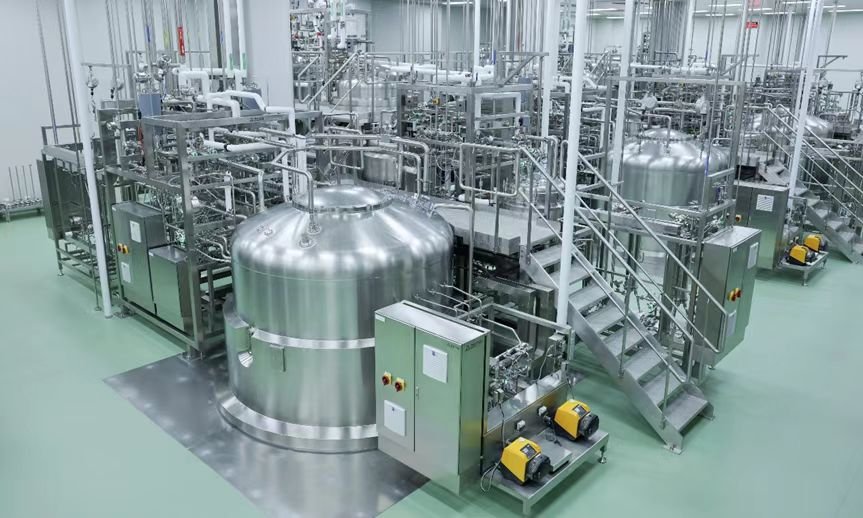
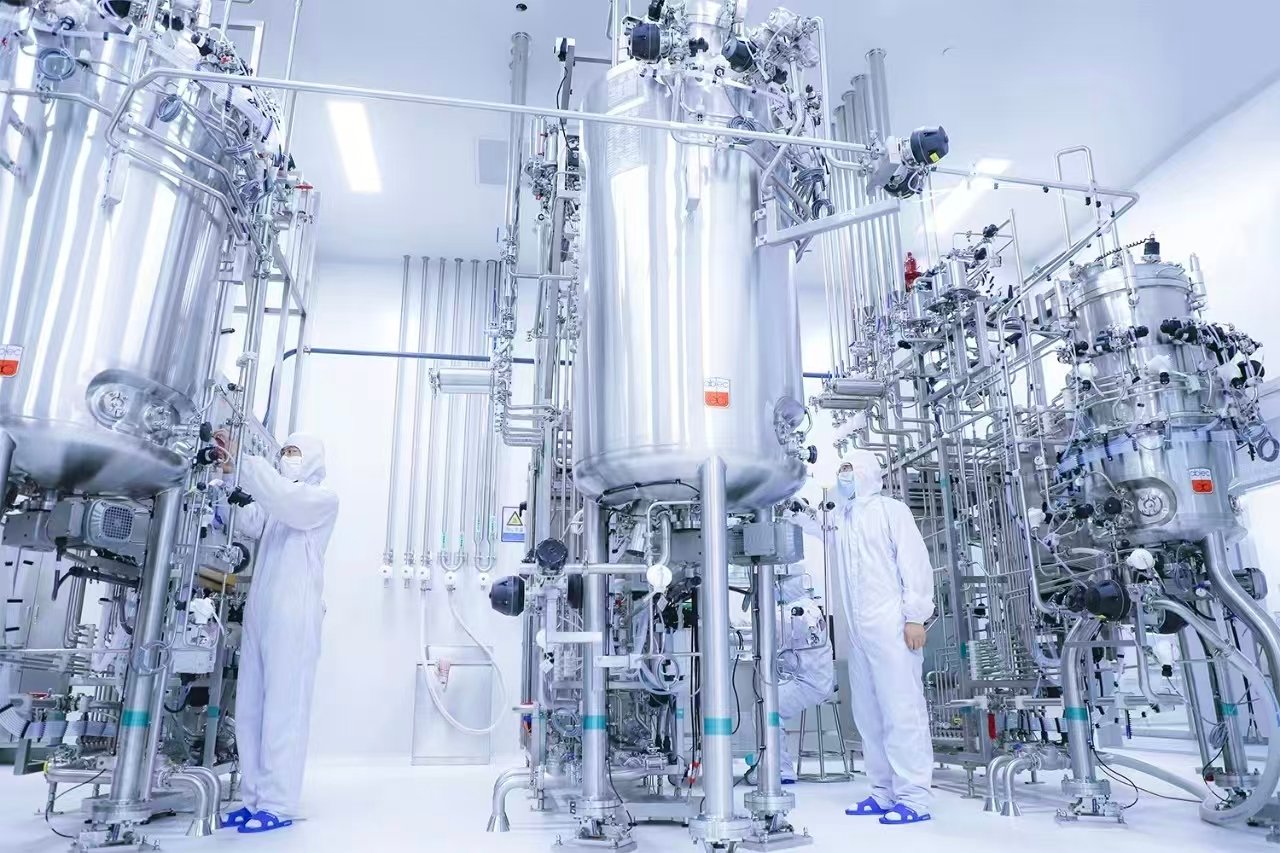
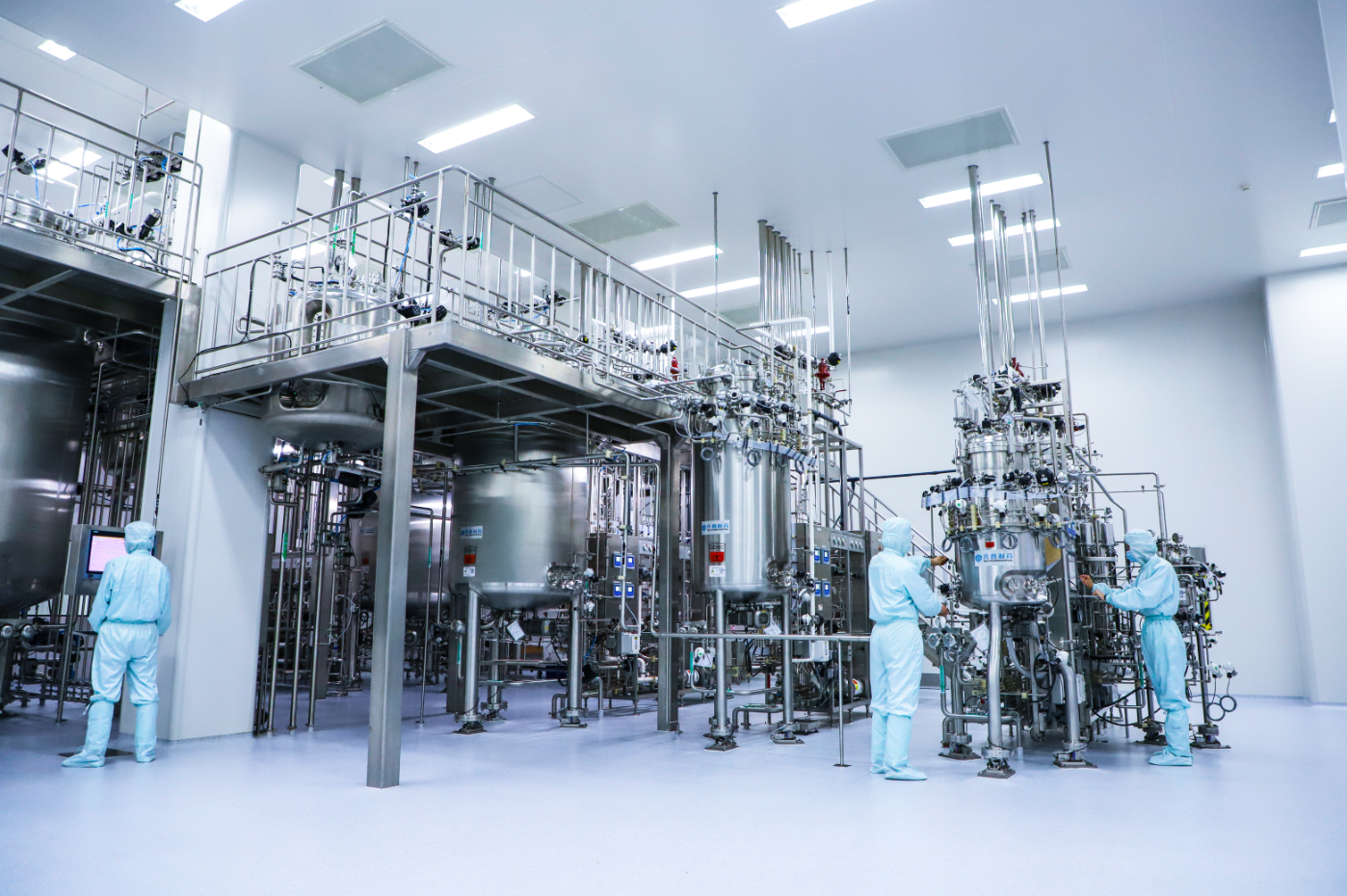
Sino Bioengineering offers a complete portfolio of bioreactor systems spanning process development, scale-up and GMP-compliant large-scale manufacturing, including parallel bioreactors, single-use bioreactors and stainless steel bioreactors. Our platforms cover working volumes from milliliter scale through thousands of liters. Optimized impeller geometry, aeration configuration, mixing performance and process control are engineered to deliver high mass transfer efficiency while minimizing hydrodynamic stress. These systems are fully suited for CHO and other mammalian cell cultures, delivering reliable support for process development and commercialization of monoclonal antibodies, vaccines and recombinant biotherapeutics.