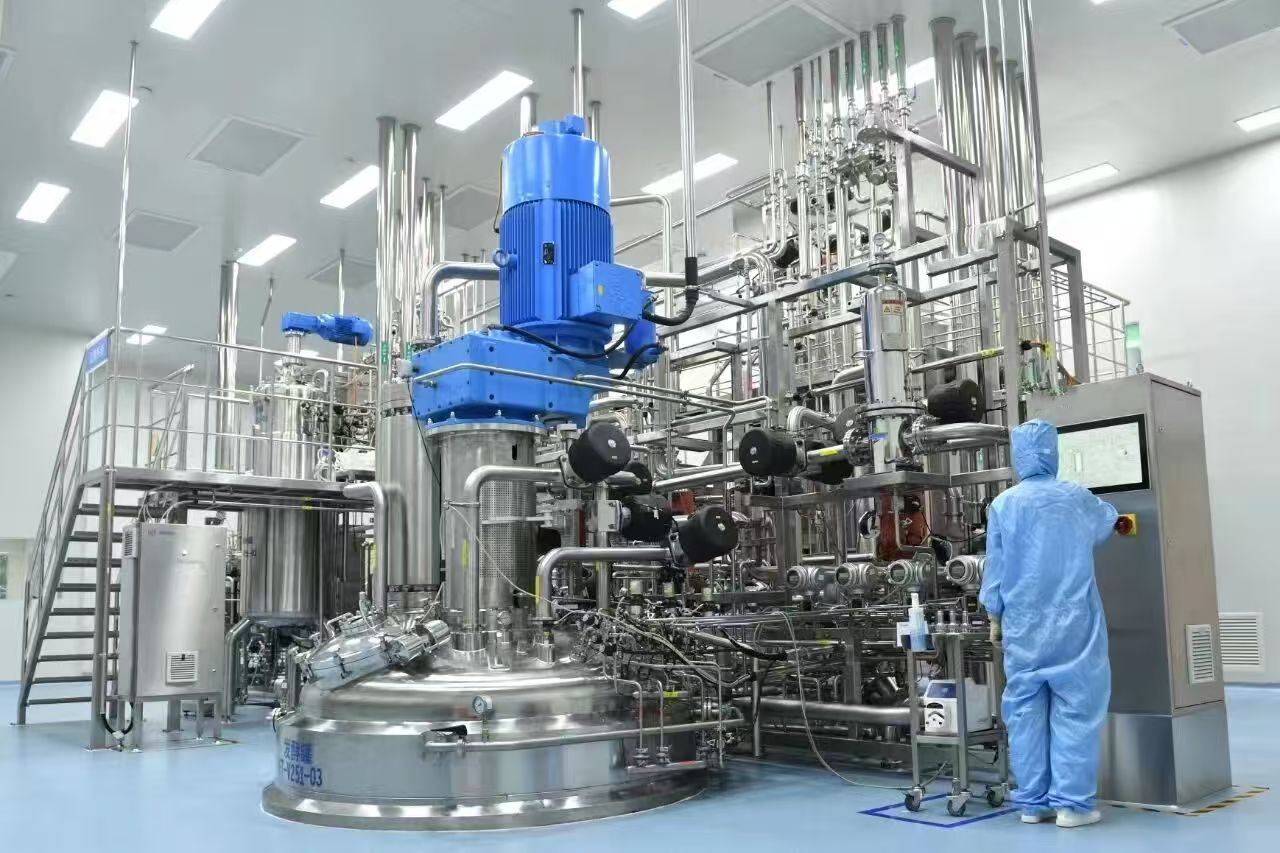
1 Yeast Expression Hosts
Yeast was the first eukaryotic system applied for heterologous gene expression. It features simple genetic manipulation, rapid growth rate and low production cost, and possesses eukaryotic protein processing capabilities to achieve correct folding and modification of expressed proteins, rendering end products highly similar to their natural counterparts.
Methylotrophic yeast has emerged as an ideal expression system for heterologous genes, especially eukaryotic genes, over the past decade. This type of yeast is capable of utilizing methanol as the sole carbon and energy source for growth. Recombinant methylotrophic yeast strains exhibit stable genetic traits and high expression levels, making them well-suited for large-scale fermentation. They effectively address the deficiencies of Saccharomyces cerevisiae, including poor strain stability, low product yield and insufficient secretory efficiency. Among mainstream species, Komagataella phaffii (Pichia pastoris) and Ogataea polymorpha (Hansenula polymorpha) are the most widely adopted.
Remarkable advances have been achieved in strain engineering and process intensification of Pichia pastoris, enabling the biosynthesis of complex humanized recombinant proteins. Although the commonly used alcohol oxidase 1 promoter (pAOX1) delivers high expression efficiency, it relies on methanol induction, which poses potential risks in raw material storage and field operation. To mitigate such drawbacks, MutS strains with AOX1 gene knockout and mixed methanol-glycerol feeding strategies have been developed to cut methanol consumption and elevate production efficiency. Moreover, novel methanol-free promoter systems such as pPDF and pUFF are under intensive research. Commercially, Pichia pastoris has been successfully utilized to manufacture over 70 types of industrial and biopharmaceutical recombinant proteins by enterprises including Sanofi and Merck.
Ogataea polymorpha is classified as a thermotolerant facultative anaerobe, with an optimal growth temperature ranging from 37 °C to 43 °C and a maximum viable growth temperature up to 48 °C, alongside a broad pH adaptation range of 2.5–8.0. It is characterized by high fermentation cell density, superior protein yield and moderate protein glycosylation modification. Its prevalent promoters cover endogenous strong constitutive promoters (pGAP, pPMA1), self-derived methanol oxidase promoter (pMOX) and heterologous pAOX1 from Pichia pastoris. This yeast species has been commercially applied for the production of hepatitis B surface antigen, insulin and HPV vaccines.
2 Core Process Parameters and Scale-Up Considerations
2.1 Dissolved Oxygen (DO)
Dissolved oxygen acts as a pivotal parameter determining the overall performance of recombinant protein production processes. For aerobic microbial hosts, anaerobic environments inevitably lead to reduced product titers and accumulation of undesirable by-products. Oxygen fluctuation and insufficient oxygen availability are predominant bottlenecks in large-scale fermentation operations. Sufficient oxygen supply facilitates recombinant protein synthesis, substrate consumption and biomass accumulation, yet stable high oxygen tension is difficult to achieve in industrial-scale bioreactors. Additionally, unstable oxygen levels severely impair fermentation performance, highlighting the necessity of selecting robust host strains with strong tolerance to oxygen variation, such as Kluyveromyces marxianus.
2.2 System Pressure
Elevated hydrostatic pressure is commonly maintained up to 1.5 barg in large-scale bioreactors to enhance oxygen dissolution capacity and guarantee sterile operation. Such pressure conditions barely impair yeast cell viability, whereas increased solubility of gaseous compounds alters intracellular physiological metabolism, raises cellular maintenance energy requirements, and consequently causes declines in biomass accumulation and target product output. Relevant research conclusions remain inconsistent and require further in-depth verification.
2.3 Substrate Gradient
Single-point substrate feeding inevitably forms uneven substrate concentration gradients within large-scale bioreactors, which trigger metabolic reprogramming and massive by-product synthesis. For instance, substrate heterogeneity in Saccharomyces cerevisiae fermentation boosts ethanol accumulation and further reduces biomass yield by approximately 30%, which underscores the research significance of eliminating substrate gradient effects in industrial production.
2.4 pH Value
pH serves as a critical process indicator that regulates yeast cell proliferation, target product formation, recombinant protein stability and endogenous protease activity. Optimal pH conditions vary significantly among different yeast strains and target recombinant proteins. In industrial production, continuous pH regulation via concentrated acid-base solutions inevitably causes drastic pH fluctuation around feeding ports. Though yeast strains possess moderate tolerance to pH deviation, unstable pH severely deteriorates protein quality and production efficiency. For example, the titer of recombinant erythropoietin expressed by Pichia pastoris drops below 50% at pH 5.0, and excessive pH fluctuation further induces protein aggregation and intracellular proteolytic degradation. Systematic exploration of pH effects on process performance is essential to predict and control pH deviation risks in scaled-up fermentation.
2.5 Temperature
Process temperature exerts decisive impacts on recombinant protein synthesis efficiency, structural stability and final product quality. No obvious temperature gradient exists inside industrial bioreactors, yet sufficient heat dissipation becomes a core limiting factor during process scale-up, especially in high-cell-density fermentation. Heat Transfer Rate (HTR) is adopted to evaluate the cooling capacity of fermentation tanks. During scale expansion, the surface area-to-volume ratio of reactor jackets decreases continuously, resulting in weakened heat dissipation capacity, which necessitates targeted process intensification strategies for compensation.
3 Process Intensification Strategies
3.1 Feeding Optimization Strategies
Cell growth rate is highly correlated with recombinant protein synthesis efficiency, which can be precisely regulated via online process monitoring technologies including off-gas analysis, in-situ biomass probes and kinetic mathematical modeling. For example, growth rate control based on real-time ammonia consumption measurement effectively elevates the final titer of alpha-1 antitrypsin in Pichia pastoris fermentation.
Mixed carbon source feeding combines two or more carbon substrates to enhance volumetric productivity of methanol-induced Pichia pastoris fermentation, while lowering oxygen demand and metabolic heat generation. Methanol-glycerol co-feeding has been proven to markedly improve bovine lysozyme production efficiency. Nevertheless, mixed feeding increases process complexity, may trigger protein structural variation and inhibit induction-related signaling pathways, hence requiring rational optimization of carbon source ratio and comprehensive cost-benefit evaluation covering raw material expense, product yield, oxygen supply and cooling consumption.
Intermittent feeding achieves periodic substrate starvation to accelerate recombinant protein synthesis, which facilitates biomass increment but imposes metabolic stress on host cells, potentially accelerating proteolysis and compromising product yield and quality. This strategy features outstanding cost-effectiveness and broad industrial application prospects, while its long-term impacts on protein degradation still require systematic evaluation.
3.2 Oxygen Regulation Strategies
High oxygen transfer efficiency is indispensable for yeast high-cell-density fermentation. Moderate reduction of cell growth rate cuts down oxygen consumption and cellular maintenance energy expenditure, thereby prolonging target protein accumulation phase. Pilot-scale trials confirm that growth rate limitation in Pichia pastoris enhances specific lipase activity and reduces maintenance energy consumption by around 50%, accompanied by decreased biomass accumulation and compromised overall lipase productivity.
Elevating bioreactor operating pressure is a feasible industrial approach to improve oxygen solubility and eliminate pure oxygen supplementation dependence. In Pichia pastoris fermentation, raising system pressure from 0.2 barg to 0.9 barg increases β-glucosidase yield by 50%; pressure elevation up to 7 barg boosts lipase production by over 500% in Yarrowia lipolytica cultivation.
Setting low dissolved oxygen setpoints (below 5%) strengthens oxygen transfer driving force and cuts energy consumption, with strain-dependent differential effects. Low-oxygen culture elevates recombinant protein productivity by 2.3 times and improves product purity in Pichia pastoris, and reduced biomass also simplifies downstream purification procedures; in contrast, low oxygen inhibits cell growth and lowers synthesis efficiency of Saccharomyces cerevisiae. Precise low-oxygen condition control can be realized via real-time monitoring of ethanol production rate and respiratory quotient.
3.3 Continuous Cultivation Technology
Continuous fermentation remarkably improves overall process efficiency and economic competitiveness, holding promising application prospects for industrial yeast-derived recombinant protein manufacturing. It extends effective production duration, minimizes equipment downtime, elevates space-time yield, standardizes product consistency and reduces facility investment scale. Practical cases verify that continuous culture achieves significantly higher yields of recombinant lipase B and hepatitis B antigen in Pichia pastoris, as well as enhanced β-galactosidase productivity in Saccharomyces cerevisiae, compared with traditional fed-batch fermentation. However, continuous cultivation faces challenges including complex process control, stringent requirements on strain genetic stability, high contamination risks and strict regulatory restrictions for biopharmaceutical products. Its large-scale industrial adoption is expected to expand alongside the maturation of biotechnology industry norms.
3.4 Low-Temperature Fermentation Operation
Proper temperature reduction suppresses intracellular protease activity, reduces endogenous protease release and enhances recombinant protein structural stability, thus alleviating proteolytic degradation and improving final product quality. Nevertheless, low temperature inevitably slows down yeast cell growth and proliferation. During process scale-up, extra attention shall be paid to heat dissipation pressure and rising cooling costs, especially in high-cell-density fermentation and methanol-induced Pichia pastoris fermentation with intensive heat generation. Combined application with other intensification strategies is recommended to balance protein synthesis efficiency and production operating costs.
3.5 Low-pH Process Regulation
Targeted pH optimization effectively inhibits proteolytic degradation and streamlines fermentation workflows. Lowering pH from 5.0 to 4.0 increases the full-length proportion of cellulose-binding module fusion proteins, and further pH reduction to 3.0 significantly mitigates growth hormone hydrolysis. Additionally, low-pH culture conditions reduce microbial contamination risks, while practical application shall comply with the physiological tolerance of host strains and structural stability characteristics of target proteins.
3.6 Strain Screening and Genetic Engineering Modification
Rational host strain selection and targeted genetic modification dramatically optimize fermentation process performance. Adoption of thermotolerant yeast strains such as Kluyveromyces marxianus improves cooling efficiency and lowers contamination risks, on the premise of guaranteeing target protein thermostability. Metabolically engineered yeast strains with reduced metabolic heat output cut down oxygen demand and methanol uptake rate to lower production costs, despite moderate decline in product titer. Research on methanol-free promoter expression systems is also in full swing. Furthermore, synthetic biology tools represented by CRISPR/Cas9 are widely applied to optimize promoters, terminators and transcription factors, so as to enhance homologous recombination efficiency and intracellular protein folding capacity.
Conclusion
Yeast expression systems possess tremendous industrial application potential for recombinant protein manufacturing. Saccharomyces cerevisiae and Pichia pastoris have already achieved large-scale commercial production of numerous bioproducts, while unconventional yeast species such as Yarrowia lipolytica gain increasing attention owing to their compatibility with low-cost sustainable raw materials.
Large-scale bioreactor fermentation inevitably encounters technical obstacles including uncontrollable fluctuation of dissolved gas concentration, uneven substrate distribution and unstable pH environment, as well as universal bottlenecks of insufficient oxygen supply and inadequate heat dissipation. Diversified process intensification strategies have been developed to address the above challenges, aiming to cut manufacturing costs, upgrade product quality and enhance industrial practicability.
Currently, Saccharomyces cerevisiae and Pichia pastoris dominate high-efficiency yeast fermentation production. Future research directions include expanding the exploration of emerging non-conventional yeast species, developing innovative biopharmaceutical products and promoting the application of renewable sustainable raw materials in yeast biomanufacturing.
As a leading process-oriented engineering company, Sino Bioengineering delivers professional bioengineering solutions and comprehensive technical services to clients worldwide.
For more products and solutions: https://sinobioengg.com/category/solution/
For more service: https://sinobioengg.com/category/service/