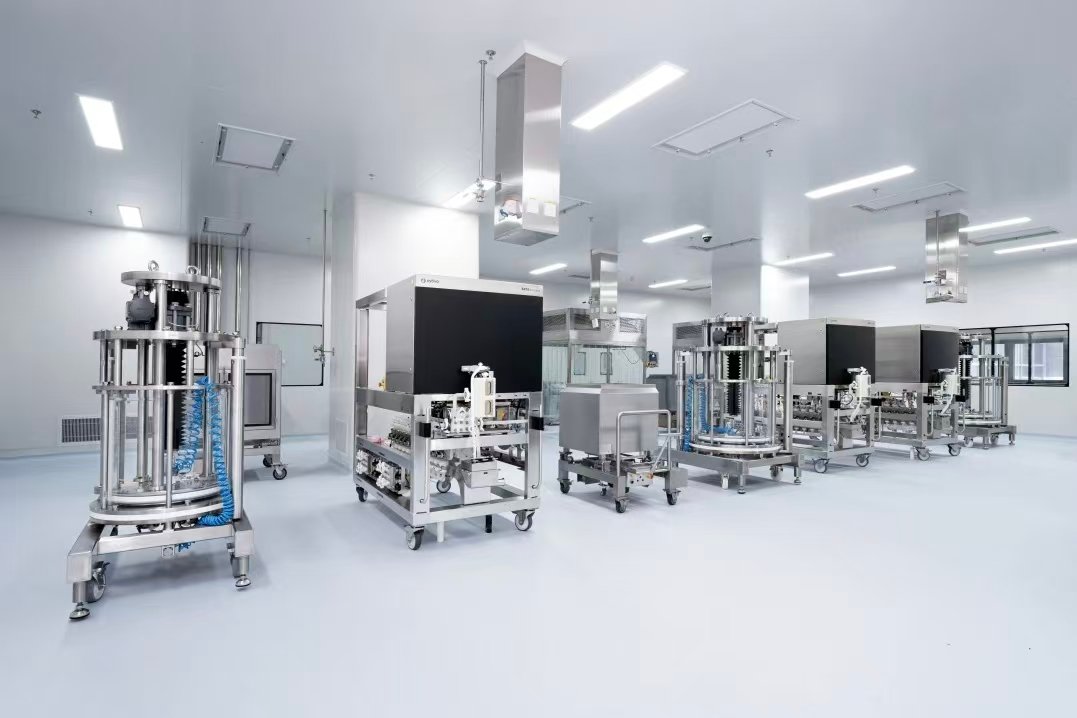
Antibody-drug conjugates (ADCs) have garnered tremendous attention in oncology therapeutics owing to their precise targeted cytotoxicity, sustaining robust market momentum. The purification workflow post-conjugation directly dictates the safety and efficacy of ADC drug products. This review systematically dissects core purification technologies and unmet technical bottlenecks for ADC manufacturing, centering on dominant purification strategies and associated challenges. It aims to deliver an in-depth, practically actionable reference for R&D and production professionals across the biopharmaceutical industry.
1. Impurity Profiles and Origins in ADCs
The impurity spectrum of an ADC is highly correlated with its conjugation chemistry. ADC conjugation platforms fall into three categories: random conjugation, site-specific non-site-selective conjugation, and site-specific site-selective conjugation. Random conjugation and site-specific non-site-selective conjugation generate heterogeneous ADC variants with divergent drug-to-antibody ratio (DAR) values, necessitating dedicated purification steps to modulate DAR distribution. In contrast, site-specific site-selective conjugation yields ADCs with homogeneous DAR and uniform variant profiles.
Figure 1 illustrates the cysteine interchain disulfide conjugation workflow. The full conjugation sequence encompasses antibody activation, linker-payload solubilization, covalent coupling between activated antibodies and linker-payload constructs, and reaction quenching. Reducing agents, organic solvents, and excess linker-payload species are introduced throughout the process, which concurrently generates high-molecular-weight aggregates and ADC variants with disparate DAR values. All impurities are categorized by their formation origins, with tailored removal strategies established accordingly.
2. Core Challenges of ADC Purification
The intricate conjugation chemistry and heterogeneous impurity matrix impose three pivotal hurdles for post-conjugation purification:
DAR Modulation: Separation of ADC species with distinct DAR values, a critical determinant of therapeutic potency and off-target toxicity.
Multi-Impurity Clearance: Elimination of free payloads, protein aggregates, organic solvent residuals, and small-molecule process reagents.
Process Robustness: Balancing high product purity, elevated process recovery, and streamlined manufacturing workflows.
3. In-Depth Analysis of Key Purification Technologies
3.1 Ultrafiltration/Diafiltration (UF/DF)
Reducing agents, catalysts, organic solvents, and quenching agents utilized in conjugation typically exhibit molecular weights (MW) of approximately 300 Da; free payloads generally have a MW of ~2 kDa, while conventional ADCs possess a MW of ~160 kDa. Theoretically, 30 kDa ultrafiltration (UF) membranes can fully retain intact ADC molecules while permitting small-molecule impurities to permeate the membrane.
Membrane Material Selection
Unlike mAb UF workflows, ADC feedstocks often contain organic solvents, mandating exceptional solvent compatibility for membrane materials. As summarized, regenerated cellulose (RC) membranes demonstrate superior resistance to organic solvents, whereas polyethersulfone (PES) membranes deliver higher permeate flux. For feedstocks containing ≥10% DMSO or DMA, RC membranes are preferred; PES membranes are adopted for solvent-free matrices to accelerate buffer exchange efficiency.
Practical Case 1: Small-Molecule Reagent Clearance
The clearance efficiency of N,N-dimethylacetamide (DMA), dimethyl sulfoxide (DMSO), tris(2-carboxyethyl)phosphine oxide (TECP=O), N-acetyl-L-cysteine (NAC), and ethylenediaminetetraacetic acid (EDTA) was evaluated using Ultracel 30 kDa membrane cassettes. As depicted, the concentration of all tested impurities declines linearly with increasing diafiltration volume (DV), with near-complete ADC retention (retention coefficient ≈ 1); satisfactory impurity reduction is typically achieved at ~10 DV. A matrix of UF operational parameters was assessed for DMA removal, confirming consistent process performance across temperature (12–28 °C), transmembrane pressure (TMP, 12–30 psi), and inlet flux (186–420 LMH), with a sieving coefficient approaching unity and robust DMA clearance.
Practical Case 2: Free Payload Removal
Diafiltration exhibits limited capacity to eliminate free payloads (Figure 4), despite the payload MW being far below the membrane molecular weight cutoff (MWCO). This phenomenon is attributed to the pronounced hydrophobicity of free payloads, which triggers self-association and non-specific adsorption onto ADC molecules and UF membrane surfaces. Multiple thiol-based quenching agents were screened to mask the maleimide reactive moiety of residual free payloads and mitigate hydrophobic interactions. L-cysteine quenching markedly enhances the membrane permeation rate of free payload impurities.
Practical Case 3: Comprehensive Impurity Removal Performance
UF/DF delivers exceptional clearance of organic solvents and small-molecule reagents. Free payloads and their quenched derivatives are recalcitrant to diafiltration alone and demand optimized UF process conditions. Protein aggregates and DAR-variant ADCs cannot be resolved via UF/DF and require orthogonal chromatographic polishing steps. Contrasts key UF/DF process parameters for naked mAbs and ADCs. ADC UF workflows necessitate milder operational regimes, including reduced crossflow velocity, lower TMP, and decreased loading capacity, driven by the inferior conformational stability of ADCs relative to unmodified monoclonal antibodies. ADC buffer exchange requires higher DV multiples to attain acceptable impurity clearance thresholds.
3.2 Cation Exchange Chromatography (CEX)
ADC monomers and high-molecular-weight aggregates (HMWS) carry divergent net surface charges, generating differential binding affinities toward cation exchange media. Optimized elution gradients enable efficient aggregate depletion. Meanwhile, free payloads lack electrostatic interactions with CEX resins and elute in the flow-through fraction, achieving concurrent free payload clearance.
Practical Case 1: HMWS Depletion
The process development strategy for aggregate removal is heavily contingent on ADC conjugation modality. Cysteine site-specific conjugation preserves the intrinsic surface charge of the parent antibody, enabling streamlined process development by referencing established naked mAb CEX workflows. Identical distribution coefficients indicate comparable binding behavior between unmodified mAbs and their cysteine-conjugated ADC counterparts. In contrast, lysine random conjugation alters antibody net charge and necessitates full de novo CEX process screening.
For ADC-1, a flow-through CEX platform was developed where monomeric ADC elutes in the flow-through while aggregates bind to the resin. Post-polishing, high-molecular-weight species (vHMWS) and total aggregate levels declined from 0.74% and 2.42% to 0.10% and 1.92%, respectively (Table 4). Process robustness of CEX aggregate removal was validated for ADC-2 across a wide operational window (±0.1 pH unit, ±0.7 mS/cm conductivity), with consistent aggregate clearance and product recovery maintained. Breakthrough curve analysis of vHMWS for ADC-3 revealed detectable vHMWS leakage at a resin loading capacity of 300 g/L. Suppressed vHMWS breakthrough and enhanced aggregate depletion can be achieved via reduced resin loading or moderately strengthened binding conditions.
Practical Case 2: Free Payload Clearance via CEX
A distinct UV absorbance peak corresponding to free payloads was observed in the flow-through fraction during sample loading. Post high-salt elution, free payload concentration dropped from 0.104 mg/mL to 0.001 mg/mL. Owing to weak non-specific hydrophobic adsorption between free payloads and CEX resins, extensive post-loading washing (10 column volumes, CV) is required to strip residual bound payload contaminants.
3.3 Hydrophobic Interaction Chromatography (HIC)
Covalently conjugated cytotoxic payloads confer strong hydrophobicity to ADC molecules; overall ADC hydrophobicity increases proportionally with payload loading (DAR = 2, 4, 6, etc.). This physicochemical property underpins HIC-mediated DAR fractionation: higher-DAR ADC variants exhibit stronger hydrophobic interactions with HIC media and elute at higher eluent gradient strength, enabling precise separation of discrete DAR species.
Practical Case 1: DAR Modulation via HIC
Samples were loaded onto HIC resins in 1 M ammonium sulfate buffer, followed by linear gradient elution with decreasing ammonium sulfate concentration to resolve ADC species with distinct DAR values. The first elution peak corresponds to unmodified naked antibody, sequentially followed by DAR2, DAR4, and DAR6 ADC variants. Highly hydrophobic DAR8 species are recovered during post-run sanitization and storage buffer flushing. Minor interpeak fractions contain odd-numbered DAR variants (DAR1, DAR3).
Practical Case 2: Temperature Dependence of HIC Separation
Hydrophobic interactions are entropically driven: elevated temperature intensifies molecular thermal motion, attenuates ordered water molecule clustering around hydrophobic moieties, and weakens binding between ADC variants and HIC media. Temperature thus represents a critical process parameter governing resolution. At 18 °C, baseline separation of naked mAb, DAR1, and DAR2 species is achieved. Temperature elevation induces peak broadening and tailing; at 30 °C, co-elution of naked antibody and DAR1 generates a pre-peak, reducing the purity and yield of target DAR2 ADC fractions.
3.4 Mixed-Mode Chromatography (MMC)
Mixed-mode media integrate multiple intermolecular forces (hydrophobic interaction, electrostatic attraction, hydrogen bonding, hydrophilic partitioning) to enable multi-dimensional impurity resolution, rendering MMC suitable for ADC DAR tuning and naked antibody depletion.
Practical Case 1: Naked Antibody Clearance via High-Throughput MMC Screening
ADC-1 was generated via cysteine site-specific conjugation (predominantly DAR2), while ADC-2 was produced through interchain disulfide random conjugation (predominantly DAR8). Both programs required robust depletion of unreacted naked mAb. A high-throughput filter plate screening platform evaluated 5 mixed-mode resins, 9 salt additives, and two pH setpoints (pH 6.0, pH 7.0) to quantify separation resolution between naked antibody and ADC alongside ADC product recovery. Optimized screening conditions were translated to preparative column chromatography. A low-salt wash step selectively elutes unmodified naked antibody, followed by high-salt elution to recover homogeneous target ADC.
3.5 Membrane Chromatography
Membrane chromatography immobilizes chromatographic ligands onto microporous polymeric membranes, relying on convective mass transport (rather than diffusive transport in packed resins) for ultrafast separation. Core advantages include high linear flow velocity, low operating pressure, short product residence time, single-use operation, and minimized cross-contamination risk and CIP validation workload.
Practical Case 1: Cation Exchange Membrane Chromatography for Free Payload Removal
Cation exchange membrane chromatography leverages a bind-and-flow-through workflow: ADC molecules bind to membrane ligands during loading, while free payload contaminants elute in the flow-through stream. A prominent A260 absorbance peak (characteristic of small-molecule payloads, with A260/A280 signal ratio exceeding that of protein) was detected in the loading flow-through fraction, confirming unbound free payloads and organic solvent impurities pass through the membrane matrix. The membrane stack was washed with 10 membrane volumes (MV) of equilibration buffer prior to isocratic target elution, achieving near-quantitative ADC product recovery (~100%).
Practical Case 2: Hydrophobic Interaction Membrane Chromatography for Aggregate Depletion and DAR Control
Crude ADC feedstock with an initial average DAR of 1.68 and HMWS content of 4.9% was loaded onto hydrophobic interaction membrane media. A stepped elution gradient was implemented: low-strength eluent (34% elution buffer) elutes low-DAR variants, an intermediate gradient (70% elution buffer) recovers target DAR2 ADC, and a final high-strength wash (100% elution buffer) strips high-DAR species and protein aggregates. Post-membrane polishing, HIC analysis confirmed a refined average DAR of 1.92 (enriched target DAR2 population), while SEC analysis demonstrated HMWS levels reduced to below 1%.
The integrated ADC purification workflow is summarized schematically:
1.DAR Homogenization: Exploit the graded hydrophobicity of ADC variants with divergent DAR values; hydrophobic interaction chromatography (including high-throughput hydrophobic membrane chromatography) or mixed-mode chromatography delivers selective enrichment of target DAR species.
2.Protein Aggregate Depletion: Capitalize on the divergent net surface charge between monomeric ADC and HMWS; cation exchange chromatography (and single-use cation exchange membrane chromatography) serves as the primary polishing step to eliminate toxic aggregate impurities.
3.Free Payload & Small-Molecule Clearance: UF/DF separates low-MW free payloads, organic solvents, and process reagents via size exclusion. Cation exchange (resin or membrane) removes residual free payloads via flow-through partitioning, as payloads exhibit no electrostatic affinity for cationic media.
ADC purification performance hinges on rational orthogonal integration and dynamic optimization of complementary separation technologies. This integrated approach not only maximizes process recovery metrics but also establishes robust, streamlined manufacturing workflows. Only through systematic purification platform optimization can biomanufacturers satisfy stringent pharmacopoeial quality specifications while enabling scalable, consistent ADC commercial production. Beyond a discrete process engineering challenge, ADC purification constitutes an indispensable manufacturing foundation that translates targeted antibody-drug therapeutics from laboratory bench to clinical bedside, delivering precise, life-saving treatment options to cancer patients worldwide.