Hyaluronic acid (HA) is a naturally occurring biopolymer widely found in nature. As a linear, non-sulfated glycosaminoglycan, it is primarily composed of N-acetylglucosamine and glucuronic acid. These repeating units are alternately linked by β-(1→4) and β-(1→3) glycosidic bonds to form a stable molecular structure. Each disaccharide unit has a molecular weight of approximately 400 Daltons, and a single HA chain can consist of over ten thousand disaccharide units, resulting in a total molecular weight of several million Daltons.
Possessing excellent moisture retention, viscoelasticity and anti-damage properties, alongside nearly non-existent immunogenicity and toxicity, hyaluronic acid stands out as a highly promising biomaterial with vital physiological functions in organisms. It acts as a lubricant for joints, a structural stabilizer, a dermal filler and a shock absorber for cartilage. As a core component of the extracellular matrix, HA maintains the moisture and elasticity of human skin. With aging, the content of hyaluronic acid in the skin gradually declines, leading to dryness and wrinkle formation, which makes HA a mainstream ingredient in anti-aging cosmetics.
Hyaluronic acid can absorb and retain massive amounts of moisture to keep tissues hydrated, and it also regulates cell proliferation and tissue repair. Its biological functions are closely correlated with molecular weight: high-molecular-weight HA is suitable for tissue filling and immune suppression; medium-molecular-weight HA participates in various physiological activities; low-molecular-weight HA exerts anti-inflammatory effects and promotes angiogenesis. As a potent humectant, HA can absorb water up to 1,000 times its own weight, plumping the skin, diminishing fine lines and improving skin elasticity. Its anti-inflammatory properties also make it ideal for sensitive skin and patients with cutaneous disorders.
Hyaluronic acid boasts extensive application scenarios, including facial wrinkle correction, tumor marker detection, intra-articular fluid supplementation, ophthalmic surgery and wound healing. It is also applied as a drug carrier to enhance therapeutic efficacy. Additionally, HA can amplify the performance of other skincare ingredients, alleviate skin irritation caused by vitamin A, and assist antioxidants in protecting the skin.
Commercially available topical hyaluronic acid is mostly produced via microbial fermentation. In recent years, the market demand and commercial value of HA have continued to soar, driving the urgent need to upgrade its production processes.
Hyaluronic Acid Production via Fermentation
Microbial fermentation has gained growing attention for hyaluronic acid manufacturing, utilizing bacteria, yeast and other microorganisms to synthesize HA. Among various strains, Streptococcus zooepidemicus is the most widely adopted producer due to its high yield and easy cultivation. Traditionally, hyaluronic acid was extracted from animal tissues such as cockscombs. However, animal-derived HA is plagued by difficult quality control, high production costs and ethical concerns, making microbial fermentation the dominant alternative.
Nevertheless, fermentation-based production still faces multiple challenges. The high viscosity of fermentation broth hinders oxygen transfer and mass exchange; by-products such as lactic acid accumulate and inhibit microbial growth and HA synthesis; and precursor competition exists between cell proliferation and hyaluronic acid production. To address these bottlenecks, researchers have carried out extensive optimization work covering strain screening, medium formulation and cultivation conditions. Selecting superior microbial hosts is the prerequisite for efficient HA production.
Selection and Optimization of Microbial Hosts and Culture Media
Ideal production strains should feature high HA yield, easy cultivation and low cost. Apart from Streptococcus zooepidemicus, Bacillus subtilis, Escherichia coli and Pichia pastoris are also applied in HA fermentation.
Streptococcus zooepidemicus synthesizes high-molecular-weight HA fit for medical use, yet it grows slowly and has rigorous nutritional requirements, pushing up production costs.
Bacillus subtilis grows rapidly at a low cost, and mainly produces low-molecular-weight HA for cosmetic applications.
Escherichia coli is equipped with abundant genetic engineering tools but delivers relatively low HA output.
Pichia pastoris achieves high yield and facilitates scale-up production, emerging as a promising strain for manufacturing low-molecular-weight pharmaceutical-grade HA.
The formulation and optimization of culture media are equally critical for microbial fermentation. A qualified medium must supply carbon sources, nitrogen sources, vitamins, minerals and other growth factors required for microbial metabolism. Streptococcus zooepidemicus has high nutritional demands and is particularly dependent on nitrogen sources. Supplementing the medium with specific amino acids and nutritional additives has proven effective in boosting HA production.
Conventional media primarily use glucose and fructose as carbon sources, which are costly and subject to supply constraints. To cut costs and improve sustainability, researchers have explored alternative carbon feedstocks, including agricultural wastes such as beet pulp and wheat bran, industrial by-products like molasses and brewery residues, as well as hydrolysates of starch and cellulose. These low-cost raw materials also deliver notable environmental benefits.
Researches on alternative nitrogen sources have also made remarkable progress. For instance, soybean peptone effectively promotes HA synthesis, largely thanks to its rich content of amino acids including cystine and arginine, which facilitate HA biosynthesis. Pre-treatment of raw materials, such as activated carbon treatment of molasses, can remove inhibitory substances and improve both HA yield and product quality.
Supplementary medium components play a key role in fermentation. Additional carbon sources like glucose and fructose provide extra energy for microbes and increase HA output. Nitrogen supplements such as yeast extract and ammonium sulfate supply essential amino acids. Vitamins including thiamine, riboflavin and pyridoxine, minerals like sodium, potassium and calcium, as well as peptone-based growth factors all contribute to microbial growth and target product accumulation.
The carbon-nitrogen ratio of the medium exerts a pronounced impact on HA yield, and an optimal ratio maximizes HA synthesis. The addition of amino acids such as L-arginine hydrochloride elevates productivity, as these substances participate in the synthesis of UDP-N-acetylglucosamine, a key precursor of hyaluronic acid. Tannic acid inhibits hyaluronidase activity and prevents HA degradation, thereby increasing the molecular weight of the final product.
Suppressing lactic acid accumulation is another core strategy to enhance HA production. Compounds such as sodium iodoacetate are added to inhibit the glycolysis pathway, reducing lactic acid generation and diverting carbon flux toward the synthesis of HA precursors. Rational regulation of fermentation pH, temperature and fed-batch strategies further improves overall production efficiency.
Screening for Streptococcus strains with no hemolytic activity and negative hyaluronidase activity, combined with optimized medium composition, enables higher HA yield and molecular weight. Experiments have shown that lysozyme disrupts microbial cell walls, prompting strains to secrete more HA for self-protection, which in turn raises product yield and molecular weight.
Optimization of Cultivation Conditions
Defining optimal fermentation parameters is an essential step in developing industrial HA production processes. Key parameters affecting microbial growth and HA synthesis include temperature, pH, aeration rate, agitation speed, substrate concentration and additives.
The cultivation temperature is generally maintained between 30 °C and 37 °C, and the pH value is kept within the range of 6.5 to 7.5 to support robust cell growth and product formation. Sufficient aeration ensures adequate oxygen supply for microbes and boosts HA yield. Agitation homogenizes the medium and accelerates oxygen transfer, while excessive shear force may damage HA macromolecules. Substrate concentration (e.g., glucose) needs precise control: an excessively low concentration limits productivity, whereas an overly high concentration increases broth viscosity and impedes mass and oxygen transfer. Proper addition of nitrogen sources and growth factors also helps improve production efficiency.
Experimental results demonstrate that a relatively high agitation speed facilitates the release of HA from Streptococcus cells into the medium, though overly intense stirring may damage polymer chains. The optimal pH value is approximately 6.7. A cultivation temperature of 32 °C yields HA with higher molecular weight and greater output, since lower temperature slows cell growth and directs more substrates toward HA synthesis. Increasing aeration within a proper range significantly improves HA yield and molecular weight. As a major precursor, elevated glucose concentration contributes to higher yield and molecular weight, yet excessive glucose raises broth viscosity and impairs oxygen transfer.
Dissolved oxygen (DO) is a decisive factor for HA production. Productivity rises along with DO within a certain range, while the effect diminishes once DO exceeds the threshold. Higher agitation speed markedly increases HA production per cell. Intermittent alkaline stress (pH 8.5) remodels carbon metabolic flux to enhance HA synthesis and simultaneously elevates dissolved oxygen levels. Given the high viscosity of fermentation broth and resultant poor oxygen transfer, diluting the medium and regulating pH have been verified as effective methods to improve oxygen mass transfer and increase HA yield.
A phased control strategy for agitation speed and dissolved oxygen is widely applied. Gradually increasing agitation speed achieves a dynamic balance between oxygen supply and shear force, leading to higher HA yield. Adding oxygen carriers in the late fermentation stage can raise dissolved oxygen and productivity even at low agitation rates. N-hexadecane, an organic oxygen carrier, has been proven to increase HA concentration and molecular weight. Dissolved oxygen modulates the balance between ATP and reactive oxygen species (ROS), which further influences HA molecular weight, and appropriate DO levels are conducive to obtaining high-molecular-weight products.
A two-stage fermentation strategy is adopted to balance yield and molecular weight: the early stage adopts low temperature and relatively high pH to promote molecular chain elongation, while the late stage is adjusted to higher temperature and neutral pH for massive HA accumulation. Different strains produce HA with varied molecular weights under different temperatures: generally, higher temperature favors higher molecular weight, while lower temperature delivers larger production volume.
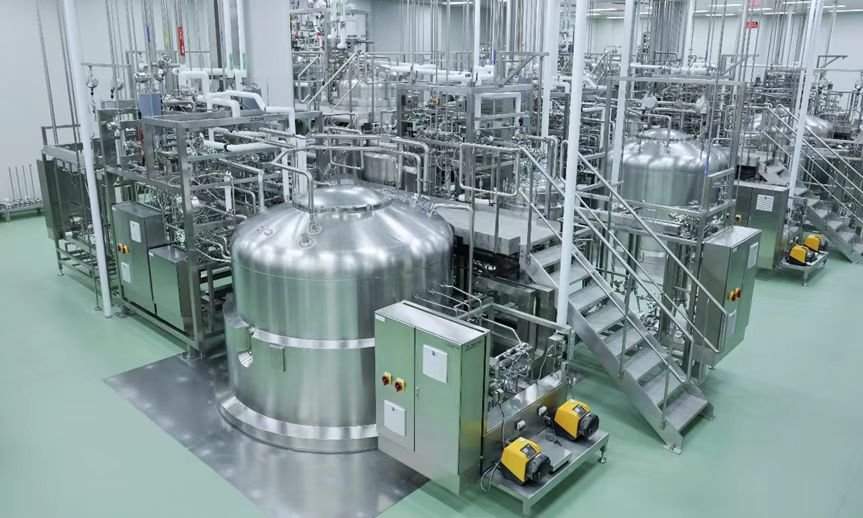
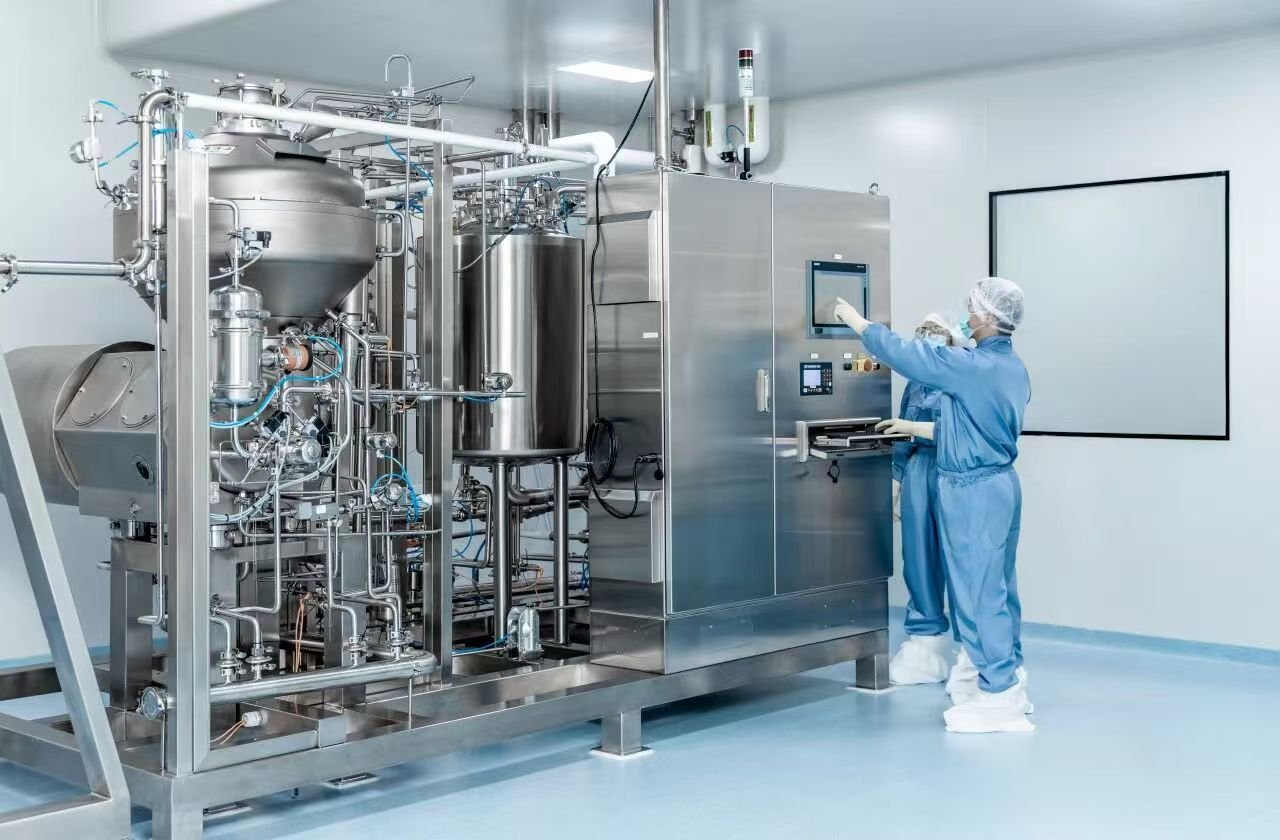
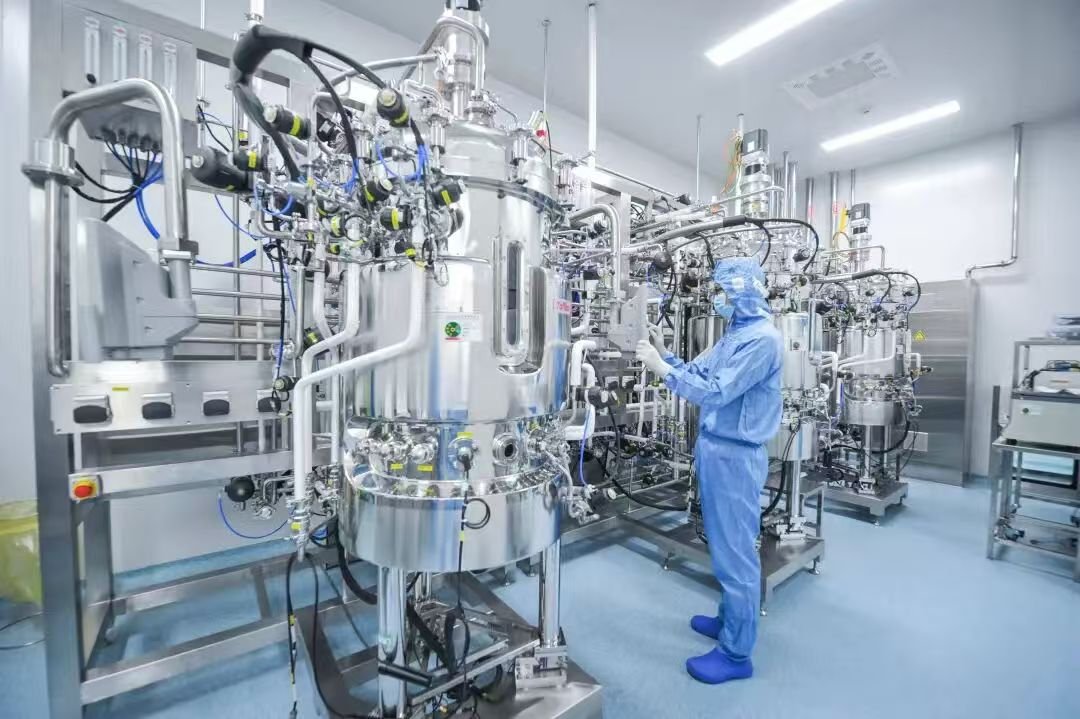
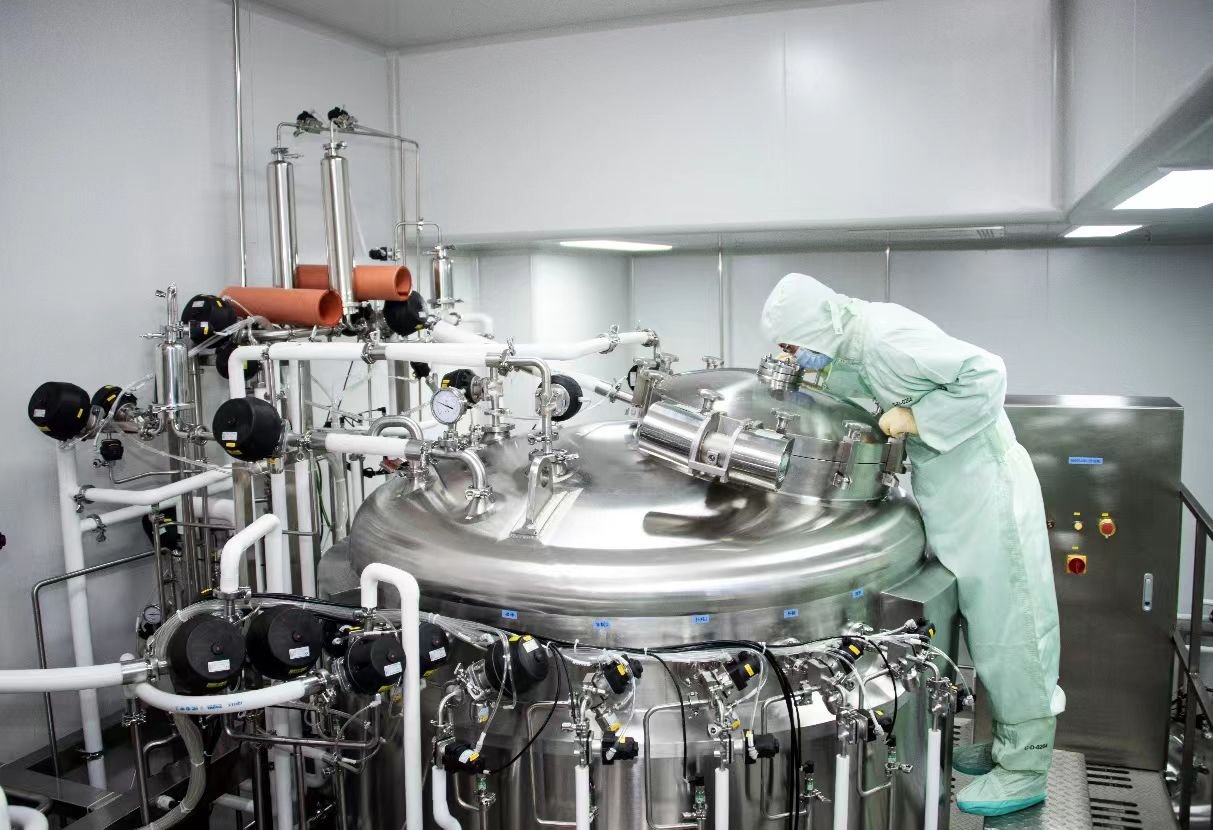
Fermenters are the core equipment for large-scale HA production. Industrial-scale fermenters are mostly made of stainless steel, with specifications and designs customized according to production capacity. A standard fermenter is equipped with agitators, aeration systems, pH and temperature control units, as well as automatic process control systems.
The type and design of agitators directly determine gas-liquid oxygen transfer efficiency and shear force exerted on fermentation broth. Multiple agitator designs are available, with adjustable rotation speeds to match the requirements of specific microbial strains. Studies indicate that agitator types have limited impact on HA yield but significantly affect its molecular weight. The aeration system delivers oxygen via air injection or bubble diffusion to meet microbial oxygen demand. Real-time pH and temperature sensors enable automatic regulation to stabilize the fermentation environment.
Large industrial fermenters are integrated with automatic sampling, in-situ sterilization and foam control functions to guarantee production safety and operational efficiency.
Cultivation modes refer to the operational protocols for microbial growth and HA synthesis. The three mainstream modes are batch culture, fed-batch culture and continuous culture.
Batch culture features simple operation and is suitable for laboratory-scale or pilot production, but with relatively low yield and efficiency.
Fed-batch culture periodically supplements substrates and nutrients to increase cell density and product accumulation, which is ideal for medium and large-scale production.
Continuous culture enables stable and continuous HA generation, yet it requires sophisticated operation and high-standard equipment and process control.
Research shows that fed-batch culture benefits cell proliferation, while batch culture is more favorable for product accumulation. Accordingly, a combined two-stage cultivation strategy has been developed: fed-batch culture is applied in the initial phase to boost cell growth, followed by batch culture to maximize HA output.
Repeated batch culture realizes continuous production through cyclic inoculation, though excessive inoculum ratio may cause product inhibition and reduce yield. Chemostat culture controls cell growth rate and HA molecular weight by adjusting dilution rate. It is found that HA molecular weight is negatively correlated with dilution rate and cell growth rate, and a low growth rate facilitates the production of high-molecular-weight HA. For different strains and variants, researchers optimize pH, temperature, agitation and aeration conditions, and select tailored cultivation modes to achieve higher yield and target molecular weight.
Microbial fermentation for hyaluronic acid production is a systematic and sophisticated process requiring comprehensive optimization of medium composition, cultivation conditions, fermenter configuration and cultivation modes. Different microbial strains have distinct nutritional and environmental requirements, making precise regulation of temperature, pH, aeration, agitation and substrate concentration indispensable. Fermenter design must strike a balance between oxygen transfer efficiency and microbial cell protection. The selection of cultivation modes depends on production efficiency, operational complexity and product quality standards.
Although microbial HA production technology is relatively mature, multiple challenges remain, including restricted mass transfer caused by high broth viscosity, precursor competition between cell growth and product synthesis, and yield inhibition induced by by-product accumulation. Metabolic engineering of non-pathogenic strains for safe and efficient HA production has become a major research hotspot. Meanwhile, reducing production costs by developing low-cost alternative raw materials and optimizing downstream purification processes are critical to large-scale industrial manufacturing.
In summary, continuous optimization of all process parameters, combined with emerging biotechnologies and engineering strategies, will drive the advancement of HA production technology and meet the growing demands from pharmaceutical, cosmetic and other industries.
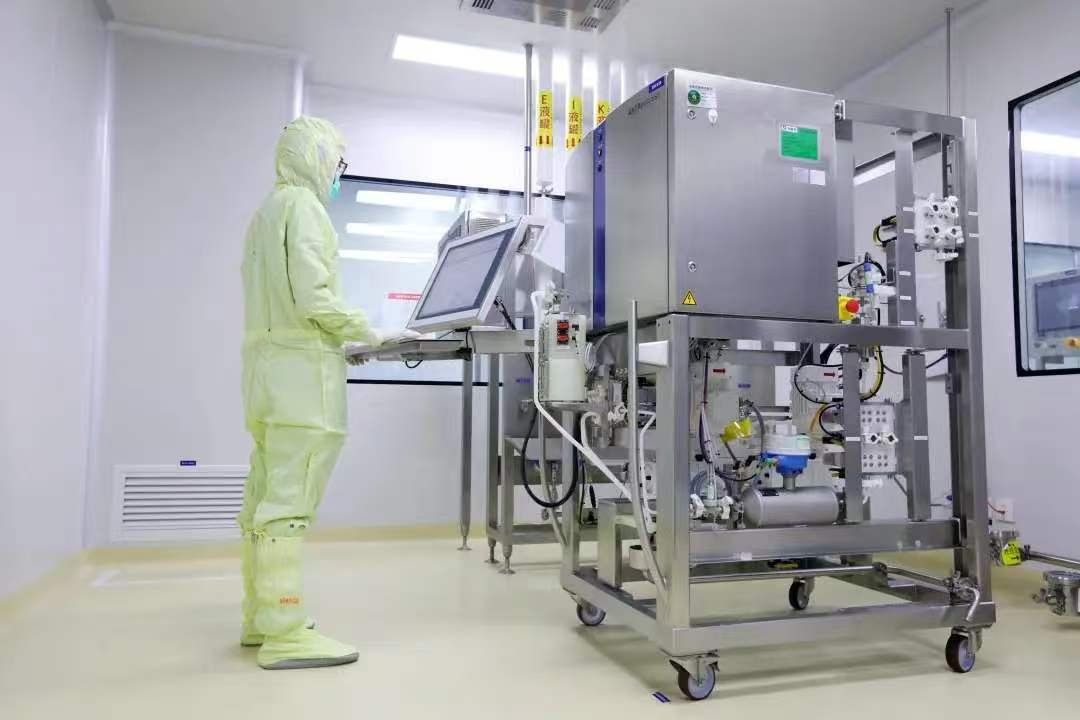
Starting from fermentation technology, Sino Bioengineering leverages in-depth expertise in this field to deliver turnkey solutions for the entire hyaluronic acid production workflow. Our solutions cater to precise process parameter requirements for laboratory R&D, and support pilot trials as well as full-scale industrial manufacturing, ensuring seamless process scale-up and stable operation. Equipped with advanced equipment design and intelligent control systems, we help clients achieve efficient, high-quality hyaluronic acid production, and foster technological progress and innovation across the pharmaceutical, cosmetic and related sectors.