

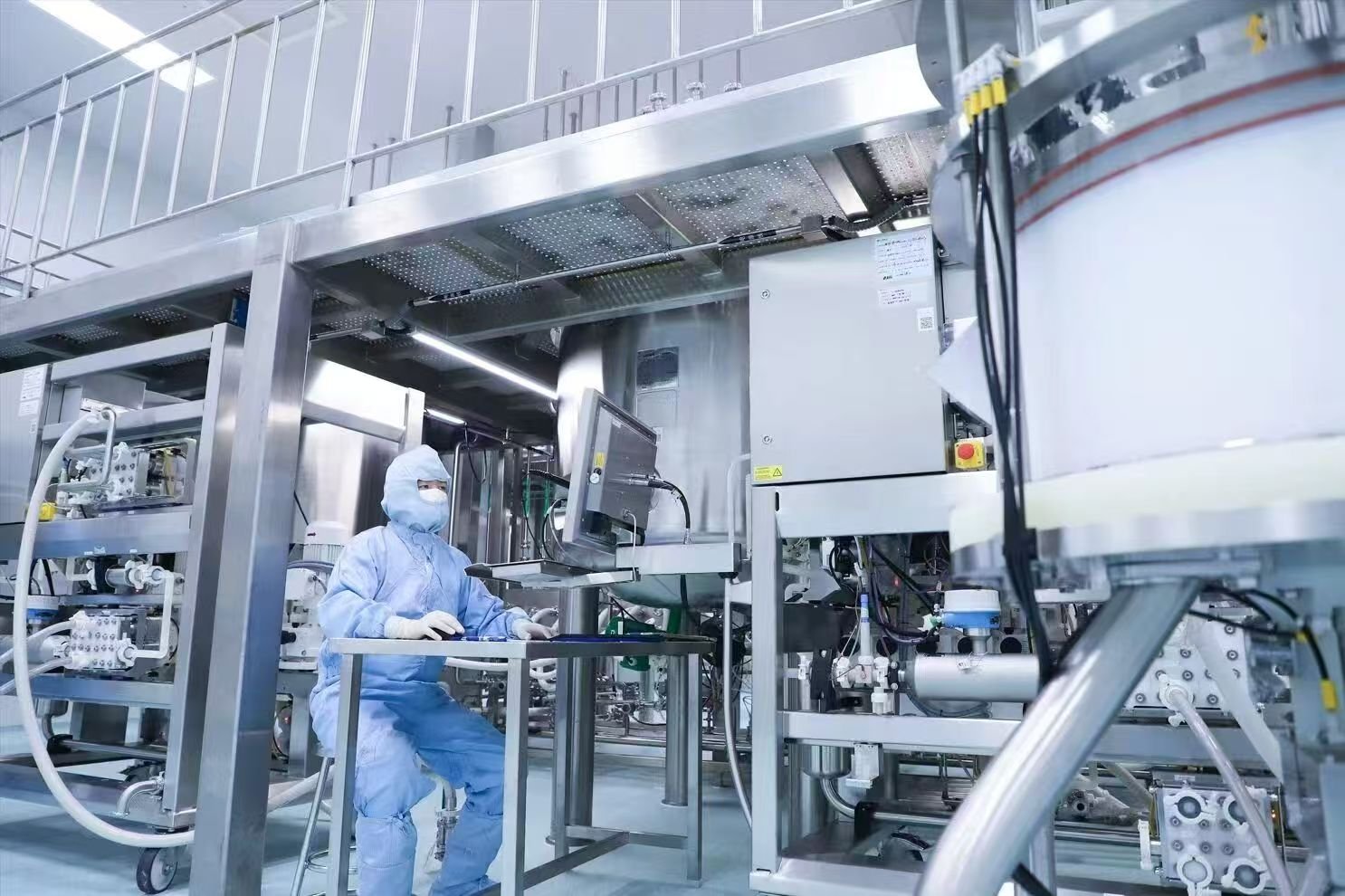
Since the first monoclonal antibody drug was approved in 1986, the research and development of antibody drugs have flourished. Up to now, antibody drugs have become an important part of modern biomedicine. To meet the protein quality requirements of the biopharmaceutical industry, capturing antibodies from cell supernatant has always been a key step in downstream processing.
Among various separation technologies, affinity chromatography is widely applied in the capture stage of large-scale bioprocesses due to its advantages of high binding capacity, high antibody purification selectivity, fast processing speed, simple operation and high resolution. However, affinity chromatography media are expensive with limited service life, dominating the major cost of downstream separation and purification. Therefore, optimizing the affinity chromatography process to obtain higher-quality products and reduce overall costs is particularly critical.
Principle of Affinity Chromatography
Affinity chromatography is a separation and purification method based on specific recognition and interaction between molecules. One of the two molecules with mutual affinity is immobilized on an insoluble matrix. By utilizing the specificity and reversibility of intermolecular affinity, the target biomolecules can be adsorbed from raw samples, and then dissociated by appropriate elution to achieve purification. The structure of affinity chromatography media includes porous spherical support, spacer arm and affinity ligand.
Basic Steps of Conventional Antibody Affinity Chromatography
The standard process of affinity chromatography consists of five stages: equilibration, sample loading, washing, elution and column regeneration.
Pre-equilibration
Select a suitable buffer to equilibrate the chromatography column to ensure the binding efficiency between target molecules and ligands. For each type of medium, optimal binding properties with antibody proteins including temperature, pH and salt concentration should be considered to prepare the optimal buffer.
Sample Loading
Affinity chromatography is usually adopted as the first capture step. The antibody feedstock contains a large number of impurities. Therefore, filtration is required before loading to obtain clarified samples without particulate matter and avoid column blockage. During loading, target antibodies bind to ligands, while impurities cannot bind effectively and flow through directly.
Washing
After sample loading, non-specifically adsorbed impurities remain on the column and need to be removed by washing. A proper washing buffer is used to elute non-specifically bound contaminants, which can be optimized by adding NaCl or adjusting buffer pH.
Elution
Elution buffer is used to dissociate target molecules from ligands.
Non-competitive elution: adjust buffer pH, ionic strength or polarity. Attention should be paid to the impact of pH on antibodies, as excessively low pH may cause antibody aggregation.
Competitive elution: add competing agents to compete with antibodies for ligand binding sites, so as to displace antibodies from the medium.
Regeneration
After target elution, the affinity column needs to be regenerated for cyclic reuse.
Factors Affecting Affinity Interaction
Chromatography Media
Media beads differ in particle size, porosity and structure, which affect purification speed and efficiency. Smaller bead size and higher internal porosity increase the interaction surface area between target molecules and media for better separation, but lead to higher back pressure. Larger bead size and lower porosity reduce back pressure and increase flow rate to shorten processing time, but may weaken binding capacity and impurity removal performance.
Ionic Strength
Affinity interaction generally decreases with the rise of ionic strength. However, an appropriate ionic strength in sample buffer is required to reduce non-specific adsorption among matrix, ligands and other sample components.
pH Value
pH variation changes the ionization degree of ligands and bound proteins, which may affect binding sites or molecular conformation. Excessively acidic or alkaline conditions will weaken affinity binding.
Residence Time
The binding equilibrium rate between biological macromolecules and ligands is relatively slow. Excessively high flow rate leads to short residence time during loading, which impairs the binding efficiency between samples and affinity media and reduces product recovery.
Temperature
The affinity between biomolecules is temperature dependent, and usually decreases with the increase of temperature.
Process Development of Affinity Chromatography
Screening of Affinity Chromatography Media
The selection of suitable affinity media is essential for the purification of monoclonal antibodies, bispecific antibodies and fusion proteins. It not only affects the cost of affinity step, but also influences the purity, yield of post-affinity samples and the design of subsequent processes. Protein A media are the most commonly used in current bioprocesses, accounting for more than half of downstream costs. Due to its high price, improving the utilization rate of Protein A media is the core of process optimization.
Case 1: Bispecific Antibody Purification — Medium Screening
Select suitable media according to the characteristics of specific antibodies or fusion proteins, and evaluate dynamic binding capacity and impurity removal capability. This can effectively reduce column volume and process time. Meanwhile, evaluate the scalability of chromatography media and processes to support the industrial production of biological products.
Optimization of Washing Conditions
Impurities in antibody drugs are divided into product-related impurities and process-related impurities. Product-related impurities include target variants, aggregates, and variants or degradation products caused by post-translational modification. Process-related impurities mainly include host cell protein (HCP), host cell DNA (HCD) and residual medium components. HCP, HCD and nucleic acids are the main contaminants affecting product quality.
Washing conditions are critical for removing process-related impurities in affinity chromatography. Studies have shown that optimizing washing buffer conditions can effectively reduce HCP content in monoclonal antibodies, such as adding sodium chloride, arginine or urea.
The pH, ionic strength and different additives of washing buffers are important optimization directions. Customized process schemes are designed according to project demands to screen optimal buffer conditions and reduce the purification pressure of subsequent steps.
Optimization of Elution Conditions
Elution conditions have a great impact on both product quality and recovery yield. Salt concentration and pH of elution buffer are two key parameters. Low pH elution is the most widely used non-competitive elution method. Antibodies are sensitive to pH like other proteins, and extremely low pH is likely to induce aggregation.
Therefore, it is necessary to explore the pH stability, especially low-pH stability and solubility of antibodies. In process design, properly increasing elution pH is recommended. The eluted fraction is usually neutralized immediately to improve protein stability.
Case 2: Monoclonal Antibody Purification — Elution pH Optimization
Four elution pH values of 3.3, 3.5, 3.7 and 3.9 were investigated for their effects on recovery yield and product quality attributes. The results showed no obvious difference in HCP content among groups. Higher recovery was obtained at pH 3.5 and 3.7, while elution at pH 3.7 achieved lower residual recombinant Protein A. Therefore, the optimal elution pH was determined as 3.7.
With the continuous expansion of the antibody commercial market and rapidly growing demand for antibody therapeutics, the biopharmaceutical industry is under increasing pressure to reduce costs and shorten production cycles. The number of FDA-approved antibody therapeutics keeps rising, making antibody preparation one of the most promising and fastest-growing segments in biopharmaceuticals. Downstream purification is a vital part of antibody drug substance production, which determines final product quality and greatly affects commercial production costs.