
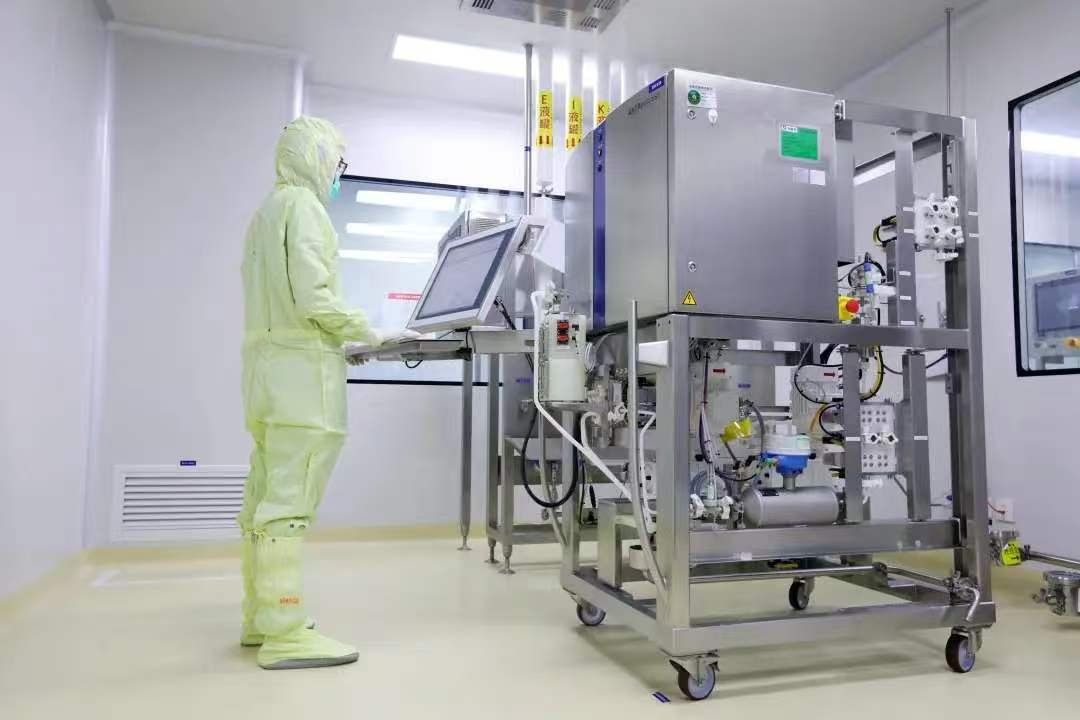
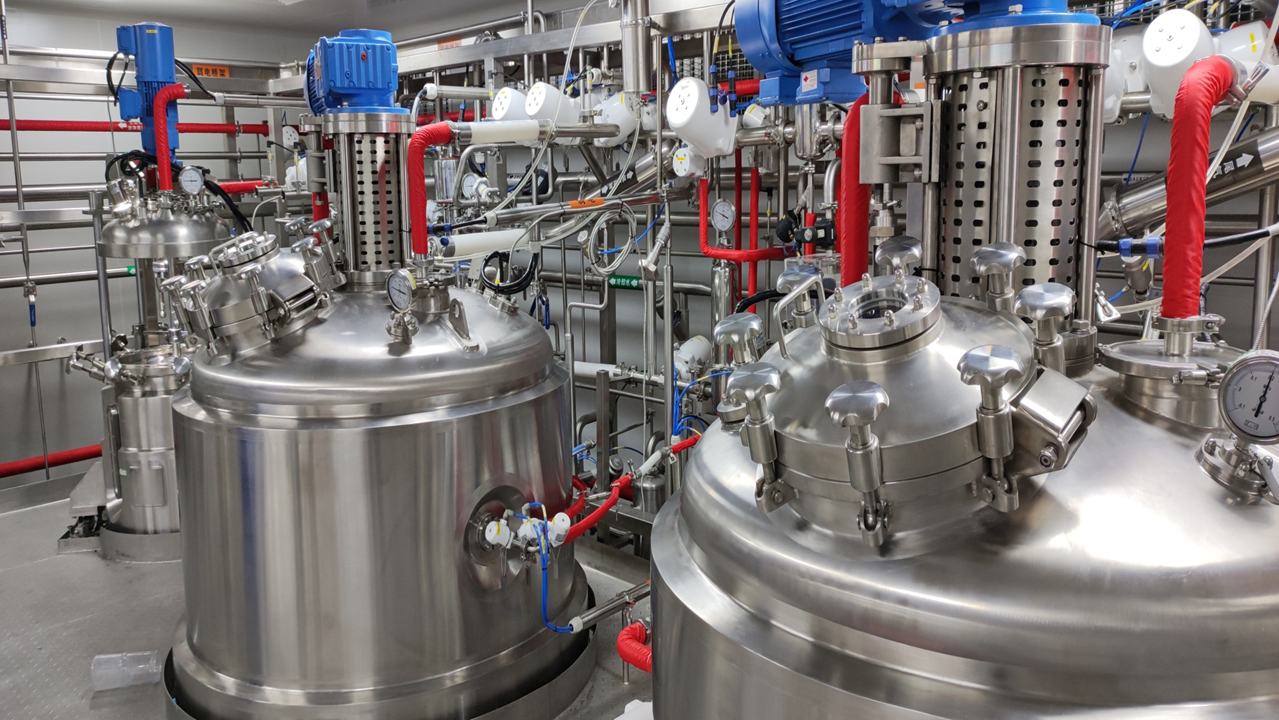
Over the past decade, the biopharmaceutical manufacturing industry has shown growing interest in bioprocess intensification. Nevertheless, its development pace has fallen short of the expectations held by industry analysts and solution providers. The concept is highly appealing, as streamlining production workflows promises higher operational efficiency, lower costs, shorter time-to-market, while consistently safeguarding product quality and safety.
However, publicly available data regarding how biopharma enterprises implement bioprocess intensification and the outcomes they have achieved remain limited, let alone quantitative performance metrics. In essence, bioprocess intensification is a broad concept, which misleadingly creates the impression that a comprehensive, step-by-step implementation manual exists. This is not the case. It is not a procedure with defined workflows, nor does it have a clear starting point — and in practice, it has no definitive end point. This article elaborates on the latest industrial practices of bioprocess intensification, covering seven core concepts, strategies and key focus areas.
Continuous Bioprocessing
Continuous bioprocessing refers to the uninterrupted connection of upstream and downstream unit operations. By breaking down the boundaries between individual process stages, it boosts productivity, reduces facility footprint, improves product quality and simplifies process scale-up.
Traditional batch processing has long been the mainstream standard for biopharmaceutical production. While principles of flow chemistry are gradually being adopted within continuous bioprocessing, this industry transition is progressing slower than anticipated. Studies demonstrate that integrating continuous cell culture, purification and formulation operations can cut the consumption of active pharmaceutical ingredients (API) by over 60% and substantially shorten the lead time for final product launch. Despite these notable advantages, continuous bioprocessing still has a long way to go before becoming an industry standard, with only a small number of biomanufacturing facilities currently deploying this technology.
High Cell Density Cultivation
Achieving high cell density cultivation in upstream processing serves as a core and often inaugural step for bioprocess intensification. Higher cell densities deliver elevated yields within the same bioreactor volume, driving productivity gains and cost reduction. This is not an emerging technology: over the past ten years, this approach has quadrupled production efficiency compared with standard fed-batch processes.
For bacterial cultures such as Escherichia coli, fed-batch cultivation reaching a dry cell weight above 100 g/L or a cell concentration exceeding 1 billion cells per milliliter represents a remarkable leap in production performance. Decades ago, a product titer of 10 g/L was deemed unattainable for mammalian cell culture used to manufacture therapeutic proteins including monoclonal antibodies.
Realizing high cell density cultivation requires capital investment in equipment and scientific resources. Optimization needs to be conducted on expression systems, culture media, cell growth rates and oxygen supply. Fine-tuning these variables typically necessitates the adoption of single-use and rocking bioreactors, as well as in-line sensors and process analytical technology (PAT).
Multi-Column Chromatography
Multi-column chromatography enables continuous flow of process streams across columns operating in different cyclic phases, facilitating fully continuous downstream processing. Leading suppliers including Sartorius and Pall confirm that this technology can reduce chromatographic resin costs by up to 80% compared with batch chromatography. Multiple smaller columns allow fuller and more efficient utilization of resin media, whereas larger columns are required in batch operations to handle equivalent high-titer feed streams. This advantage is particularly prominent for processes relying on costly Protein A resins.
According to suppliers, performing loading, washing, elution and regeneration in parallel across multiple columns can enhance productivity by 3 to 5 times versus batch chromatography. Multi-column chromatography also features flexible configurability: the number of columns can be adjusted to match specific production scales and process requirements. Even in large-scale applications, such systems generally occupy a smaller footprint than conventional batch chromatography setups.
Precipitation and Crystallization
As an effective downstream intensification approach, precipitation technology eliminates multiple chromatographic steps and reduces the number of unit operations, greatly advancing purification efficiency. When combined with other procedures such as cell removal and viral inactivation, precipitation supports the establishment of fully integrated continuous workflows for purification and separation.
Crystallization is another key downstream unit operation applicable to purification and formulation. When operated in continuous mode, it strongly underpins bioprocess intensification. Compared with batch crystallization, continuous crystallization helps biopharmaceutical manufacturers achieve a smaller facility footprint, lower capital expenditure and higher throughput.
Modular and Flexible Manufacturing Facilities
Driven by the rising demand for personalized medicines and small-batch production, biopharmaceutical manufacturers are increasingly investing in modular and flexible production facilities. These facilities support rapid process modification, flexible scale-up and scale-down, as well as seamless technology transfer across different product lines — a critical advantage for manufacturers undergoing operational transformation.
For new construction projects, modular facilities deliver outstanding economic benefits, with construction time reduced by approximately 50% compared with traditional fixed-site facilities.
Single-Use Technologies
Single-use technologies, including disposable bioreactors and chromatographic systems, are pivotal to enhancing production agility and advancing bioprocess intensification. They enable faster production changeovers, alleviate cleaning and validation workload between batches, virtually eliminate cross-contamination risks, and underpin highly flexible manufacturing environments.
Research indicates that full-scale implementation of single-use technologies can slash initial capital investment by 40%, cut water and energy consumption by 46%, and reduce the carbon footprint of biopharmaceutical production facilities by 35%.
Bioprocess 4.0 and Automation
Bioprocess 4.0 draws parallels with Industry 4.0. It integrates digitization and automation of paper-based workflows, digital data acquisition, data analytics and process control at the facility level, alongside Internet of Things (IoT) technologies. Connected equipment and systems feed data into unified software platforms to enable real-time monitoring and autonomous process operation.
This framework empowers advanced analytical tools and predictive modeling to optimize production performance and further improve product quality. Feedback control loops and machine learning play indispensable roles in this ecosystem. Implementation involves numerous considerations and substantial capital investment.
Bioprocess 4.0 is a widely pursued development target. While comprehensive quantitative research on its full-scale benefits remains limited, it forms a mutually reinforcing relationship with bioprocess intensification. Fortunately, the transition toward Bioprocess 4.0 follows an incremental roadmap, and relevant intensification initiatives can be implemented in a coordinated manner.
Efficiency gains delivered by various intensification strategies generate higher-quality data and operational inputs for Bioprocess 4.0. In turn, insights and capabilities derived from Bioprocess 4.0 create new opportunities for further process intensification. Neither is a prerequisite for the other, and enterprises may initiate their transformation from a wide range of entry points.