Driven by the rapid expansion and fierce competition in the biopharmaceutical market, optimization of manufacturing processes has become indispensable. Particularly in upstream bioprocessing, sustaining high cell viability and enabling long-term cell culture can markedly boost target protein production, improve product quality and enhance process robustness. Cell viability is closely correlated with cell apoptosis.
Three well-recognized pathways of cell death have been identified to date: necrosis, autophagy and apoptosis. Among them, apoptosis is the predominant cause of reduced cell viability in manufacturing processes. Studies have demonstrated that approximately 80% of Chinese Hamster Ovary (CHO) cell death in bioproduction is attributed to apoptosis. Accordingly, it is essential to clarify the biological mechanisms of cell apoptosis and analyze key process-related factors that trigger apoptosis in production workflows.
Biological Background of Cell Apoptosis
Cell apoptosis refers to programmed cell death induced by internal and external stimuli via a cascade of tightly regulated biochemical reactions. Two major protein families play central roles in regulating apoptosis: caspases and the B-cell lymphoma 2 (Bcl-2) protein family.
Caspases are cysteine-dependent endoproteases responsible for peptide chain cleavage. They generally exist as inactive zymogens and become functional upon dimerization. A total of 14 caspase subtypes (Caspase-1 to Caspase-14) have been discovered in human and rodent cells, which exert profound impacts on biomanufacturing processes.
Based on their roles in the apoptotic cascade, most caspases are categorized into three groups:
Initiator caspases: Caspase-8 and Caspase-9
Executioner caspases: Caspase-3, Caspase-6 and Caspase-7
Inflammatory caspases: Caspase-1, Caspase-4, Caspase-5, Caspase-11 and Caspase-12L
Caspase-2 is capable of activating Caspase-3 and Caspase-8. The two activated caspases further trigger cytochrome c release and apoptosome formation. Caspase-10 can be activated by Caspase-6. Collectively, caspases interact with one another and act in a sequential cascade to ultimately drive cell apoptosis.
Five major apoptotic signaling pathways have been characterized:
Extrinsic pathway: Extracellular death ligands such as Fas ligand (FasL) and Tumor Necrosis Factor-α (TNF-α) bind to cell membrane receptors and initiate the activation of Caspase-8.
Intrinsic pathway: Triggered by metabolic perturbations or hypoxia, this pathway modulates caspases and Bcl-2 family proteins, leading to mitochondrial outer membrane permeabilization (MOMP). MOMP suppresses the activity of anti-apoptotic proteins or induces cytochrome c release, which in turn promotes apoptosome assembly.
Caspase-2-dependent pathway: Persistent intracellular DNA damage activates the tumor suppressor gene p53, which subsequently triggers Caspase-2 and initiates apoptosis.
Granzyme B-mediated pathway: Caspase-3 serves as the key effector in this apoptotic cascade.
Granzyme A-mediated pathway: This pathway proceeds independently of caspases; Granzyme A directly induces DNA fragmentation and cell death.
Proteomic analyses reveal that the intrinsic pathway is the primary driver of apoptosis during cell culture. In biomanufacturing, nutrient depletion, protein overexpression and misfolding, pH and temperature deviations, as well as hyperosmolarity all activate the intrinsic apoptotic pathway. The following sections focus on apoptotic stress responses encountered during bioprocess development.
Apoptotic Stress Responses in Bioprocess Development
Cell Apoptosis Across Different Culture Scales
Clone screening is the initial step of upstream process development, typically performed in microplates or shake flasks. As the process scales up, culture volumes gradually expand to thousands of liters. Apoptotic stress varies drastically across scales and exerts significant influences on cell growth and protein expression. To optimize culture conditions, it is critical to characterize stress responses, elucidate underlying mechanisms, and mitigate or reverse apoptosis in bioprocesses.
In microplate and shake flask cultures, substance transport relies purely on diffusion and orbital shaking without mechanical agitation. Apoptosis at this stage is mainly induced by selective agents used in clone screening, such as Methotrexate (MTX) and Methionine Sulfoximine (MSX).
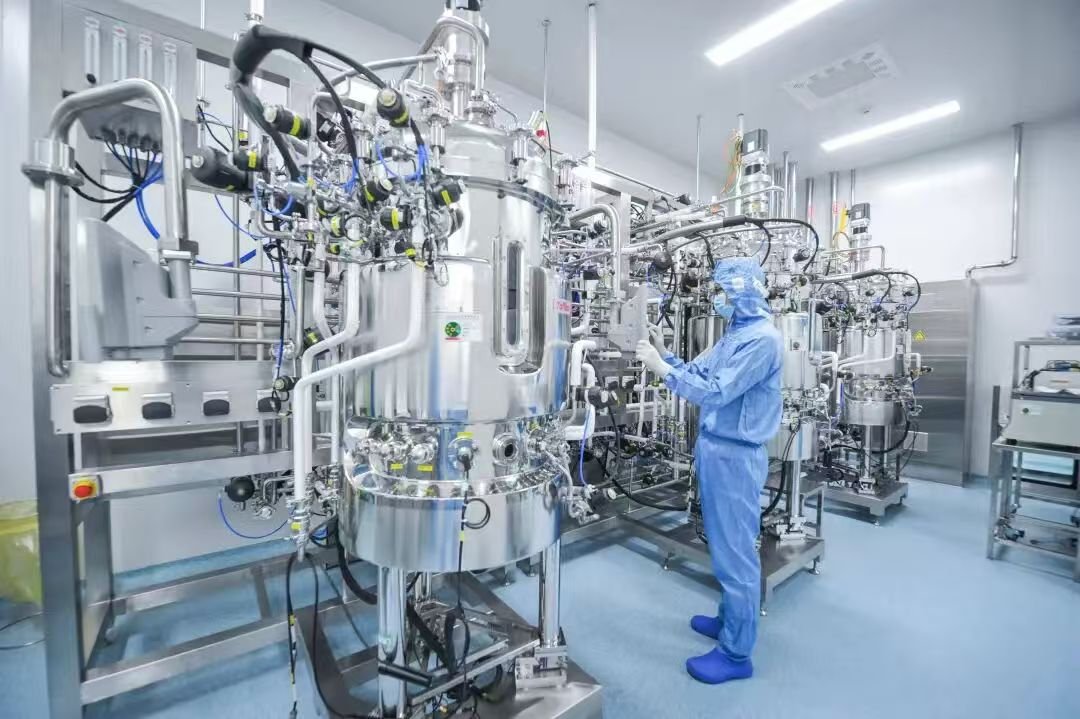
In bioreactor cultures, process parameters including pH, temperature, nutrient consumption and osmolarity must be strictly controlled to avoid growth inhibition and apoptosis during clone evaluation. At large scales, diffusion alone cannot ensure homogeneous mass transfer, necessitating mechanical stirring. Fluid shear stress generated by stirring is a major apoptotic trigger. Meanwhile, submerged aeration, the mainstream strategy for oxygen supply at scale-up, also generates substantial shear stress and induces cell apoptosis. Key process parameters associated with apoptosis in bioreactors are discussed in detail below.
Apoptotic Stress Responses in Bioreactors
Multiple stressors in bioreactors contribute to apoptosis, including hypoxia, fluid shear stress, nutrient limitation, temperature fluctuation, pH deviation, hyperosmolarity and protein misfolding.
Hypoxic conditions lead to the accumulation of toxic metabolites, cell cycle arrest and eventual apoptosis. Reduced energy metabolism under hypoxia stimulates the expression of hypoxia-inducible factors (HIFs), a group of survival regulators mediating cellular responses to oxygen deprivation. Therefore, bioreactor design and scale-up must ensure dissolved oxygen (DO) is not a limiting factor.
Supplementing culture media with specific metal ions can alleviate hypoxia-induced apoptosis. Nevertheless, metal ions exert notable effects on protein glycosylation, so their concentrations require stringent monitoring to guarantee product quality.
Shear stress is primarily generated by impellers, vessel baffles and submerged aeration. The addition of Pluronic F68 to culture media effectively mitigates shear damage by reducing surface tension between cells and air bubbles.
However, the dosage of Pluronic F68 must be tightly regulated. Excessive addition inhibits cell growth and compromises product quality, requiring quantitative quality control even in downstream purification processes. Bioreactor baffles are designed to eliminate vortex flow and reduce shear force, yet they alter the energy dissipation rate (EDR). CHO cell apoptosis occurs when EDR exceeds \(2\sim3\times10^5\ \text{W/m}^3\) (corresponding to agitation speed above 700 rpm). The optimal EDR range for CHO cell culture is maintained between \(1\times10^8\ \text{W/m}^3\) and \(1\times10^9\ \text{W/m}^3\).
3. Nutrient and Metabolite Stress
Quantifying cellular nutrient consumption is fundamental to developing customized culture media. Depletion of key nutrients results in cell cycle arrest and apoptosis. Glucose acts not only as a carbon source but also as a critical regulator of apoptosis. Amino acids serve as building blocks for protein synthesis and participate in the tricarboxylic acid (TCA) cycle. Deficiencies of insulin, transferrin and other supplements also trigger apoptosis. The adverse impacts of metabolic byproducts such as lactic acid and ammonium are well documented and will not be elaborated here.
Vital activities of mammalian cells, including growth, protein expression and enzymatic reactions, are highly temperature-dependent. To date, over 200 temperature-responsive proteins have been identified, among which 23 are closely associated with cell growth, apoptosis and glycosylation quality control in CHO cells. Overexpression of heat shock proteins HSP70 and HSP27 suppresses the expression of Caspase-2, Caspase-3, Caspase-8 and Caspase-9, extending culture duration and elevating protein titer.
Temperature optimization must balance cell performance and product quality. For monoclonal antibody (mAb) production in CHO cells, lowering the culture temperature from 37 °C to 32 °C causes a 2–5 fold increase in protein aggregation. A similar trend is observed in bispecific antibody production when temperature drops from 36 °C to 32.5 °C.
Precise pH control is critical for mammalian cell culture; even minor pH deviations can lead to cell death. pH also modulates cell proliferation, antibody production rate, amino acid uptake and final product quality. While pH regulation is well established, the molecular mechanisms linking pH fluctuation to apoptosis remain poorly understood. A setpoint of pH 7.0 is widely adopted for commercial biomanufacturing, with fine-tuning performed on a case-by-case basis to determine the optimal working range.
Alterations in osmolarity caused by salts and metabolic byproducts affect cell growth and protein expression. Hyperosmolarity activates Caspase-3 and Caspase-7, triggering DNA fragmentation in CHO cells and double-strand DNA breaks in mouse renal cells. Further research is required to fully elucidate the mechanisms of osmotic stress-induced apoptosis. In practical bioreactor operation, decoupling the effects of salts and carbon dioxide is challenging, since pH is commonly maintained using sodium carbonate or bicarbonate buffer systems that rely on CO₂.
Beyond the above process parameters, overexpression and misfolding of target proteins trigger endoplasmic reticulum (ER) stress and subsequent apoptosis. Hence, comprehensive process control covering multiple factors is indispensable.
In upstream biomanufacturing, cell death is predominantly caused by apoptosis. During production, multi-factor regulation is required to prevent or delay apoptotic progression, so as to stabilize cell viability and preserve target protein quality. Furthermore, establishing robust analytical methods for apoptosis characterization is of great significance. Integrating apoptosis assessment into cell line engineering and process optimization can substantially improve the overall robustness of upstream biomanufacturing processes.