1. Introduction
Since the launch of insulin in the early 1970s, recombinant proteins have established a solid foothold in the pharmaceutical industry. With their growing prevalence, innovation must balance production efficiency and functional improvement. Prior to selecting an optimal production system, it is essential to evaluate the length, complexity, and functional characteristics of the target protein to maximize quality, cost-effectiveness, and yield. For large-scale production based on protein complexity, prokaryotic systems such as Escherichia coli, as well as yeast and mammalian cell systems, can be adopted.
E. coli is one of the most widely utilized industrial hosts for recombinant protein production, owing to its ability to rapidly reach high cell density with low-cost carbon sources, ease of genetic manipulation, and generally recognized as safe (GRAS) status. Nevertheless, it lacks critical post-translational modification capabilities and exhibits poor secretion performance, often leading to the intracellular accumulation of recombinant proteins in the form of inclusion bodies. Compared with cell lysis, secretion systems offer distinct advantages, including facile isolation of non-glycosylated proteins, reduced risk of proteolytic degradation, and minimal host protein contamination. To date, remarkable progress has been made in enhancing secretion efficiency through engineering optimization.
2. Membrane Structure of Escherichia coli
As a Gram-negative bacterium, the cellular envelope of E. coli consists of three layers: the inner membrane (IM), peptidoglycan layer, and outer membrane (OM) . The IM is a selectively permeable phospholipid bilayer and serves as a key site for the Sec and Tat pathways, which transport unfolded and folded proteins into the periplasm respectively. The peptidoglycan layer provides structural rigidity.
The periplasm, located between the IM and OM, creates an oxidative microenvironment that facilitates protein folding and disulfide bond formation, which is indispensable for protein secretion; however, it may also trigger protein aggregation. The OM features an asymmetric bilayer structure that endows the bacterium with defense capabilities, while lipopolysaccharides (LPS) as endotoxins can induce immune responses. Most outer membrane proteins adopt a β-barrel conformation and participate in enzymatic activity and protein secretion. They are core components of multi-protein secretion complexes such as the Type II Secretion System (T2SS) and Type V Secretion System (T5SS), responsible for transporting proteins from the periplasm to the extracellular milieu. Engineering modification of these systems can boost extracellular protein yield. The cellular envelope also acts as an attachment site for motility and adhesion appendages including flagella and pili. An in-depth understanding and targeted modification of membrane structures are crucial for optimizing the secretion efficiency of recombinant proteins.
3. Native Secretion Systems of Escherichia coli
E. coli achieves efficient transport of recombinant proteins via native and engineered secretion systems. The Type I Secretion System (T1SS) forms a continuous channel composed of inner membrane transporters, membrane fusion proteins, and outer membrane porins, enabling the direct one-step transmembrane secretion of proteins ranging from 10 kDa to 1 MDa into the extracellular space.
The Type III Secretion System (T3SS) functions as a molecular syringe, delivering effector proteins into host cells through a needle-like complex. Its engineering modifications include the deletion of flagellar genes to construct non-pathogenic strains and optimization of secretion signals. Although it holds potential in targeted therapy, its industrial application is constrained by narrow substrate specificity and low secretion titer.
In addition to the aforementioned one-step secretion systems, protein translocation in E. coli also relies on two-step secretion systems. In this process, proteins first cross the IM into the periplasmic space, followed by penetration of the OM for extracellular release, which is distinctly different from the one-step secretion mechanism. Its core pathways include the Sec pathway and the Tat pathway. To overcome the low inherent secretion efficiency of E. coli, modifying outer membrane permeability can enhance the release of periplasmic proteins into the extracellular environment.
4. Protein Translocation Across the Inner and Outer Membranes
In the two-step secretion system of bacteria, target proteins are translocated across the inner membrane into the periplasm via either the Sec or Tat pathway. The Sec system primarily transports unfolded proteins, recognizing signal peptides through the SecA/SecB or SRP complex. Its limited transport capacity easily causes cytoplasmic protein accumulation, which can be alleviated by overexpressing Sec components to enhance secretion efficiency. The Tat system is dedicated to transporting fully folded proteins and is driven by the proton motive force. Despite its relatively low expression level, it reduces intracellular protein aggregation. Efficiency can be improved by co-expressing heterologous Tat components or chaperone proteins to enhance the stability and translocation of target proteins.
The T2SS is a highly conserved system in Gram-negative bacteria, capable of transporting folded proteins that have entered the periplasm via the Sec or Tat pathway to the extracellular space with broad substrate specificity. The T5SS features a simpler structure, including autotransporter, two-partner secretion, and chaperone-usher mechanisms, all of which depend on the Sec/Tat pathway to deliver proteins to the periplasm prior to final extracellular translocation.
With the growing demand for the expression of complex proteins such as single-chain variable fragments (scFv) and nanobodies, secretion systems are required to ensure their correct folding and disulfide bond formation in the periplasm. Unfolded proteins tend to aggregate, misfold, or undergo degradation in the periplasm, resulting in reduced yield and impaired functionality. Although host engineering and signal peptide optimization can improve efficiency, the high energy consumption and scale-up difficulties of the Tat and T2SS pathways, coupled with the complexity of purification and refolding processes, make it challenging to strike a balance between yield, efficiency and protein functionality.
5.1 Signal Sequences of the Sec and SRP Pathways
The Sec pathway facilitates the translocation of unfolded proteins across the inner membrane into the periplasmic space and is one of the most widely applied protein secretion systems due to its high efficiency and broad substrate adaptability. This system mainly comprises the ATPase SecA, the SecYEG translocon forming the translocation pore, and the chaperone SecB that stabilizes proteins prior to transport, with energy supplied by ATP hydrolysis and proton motive force.
The Sec pathway can transport a wide variety of proteins, including macromolecules and structurally complex ones, and co-expression of chaperone proteins can improve folding efficiency. However, since the Sec system only transports unfolded proteins, subsequent folding machinery in the periplasm is still indispensable. Insufficient folding efficiency readily leads to periplasmic protein aggregation or degradation, compromising overall production yield.
A typical Sec signal sequence consists of approximately 20 amino acids, comprising a positively charged N-region, a hydrophobic H-region, and a C-region with recognition motifs. The structure and physicochemical properties of each region affect translocation efficiency, and compensatory effects exist among different regions. At present, multiple homologous and heterologous signal sequences have been successfully applied to direct proteins into the Sec pathway in E. coli, providing diverse options for the construction of secretion expression systems.
5.2 Signal Sequences of the Twin-Arginine Translocase (Tat) Pathway
In contrast to the Sec pathway, the Tat pathway exclusively transports fully folded proteins, making it particularly suitable for complex proteins containing cofactors or disulfide bonds. The Tat system consists of TatA, TatB and TatC proteins, and mediates protein translocation relying on proton motive force rather than ATP hydrolysis. This mechanism markedly alleviates protein misfolding and periplasmic stress, and is especially applicable to proteins that require cofactor integration prior to secretion.
Nevertheless, its limited transport capacity and strict dependence on specific signal sequences render the Tat pathway less applicable for high-yield production compared with the Sec pathway, and well-established engineering strategies for large-scale application remain scarce. The Tat signal sequence also contains N, H and C regions with variable length, and features a conserved twin-arginine motif in the N-region. Such sequences generally exhibit low hydrophobicity and relatively weak specificity; unfolded target proteins may be mistakenly directed into the Sec pathway.
Commonly used signal peptides for the Tat system include TorA and CueO, which have been successfully employed for the expression of recombinant human serum albumin, human epidermal growth factor and other proteins. To date, around 29 known signal sequences have been validated for Tat-dependent translocation in E. coli.
6. Strategies for Enhancing Protein Translocation
6.1 Enhancing Membrane Permeability for Improved Protein Secretion
To improve the secretion efficiency of recombinant proteins in E. coli, engineered signal peptides and secretory carrier proteins are commonly adopted. Among these, the osmotic inducible protein OsmY of E. coli has been extensively investigated due to its inherent capacity to deliver proteins to the extracellular milieu. Through recombinant enzyme-mediated random and site-directed mutagenesis, the optimized OsmY mutant (M3) significantly enhances the secretory expression of multiple heterologous proteins, while improving the stability and folding efficiency of chaperone proteins, demonstrating promising potential as a secretion carrier.
Beyond carrier protein engineering, another approach to boost extracellular secretion is the co-expression of bacteriocin release protein (BRP), also known as lysis protein, which transiently increases membrane permeability to facilitate the release of target proteins into the culture medium. Representative BRPs such as colicin A, E1 and E2 are widely used for inducible protein release. However, this method poses notable risks, including non-specific leakage of cytoplasmic and periplasmic components, cell lysis, elevated mortality and restricted cell growth, which may impair overall yield and bacterial stability. Therefore, precise regulation of BRP expression level and induction timing is required to ensure safety and effectiveness.
Overall, OsmY carrier engineering, membrane permeability modulation and chaperone protein optimization are three prevalent strategies for enhancing protein secretion. Each offers unique advantages for different target proteins and expression systems, and rational selection and balancing should be made according to protein characteristics and production conditions.
6.2 Chemical Approaches to Enhance Protein Secretion
Chemical optimization strategies for improving protein yield play a pivotal role in the industrial and therapeutic production of recombinant proteins. Medium optimization is the most fundamental and effective strategy. Adjustment of carbon sources, nitrogen sources, buffer systems, inorganic salts, vitamins and trace elements can precisely match the metabolic demands of host cells and promote protein expression. For instance, supplementation with glucose or glycerol provides energy, while the addition of amino acids, yeast extract or peptone relieves the metabolic burden of de novo precursor synthesis in host cells.
Inducers such as arabinose are widely used to initiate expression systems, and surfactants can inhibit the aggregation of hydrophobic proteins. In addition, chemical chaperones including glycerol and betaine facilitate correct protein folding, while redox modulators such as cysteine and glutathione promote disulfide bond formation, particularly critical for periplasmic expression. Metal ions such as Mg²⁺, Ca²⁺ and Zn²⁺ enhance protein stability, and antioxidants like ascorbic acid mitigate oxidative stress. Auto-induction medium and fed-batch fermentation further enable sustained induction and metabolic balance. Moreover, protease inhibitors such as leupeptin prevent proteolytic degradation. The synergistic application of these chemical strategies substantially improves protein expression and secretion levels.
Conclusion
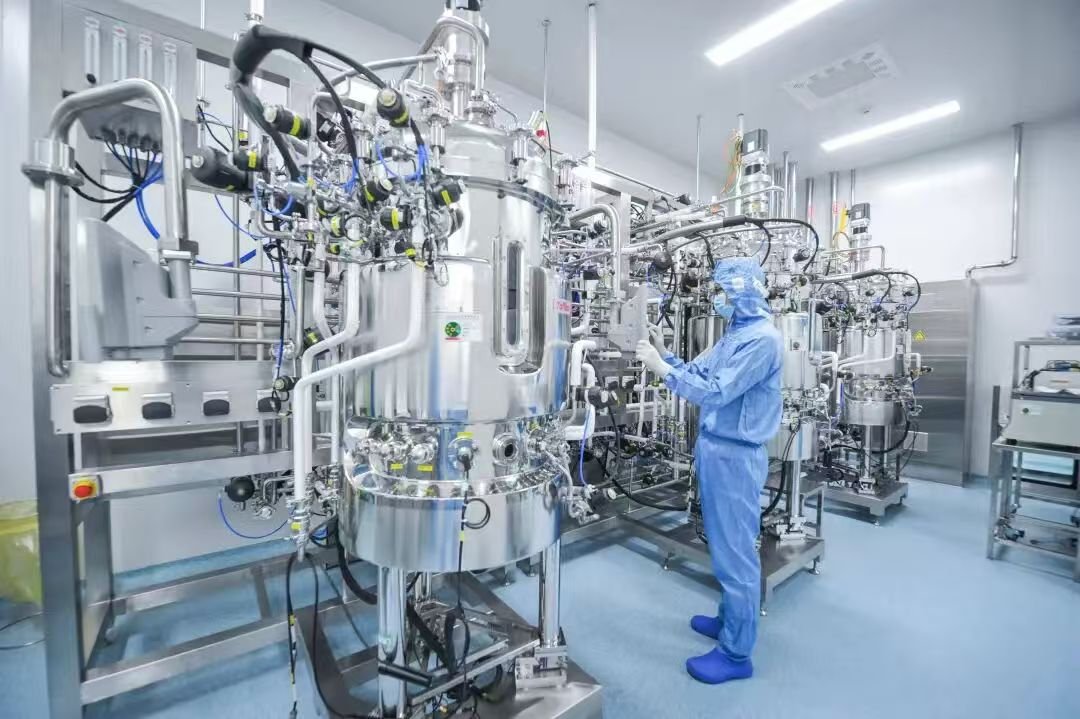
As a classic host for recombinant protein production, continuous innovation in secretion systems has significantly advanced the application of E. coli in industrial biotechnology. Engineering modification of secretion pathways, such as the ESETEC® system, achieves efficient extracellular protein secretion, reduces periplasmic protein accumulation and simplifies purification workflows. Technologies including BacSec® combine continuous perfusion bioprocessing with engineered secretion mechanisms, balancing high yield and production stability, minimizing host protein contamination and enhancing the economic efficiency and scalability of commercial production.
Furthermore, the application of synthetic biology and precision gene editing enables targeted optimization of secretion systems, improving protein folding efficiency and reducing the risk of aggregation and degradation. The combination of signal peptide engineering and chaperone-assisted folding is expected to break through the traditional bottlenecks of protein secretion. Overall, the innovation of E. coli secretion systems has deepened the understanding of secretion mechanisms and laid a solid foundation for meeting industrial and pharmaceutical demands, with broad prospects for future development.
As a leading process-oriented engineering company, Sino Bioengineering delivers professional bioengineering solutions and comprehensive technical services to clients worldwide.
For more products and solutions: https://sinobioengg.com/category/solution/
For more service: https://sinobioengg.com/category/service/