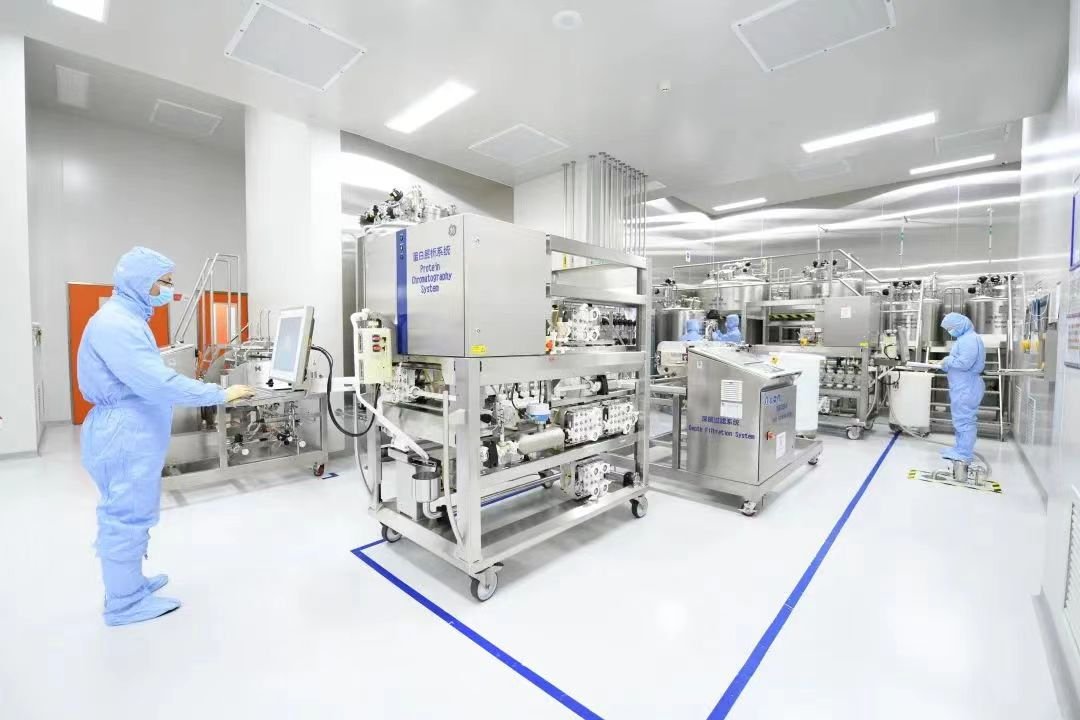
In 2026, with the full implementation of EU GMP Annex 1 and the revised PDA Technical Report No. 26, the global sterile pharmaceutical manufacturing industry has undergone a comprehensive overhaul centered on Contamination Control Strategy (CCS). Among all updates, PUPSIT (Post-Use Pre-Sterilization Integrity Testing) has emerged as the most prominent yet technically challenging requirement.
From Risk Assessment to Mandatory Implementation
1. EU GMP Annex 1 (2022): The Most Stringent Regulatory Expectations
The revised EU GMP Annex 1 has redefined the regulatory status of PUPSIT. Clause 8.87 explicitly stipulates: “Sterilizing-grade filters shall be subjected to integrity testing after sterilization and prior to use. Where pre-use testing is not performed, robust justification shall be provided, together with alternative, equivalent and validated control measures.”
This establishes the core principle: PUPSIT is the default requirement, and exemption requires rigorous justification. The European Medicines Agency (EMA) highlights that sterilization processes such as Steam-in-Place (SIP) or autoclaving may cause irreversible physical damage to filters, including micropore deformation and seal failure. Such risks can only be accurately identified via PUPSIT prior to production.
2. PDA Technical Report No. 26 (2025 Revision): Balancing Science and Risk
The 2025 updated PDA TR 26 maintains stringent standards and elaborates in depth on the risk of Flawed Filter Masking. Research indicates that when filter clogging exceeds 81%, defective membrane pores may be blocked by process fluids. In this case, post-use integrity testing may yield a passing result, while microbial penetration has already occurred during production.
PDA TR 26 classifies PUPSIT as a general regulatory expectation and guides enterprises to formulate implementation plans based on risk assessment. For equipment manufacturers, it is imperative to deliver system designs that support both standard PUPSIT execution and justified exemption with flexible technical solutions.
3. China’s Guidelines for the Application of Sterilizing Filtration Technology (2018): Global Regulatory Convergence
Though the guideline issued by the National Medical Products Administration (NMPA) does not impose absolute mandates like EU GMP Annex 1, it sets rigorous requirements: “Risk assessment shall be conducted to determine whether integrity testing is required for sterilizing filters prior to use, and to define whether testing is performed before or after sterilization.” Aligned with global inspection trends, Chinese regulatory authorities now place high emphasis on PUPSIT design and implementation during on-site audits, with inspection criteria gradually converging with international standards.
Engineering Challenges of PUPSIT in Stainless Steel Liquid Preparation Systems
For equipment manufacturers, implementing PUPSIT in stainless steel tank and piping liquid preparation systems involves far more than adding operational steps on process flow diagrams. It demands systematic reconstruction of overall design, valve manifold layout and automated control architecture.
1. Management of Wetting Fluid: Full-cycle Design from Introduction to Drainage
The greatest engineering challenge for PUPSIT in stainless steel systems lies in the introduction, circulation and complete removal of wetting fluid.
Wetting Path Design: Filters remain dry after sterilization. Wetting fluid (Water for Injection / buffer solution) is delivered from the upstream tank via circulating pumps to flow forward and backward through filters for full membrane saturation, while preventing contamination of the downstream sterile zone.
Drainage and Drying: Low-point drainage combined with clean compressed air purging is adopted to ensure complete removal of residual wetting fluid, eliminating risks of product dilution and cross-contamination in subsequent production batches.
Recirculation of Wetting Fluid: A closed-loop circulation circuit is configured for high-grade wetting fluid such as WFI. The fluid can be returned to the original tank or dedicated buffer tank after testing, complying with sterility requirements while cutting operational costs.
2. Sterile Boundary Maintenance: Integrated Valve Manifolds and Sterilization Logic
During PUPSIT, the introduction of test gas and wetting fluid must not compromise the sterility of downstream process zones.
Valve Manifold Layout: Modular valve manifolds with integrated pneumatic diaphragm valves upstream and downstream of filters are deployed and centrally controlled via valve islands. Downstream valves remain closed throughout testing to form physical isolation and preserve sterile boundaries.
Full SIP Coverage: All pipelines, valves and drain points associated with PUPSIT are incorporated into the SIP scope. Independent SIP routes are configured for wetting fluid supply lines and drain lines to eliminate sterilization dead legs.
Sterile Drainage: Used wetting fluid and test gas are discharged through dedicated sterile drain pipelines. Drain outlets are fitted with sterile vent filters or connected to closed CIP/SIP drainage systems to prevent microbial backflow from the external environment.
3. PUPSIT Implementation under Redundant Filtration Configuration
Dual-stage redundant filtration (primary filter + backup filter) is a standard sterility assurance design for liquid preparation systems, which adds complexity to PUPSIT execution. Corresponding design solutions are developed as follows:
Independent Graded Testing: The system enables separate integrity testing for primary and backup filters. Valves are switched to isolate one filter during testing to avoid mutual interference.
Downstream Protection Logic: When testing the backup filter, dedicated valve interlocks keep downstream pipelines connecting to preparation tanks or filling lines fully closed. Normal filtration routes are restored only upon completion of testing.
Parallel Testing Option: For high-yield production processes, a parallel testing design is available to run PUPSIT for two filters simultaneously, shortening batch turnaround time.
4. Automated Control: From Manual Operation to Intelligent Closed-loop Management
EU GMP Annex 1 mandates minimization of human intervention. Traditional manual PUPSIT involves complex valve switching and data recording, which leads to low efficiency and elevated contamination risks.
One-touch Automated Testing: The entire PUPSIT workflow is integrated into the SCADA/DCS system. A one-touch program automates all steps including wetting, pressure holding, integrity testing, drainage and purging. Operators only need to initiate the process via the HMI.
Real-time Data Acquisition: Critical parameters such as pressure, temperature and duration are automatically recorded to generate electronic records compliant with 21 CFR Part 11, ensuring full data integrity.
Alarm and Interlock Functions: The system triggers audible and visual alarms and activates safety interlocks in case of abnormal test results or incorrect operational sequences, prohibiting unauthorized subsequent operations and mitigating human error.
Evolving from Equipment Supplier to Regulatory Compliance Enabler
As the industry landscape evolves in 2026, mere hardware configuration for PUPSIT can no longer meet regulatory requirements. Regulatory authorities pay increasing attention to data integrity, automation level and systematic Contamination Control Strategy. In this context, Sino Bioengineering is transforming its role from a pure equipment supplier to a professional regulatory compliance enabler.
Integrated CCS Design: PUPSIT is embedded as a core component of the overall Contamination Control Strategy. Equipment design is aligned with clients’ CCS documentation at the design stage to realize seamless integration between equipment functionality and quality risk management.
Full Lifecycle Technical Support: Comprehensive services covering DQ, IQ, OQ, PQ validation and data analysis for annual product quality reviews are provided to help clients continuously optimize production processes.
Global Regulatory Expertise: Drawing on project experience across more than 40 countries and regions worldwide, we deliver designs compliant with regulations issued by the FDA, EMA, NMPA, WHO and other authorities, supporting clients’ global drug registration and commercialization.
Standard PUPSIT Operational Procedure for Stainless Steel Liquid Preparation Systems
With extensive project experience across diverse countries and product lines, Sino Bioengineering has established a standardized PUPSIT workflow for sterilizing filters in liquid preparation systems. Normally, only the primary filter undergoes integrity testing first. If the primary filter passes the test, the backup filter is exempted from testing. The backup filter will be tested only if the primary filter fails. The detailed procedures are as follows:
PUPSIT is performed immediately after SIP, when filters remain in a sterile state, making the selection of wetting fluid critical. The temperature of wetting water is controlled at 20 ~ 25°C. The fluid is first sterilized by the upstream backup filter, then delivered to the primary filter housing for thorough membrane saturation. Excess wetting fluid flows into an aseptic gas separation tank instead of direct drainage. This design prevents non-sterile air in drain lines from flowing back and contaminating the post-sterilization system.
The gas separation tank is equipped with high and low level sensors. The drain valve remains closed when the liquid level is below the high-level threshold to retain fluid inside the tank. Once the high level is reached, the bottom drain valve opens automatically to discharge fluid and prevent flooding of the vent filter. The valve closes when the liquid drops to the low-level threshold, leaving a residual liquid layer at the tank bottom. This permanent water seal effectively prevents secondary microbial contamination of the sterile system.
Compressed air supplied to the integrity tester first passes through a gas sterilizing filter (included in the system SIP cycle). 1/2-inch stainless steel tubing is adopted for distribution lines to minimize upstream volume and improve testing accuracy. All pipe connections are full welded to eliminate air leakage at clamp joints.
During testing, gas pressure is applied to the upstream side of the fully wetted filter membrane, while the downstream side is open to atmosphere. Gas permeates through membrane pores under differential pressure, and gas flow rate rises sharply once pore integrity is compromised. The system analyzes flow variation to determine the bubble point pressure, which is compared against the manufacturer’s specification to judge filter integrity. Fluid expelled during testing is also diverted to the gas separation tank to avoid secondary contamination risks.
Upon completion of integrity testing, sterile compressed air is used to purge pipelines and filter housings to remove residual water, preventing residual moisture from affecting subsequent production batches.
PUPSIT is far more than a regulatory technical requirement; it represents an upgrade in sterility assurance philosophy, shifting the industry mindset from post-failure inspection to prevention in advance.
At Sino Bioengineering, we believe premium pharmaceutical equipment should not merely satisfy regulatory compliance, but also empower clients to build robust sterility assurance systems. By deeply integrating PUPSIT into the design and control of stainless steel liquid preparation systems, we deliver comprehensive sterile liquid processing solutions featuring full compliance, high reliability and superior flexibility for global pharmaceutical manufacturers. We strive to safeguard drug safety, and ultimately achieve win-win outcomes for patient safety and business success.
As a leading process-oriented engineering company, Sino Bioengineering delivers professional bioengineering solutions and comprehensive technical services to clients worldwide.
For more products and solutions: https://sinobioengg.com/category/solution/
For more service: https://sinobioengg.com/category/service/