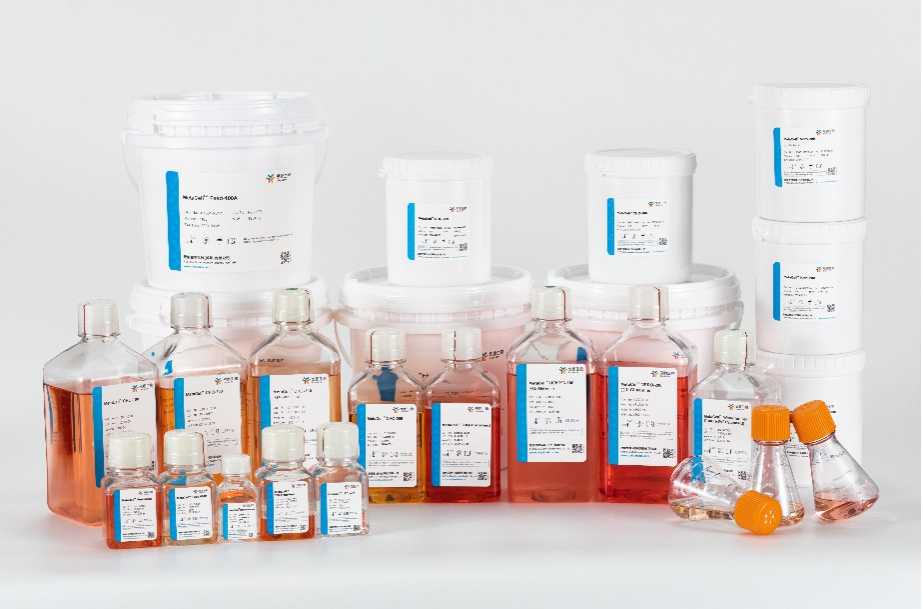
Within the industrial biopharmaceutical manufacturing ecosystem, the rational design and refined development of Chinese Hamster Ovary (CHO) cell culture medium constitute a core technical barrier supporting efficient and high-quality production of therapeutic proteins. Medium performance fundamentally defines bioprocess productivity, critical quality attributes (CQAs) of drug substances, and manufacturing process robustness. As an in vitro microenvironment system for cell culture, culture medium supplies all nutritional substrates and suitable physicochemical conditions required for CHO cell proliferation, metabolic activity and heterologous protein expression. It serves as an essential platform enabling high-density cell cultivation and the biosynthesis of bioactive therapeutic proteins.
The research and development of high-end industrial-grade culture medium is not merely focused on boosting cell growth and protein titers. It also requires balanced consideration of precise product quality modulation, process scalability, and the feasibility and stability of industrial powder manufacturing. Essentially, it represents a systematic engineering effort featuring multi-dimensional coordinated optimization.
Reviewing the evolution of industrial cell culture technologies, cell culture medium systems have undergone landmark iterations: from early serum-containing formulations to serum-free and animal-component-free chemically defined (CD) media. This paradigm shift fundamentally eliminates biosafety risks originating from animal-derived raw materials and resolves long-standing industry challenges including significant batch-to-batch variability of natural feedstocks and poor process reproducibility. Driven by advances in modern biotechnology and cell metabolic engineering, targeted modulation via precise formulation of basal nutrients and rewiring of cellular metabolic networks has enabled substantial improvements in production performance, process resilience and quality controllability of contemporary CHO CD media.
This article systematically reviews the technological evolution of mammalian cell culture media, provides in-depth analysis of mainstream development strategies, core technical considerations and industrial adaptability criteria for CHO culture medium, and summarizes cutting-edge research progress and development trends in this field. It aims to deliver theoretical support and engineering references for the development of high-standard, standardized and intelligent cell culture processes.
1. Core Design Strategies for CHO Culture Medium: Platform-Based Layout and Customized Iteration
In the industrial R&D framework for CHO culture medium, customized formulations exhibit prominent process compatibility advantages over generic commercial media. By retaining independent ownership of medium formulations, researchers can achieve targeted iterative refinement of culture processes, accurate root-cause analysis of manufacturing deviations, and establish clear correlations between nutritional components and cellular metabolism as well as protein quality attributes. This generates foundational datasets to guide process optimization.
The global biopharmaceutical industry has widely adopted a mainstream R&D paradigm combining platform-based bioprocesses with customized optimization. Enterprises establish standardized CHO host cell platforms at early clinical stages, alongside platform culture media validated across multiple cell lines and projects. This effectively shortens the transition timeline from lab-scale development to clinical trials while lowering process development costs and technical risks.
Within this framework, standardized platform media satisfy baseline production requirements for most recombinant protein therapeutics. For projects involving molecules with distinctive structural features, high expression demands or proprietary cell lines, fine-tuning of component ratios and metabolic adaptation are performed based on the platform formulation to generate tailored media. This tiered development approach — leveraging universal platforms as the foundation with dedicated customization for specific programs — balances general process applicability and project-specific requirements, and is highly compatible with large-scale industrial manufacturing.
2. Nutritional Metabolic Regulation and Component Optimization Principles in Medium Development
CHO culture medium represents a sophisticated composite system comprising dozens to hundreds of functional components. The concentration of each nutrient must be maintained within physiologically compatible ranges. Excess, insufficient supply or metabolic imbalance of any component may trigger cellular metabolic perturbation, proliferation inhibition, reduced protein productivity, and even quality defects such as aberrant glycosylation and charge heterogeneity. Accordingly, the central objective of medium development is to achieve precise formulation and dynamic regulation of carbohydrates, amino acids, micronutrients and functional enhancers based on cellular metabolic patterns.
2.1 Metabolic Modulation of Core Macronutrients
Carbohydrates act as primary energy substrates for CHO cells, fueling cell proliferation and protein synthesis via glycolysis and oxidative phosphorylation. Nevertheless, conventional high-glucose regimens tend to overload glycolytic flux, leading to massive lactate accumulation, extracellular acidification, suppressed cell growth, shortened culture duration and diminished protein yields. Modern medium development commonly adopts a glucose-limited metabolic control strategy. Baseline glucose concentrations are precisely calibrated, paired with alternative carbon sources with low byproduct formation, to remodel cellular energy metabolism pathways, reduce lactate buildup, improve carbon utilization efficiency and stabilize culture environments.
Amino acids constitute fundamental building blocks for cytoskeleton assembly, endogenous metabolic enzymes and heterologous therapeutic protein synthesis. Their formulation and dynamic balance directly determine the upper limit of cell density and protein biosynthesis efficiency. With analytical tools including metabolic flux analysis and high-performance liquid chromatography (HPLC), real-time monitoring of amino acid consumption profiles throughout cultivation enables classification of amino acids into depleted, accumulated and steady-state groups, supporting staged targeted feeding optimization. Specifically, the metabolic efficiency of select amino acids such as asparagine and serine acts as a key limiting factor governing maximum viable cell density and productivity of certain CHO cell lines, making them priority optimization targets.
2.2 Functional Modulation and Safety Optimization of Micronutrients
Although vitamins and trace elements account for a minor fraction of medium composition, they serve as essential cofactors for metabolic enzymes and redox regulators, performing irreplaceable catalytic and modulatory roles. Vitamins participate extensively in intracellular biosynthesis, energy metabolism and antioxidant responses to sustain cellular physiological homeostasis. Trace elements including copper, iron, zinc and selenium exert distinct metabolic regulatory functions: appropriate copper concentrations facilitate metabolic rewiring to shift lactate balance from net production to net consumption, alleviating accumulation of metabolic byproducts. Iron can significantly enhance recombinant antibody titers; however, free ionic iron carries cytotoxicity. Chelation modification technologies are therefore deployed to eliminate toxicity while preserving biological functionality, ensuring stable and safe culture conditions.
2.3 Screening and Compliant Application of Functional Enhancers
Diverse specific functional enhancers have been widely incorporated into high-end CHO culture media to break productivity bottlenecks and optimize product quality attributes. Candidates include insulin-like growth factor analogues, functional di/tripeptide complexes, glucocorticoid modulators, nucleosides and histone deacetylase inhibitors. These additives improve viable cell density, culture longevity and protein production by regulating cell cycle progression, suppressing apoptosis and rewiring metabolic pathways.
Notably, the introduction of functional enhancers must comply with industrial regulatory requirements. Systematic evaluation covers application costs, formulation stability, supply chain controllability, as well as impacts on protein CQAs and removability in downstream purification. This mitigates residual impurity risks and guarantees purity, safety and regulatory compliance of final drug products.
3. Experimental Frameworks and High-Throughput Intelligent Evaluation Technologies for Medium Development
Traditional one-factor-at-a-time (OFAT) optimization only enables gradient testing of single components and cannot accommodate the complex interplay of multiple medium constituents. It suffers from low experimental throughput, prolonged R&D cycles and frequent failure to capture synergistic or antagonistic interactions between components, often resulting in local rather than global formulation optima. Contemporary CHO medium development adopts Design of Experiments (DoE) as the core technical framework, establishing a standardized “screening–optimization–iteration” workflow that greatly improves the scientific rigor and efficiency of formulation development.
3.1 Tiered Formulation Optimization System Based on DoE
DoE enables simultaneous assessment of independent component effects and pairwise interactions, achieving multi-parameter optimization with minimal experimental workload. Its R&D logic follows two sequential optimization stages:
The first stage involves identification of critical components. High-throughput screening models such as Plackett–Burman factorial design rapidly identify significant factors impacting cell growth, protein titer and product quality from an extensive component library, eliminating inert ingredients.
The second stage focuses on precise concentration tuning. Central composite design and Box–Behnken response surface methodologies are applied to construct mathematical models correlating component concentrations with cultivation performance and quality attributes, accurately defining optimal concentration windows and locating global formulation optima.
In addition, medium blending screening serves as a valuable supplementary tool for accelerated formulation iteration. Gradient mixing of established CD media enables rapid identification of optimal combinations and pinpointing of core active components responsible for productivity and quality improvements, shortening overall development timelines.
3.2 High-Throughput Cultivation Platforms and Precise Characterization Techniques
Robust and reproducible high-throughput cultivation systems form critical infrastructure for large-scale formulation screening. During primary component screening, low-cost cultivation vessels including deep-well plates, shake flasks and conical tubes are widely deployed for extensive preliminary screening. For detailed process development and parameter validation, micro bioreactor high-throughput platforms accurately mimic key manufacturing parameters of large-scale bioreactors, including pH, dissolved oxygen, agitation and temperature. This enables reliable translation of lab-scale data to industrial production and minimizes scale-up deviations.
3.3 Data-Driven Iterative Optimization Mechanism
Medium development constitutes a closed-loop continuous refinement cycle built upon the workflow: performance validation → metabolomic analysis → formulation refinement. At present, multi-dimensional analytical platforms encompassing HPLC, nuclear magnetic resonance (NMR), gas chromatography (GC), LC-MS, GC-MS and inductively coupled plasma mass spectrometry (ICP-MS) support dynamic monitoring of nutrient consumption and metabolite formation over the entire cultivation period. Combined analytical workflows resolve time-resolved metabolic profiles of amino acids, vitamins and trace elements. Targeted feeding strategies and formulation fine-tuning guided by metabolic datasets replace conventional empirical trial-and-error approaches, establishing a data-enabled scientific and precise formulation iteration system for sustained bioprocess enhancement.
4. Precise Modulation of Product Critical Quality Attributes in Medium Development
CHO medium R&D must abandon the one-sided mindset prioritizing productivity over quality. Critical quality attributes of therapeutic proteins, including glycosylation profiles, charge heterogeneity, molecular integrity and sequence fidelity, represent core metrics evaluating bioprocess reliability and clinical safety, directly determining drug efficacy, stability and immunogenic risk. Minor fluctuations in medium component concentrations can trigger cascading alterations in protein synthesis and post-translational modification via cellular metabolic networks, ultimately leading to product quality drift.
Trace metal ions act as pivotal regulators of product quality attributes. Copper enhances protein productivity, yet excessive concentrations induce accumulation of basic antibody variants and exacerbate protein aggregation and fragmentation. Manganese serves as a master switch governing protein glycosylation, modulating levels of high-mannose, galactosylated and sialylated species and directly determining the compliance of glycan profiles.
Amino acid balance also exerts profound impacts on product quality. Steady supply of cystine, asparagine, glutamine and other key amino acids improves glycosylation homogeneity, reduces acidic variant fractions and enhances overall product consistency. Certain functional enhancers deliver dual benefits of elevated productivity and improved quality. For instance, glucocorticoids and specific insulin-like growth factor analogues can boost cell-specific productivity while significantly increasing protein sialylation and optimizing biological activity.
Furthermore, cellular metabolic stress induced by nutrient depletion represents a primary driver of amino acid misincorporation and aberrant protein modification. Precise formulation design ensuring stable availability of core nutrients mitigates quality risks at the metabolic origin and enables simultaneous optimization of productivity and product quality.
5. Industrial Manufacturability Considerations for Medium Development
Liquid culture media are commonly used for formulation screening at lab scale. Nevertheless, powdered CD media dominate industrial manufacturing owing to superior chemical stability, reduced logistics and storage costs, and enhanced batch consistency. Accordingly, modern medium R&D adopts a frontloaded manufacturing-oriented design philosophy. Formulation screening simultaneously evaluates lab-scale performance and industrial powder production feasibility to avoid scale-up barriers at later stages.
5.1 Modification Optimization of Poorly Soluble Components
Key nutritional amino acids such as cystine and tyrosine exhibit inherently low aqueous solubility. Traditional workflows require separate feeding regimens under elevated pH to maintain solubility and stability, increasing operational complexity and quality control burdens. Incorporation of chemically modified amino acid derivatives (e.g., S-sulfocysteine, phosphotyrosine) markedly improves aqueous solubility and formulation compatibility. This enables direct preparation in a single medium stock without supplementary feeding, streamlining industrial workflows and strengthening process robustness.
5.2 Upgrading of Powder Manufacturing Processes
Powder milling governs homogeneity and biological activity of medium constituents. Compared with conventional ball mills, industrial pin mills feature low heat generation, superior particle uniformity, minimal component degradation and simplified maintenance. They effectively prevent thermal degradation of heat-sensitive ingredients such as vitamins and peptides induced by frictional heating, preserving component bioactivity and inter-batch consistency of powder media.
5.3 Quality Control Framework for Powder Batch Consistency
As complex multi-component mixtures, CD powder media require strict batch-to-batch consistency to sustain stable industrial manufacturing. Variations in raw material purity, feedstock sources and drift in milling and blending parameters can introduce compositional deviations. Currently, the industry integrates chemometrics with non-destructive spectroscopic techniques including near-infrared, Raman and fluorescence spectroscopy to build real-time powder quality control systems. Rapid screening and risk prediction of compositional uniformity allow early detection of batch discrepancies prior to bioproduction, ensuring seamless translation from R&D to industrial manufacturing.
6. Frontier Trends in CHO Medium Development: Advancement toward Precision and Intelligence
Driven by iterative progress in biopharmaceutical manufacturing, CHO medium development has transitioned from empirically guided optimization to an era featuring precise metabolic regulation and data intelligence. Custom medium design for continuous perfusion bioprocesses and multi-omics-enabled metabolic network rewiring represent two major frontier directions.
6.1 Custom Medium Development Tailored for Continuous Perfusion Cultivation
Continuous perfusion culture delivers high bioreactor utilization, elevated cell densities and superior product quality homogeneity. It is progressively replacing traditional fed-batch as the preferred manufacturing platform for premium biotherapeutics. Characteristics of perfusion systems — ultra-high cell densities and prolonged steady-state cultivation — impose stricter requirements on medium nutritional balance, component stability and metabolic compatibility.
Current perfusion medium development builds upon established fed-batch formulations via component streamlining, concentration rebalancing and targeted fortification. Redundant inert components are eliminated, while concentrations of core nutrients including amino acids, lipids and vitamins are precisely strengthened. Multi-parameter collaborative optimization guided by DoE models achieves high compatibility between media and perfusion workflows, supporting sustained high productivity and consistent product quality during long-term steady-state culture and facilitating smooth transition from batch to continuous manufacturing.
6.2 Intelligent Metabolic Rewiring Driven by Multi-Omics Technologies
Combined transcriptomic, proteomic and metabolomic approaches transform medium development from trial-and-error experimentation toward mechanism-driven rational design. Comparative analysis of gene expression, protein modification and metabolic pathways across high-productivity, low-productivity and stressed CHO cell populations enables precise identification of metabolic bottlenecks and productivity-limiting factors. Targeted adjustments to lipid, amino acid and micronutrient formulations can overcome cellular productivity constraints. Meanwhile, metabolomics identifies harmful byproducts triggering apoptosis and metabolic stress, allowing formulation design to proactively prevent bioprocess defects. In-depth mining of multi-omics datasets reveals molecular regulatory mechanisms linking extracellular microenvironment to cellular physiological status, furnishing molecular-level theoretical foundations for rational medium optimization.
7. Conclusions and Outlook
Refined development of CHO cell culture medium constitutes a cross-disciplinary systematic engineering program integrating nutritional science, metabolic engineering, statistical modeling and industrial manufacturing technologies, spanning formulation design, quality modulation, process scale-up and commercial production. Its core R&D logic relies on precise nutrient formulation, targeted rewiring of cellular metabolic networks and standardized manufacturing adaptation to achieve the optimal balance between therapeutic protein productivity and product quality, ensuring stability, controllability and regulatory compliance of biomanufacturing workflows.
In the future, CHO medium development will fully evolve toward computation-driven intelligent iteration. Deep integration of chemometrics, mechanistic metabolic models and in silico simulation will enable accurate prediction of cellular nutritional demands and computational pre-optimization of formulations, drastically reducing experimental workload and R&D costs. Synergistic advancement of multi-omics big data, high-throughput screening platforms and advanced powder manufacturing technologies will break traditional process limitations and enable systematic rewiring of cellular metabolic networks. R&D priorities will shift from singular productivity enhancement toward multi-dimensional optimization of yield, product quality, process robustness and industrial manufacturability. This will support the delivery of therapeutic proteins with improved bioactivity, safety and consistency, and continuously drive standardization and intelligent transformation of the global biopharmaceutical industry.