

1. Introduction
As core tools for diagnosis, imaging and therapeutic applications, antibodies are widely utilized in clinical detection techniques including Western blotting and flow cytometry. While traditional monoclonal antibodies (mAbs) play a vital role in cancer treatment, they are subject to numerous inherent limitations. The development of recombinant antibody fragments has broken through these bottlenecks. Genetically engineered fragments such as single-chain variable fragments (scFv) and nanobodies (Nb) retain complete antigen-binding capacity and possess distinctive superiorities including low molecular weight and strong tissue penetrability. Compared with conventional antibodies, recombinant antibody fragments achieve 3–10 times higher penetration efficiency in solid tumors and are capable of targeted delivery across biological barriers.
In terms of manufacturing technology, phage and yeast display technologies have accelerated the screening and optimization of high-affinity recombinant antibody fragments, while the Escherichia coli expression system has substantially cut down production costs. Owing to these characteristics, recombinant antibody fragments exhibit prominent application prospects in the treatment of infectious diseases, neurodegenerative disorders and other disease fields.
2. Production of Recombinant Antibody Fragments in Escherichia coli
2.1 E. coli as an Expression Host
As a mature platform for industrial production of heterologous proteins, prokaryotic expression systems occupy a pivotal position in the preparation of recombinant antibody fragments. After decades of technological iteration, the E. coli expression system has evolved into an industrial standard, and approximately 30% of global biopharmaceutical products are mass-produced via this platform.
Compared with other expression systems, E. coli boasts multiple technical merits: short doubling time, simple culture medium composition, low unit production cost and easy process scalability, making it particularly suitable for the high-efficiency preparation of non-glycosylated recombinant antibody fragments.
2.2 Conventional Production Methods in E. coli
Two major targeting strategies are adopted for recombinant antibody fragment expression in prokaryotic systems: cytoplasmic expression and periplasmic secretion, which are complementary in yield and quality control.
The cytoplasmic expression system eliminates the requirement for signal peptides and enables a scFv yield up to 240 mg/L, yet it tends to form inclusion bodies that require subsequent in vitro refolding. Host strain engineering modifications, such as the introduction of disulfide bond isomerases and construction of redox-regulated strains, can markedly increase the proportion of intracellular soluble proteins.
In contrast, periplasmic targeted secretion facilitates the natural formation of disulfide bonds. The oxidative microenvironment combined with the Dsb enzyme system ensures the structural integrity of antibody fragments. In typical processes, signal peptides such as PhoA and PelB are used to guide secretion, and mild cell disruption methods including osmotic shock are applied to efficiently recover target proteins while reducing host protein interference. This strategy has been applied in multiple industrialized production cases. Nevertheless, the limited periplasmic space may trigger protein aggregation, hence promoter regulation is necessary to balance expression intensity and folding efficiency.
The selection of technical routes depends on target protein properties and process economy. Periplasmic secretion is preferable for structurally complex antibody fragments with multiple disulfide bonds, whereas cytoplasmic expression is more advantageous in high-throughput screening and cost-sensitive production scenarios.
2.3 E. coli Strains and Expression Vectors
The selection of engineered E. coli strains directly determines the production efficiency of recombinant antibody fragments, which are mainly divided into K-12 and B lineages. Derivatives of the K-12 lineage suffer from excessive acetate accumulation in metabolism, yet they feature clear genetic backgrounds and high transformation efficiency, rendering them the preferred platform for gene cloning and screening.
BL21-series strains of the B lineage reduce acetate generation via metabolic regulation and tolerate high-concentration carbon sources, thus being more applicable to large-scale manufacturing. For instance, the WK6 strain, a K-12 derivative, achieves efficient VHH expression through the periplasmic secretion system. Its unique intracellular redox microenvironment promotes correct disulfide bond formation, and fusion strategies such as His-tag can lower the inclusion body formation rate to below 5%.
Equipped with the T7 RNA polymerase system, B-lineage strains are compatible with strong inducible expression vectors and attain a fermentation titer of 2.4 g/L in the production of antigen-binding fragments (Fab), highlighting their technical advantages in the development of therapeutic antibodies.
Precise matching between promoters and vectors is the core principle for designing recombinant antibody fragment expression systems. The T7 strong promoter is widely adopted for large-scale production due to its high inducibility; the araBAD promoter features stringent regulation and is ideal for toxic protein expression; the cold-inducible cspA promoter alleviates inclusion body formation under low-temperature induction and fits thermosensitive antibody fragments perfectly.
In vector engineering, pOPE101 is specially designed for periplasmic secretion, integrating the T7 promoter, ampicillin resistance gene and dual C-myc/His6 tagging system. Its modular cloning sites support efficient assembly of scFv heavy and light chains. Such innovative vector designs break the efficiency bottleneck of traditional single-chain expression and provide critical technical support for the industrial production of structurally complex antibody fragments.
2.4 High-Yield Culture Conditions for E. coli
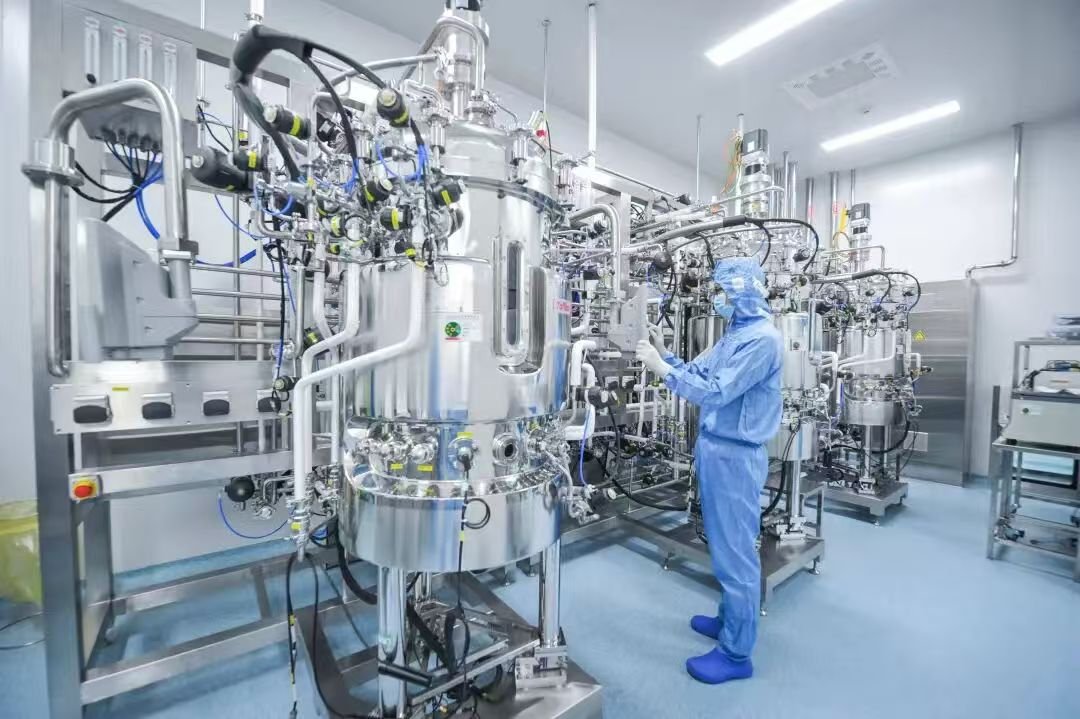
Systematic optimization of fermentation parameters is essential for high-efficiency production of recombinant antibody fragments, among which temperature control and induction strategies are of paramount importance. Compared with conventional culture at 37 °C, low-temperature expression at 25 °C inhibits protease activity, reduces inclusion body formation by over 40% and elevates the proportion of soluble proteins.
Although TB medium facilitates biomass accumulation, the actual protein expression level is predominantly determined by target protein characteristics, and carbon source optimization modulates metabolic flux to greatly enhance product secretion. Glycine exerts dual functional effects and plays a unique role in VHH production; supplementation with 0.8% glycine raises the yield of secreted scFv to 1.8 g/L.
Fine-tuning of induction conditions is key to balancing expression intensity and folding efficiency. Gradient tests of IPTG concentrations from 5 μM confirm that induction at 0.1 mM increases the soluble expression ratio of T7 promoter-driven Fab fragments from 35% to 78%. Combined with low-temperature induction at 20 °C for 16 hours, the inclusion body formation rate can be controlled within 15%. This dynamic regulation strategy maintains cell viability while achieving an industrial volumetric yield of 2.4 g/L.
3. Production of Recombinant Antibody Fragments in Yeast
The selection of expression systems for recombinant antibody fragments requires comprehensive comparison of prokaryotic and eukaryotic platform characteristics. Despite the advantages of short cultivation cycle and mature process technology, the intracellular reducing environment of E. coli easily induces inclusion body formation, and additional in vitro refolding procedures lead to low yields of functional proteins.
By contrast, yeast expression systems possess eukaryotic post-translational modification capabilities to accomplish accurate disulfide bond assembly and glycosylation, which are especially suitable for complex antibody fragments with molecular weights above 50 kDa. Taking Pichia pastoris as an example, high-density fermentation enables cell density exceeding OD600=500, and target recombinant antibody fragments secreted extracellularly reach the g/L level under the regulation of methanol-inducible promoters. The purity of secreted proteins in this system is up to 90%, which significantly cuts downstream purification costs.
As methylotrophic yeast, Pichia pastoris exhibits superior tolerance compared with traditional Saccharomyces cerevisiae. It maintains biological activity within a pH range of 2.0–8.0 and withstands ethanol concentrations up to 15%, laying a solid foundation for the development of continuous fermentation processes.
3.1 Saccharomyces cerevisiae
Recognized as a safe non-pathogenic microorganism, Saccharomyces cerevisiae has been widely applied in the food industry. Recombinant protein expression requires introducing target gene-carrying vectors into yeast cells via chemical transformation or electroporation, and the vectors replicate along with host cells during rapid cell proliferation.
Most eukaryotic expression vectors are shuttle vectors capable of replicating in both bacteria and eukaryotic cells, containing two independent origins of replication and two sets of screening marker genes functional in prokaryotic and eukaryotic hosts respectively.
Yeast systems show unique strengths in the precise regulation of post-translational modification during recombinant antibody fragment production. To address the inherent high-mannose glycosylation issue in yeast, triple gene knockout strategies targeting Mmn2p, Mnn11p and Och1p reduce the N-glycosylation level of antibody fragments by 72%, effectively eliminating potential immunogenic risks. This modification regulation technology ensures correct folding of domain antibodies with molecular weights ranging from 15 kDa to 58 kDa.
Nevertheless, the poor plasmid stability of Saccharomyces cerevisiae drives researchers to shift focus to Pichia pastoris. Via genome-integrated expression strategies, Pichia pastoris stably maintains antibody fragment yields within 1.5–3.8 g/L and improves glycan homogeneity to over 95%, serving as a more optimal solution for industrial mass production.
3.2 Pichia pastoris
As a superior expression platform for recombinant antibody fragments, Pichia pastoris features prominent advantages in precise process regulation and industrial scalability. Compared with Saccharomyces cerevisiae, genome integration technology boosts its plasmid stability above 98%, and its inherent low-mannose N-glycosylation pattern reduces immunogenic risks by 65%.
The core expression element AOX1 methanol-inducible promoter enables dynamic regulation of expression intensity through glycerol-glucose carbon source switching strategies. Secretory pathway engineering is critical for improving product quality. The pPICZαA vector carrying the MFα1 leader sequence directs over 85% of recombinant antibody fragments to extracellular secretion. Combined with the PichiaPink system equipped with eight optimized signal peptides, the purity of target proteins in fermentation supernatant reaches 92%.
The latest adenine auxotrophic screening system breaks away from traditional antibiotic-dependent screening modes, increasing screening efficiency by 40% during fermentation scale-up. Within a 120-hour cultivation cycle, a maximum antibody fragment yield of 12 g/L can be achieved. Mass spectrometry detection confirms that the batch-to-batch deviation of glycan homogeneity is less than 5%, establishing a standardized production pathway for the development of biosimilar antibodies.
3.3 Strategies for Enhancing Recombinant Antibody Fragment Expression in Yeast
Multi-dimensional fermentation parameter optimization is required to maximize recombinant antibody fragment production in Pichia pastoris. A composite feeding strategy with 2.5% methanol and 0.8% sorbitol sustains AOX1 promoter activity, raises cell density to OD600=450 and restricts the concentration of toxic methanol metabolites below 0.3 g/L.
Temperature gradient experiments verify that induction culture at 28 °C inhibits protease activity by 57%. Within a 72-hour dynamic expression period, the soluble expression ratio of anti-hERG1 scFv-Cys mutants reaches 82%, which is 1.7 times higher than that of conventional 30 °C cultivation processes.
Practical industrial production cases have validated the clinical translation potential of this system. Latest online metabolic regulation technologies shorten the fermentation cycle to 60 hours and lift the volumetric production capacity to 12 g/L, establishing scalable technical protocols for large-scale manufacturing of antibody fragments.
Conclusion
Recombinant antibody fragments can be efficiently produced via diverse prokaryotic and eukaryotic expression platforms. Benefiting from rapid cell proliferation, high expression levels and cost-effective culture conditions, the E. coli system remains the primary choice for large-scale commercial production.
Over the past two decades, yeast-based expression systems have also gained increasing popularity in recombinant antibody fragment manufacturing. Similar to bacterial systems, yeast strains are non-pathogenic, easy to culture and capable of achieving high protein yields. More importantly, different from prokaryotic hosts, yeast can synthesize antibodies with humanized glycosylation patterns and guarantee correct protein folding and complete biological functions. Accordingly, yeast expression systems have gradually evolved into efficient and cost-competitive manufacturing alternatives.
As a leading process-oriented engineering company, Sino Bioengineering delivers professional bioengineering solutions and comprehensive technical services to clients worldwide.
For more products and solutions: https://sinobioengg.com/category/solution/
For more service: https://sinobioengg.com/category/service/