

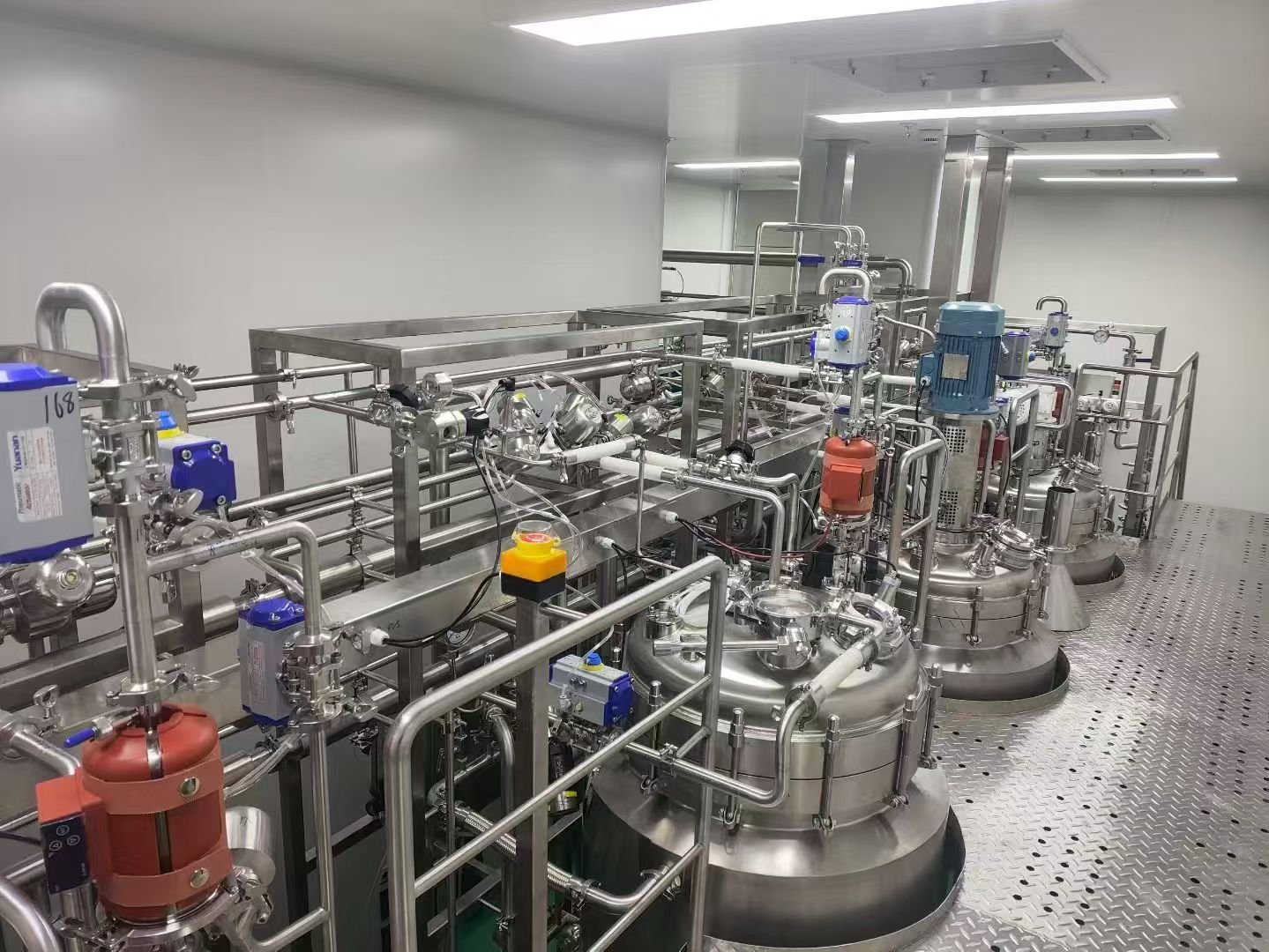
In the field of lipid-based drug delivery, LNPs (Lipid Nanoparticles) and liposomes are two widely discussed yet frequently confused concepts. Many people mistake them for the same entity, or regard LNPs merely as an upgraded version of liposomes. This understanding, however, is inaccurate. Though both belong to the family of lipid nanocarriers, they differ fundamentally in structure, composition, manufacturing processes and application scenarios. Distinguishing these two closely related platforms is essential to grasping the evolution of nanoparticle delivery technologies.
A Brief History: The Discovery of Liposomes
In 1964, British scientist Alec D. Bangham observed that phospholipids spontaneously assemble into closed lipid bilayer vesicles when dispersed in water. This marked the first discovery of liposomes — hollow spherical vesicles enclosed by one or multiple layers of phospholipid bilayers. The interior of these vesicles is an aqueous compartment, while the lipid bilayers form a hydrophobic region. Thanks to this unique structure, liposomes can encapsulate water-soluble drugs within the inner aqueous core and embed lipophilic drugs into the lipid bilayers, enabling the co-delivery of compounds with different polarities.
Doxil, the world’s first approved liposomal drug, gained FDA clearance in 1995 for ovarian cancer treatment. It uses PEGylated liposomes to encapsulate doxorubicin, a chemotherapeutic agent, which effectively reduces cardiac toxicity and prolongs circulation time in the body. Over the following decades, liposomes have been widely adopted in cosmetics, nutritional supplements and various drug delivery systems, emerging as an early flagship platform in nanomedicine.
Structural Differences: Hollow Vesicles vs. Dense Solid Particles
The most intuitive distinction between liposomes and LNPs lies in their internal architecture.
A liposome is essentially a hollow vesicle, a spherical microcapsule bounded by phospholipid bilayers with an aqueous lumen inside, resembling tiny hollow bubbles. It can consist of a single lipid bilayer (unilamellar vesicle) or multiple concentric bilayers (multilamellar vesicle), whose cross-section looks similar to an onion. Liposome sizes vary greatly, ranging from tens of nanometers to hundreds of micrometers. Phospholipid head groups face the aqueous phase, while hydrophobic tails cluster inward within each bilayer.
LNPs feature an entirely different structure with no hollow aqueous core. Instead, they possess a dense solid core composed of ionizable lipids and nucleic acids. Within this core, ionizable lipids arrange into inverted micelles that tightly encapsulate negatively charged mRNA. Industrial-grade LNPs are strictly sized at approximately 80 nanometers, generally smaller than most liposomes. This compact solid core serves as a robust physical barrier to protect encapsulated nucleic acids.
Compositional Differences: Refined Lipid Formulations
Structure forms the framework, while composition defines functionality — and the compositional gaps directly set their performance boundaries.
Traditional liposomes are primarily formulated with natural or synthetic neutral phospholipids and cholesterol. Phospholipids build the main bilayer membrane, and cholesterol is incorporated to modulate membrane fluidity and stability. This simple formulation is highly biomimetic, as its lipid bilayer closely resembles natural cell membranes, endowing liposomes with excellent biocompatibility.
LNPs adopt a far more sophisticated and precise four-component lipid system: ionizable cationic lipids, helper phospholipids, cholesterol and PEGylated lipids. Among these, ionizable lipids are the core functional component. They become positively charged under acidic conditions, enabling electrostatic binding and efficient encapsulation of negatively charged mRNA. At physiological pH, they turn neutral, minimizing cytotoxicity and non-specific interactions. The presence of ionizable lipids is the defining feature that separates LNPs from conventional liposomes.
Cholesterol content also differs drastically. In Doxil, cholesterol accounts for roughly 20% of total lipids. By contrast, the LNPs used in mainstream COVID-19 mRNA vaccines contain 38.5% to 42.7% cholesterol. The substantially higher cholesterol content enhances the structural rigidity and physical stability of LNPs.
Why the Confusion? Technological Evolution from Liposomes to LNPs
Given their fundamental differences, why do many still view LNPs as improved liposomes? The misconception stems from the historical evolution of related technologies.
Liposomes were first identified in the 1960s, ranking as the first generation of lipid nanocarriers. The term LNP did not come into widespread use until the 1990s. Building on liposome technology, researchers later developed solid lipid nanoparticles and nanostructured lipid carriers with more complex architectures.
With the rise of nucleic acid therapeutics, conventional liposomes revealed critical limitations: their neutral lipid composition cannot efficiently encapsulate negatively charged large nucleic acid molecules. To address this challenge, scientists optimized lipid formulations by introducing ionizable lipids, raising cholesterol ratios and integrating PEGylated lipids, ultimately establishing the standard four-component LNP platform used today. In short, LNPs are not modified liposomes. They represent a new generation of delivery systems systematically engineered specifically for nucleic acid delivery.
Differences in Manufacturing and Stability
Liposomes and LNPs also employ distinct production workflows and exhibit different stability profiles.
Liposomes are commonly fabricated via sonication or extrusion. The general workflow involves forming large aggregates first, then physically fragmenting them to reduce particle size and achieve uniform distribution.
LNPs are predominantly produced using microfluidic rapid mixing. Lipids dissolved in ethanol are mixed with aqueous mRNA solutions in microchannels within milliseconds. Particles self-assemble in a single step, with particle size precisely controlled during the process.
In terms of long-term stability, the hollow vesicular structure of liposomes is thermodynamically prone to membrane fusion and drug leakage during storage. The dense solid core of LNPs delivers superior physical stability. However, due to the compact structure and minimal free water inside LNPs, they have a narrower process window for stabilization techniques such as lyophilization, compared with liposomes.
Application Segmentation: Respective Strengths and Scenarios
Their unique physicochemical properties have led liposomes and LNPs to distinct application fields.
Benefiting from their simple bilayer structure and mature manufacturing processes, liposomes are widely applied in cosmetics, nutritional products and conventional drug delivery. They are especially suitable for encapsulating small-molecule chemical drugs.
LNPs, with charge-tunable ionizable lipids, optimized four-lipid formulations and dense solid cores, have become the leading non-viral delivery vector for nucleic acid therapeutics. Onpattro, the world’s first siRNA drug delivered by LNPs, was approved in 2018. During the COVID-19 pandemic, mRNA vaccines based on LNP technology achieved emergency authorization within just one year. To date, LNPs remain the most advanced and well-established non-viral platform for nucleic acid delivery.
Conclusion
From the first microscopic observation in 1964 to global pandemic response in the 2020s, liposomes and LNPs have each carved out their place in history. Both are lipid-based nanocarriers: liposomes are hollow vesicles constructed from lipid bilayers with a basic phospholipid-cholesterol composition, while LNPs are compact solid-core particles formulated with ionizable lipids and a four-component lipid blend.
To put it simply, liposomes are versatile universal carriers originally designed for small-molecule drugs, whereas LNPs are precision-engineered delivery machines developed to solve the unique challenges of transporting fragile large-molecule nucleic acids. The gap between them is not merely a generational upgrade, but a major leap in delivery science to tackle unprecedented technical demands. Today, the two platforms advance independently in their respective dominant fields, together forming a complete landscape of lipid-based nanoparticle delivery technology.