
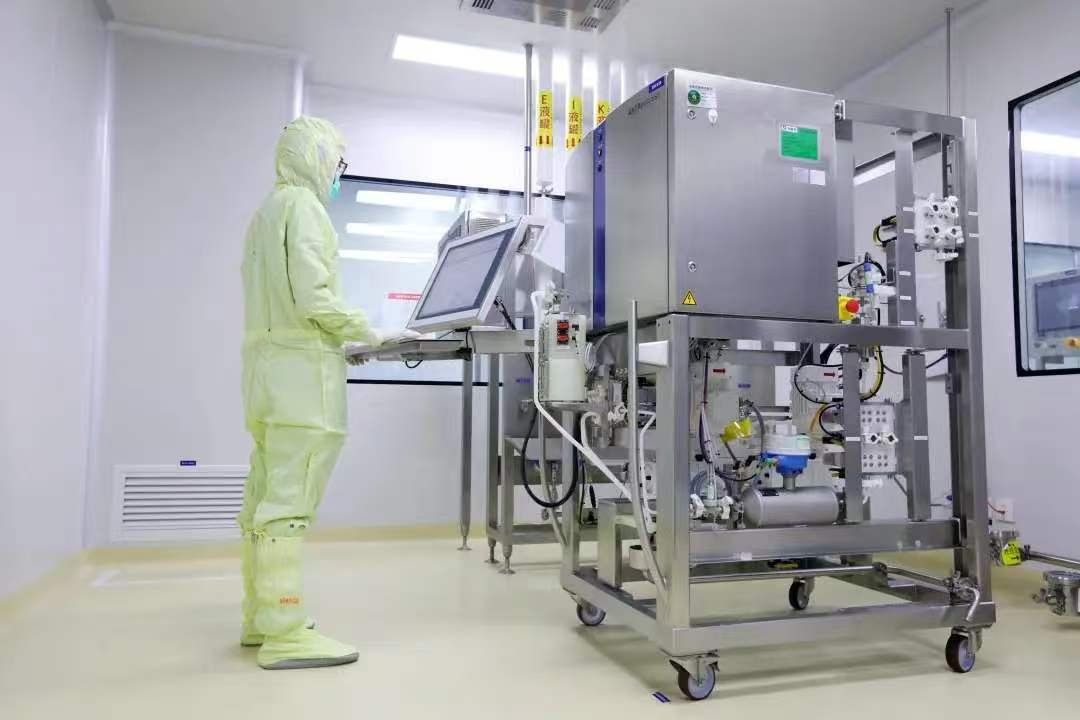
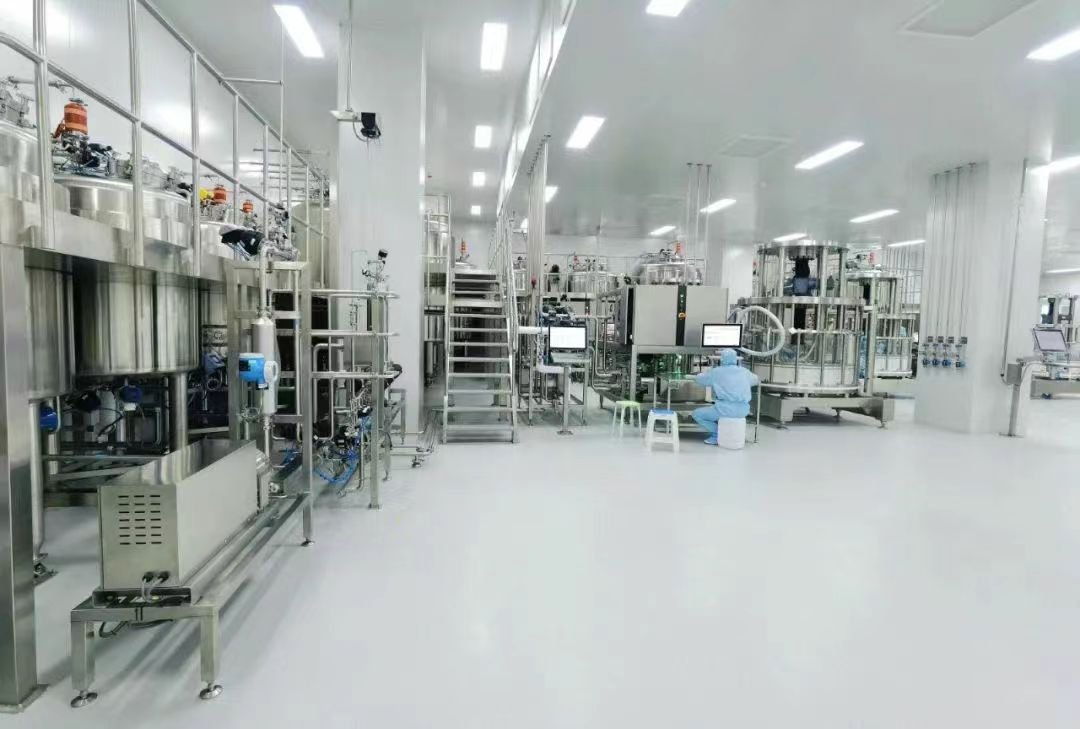
Continuous biomanufacturing processes have attracted extensive attention in the biopharmaceutical industry due to their outstanding advantages, including reduced facility footprint, high compatibility with single-use technologies, and lowered production costs via modular design. Cell perfusion culture and continuous chromatography have been widely researched and implemented as core continuous manufacturing technologies. However, limited studies have focused on the optimization of ultrafiltration and diafiltration processes in the downstream polishing stage. Single-Pass Tangential Flow Filtration (SP-TFF) serves as a mainstream process for intermediate concentration and buffer exchange in the downstream workflow of continuous production. This article elaborates on the process development of SP-TFF and its practical application in continuous biomanufacturing.
1. Comparison Between Single-Pass Tangential Flow Filtration (SP-TFF) and Conventional Tangential Flow Filtration (TFF)
Conventional TFF and SP-TFF follow the same fundamental operating principle: transmembrane buffer permeation and target drug retention driven by Transmembrane Pressure (TMP). The core difference lies in the workflow. Conventional TFF generally consists of four sequential steps: ultrafiltration concentration, diafiltration buffer exchange, over-concentration, and product collection. The feed solution circulates continuously across the ultrafiltration membrane to complete concentration and buffer exchange.
In contrast, SP-TFF reduces the feed flow rate and adopts modular filter configuration to extend the filtration path and increase feed residence time. It achieves one-step completion of feed concentration and buffer exchange in a single pass through the membrane system.
2. Advantages of SP-TFF
Compared with conventional TFF, SP-TFF offers the following superiorities:
One-pass operation, making it highly compatible with continuous production workflows.
The feed only passes through the pump head and filter once; compressed air can even be adopted for liquid feeding. This minimizes high shear force generated by repeated circulation through pumps and filters, making SP-TFF ideal for shear-sensitive biotherapeutic products.
Eliminates product quality deviations caused by the decreasing liquid volume in the reservoir tank during conventional concentration processes.
Avoids liquid mixing and foaming issues commonly encountered in reservoir tanks of traditional TFF systems.
Low hold-up volume and high product recovery yield.
3. SP-TFF Process Development Workflow
SP-TFF process development is typically divided into three key stages:
Conduct SP-TFF experimental trials to investigate the effects of feed concentration and feed flow rate on process performance, and establish permeate flux versus TMP curves.
Develop a correlation model between maximum permeate flux (\(J_{max}\)) and feed process parameters based on the permeate flux-TMP curves.
Determine the optimal filter size within the expected range of feed parameters and formulate automated process control strategies using the established models.
4. Application Case
By supplementing diafiltration buffer at the inlet during SP-TFF operation, two functional modes can be realized: Single-Pass Ultrafiltration (SP-UF) for concentration and Single-Pass Diafiltration (SP-DF) for buffer exchange.
In this case, the overall SP-TFF workflow is designed as two-stage SP-UF (SP-UF1 and SP-UF2) with SP-DF integrated between the two ultrafiltration steps. The design rationale is based on preliminary studies confirming optimal diafiltration efficiency at a protein concentration of 75 g/L. The final targeted protein concentration after the entire process is 175 g/L.
The detailed process flow is as follows: The feed solution is first concentrated to 75 g/L via SP-UF1, followed by 5 Diavolume (5 DV) buffer exchange through SP-DF, and finally further concentrated from 75 g/L to the target 175 g/L via SP-UF2.
(1) Stage 1: Investigate Effects of Feed Concentration and Flow Rate & Establish Permeate Flux-TMP Curves
Separate experimental characterization is performed for SP-UF and SP-DF respectively.
In the pressure-dependent regime, permeate flux increases with rising TMP until reaching an inflection point. Beyond this point, the process enters the pressure-independent regime, where further TMP elevation no longer increases permeate flux.
Additionally, restricted by mass transfer resistance on the membrane surface, higher protein concentration results in lower permeate flux under a fixed TMP. Therefore, a higher TMP is required to maintain the same permeate flux as feed concentration increases. Meanwhile, permeate flux rises with the increase of feed flow rate.
Compared with feed flow rate, the impact of feed concentration on \(J_{max}\) is negligible, which is attributed to the more dominant influence of inlet flow rate on gel layer formation on the membrane surface.
(2) Stage 2: Establish Correlation Model Between Maximum Permeate Flux ((J_{max})) and Feed Parameters
Where \(C_{feed}\) refers to feed concentration (g/L) and \(Q_{feed}\) refers to feed flow rate (LMH). Model fitting results show excellent consistency between predicted values and experimental data.
(3) Stage 3: Determine Optimal Filter Size and Automated Control Strategy
In continuous SP-TFF operation, feed flow rate, feed concentration and TMP are dynamically variable parameters, among which TMP is adjusted according to the required permeate flux. In contrast, membrane filter area is a fixed design parameter, hence it must be selected to accommodate all potential operating conditions.
The minimum required membrane area is determined based on the \(J_{max}\) model and target diafiltration flux. Taking the SP-DF unit as an example, the feed flow rate ranges from 0.4 to 1.7 L/h and feed concentration ranges from 50 to 75 g/L. According to the \(J_{max}\) model, the maximum permeate flux occurs at the lowest feed concentration and highest feed flow rate, while the minimum permeate flux occurs at the highest feed concentration and lowest feed flow rate. The required membrane area under 5 DV buffer exchange is further calculated via mass balance.
Relevant data indicates that the maximum membrane area demand appears under the condition of the lowest inlet concentration and highest inlet flow rate, with the required maximum membrane area for SP-DF being 0.8 m². Accordingly, the minimum membrane area configured for the continuous production system is determined as 0.8 m².
A closed-loop control strategy is ultimately implemented: back pressure is dynamically regulated via online monitoring of inlet and retentate protein concentrations, enabling stable operation of the integrated SP-TFF workflow (SP-UF1 → SP-DF → SP-UF2).
5. Summary
This case demonstrates that conventional TFF and SP-TFF differ significantly in both equipment configuration and process control logic.
For conventional TFF process development, the standard approach is to first plot diafiltration flux-TMP curves under different feed flow rates, calculate the required membrane area and pump flow rate for each condition, and select the optimal feed flow rate. The TMP is then determined by identifying the inflection point between the pressure-dependent and pressure-independent regimes, followed by optimization of the optimal dialysis setpoint under the target feed flow rate and TMP.
In continuous production, feed flow rate and feed concentration of SP-TFF are prone to fluctuations affected by the robustness of upstream unit operations. It is necessary to calculate the required membrane area and diafiltration flux based on established mathematical models and mass conservation principles. The target product concentration and buffer exchange volume are finally achieved by adjusting the backpressure valve at the retentate outlet.
As a leading process-oriented engineering company, Sino Bioengineering delivers professional bioengineering solutions and comprehensive technical services to clients worldwide.
For more products and solutions: https://sinobioengg.com/category/solution/
For more service: https://sinobioengg.com/category/service/