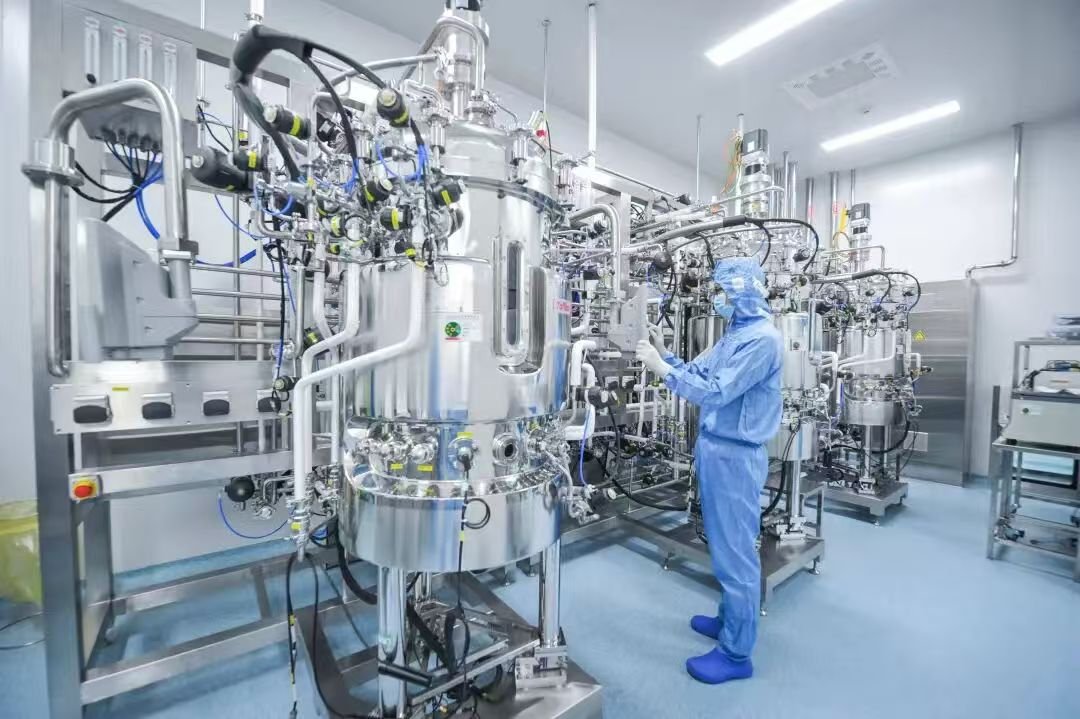
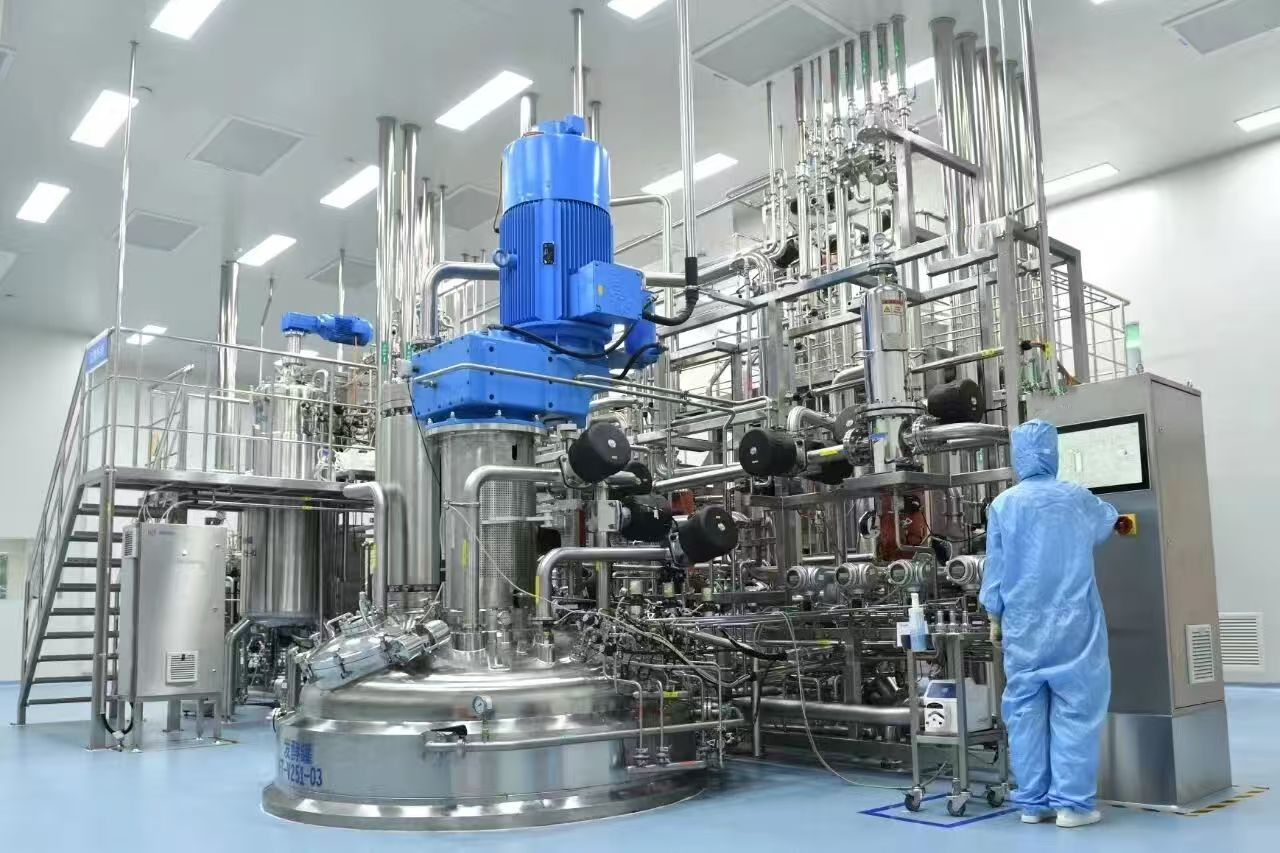
As the biopharmaceutical industry has matured, bioprocesses have evolved from low-yielding to highly-productive in just two decades. Underlying reasons for this development include an increased understanding of cell metabolism and physiology, which in combination with cell line engineering and cell culture medium developments have led to higher cell concentrations, increased cell-specific productivities, and processes with less variability. In addition, developments in bioreactor technology have enabled tailored, more accurate control that has contributed to an increased viability of production cultures and further increase in product yields.
Another development is the emergence of single-use technology. The initial reluctance to single-use has rapidly shifted towards a broad recognition of the multiple advantages that disposables bring, including an increased flexibility and a decreased upfront investment. Manufacturing suites and production plants entirely based on production with single-use are becoming more common, and agile and flexible facilities with disposable technology are being constructed in less time.
The increased productivity enables smaller facilities to be constructed, and it also facilitates using single-use technology throughout the process, including the production stage. This translates into advantages for the biomanufacturer, for example, in terms of decreased risk and earlier market entry. At the same time, biomanufacturers with existing infrastructure are looking for strategies to increase the capacity of their current plants to stay competitive. The approach of making processes more effective and high-yielding to increase productivity, or to enable manufacturing of the same quantity of product in a smaller scale with less effort, is called process intensification.
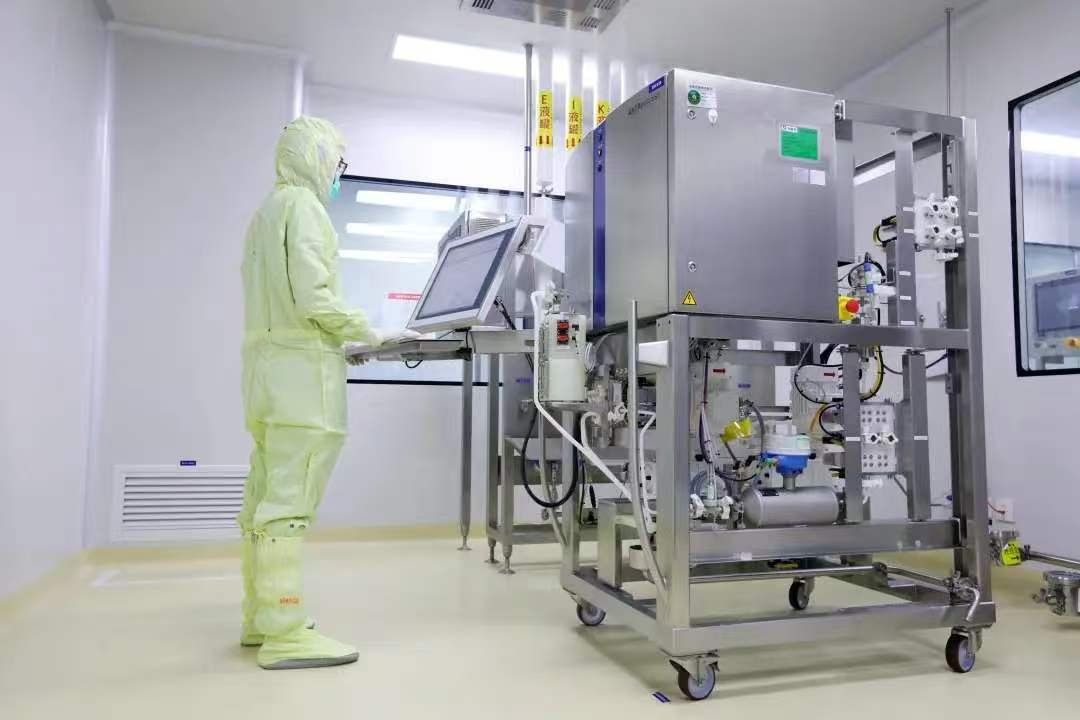
One example to illustrate the concept of process intensification is the intensified fed-batch process mode, which is also called concentrated fed-batch (CFB). The concentrated fed-batch gained public attention in 2009 when Percivia, a joint venture between Crucell and DSM, published record yields of 27 g/L from an antibody process using PER.C6 cells. A concentrated fed-batch resembles a perfusion, but here not only are the cells recirculated, but the product is, too. This is accomplished using a bioreactor in combination with a hollow-fiber filter retention system and an alternating tangential flow pump, such as the XCell ATF system from Repligen. The filter should have a pore size that retains both cells and product. In the case of antibody production, the filter cut-off is typically 30kDa, compared with filter pore sizes of 0.2 or 0.65μm used in perfusion processes. The concentrated fed-batch process typically starts as a conventional fed-batch, and cells and product are only recirculated during the last couple of days. An intensified fed-batch can support extremely high cell densities of more than 150 million cells/mL, and it leads to a single harvest with a highly-concentrated product.
The concentrated fed-batch process can be useful if the specific productivity of a cell line is low, as it readily supports high cell densities without extensive process development efforts required. However, the set-up is more complex than a fed-batch, and it requires additional cell culture medium. In addition, a considerable amount of biomass is generated, and this biomass needs to be taken care of in the harvest and clarification process. Cellular DNA and host cell protein are highly concentrated along with the product, further complicating downstream purification. Efficient clarification has been a challenge for concentrated fed-batch processes, and several different technologies have been investigated. This includes expanded bed adsorption (EBA), aqueous two-phase extraction, and precipitation, in addition to the depth-filter and centrifuge-based clarification steps typically used in harvest unit operations. Another consideration for concentrated fedbatch is product quality, as the product remains in the reactor vessel throughout the process. Here, it is readily exposed to cell debris, which increases the risk for degradation and product loss. Concentrated fed-batches can have benefits in certain cases, especially if the product is stable, and the process know-how already exists in-house. Under other circumstances, a conventional fed-batch might be a better option.
Intensified perfusion is a term used to describe perfusion processes that are run at very high cell densities of more than approximately 60 million cells/mL. A variety of cell retention devices can be used in an intensified perfusion process, but the retention capacity and scalability need to be assessed to ensure trouble-free operation at production scale. In an intensified perfusion process, the cell culture medium composition is critical to avoid nutrient depletion at high cell concentrations. The cell density can reach more than 100 million cells/mL, up to 200 million cells/mL, and productivities can reach very high levels in the range of 2–3 g/L, day [7,8,14].
Another application of upstream process intensification is found in the seed train. Here, an emerging strategy is to use perfusion instead of batch in the scale-up process. Briefly, the principle is that a perfusion culture can be grown to a very high cell density, which enables inoculation of a production-scale reactor with very few intermediate scale-up steps. For example, a 10 L perfusion culture at 60 million cells/mL can be used for direct inoculation of a 2000-L reactor at a start cell density of 0.3 million cells/mL. A more conventional scale-up process with batch cultures would have included intermediate vessels of, for example, 50L, 200 L, and 500L scale. Another aspect is that a high-density seed culture enables inoculation of the production culture at a high start cell concentration. This can minimize the production lag phase and shorten the production process considerably. A shorter process can enable more production batches annually and a better facility utilization.
As a leading process-oriented engineering company, Sino Bioengineering delivers professional bioengineering solutions and comprehensive technical services to clients worldwide.
For more products and solutions: https://sinobioengg.com/category/solution/
For more service: https://sinobioengg.com/category/service/