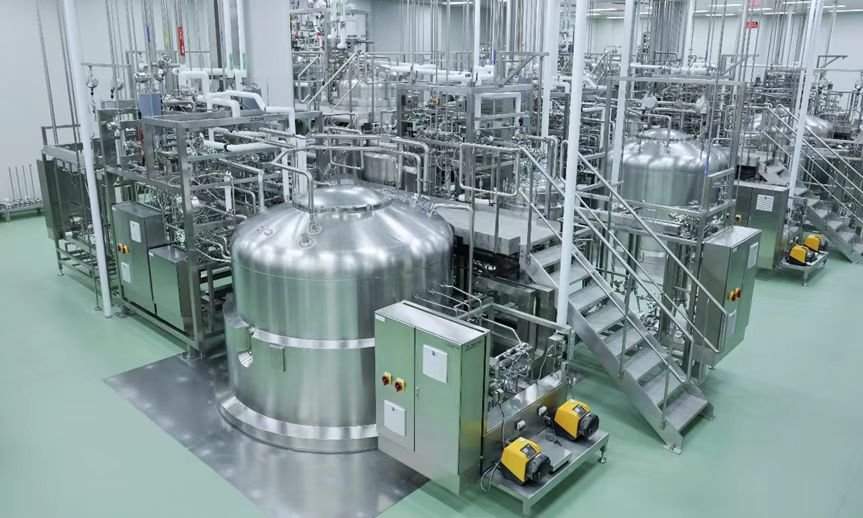

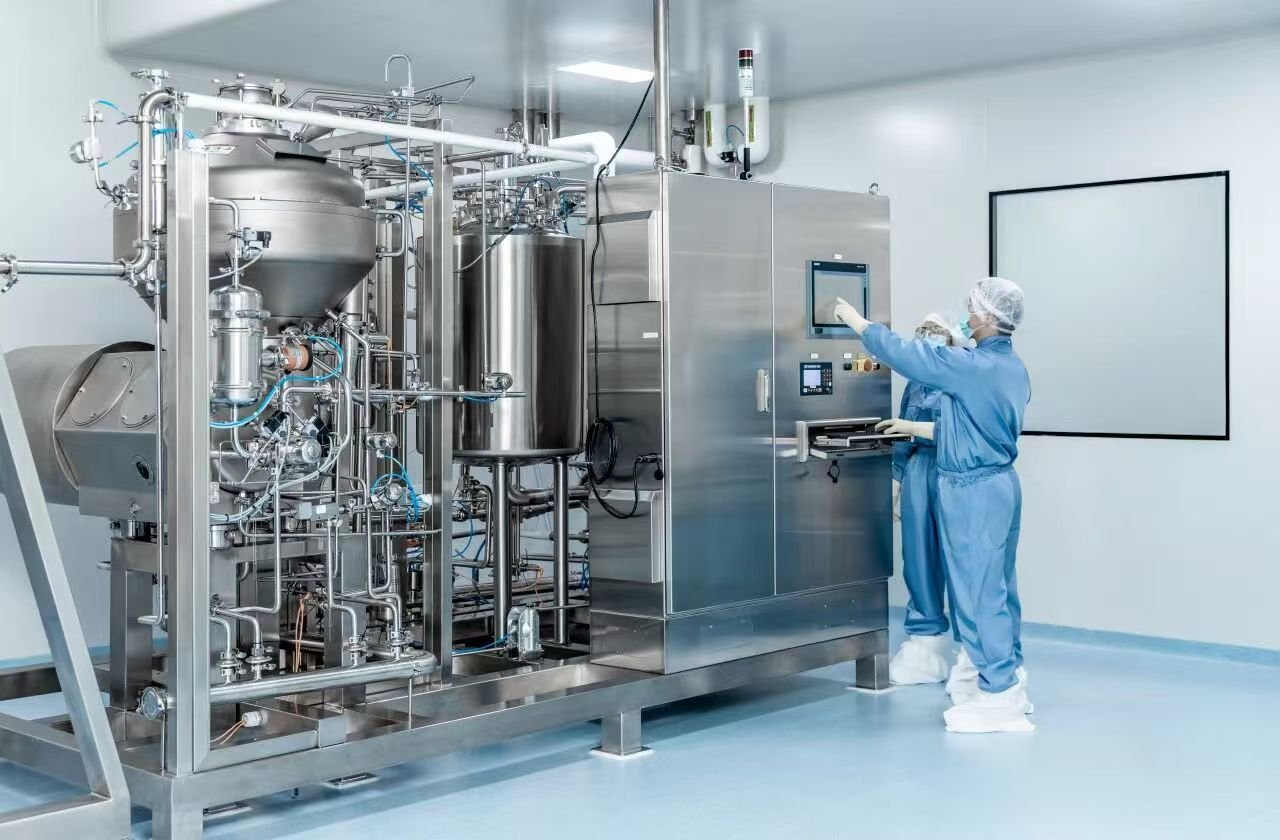
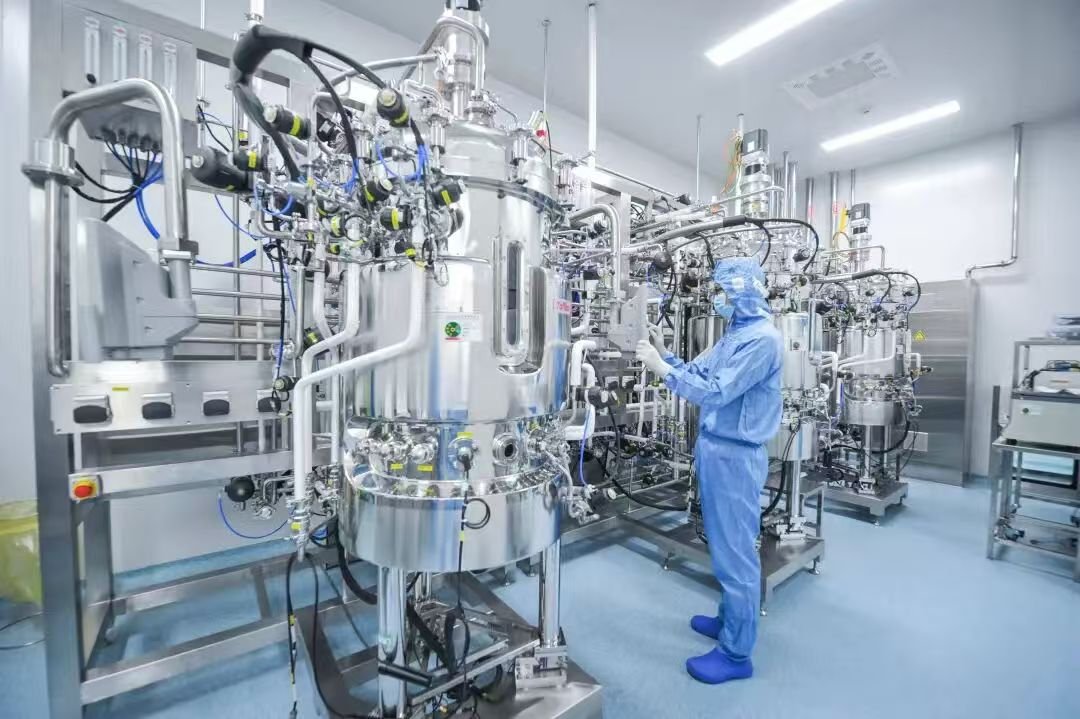
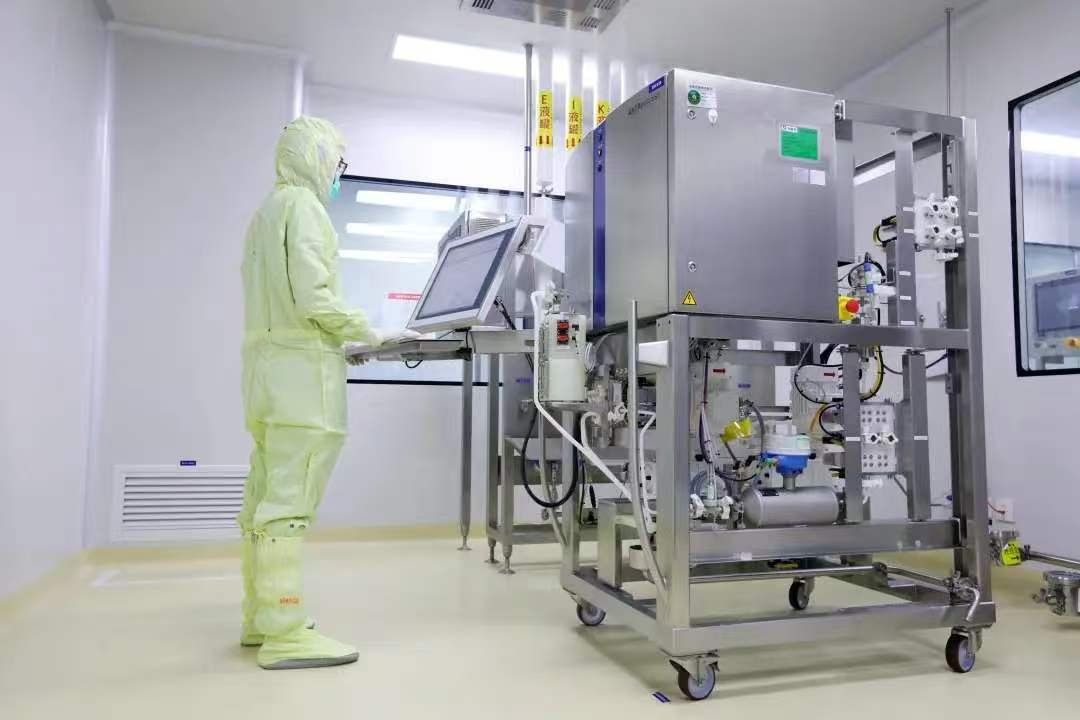
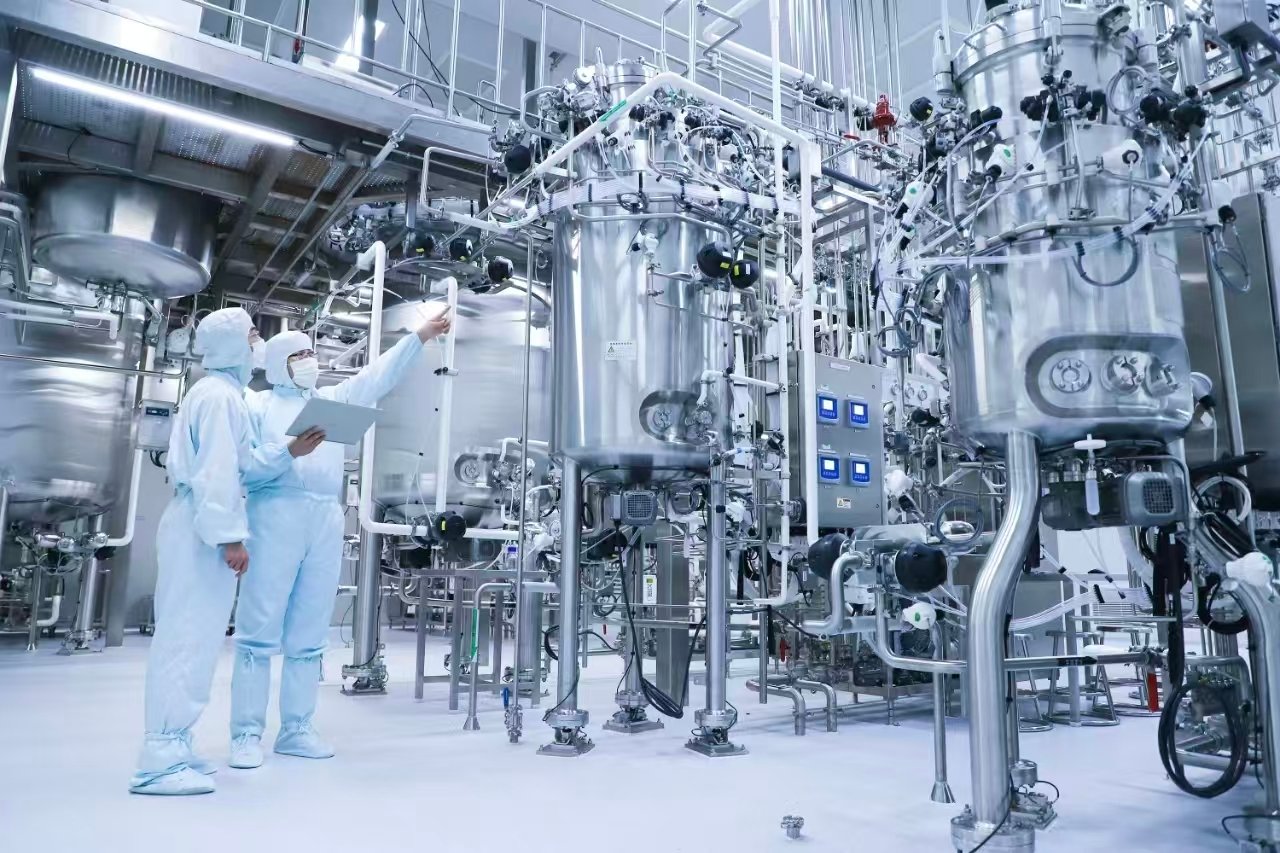
Before a production culture can start, there is a need to grow enough cells to inoculate the production reactor. This process is called the seed-train. Historically, not much attention has been given to the seed-train, but it plays a critical part for a successful outcome in the overall manufacturing process. The seed-train starts with thawing cells from a working cell bank (WCB), then scaling up in small scale vessels (often shake flasks), and continued scale-up in bioreactors of increasingly larger size, until the production vessel is inoculated. The operations that follow the harvest are consequently downstream.
The quality of the cell bank and a successful thaw are prerequisites for a robust, repeatable process. Thawing is done quickly in a process-tempered water bath, to avoid ice crystal damage to the cells. When the vial is thawed, fresh medium is added and the culture is left to recover. For animal cells, this typically takes a couple of days. When the culture has recovered, and the cells have started to proliferate, the expansion phase begins through addition of fresh culture medium. This is most often done batch-wise with a new expansion every 2-4 days depending on the specific process. As the volume increases, the culture is transferred to new vessels with appropriate sizes until the production bioreactor is inoculated.
Historically, glass shake flasks or glass spinners were used for small-volume suspension cultures in the seed-train and stainless steel bioreactors were the only option for cultures in larger scale. However, disposable shake flasks and singleuse bioreactor systems have, to a large extent, replaced the re-use vessels in the seed train, and few modern seed-trains are designed without any single-use technology. The increased use of disposables in the seed-train is seen regardless of whether the production culture is performed in stainless steel or single-use vessels. Underlying reasons include an increased flexibility, no cleaning and cleaning validation required, and a decreased upfront investment for disposable technology. At scales of up to 25L, rocking single-use bioreactors are common, whereas in scales between 25L and 2000L, single-use stirred-tank systems dominate.
The scale-up factor, or the split ratio, is an important parameter for the seed train. This factor describes the relation between the existing culture volume and the volume of fresh medium that can be added during scale-up or in routine maintenance. A large split ratio shortens and simplifies the seed-train (unless the culture lags), whereas a small split ratio leads to a longer scale-up process and an increased operational complexity with, for example, more vessels required. Most animal cell cultures have split ratios of between 1:3 to 1:20 depending on the host cell, the specific characteristics of the production clone, and the culture medium. For example, if the culture medium is very lean, then the scale-up factor might need to be decreased. The scale-up factor is also a consideration before a bioreactor investment as it relates to the turndown ratio of a vessel. The turndown ratio describes the range of the operational volume of a bioreactor device, and it is defined as the ratio of the maximum working capacity to the minimum working capacity. The turndown ratio of bioreactors typically varies between 10:1 to 2:1, which means that the minimum volume of a bioreactor usually is between 10% and 50% of the max volume. The variation depends on impeller technology, heating technology, and positioning of measurement probes. A high turn-down ratio can enable two seed-train steps in the same vessel, whereas a low ratio might necessitate two vessels for the same operation.
As a leading process-oriented engineering company, Sino Bioengineering delivers professional bioengineering solutions and comprehensive technical services to clients worldwide.
For more products and solutions: https://sinobioengg.com/category/solution/
For more service: https://sinobioengg.com/category/service/