
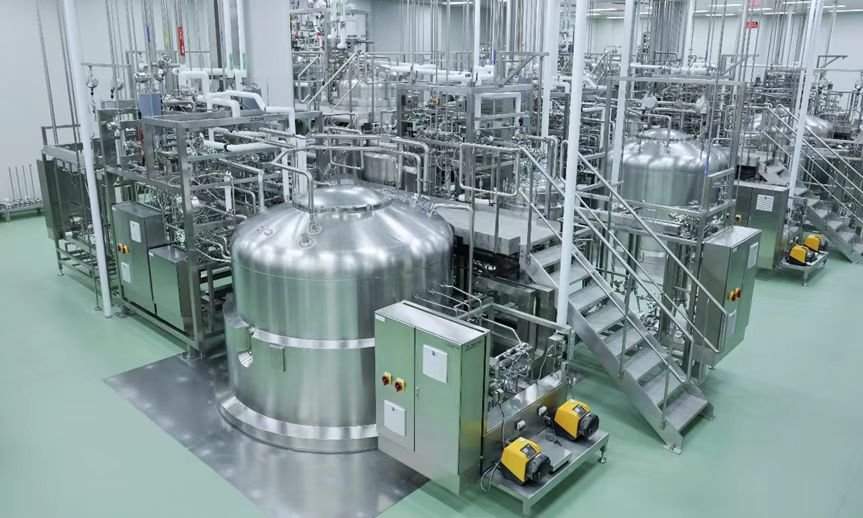

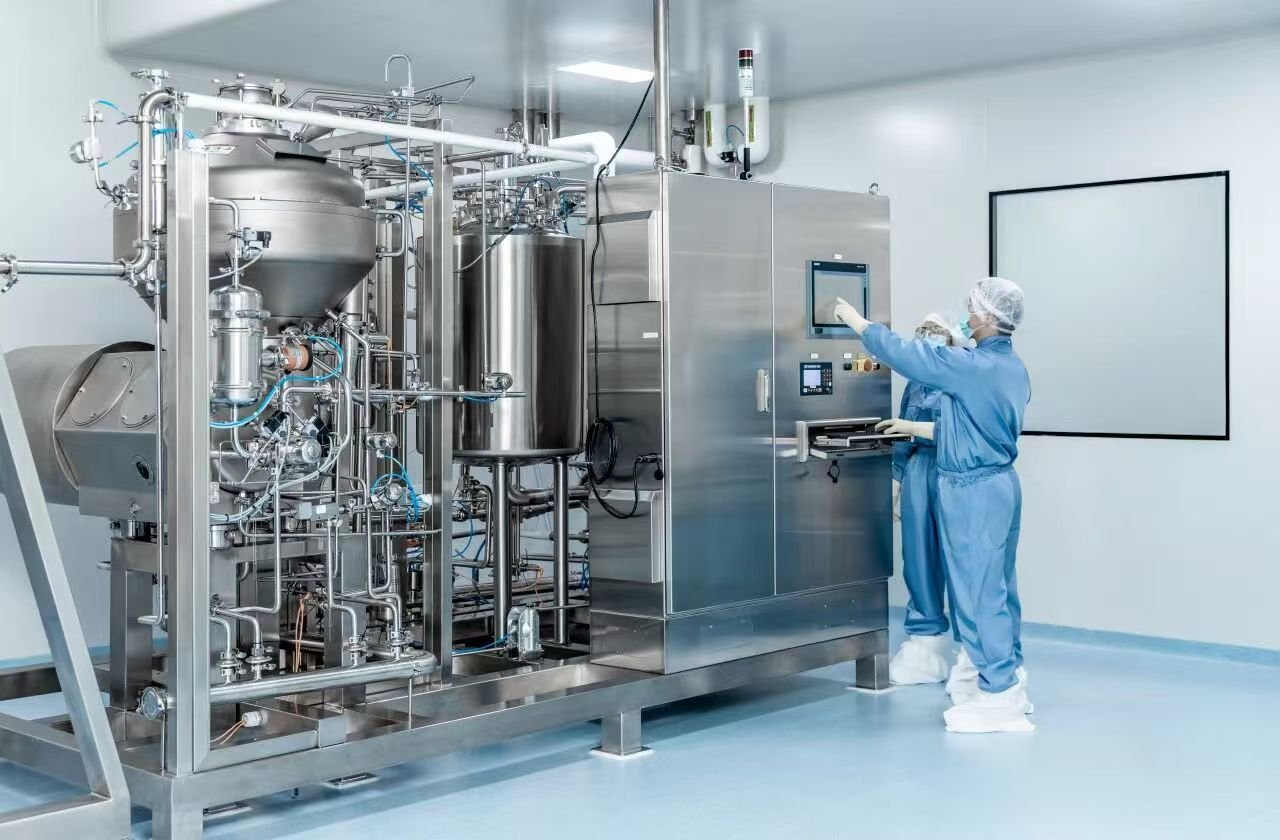
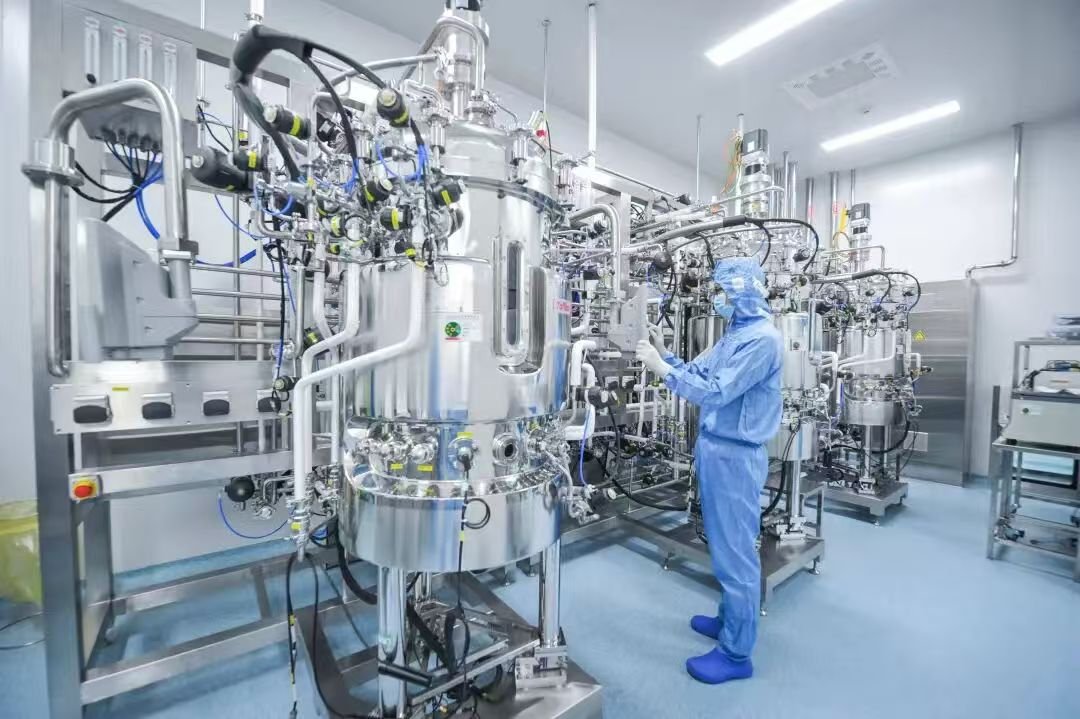
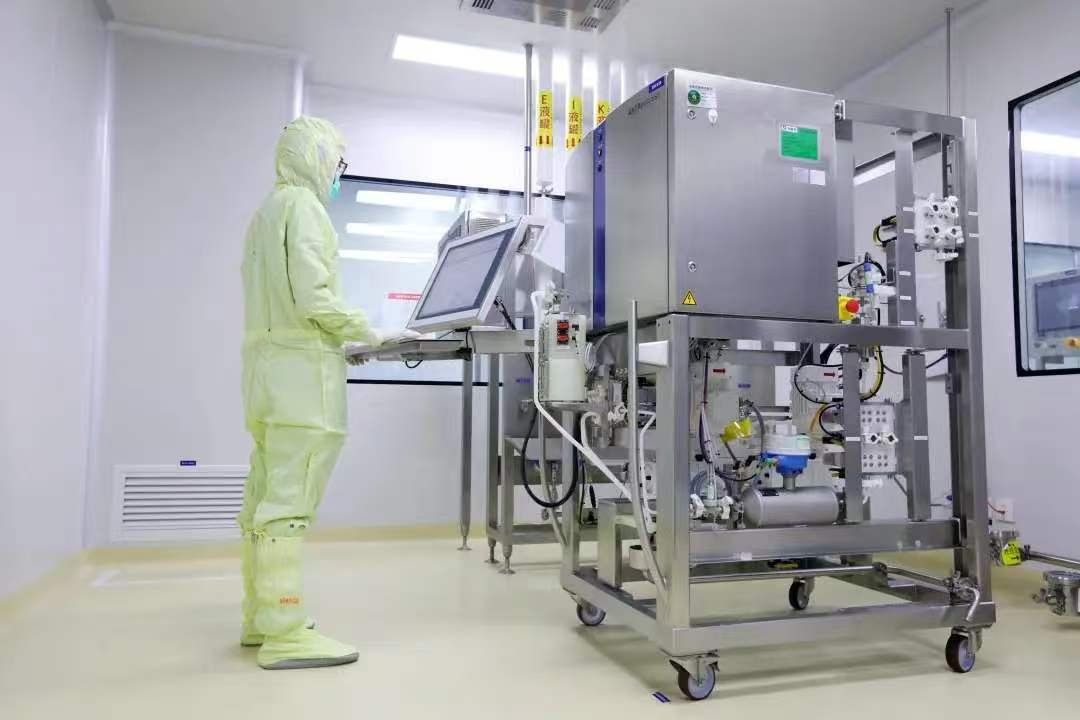
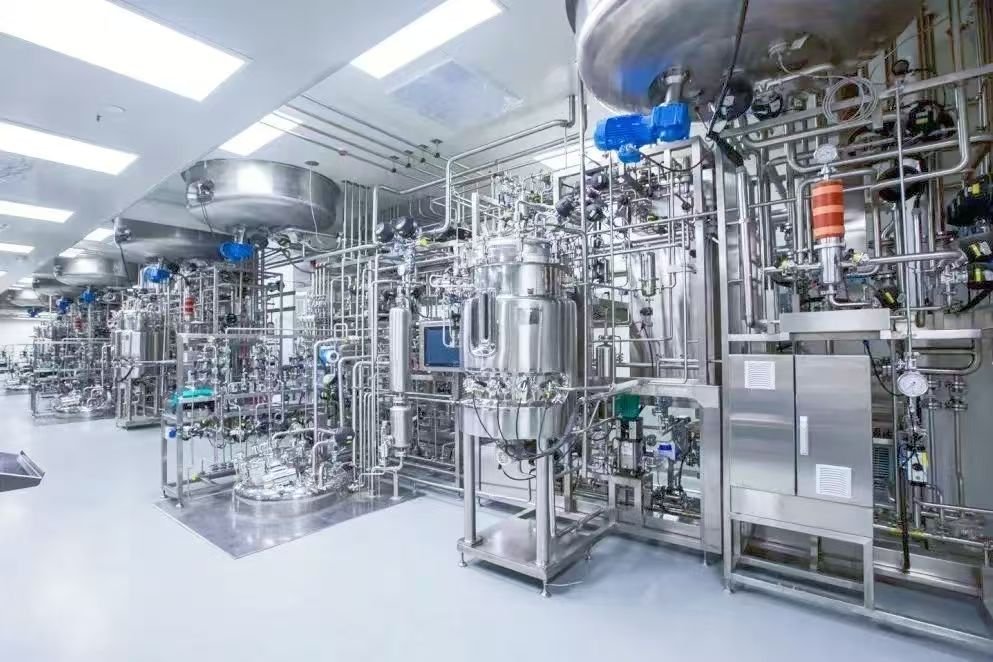
Cleaning validation is an area that demands considerable attention and often leads to negative comments during regulatory inspections. It has been suggested that for biotech products, cleaning validation should probably begin at the same time as phase 2 clinical trials. All areas in contact with the product including resins, membranes, and equipment need to be addressed during cleaning validation. In order to validate a cleaning procedure, it is necessary to know what items are being removed, how samples are taken, and when cleaning validation will be performed. Holding times for both dirty and cleaned equipment (including packed columns) should be validated.
Cleaning Validation
Resins
Chromatography resins have large surface areas to which process and product impurities and contaminants such as microorganisms can adhere. Detection and validation of carryover between batches is an essential part of cleaning validation.
Cleaning validation of packed columns usually requires a combination of small-scale studies and manufacturing runs. Small-scale studies can be useful for cleaning method development and validation (especially for lifespan studies), but they are fairly meaningless for validation unless production feedstreams and manufacturing conditions are used. Repetitive cycles of sample application, elution, and cleaning/sanitization can be run on an automated system to assess long-term effectiveness of the protocols. Keep in mind that storage solutions, in particular 0.01 M sodium hydroxide, may also have a cleaning effect. It is therefore valuable to simulate storage conditions in the small-scale study.
The production scale cleaning should be validated, and subsequent to this, monitoring becomes part of the production routine. Routine controls may include maintenance of cleaning agent contact time and measurements of product purity and impurity profiles. Blank runs (i.e., no sample applied) are expected to assess carryover. Blank runs are typically performed at production scale every five or more cycles. As analytical methods become more sensitive in the future, it is possible that a PAT approach will suffice, provided it is possible to demonstrate assay sensitivity and absence of masking of impurities.
Membranes
Just as for chromatography resins, ultrafiltration and diafiltration membranes can be reused, provided the cleaning is validated. Analysis of rinse water after cleaning, as well as blank carryover runs for impurities and product, are important for the validation. In addition, removal of cleaning agents must be validated. Ahmed et al. have demonstrated cleaning validation on an ultrafiltration/diafiltration (UF/DF) membrane used in a mAb process. Cleaning was performed using 250ppm sodium hypochlorite in 0.5M NaOH at ambient temperature. After washing out the cleaning solution, flushed streams of water from the permeate and the retentate were analyzed by TOC. Removal of the cleaning agent was checked by analysis of remaining chloride. Data showed that the cleaning process reduced organic content in flush water to about 1ppm and that the cleaning agent was efficiently removed.
Equipment
There are several publications that provide valuable information on equipment cleaning validation [12,48]. As noted in a review article on risk-based cleaning, PAT can now be used to complement cleaning validation and to optimize equipment usage based on real time data. In this way, PAT can identify parameters that indicate equipment cleanliness. Different approaches for equipment cleaning validation are discussed in this article. It is also noted that “worst case” validation testing strategies reduce the number of validation studies for a system or process. Cleaning validation for buffer tanks used in the manufacture of Betaseron has been described. Worst-case conditions were used during three cleaning runs. Final WFI rinse and fresh WFI were tested and compared for conductivity, pH, endotoxin, and bioburden.
For some equipment, it is difficult, if not impossible to reach all areas in order to test cleaning efficiency. Coupons (i.e., pieces cut out of the equipment material usually available from equipment manufacturers or their suppliers) can be used and challenged with worst-case situations, such as letting a soil dry for an extended time. Another thing to consider and validate is the time dirty equipment is held prior to cleaning. This also applies to packed chromatography columns. Not specifying holding time prior to cleaning can result in an FDA form 483 (a negative finding during an inspection), as illustrated by the comment: “Cleaning/sanitization hold times for UF/DF skids have not been established.” Recovery from different surfaces should also be addressed. In one example, a spike of purified protein was 89% recovered on stainless steel, but only 62% on polypropylene and 55% on glass. This needs to be considered if moving from stainless steel to single-use equipment.
Assays and Testing Techniques
By far, the most commonly used method for cleaning validation is TOC. Newer TOC equipment can now be used in-line, providing rapid, economical monitoring and validation of cleaning effectiveness. In 2005, the FDA stated that TOC can be an acceptable method for monitoring cleaning effectiveness.
Since TOC does not distinguish among different carbon-containing materials, when performing a risk assessment, the carbon is assumed to come from the material of highest risk. For packed chromatography columns evaluated during blank runs, TOC values may be too high due to the presence of carbon-containing buffers or additives. In this case, a total protein assay, SDS-PAGE, or another suitable assay may be needed.
Methods that are applied to cleaning validation include testing of rinse fluids, swab testing, and visual inspection. All have limitations and usually a combination of methods is used. Disadvantages of swabbing and rinse-water sample analysis are discussed by Zeller. . Assays should be chosen based on their detection capabilities and sensitivity. This can be problematic as newer, more sensitive methods are applied to cleaning validation. More recently several publications have described highly sensitive techniques for analysis of host cell proteins. These techniques have the potential to determine residual proteins removed during CIP and would therefore be valuable tools for cleaning validation. In addition, techniques to monitor the CIP process in situ have been published. Another technology that can be used to analyze residues is ion trap mobility spectrometry (ITMS). Widely used in security applications for the detection of narcotics and explosives, ITMS measurements take less than 1min and can measure swab samples directly without dilution. ITMS is applicable for detecting low molecular weight compounds and can be calibrated to detect particular contaminants such as antibiotics, detergents, or other additives used in the manufacturing process. ITMS has the potential to facilitate at-line measurements of cleaning residues and reduce the amount of equipment downtime during residue analysis. Results that are commonly returned in 24–48h can potentially be generated in under 4h with ITMS.
Swab testing is useful for equipment, and is used to sample poorly soluble, insoluble or occluded residues. Operator techniques and swabbing patterns must be standardized. Method development of swab sampling for cleaning validation can be extensive.
Rinse water sampling is useful for equipment, resins, and membranes. In some cases, poorly soluble residues may not be detected. Rinse water, however, is the best method for chromatography resins. Another sampling strategy involves actual removal of some resin during re-slurrying, which is often done to enhance resin cleaning by affording a greater contact area with the cleaning agent. This must be part of an approved protocol. In one example of a very large stainless steel column, small aliquots of resin were removed around the circumference and in the center of the column, and from any area that appeared discolored. Assays included bioburden, endotoxin, resin small ion capacity, and a product-specific assay. There was a small amount of protein that was found to carryover from run to run, but the performance was not impaired.
External visual inspection for large chromatography columns may not provide much useful information as very little of the surface area is visible. There is a perception that a discolored column may not be clean. However, there are many discolored columns being used to produce very pure biotherapeutics. It is essential to try to determine the cause of the discoloration and to evaluate the potential impact of the discoloration. If the discoloration is co-eluting with the product it may represent a risk factor. There have been studies using a plethora of reagents (including bleach which destroys the resin) to remove discoloration only to find out that nothing worked. Consistent performance was demonstrated in spite of the unpleasant appearance. Visual inspection and application of a visible residue limit for cleaning validation has been discussed. Although the examples provided in the article are for traditional pharmaceuticals, some interesting factors for validating visual detection of cleanliness are presented. For example, it is essential to define the observer viewing position, observer viewing distance, light intensity, and viewing angle. Observer-to-observer variability also affects the outcome.
Defining Acceptable Residual Levels
Defining the maximum amount of carryover is a difficult task and is best addressed by a risk assessment. There may only be trace amounts and residuals undetectable by specific methods remaining after harsh treatments such as NaOH and steam. Yet, acceptance limits should be practical, achievable, and verifiable. For biopharmaceuticals, understanding the nature of the risk is essential for defining acceptable residue limits that will not affect product quality, i.e., safety and potency.
For multiproduct facilities, there is likely to be a greater risk than for facilities dedicated to a single product (one of the reasons why these facilities nowadays tend to use more disposables). Equipment cleaning validation and common errors within a multiproduct facility have been discussed. It is not always possible to apply acceptance limits that are used for traditional pharmaceuticals to biopharmaceutical cleaning validation. Generation of misfolded and/or fragmented proteins during the cleaning might potentially be immunogenic. It is acknowledged that this is a theoretical risk that needs to be tested using both specific and non-specific assays. This can be followed by performing a risk calculation and then implementing TOC analysis between campaigns. The fact that most protein APIs will be denatured or degraded when using harsh cleaning conditions makes cleaning validation even more demanding in a multiproduct facility. As product-specific analytical methods are not valid for modified APIs, alternative approaches are needed.
Sanitization Validation
Validation of sanitization is typically performed during process validation and followed up by routine monitoring in regular production. The assays for bioburden must be validated. A recent FDA 483 noted that a company had not validated the bioburden method for their chromatography column storage solution. In some cases, the sanitization agent will inhibit the growth of microorganisms, requiring that interference tests (bacteriostasis and fungistasis) be performed to validate the assays. During process validation, routine bioburden monitoring should be included in the protocols.
The performance of challenge studies for validation of sanitization does not necessarily provide relevant information since control of microorganisms in the actual manufacturing environment is the critical element. Challenge studies are, however, useful in providing information on the effectiveness of sanitizing agents and identifying components that are difficult to sanitize. Information on the validation of sanitization is provided in the PDA technical report on bioburden recovery validation.
As a leading process-oriented engineering company, Sino Bioengineering delivers professional bioengineering solutions and comprehensive technical services to clients worldwide.
For more products and solutions: https://sinobioengg.com/category/solution/
For more service: https://sinobioengg.com/category/service/