
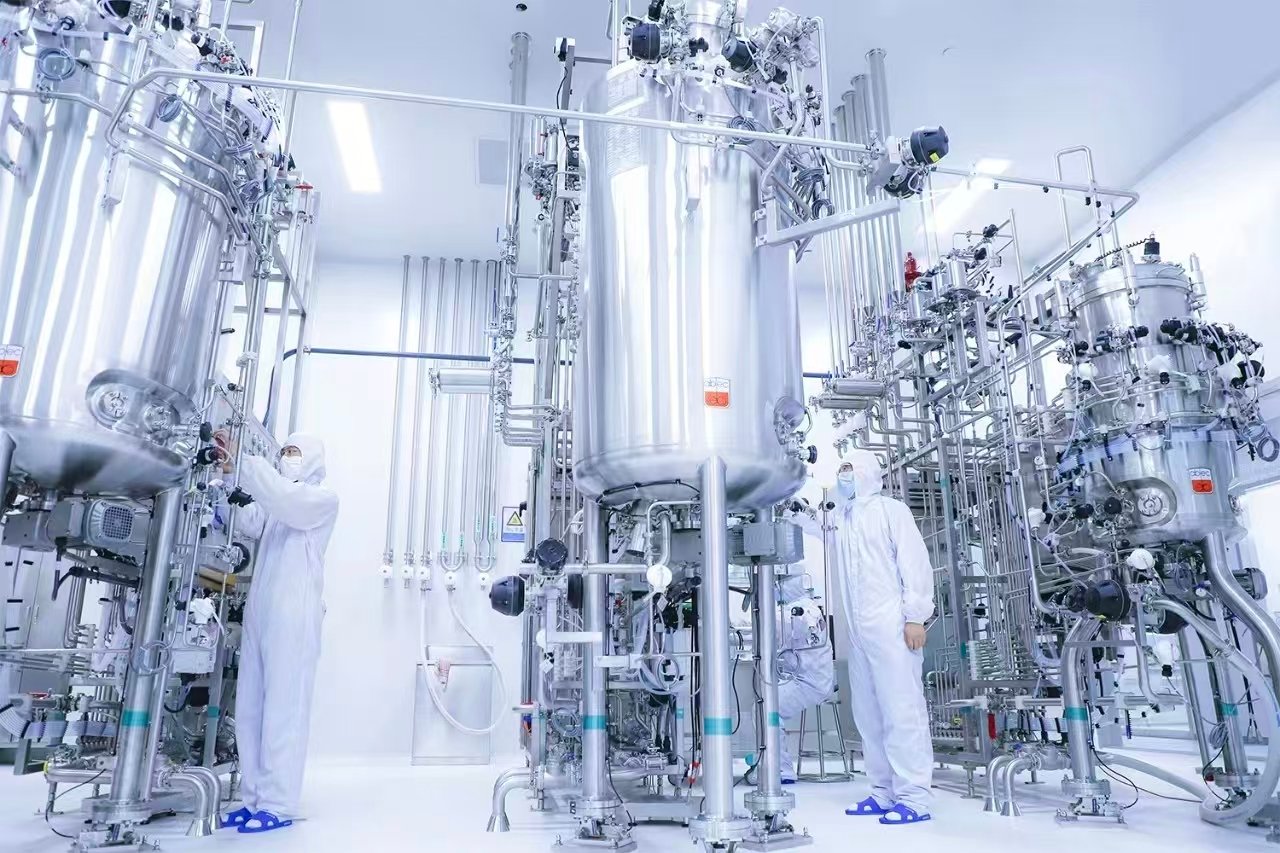
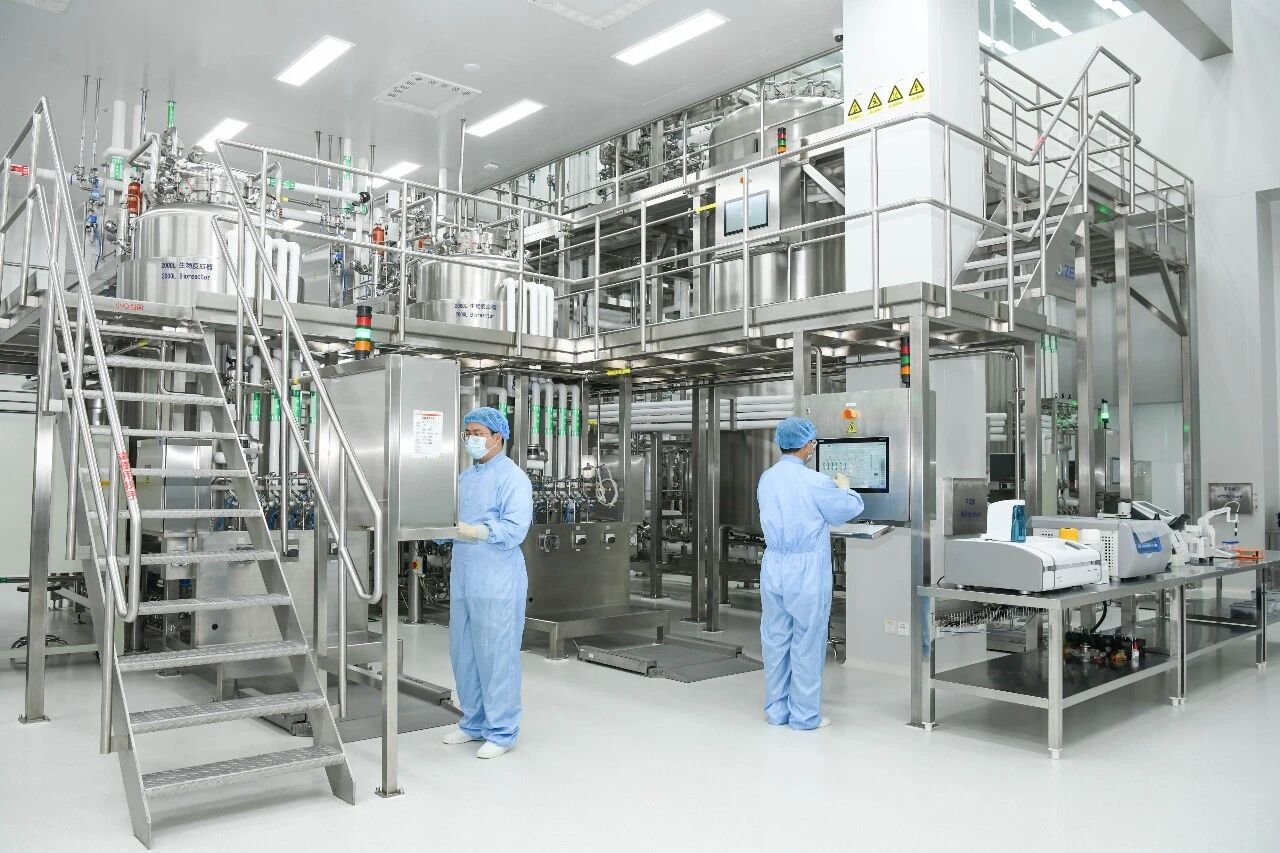
With the booming development of gene therapy, DNA vaccines and mRNA vaccines, plasmid DNA has garnered considerable attention as a core raw material for non‑viral vectors. Its inherent safety advantages together with surging market demand have driven continuous upgrades in plasmid DNA manufacturing processes. Nevertheless, regulatory authorities impose extremely stringent quality requirements for plasmid DNA: high purity, high homogeneity, and predominance of covalently closed circular supercoiled isoforms. Accordingly, downstream purification is far more than a single unit operation within manufacturing; it constitutes the critical determinant of product compliance and therapeutic efficacy.
Analogous to recombinant protein workflows, plasmid DNA process development follows the classic paradigm from lab‑scale feasibility to commercial‑scale scale‑up: screening of expression vectors and host strains, systematic optimization of fermentation parameters, and full‑process integration of cell lysis, clarification, concentration and chromatographic purification. Post‑fermentation processing of plasmid DNA comprises a series of sophisticated unit operations, with the core objective of step‑wise removal of diverse impurities: host cell debris, host proteins, low‑molecular‑weight nucleic acids (RNA, oligonucleotides), genomic DNA (gDNA), endotoxins, and topological isoforms (relaxed, linear and denatured plasmids). This article systematically dissects key unit operations and underlying technical principles for plasmid DNA downstream purification.
1. Cell Lysis: The Critical Transition from Cell Disruption to Target Release
Cell lysis marks the starting point of plasmid DNA downstream processing, and its performance directly sets the upper limit of overall process recovery. At this stage, all intracellular components — target plasmids, RNA, gDNA, endotoxins and host proteins — are concomitantly released into the lysate.
Two major challenges arise during lysis. First, both plasmid and gDNA molecules are highly shear‑sensitive; improper handling may trigger strand fragmentation. Second, crude lysates exhibit extremely high viscosity, which impairs subsequent processing workflows. Since Birnboim and Doly established the alkaline lysis method, it has remained the preferred process for plasmid recovery. The underlying principle relies on high‑pH‑mediated complete denaturation of linear gDNA, whereas supercoiled plasmid DNA undergoes reversible denaturation constrained by its topological structure. Upon neutralization, plasmids renature and remain soluble, while gDNA co‑precipitates with host proteins and cell debris to form flocculent complexes.
Laboratory‑scale centrifugation cannot be directly translated to industrial manufacturing. High‑velocity feed streams in industrial centrifuges exert shear forces that disrupt precipitates and fragment gDNA. Filtration therefore represents a more viable option for large‑scale production. Studies demonstrate that filters with 5 μm pore size can remove approximately 99 % of precipitates from alkaline lysates, delivering plasmid recovery up to 67 % and purity of 46 %. Filters with pore sizes exceeding 15 μm fail to retain solids effectively and do not meet process specifications. In large‑scale filtration, appropriate application of filter aids mitigates pressure build‑up and prevents precipitate shearing and re‑dissolution of gDNA fragments.
2. Clarification and Concentration: Core Unit Operations for Primary Impurity Reduction
Although most gDNA is denatured and precipitated during alkaline lysis, plasmid DNA accounts for merely ~2 % (w/w) of total nucleic acids in E. coli lysates. Substantial residual RNA and host proteins remain and must be eliminated in subsequent steps.
One key objective of clarification is removal of high‑molecular‑weight RNA. Moderate incubation of lysates at 37 °C leverages endogenous nuclease activity to reduce RNA levels by 40 % with only ~9 % plasmid loss. Residual host proteins can be removed via salting‑out using chaotropic salts such as lithium chloride or ammonium acetate. These salts simultaneously precipitate high‑molecular‑weight RNA, although performance varies across salt types and system‑specific screening is required.
Following clarification, plasmid DNA is commonly concentrated by polyethylene glycol (PEG) precipitation. This operation efficiently depletes small‑molecular‑weight nucleic acid impurities, reduces process volume, and achieves buffer exchange to prepare material for subsequent chromatographic purification.
3. Chromatographic Purification: Precise Separation of Supercoiled Plasmid DNA
3.1 Discontinuation of Density‑Gradient Centrifugation for GMP Manufacturing
In laboratory settings, supercoiled plasmids are conventionally purified by sucrose or cesium chloride‑ethidium bromide density‑gradient ultracentrifugation. This technique separates supercoiled, open‑circular and linear DNA based on differential sedimentation behaviour within density gradients and yields satisfactory purity. Nonetheless, three fundamental drawbacks preclude its deployment for clinical‑grade manufacturing:
1. Poor scalability and low throughput: ultracentrifugation equipment is capital‑intensive with limited batch capacity;
2. Hazardous reagents: ethidium bromide is a potent mutagen, while cesium chloride requires large dosage and is difficult to recycle;
3. Regulatory incompatibility: the method fails to satisfy GMP requirements for cleaning validation and process reproducibility.
Chromatography has therefore become the mainstream approach for large‑scale supercoiled plasmid purification. Separation performance is governed by multiple interactions between nucleic acids and stationary phases, including molecular size, physicochemical properties (charge and hydrophobicity), accessibility of base‑pair moieties, and topological constraints imposed by supercoiling. These differentiating properties enable selective separation via diverse chromatographic modalities.
3.2 Reversed‑Phase, Hydrophobic‑Interaction and Ion‑Pair Chromatography
In reversed‑phase chromatography (RPC) and hydrophobic‑interaction chromatography (HIC), nucleic acid retention is jointly determined by molecular size, base composition and secondary structure:
Molecular size: Larger nucleic acids exhibit longer retention in RPC.
Base composition: AT‑rich duplex regions possess relatively weak hydrogen‑bonding propensity and are prone to partial denaturation, generating intramolecular single‑stranded domains that expose nucleobases and enhance hydrophobic interactions, thereby prolonging retention time. Accordingly, single‑stranded oligonucleotides display retention profiles comparable to double‑stranded DNA fragments of equivalent length in RPC/HIC. Conversely, in ion‑pair reversed‑phase chromatography (IPC), partial denaturation of AT‑rich DNA segments reduces effective charge density and lowers retention factors.
Topological structure: Torsional stress from supercoiling strengthens interactions with stationary phases; retention increases with the degree of supercoiling.
Both RPC and IPC have been applied for direct purification of supercoiled plasmids from crude lysates, achieving complete separation of low‑molecular‑weight RNA, gDNA fragments and linear plasmid DNA, with linear plasmids showing the strongest stationary‑phase affinity. The major limitation of RPC lies in the requirement for organic solvents for plasmid elution, which poses challenges for clinical‑grade manufacturing with respect to process validation, residual‑solvent control and environmental compliance.
3.3 Anion‑Exchange Chromatography (AEX): Conformation‑Dependent Electrostatic Recognition
The poly‑anionic sugar‑phosphate backbone of nucleic acids renders them inherently suitable for anion‑exchange chromatography (AEX). Theoretically, total nucleic acid charge scales proportionally with base‑pair count, so larger molecules should elute later. Nevertheless, AEX separation is essentially conformation‑dependent:
Nucleic acid flexibility facilitates conformal contact with stationary‑phase pore curvatures, increasing accessible charged sites and retention factors. Molecular bending elevates local charge density and reinforces electrostatic interactions. This physical mechanism underpins topological isoform separation by AEX: supercoiled DNA demonstrates greater extensibility, compactness and bendability than relaxed plasmids, yielding higher effective charge density and improved fitting to particle pore geometries, hence enabling resolution from relaxed isoforms.
Key process optimization considerations:
1. Gradient profiling: Extended elution gradients generally improve resolution, with optimal performance observed within 5–20 column volumes. Gradient slope exerts limited influence on separation of low‑molecular‑weight dsDNA fragments, whereas shallow gradients are critical for resolving high‑molecular‑weight nucleic acid species.
2. Topological isoform separation: Moderate NaCl gradients enable partial fractionation of relaxed, supercoiled and denatured plasmid populations.
3. Limitations: Plasmid DNA, gDNA, high‑molecular‑weight RNA and endotoxins are all high‑charge‑density analytes. Single‑step AEX cannot achieve exhaustive selective elution and impurity removal, and must be combined with complementary chromatographic modes.
3.4 Size‑Exclusion Chromatography (SEC): Exploitation of Hydrodynamic Radius Differences
Supercoiling markedly reduces the hydrodynamic radius of plasmid DNA, which is the basis for SEC separation. High‑molecular‑weight nucleic acids (gDNA and plasmid DNA) are excluded from stationary‑phase pores and elute in the void volume, while low‑molecular‑weight impurities including RNA, proteins and endotoxins enter pore structures and are retained for later elution. SEC is therefore typically implemented as the final chromatographic polishing step for plasmid downstream workflows, accomplishing both fine purification and buffer exchange.
Two strategies enhance SEC resolution:
1. Reduced sample loading concentration: As reported by Bywater et al., lowered relative loading improves resolution between plasmid DNA and gDNA.
2. Column tandem configuration: Equivalent to extended bed length, further improving gDNA‑plasmid separation efficiency.
The primary disadvantage is substantial sample dilution, which may necessitate additional concentration operations, requiring trade‑off assessment in large‑scale manufacturing.
3.5 Affinity Chromatography: Potential and Practical Limitations of Triplex‑Mediated Recognition
Double‑stranded DNA can form triplex structures. Triplex formation proceeds kinetically slowly yet remains stable under high‑ionic‑strength conditions. Affinity chromatography built upon this principle employs covalently immobilized oligonucleotide ligands that hybridize to specific sequences within target plasmids to generate triplex complexes for specific capture. Owing to topological constraints, supercoiled plasmids exhibit superior affinity toward stationary‑phase ligands.
This approach delivers promising purification performance: RNA and gDNA can be reduced to undetectable levels while maintaining 62 % recovery. Significant drawbacks still restrict industrial adoption:
1. Inadequate endotoxin clearance: endotoxin levels are only halved, failing clinical‑grade specifications;
2. Accumulation of denatured plasmid species;
3. Low resin binding capacity and high consumable costs.
These constraints render triplex‑based affinity purification economically unfeasible for commercial production, and it remains predominantly a research‑stage technology.
4. Process Integration: Sequential Combination of Multi‑Mode Chromatography
No single unit operation can fulfil all purification requirements for plasmid DNA; downstream processing relies on sequential multi‑chromatographic workflows:
1. Alkaline lysis followed by filter clarification: release target plasmids and remove bulk precipitated impurities.
2. Incubation, salting‑out and PEG precipitation: reduce RNA burden, deplete host proteins, achieve concentration and buffer exchange.
3. Capture step via AEX or HIC: load at elevated ionic strength to capture plasmids while excluding gDNA, RNA, host proteins and endotoxins.
4. Intermediate polishing: further remove residual structure‑related impurities.
5. SEC final polishing: thoroughly separate supercoiled plasmids from relaxed, linear and denatured topological isoforms, and transfer product into formulation or storage buffer.
5. Conclusion
Driven by the expanding gene‑therapy and nucleic‑acid‑drug market, demand for efficient manufacturing of homogeneous supercoiled plasmid DNA continues to rise. Development and optimization of downstream purification workflows have become a key competitive factor within the biotech industry. Chromatography occupies a central position in plasmid purification owing to its scalability, reproducibility, compatibility with benign chemical reagents, and compliance with stringent cleaning‑validation requirements for regulatory approval.
From a process perspective, AEX and HIC represent the most suitable unit operations for capture, intermediate purification and concentration of supercoiled plasmids. Sample loading under high‑ionic‑strength conditions enables effective removal of gDNA fragments, RNA, host proteins and endotoxins. The final SEC step is functionally indispensable, accomplishing dual objectives: resolution of supercoiled species from other topological isoforms, and buffer adjustment for finished‑product storage.
Looking ahead, advances such as continuous manufacturing platforms, novel mixed‑mode resins, transient lysis optimization and automated process control are expected to boost overall recovery and supercoiled isoform content while lowering production costs. These technical innovations will furnish robust supply‑chain support for the industrialization of gene‑therapy and nucleic‑acid‑based therapeutics.