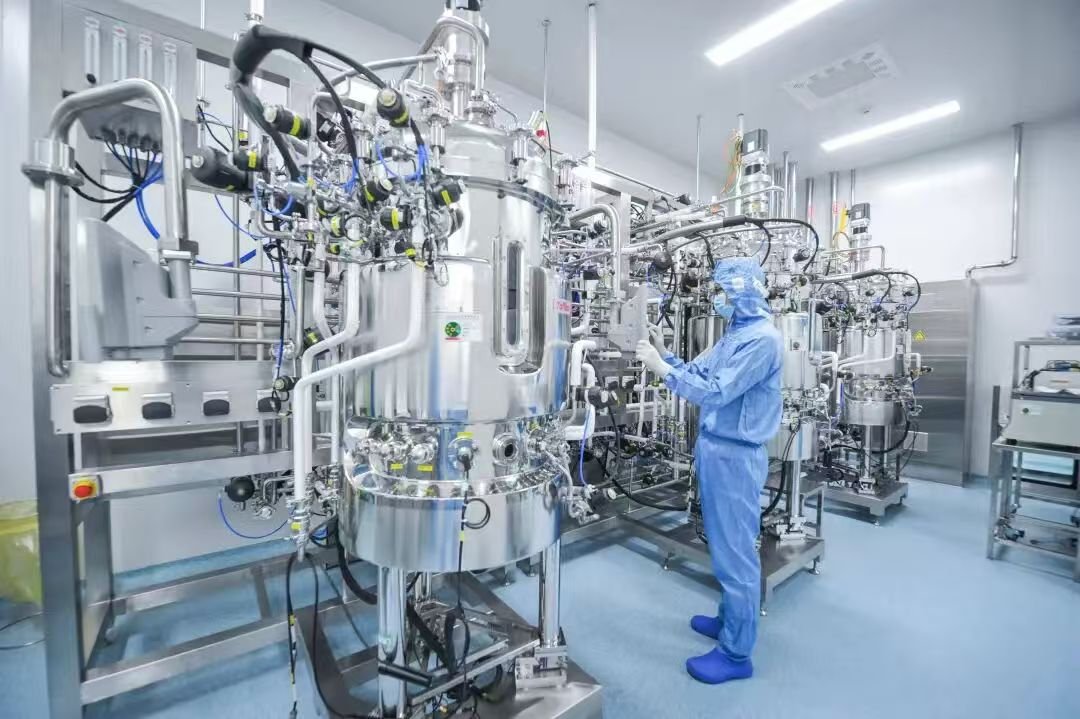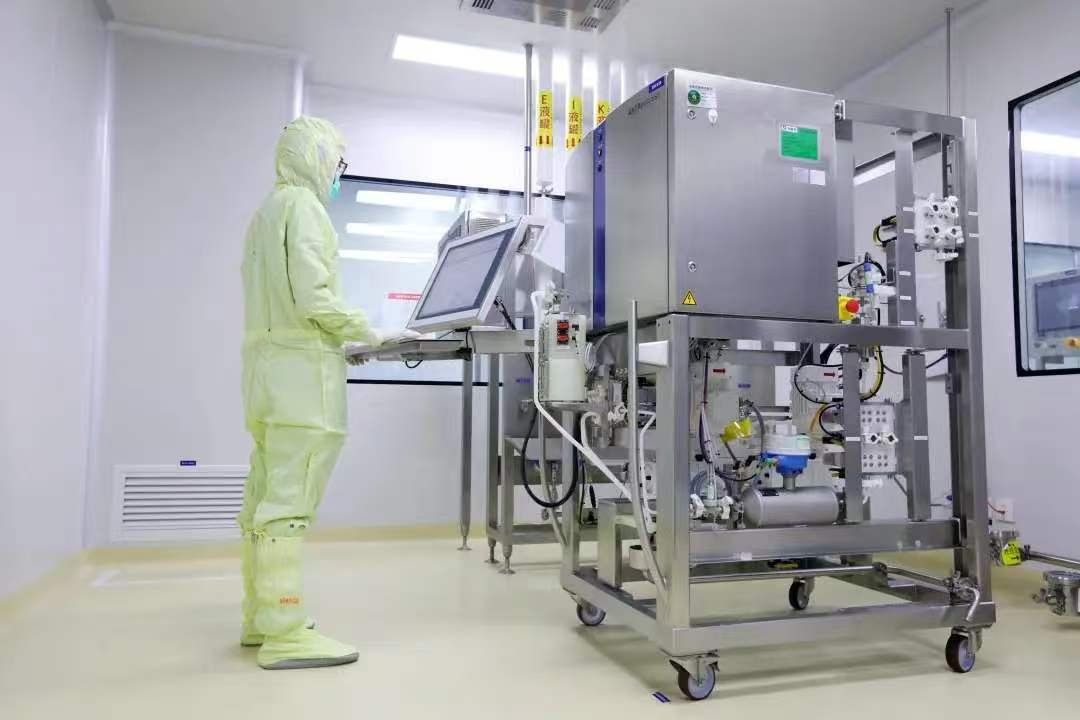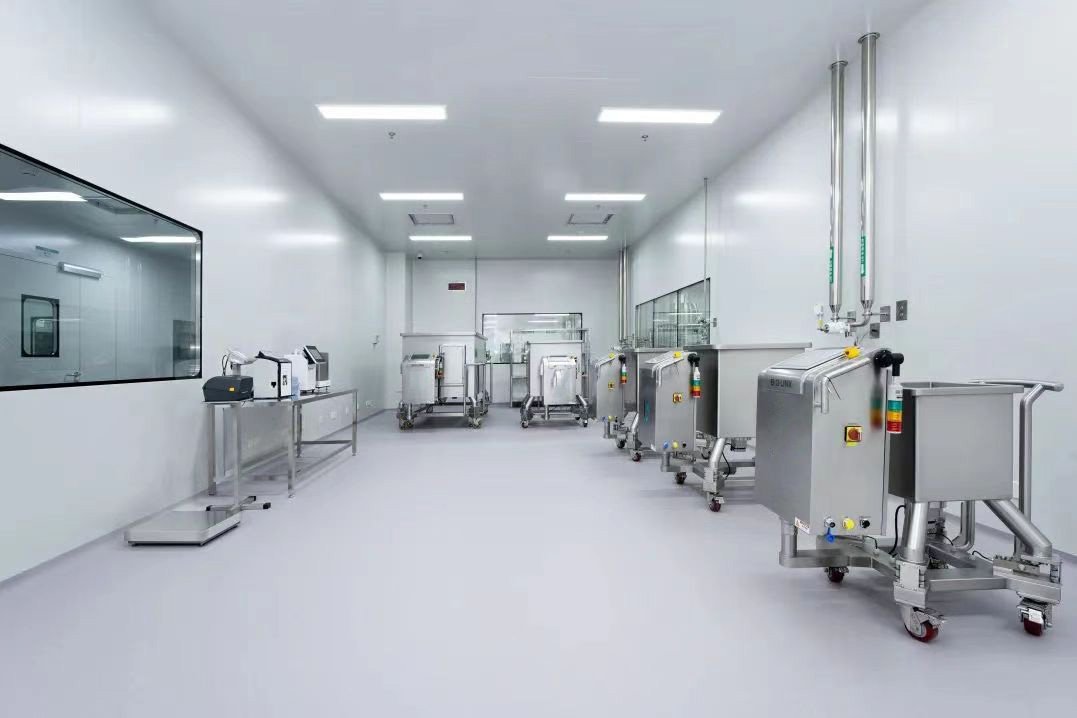
With the rapid advancement of the biopharmaceutical industry, pharmaceutical enterprises are expanding their R&D pipelines and developing increasingly diverse drug molecules. In recent years, reforms to drug review and approval systems have accelerated the clinical progression of numerous biotherapeutics. For biopharma companies, this brings both unprecedented opportunities and intensified market competition. To gain a sustainable competitive edge, enterprises must cut production costs to improve patient accessibility while enhancing product quality to capture larger market shares.
Technological innovation is imperative to reduce manufacturing costs and improve facility utilization, driving leading biopharma players to adopt continuous biomanufacturing processes. As early as April 2016, the U.S. Food and Drug Administration (FDA) approved a process conversion from batch manufacturing to continuous production at Johnson & Johnson’s pharmaceutical manufacturing site — marking the first FDA endorsement of such a transition. Currently, three antibody products of the company are manufactured via continuous processes. Eli Lilly has established a global continuous manufacturing center in Ireland; GlaxoSmithKline (GSK) has commissioned a continuous production plant in Singapore, and Amgen has built a dedicated continuous purification workshop for monoclonal antibodies (mAbs) in the same region. More recently, Biosana Pharma announced that its biosimilar of omalizumab has entered clinical trials, becoming the first monoclonal antibody developed using a fully continuous manufacturing workflow.
Traditional biopharmaceutical production predominantly relies on batch manufacturing, a process where raw materials undergo multiple discontinuous intermediate steps to yield final products. In contrast, continuous manufacturing has been widely applied in food, petrochemical and chemical industries for decades. This workflow features continuous raw material feeding at the front end and uninterrupted final product harvesting at the outlet, with theoretically no idle intervals between process steps. It enables real-time quality control throughout production, rather than relying solely on end-product testing for quality release.
Advantages and Limitations of Continuous Purification Technology
In the production of protein-based biotherapeutics, initial target protein recovery is followed by capture and polishing steps. Capture refers to crude extraction of target molecules and bulk impurity removal, while polishing further refines the product to eliminate specific contaminants including residual DNA, endotoxins, soluble aggregates and charge variants. For products requiring high purity, capture and polishing are typically combined. For instance, Protein A chromatography used for mAb capture usually requires an additional polishing step to remove leached Protein A. Chromatography serves as the core technology for capture and polishing in biomanufacturing, yet conventional batch chromatography presents inherent drawbacks:
Column volume is constrained by column pressure, hindering scale-up.
Protein products are prone to denaturation, resulting in low process efficiency and product recovery.
Batch operation leads to suboptimal utilization of buffers and chromatographic media.
Production Workflow Limitations
Protein bioproducts are invariably accompanied by diverse impurities. Some contaminants exhibit adsorption properties similar to target molecules, causing co-elution during chromatographic separation. This creates a trade-off between purity and yield, driving up purification difficulties and production costs.
Continuous purification technology effectively mitigates the above issues, with its key advantages summarized as follows:
Higher utilization of chromatographic resins
Compact equipment layout with fewer pipelines and a smaller footprint
Improved product yield, concentration, purity and stability
Integrated unit operations enabling non-stop production with excellent system compatibility
Reduced consumption of buffers and chemical reagents for equilibration, washing and elution
Flexible operational performance, allowing automatic adjustment of production rate and flow velocity according to throughput demands
Applications of Continuous Purification Technology
To address the shortcomings of traditional chromatography and accommodate the expanding scale of upstream cell culture and rising protein titers, a variety of continuous purification technologies have been developed, including Continuous Annular Chromatography (CAC), Radial Flow Chromatography (RFC), Expanded Bed Adsorption Chromatography (EBA), Multi-layer Countercurrent Solvent Gradient Chromatography (MSCGP), Periodic Countercurrent Chromatography (PCC), Continuous Countercurrent Tangential Chromatography (CCTC) and Simulated Moving Bed (SMB) chromatography. Several widely adopted technologies are elaborated below:
Periodic Countercurrent Chromatography (PCC)
Developed by Cytiva (formerly GE Healthcare Life Sciences), PCC is a mainstream continuous protein capture technology. Multiple chromatographic columns are connected in series to form an adsorption train. Feedstock is loaded onto the first column; once the first column reaches saturation, the column positions are switched sequentially, and feed loading shifts to the second column. The saturated first column then undergoes standalone washing, elution, regeneration and re-equilibration. Eluate from the elution step is continuously loaded onto the third column to recapture unbound target protein. After re-equilibration, the first column is repositioned to the end of the column train, and the cycle repeats continuously.
Compared with conventional single-column batch chromatography, PCC delivers higher resin capacity and utilization while lowering buffer consumption. Technically, the protein loading duration must be no shorter than the time required for elution and regeneration of the leading column.
Under identical operating conditions, the three-column Periodic Countercurrent Chromatography (3C-PCC) achieves a 60% increase in processing capacity, a 60% reduction in buffer consumption and a 75% cut in resin usage versus traditional batch Protein A chromatography for mAbs, substantially lowering overall process costs. PCC is primarily deployed for the initial capture step of monoclonal antibodies. It should be noted that the loading time of capture columns decreases sharply when processing high-titer feedstocks.
Simulated Moving Bed Chromatography (SMB)
SMB chromatography separates binary mixtures continuously based on differential chromatography principles. It employs multiple packed columns and periodically switches feed, mobile phase and product collection ports to simulate countercurrent flow without physical movement of the stationary phase, enhancing mass transfer efficiency between two phases.
A typical 4-column SMB configuration operates as follows: Feed mixture (target product + impurities) is introduced into the first column. Components migrate along the columns, and weakly bound target products are collected from dedicated outlets. Additional mobile phase is injected between the second and third columns, from which strongly bound impurities are harvested. As the feed stream progresses, feed points, mobile phase inlets and collection ports rotate clockwise along the flow direction to simulate countercurrent movement of the stationary phase. This mode drastically reduces buffer consumption and improves resin utilization.
SMB is widely used for protein desalting, viral purification, nucleoside isolation and refolding of fusion proteins, with mature large-scale applications in petrochemical and sugar industries. In recent years, it has also been adopted for chiral separation of pharmaceuticals and their enantiomers.
For purification of single-chain variable fragments (scFv), affinity-based SMB chromatography boosts production output by 9% and elevates productivity by 11 times compared with batch processes. Partial product recycling to the feed stream is commonly applied to improve overall efficiency and recovery. Optimized standing wave technology is also utilized to fine-tune operational parameters (flow rate, port switching interval) for optimal eluent consumption and productivity. While SMB performs well in separating binary mixtures via multi-column serial configuration, it remains challenging to simultaneously maximize product purity and recovery for complex multicomponent samples.
Continuous Countercurrent Tangential Chromatography (CCTC)
A typical CCTC system consists of three functional columns composed of modular units. Each module contains tangential flow filters and static mixers. Static mixers regulate material residence time, while hollow fiber membranes retain large resin particles and allow passage of proteins, buffers and other soluble components. During operation, feedstock is mixed with chromatographic resin slurry and flows sequentially through each module. Each module executes integrated binding, washing, elution, regeneration and equilibration. Buffers flow countercurrently with resin slurry across multi-staged units in each step, delivering high product recovery and purity with minimized buffer usage.
CCTC is primarily applied for polishing of mAbs post Protein A capture. Mixed-mode resins combining cation exchange and hydrophobic interaction chromatography with two distinct particle sizes are commonly used to remove host cell proteins (HCP), leached Protein A, residual DNA and antibody aggregates. Relevant studies show that CCTC achieves a productivity of 100 g of product per liter of resin per hour, 10 times higher than batch chromatography. Further optimization of elution pH can increase yield by an additional 5%, and the technology features excellent scalability.
Integrated End-to-End Continuous Biomanufacturing
A fully continuous manufacturing workflow realizes a closed, aseptic, fully automated and integrated production control system spanning from bioreactor inoculation to drug substance (DS) harvesting, enabling long-term uninterrupted operation. The full workflow comprises high-density cell culture, cell retention devices, inline continuous capture and polishing of cell culture supernatant, tangential flow filtration (TFF) for concentration and diafiltration, viral inactivation, sterile filtration, and real-time product quality monitoring via Process Analytical Technology (PAT).
At present, integrated upstream perfusion culture coupled with two PCC units for downstream continuous capture and ion exchange polishing has been successfully implemented, representing a major milestone toward full continuous manufacturing. This integrated system consists of a bioreactor, alternating tangential flow (ATF) cell retention device and two customized ÄKTA PCC chromatographic systems (supporting up to 4 columns), equipped with 5 UV detectors, 3 pumps, multiple valves, pH meters and conductivity sensors.
The integrated system maintained stable continuous operation for 31 consecutive days, producing 31 time-defined DS batches with a daily CHO cell antibody titer of approximately 10 g. The clarified cell culture fluid was continuously transferred to affinity and ion exchange columns for purification, yielding a daily DS output of around 8 g with an overall recovery rate of 80%. The total processing time from clarified harvest to final drug substance was approximately 7 hours. The quality attributes of products from continuous purification are comparable to those of batch-manufactured products: HCP clearance reached 4 log reductions, residual Protein A was below 1 ppm, and aggregate content was less than 5%, all complying with established specifications.
Compared with batch manufacturing, this integrated continuous process delivers a more than 10-fold increase in upstream productivity and over 6-fold improvement in downstream efficiency, alongside substantial reductions in buffer consumption and column footprint.
Continuous multi-column chromatography demonstrates remarkable economic advantages over traditional batch processing, including higher productivity, lower total production costs, smaller equipment footprint and consistent product quality. Continuous processes have been widely commercialized across multiple industrial sectors.
Nevertheless, the large-scale adoption of continuous manufacturing in biotherapeutics still faces obstacles. Key challenges include uncertain regulatory requirements for process conversion, complex operational and process control, high upfront capital investment and maintenance costs, as well as limited universality — most continuous purification technologies are optimized for specific target molecules.
Going forward, further optimization of core chromatographic technologies and development of novel purification platforms based on continuous workflows will be critical to cutting biopharma development costs. As global sales of biopharmaceuticals expand and their share among blockbuster drugs rises, market competition driven by biosimilars will increasingly center on pricing. Since cost determines pricing, enhancing productivity and reducing manufacturing expenses will remain core priorities for biotherapeutic development. Model calculations indicate that integrated end-to-end continuous manufacturing can reduce total production costs by approximately 55% versus conventional batch processes, enabling simultaneous high throughput and low operational costs.
Future efforts will focus on seamless integration of upstream and downstream workflows, implementation of closed systems and single-use technologies to mitigate contamination risks, deployment of full automation to minimize human error, and adoption of real-time process monitoring for comprehensive risk control. Combined with the establishment and refinement of corresponding regulatory frameworks, these initiatives will further mature and popularize integrated continuous biomanufacturing.