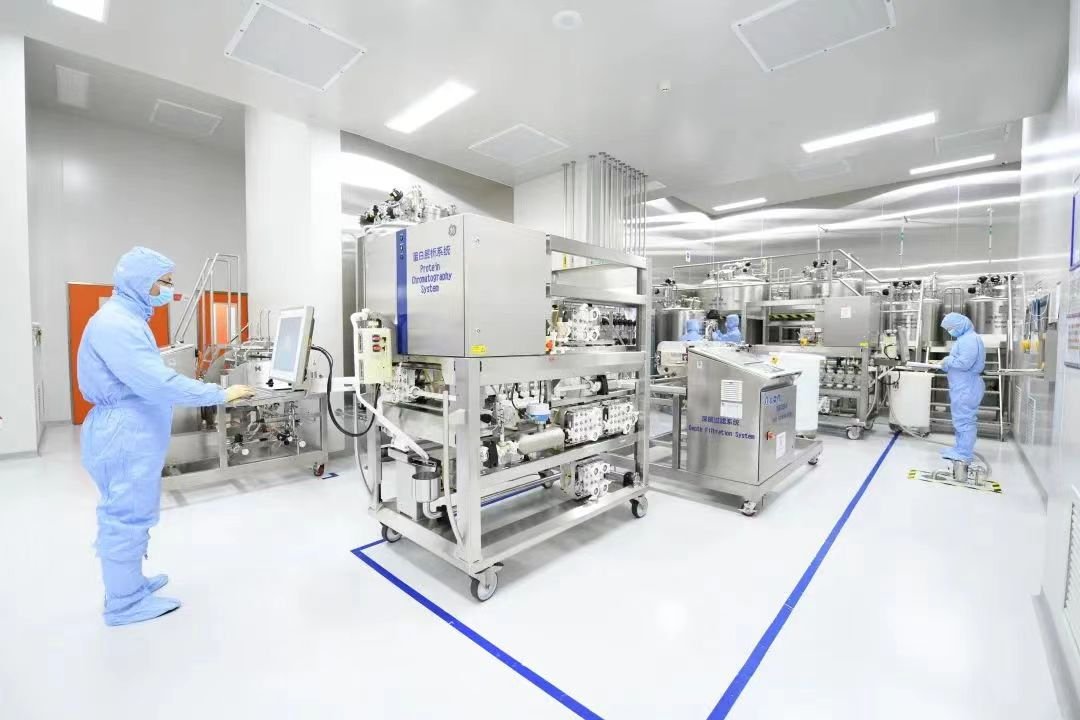
1. Purification Challenges for Biotherapeutics
The biopharmaceutical industry is experiencing rapid growth, accompanied by a continuous emergence of complex biomolecules. A total of 8,986 biopharmaceutical candidates are currently in the R&D pipeline. Beyond antibody products, which account for 30% of the market, cell therapies, viral vectors, peptides and nucleic acid drugs also hold considerable market shares. Such diversification poses substantial challenges to downstream purification. Each biomolecule requires dedicated purification strategies to guarantee product safety, efficacy and regulatory compliance.
2. Advantages of Custom Chromatography Products
For structurally unique biomolecules including novel antibody variants, viral vectors and mRNA molecules in biopharmaceutical development, standard off-the-shelf chromatography products often fail to meet the requirements for precise purification. This market gap has created strong demand for custom chromatography solutions. By targeted optimization of critical parameters such as ligand specificity, pore size and bead particle size, custom chromatography media can achieve perfect matching with specific target molecules and address individualized purification requirements.
Custom chromatography products are predominantly required in the following four scenarios:
No commercial chromatography media are currently available for specific capture or polishing steps.
Conventional products exhibit insufficient specificity and fail to meet key performance indicators for binding capacity or resolution.
Certain novel drug candidates demand mild purification conditions (e.g., specific pH and ionic strength ranges). Limited by inherent design and operational constraints, standard media cannot deliver satisfactory purification performance under such mild conditions.
Existing purification processes suffer from low efficiency and poor scalability, which cannot support large-scale commercial manufacturing.
The core value of custom chromatography products lies in their capability to deliver high purity and high yield via tailored design. They not only improve overall process efficiency but also effectively reduce the Cost of Goods (CoG). Their advantages in cost reduction and efficiency enhancement are particularly prominent in the R&D and commercial production of high-value biopharmaceuticals at large scale.
3. Customized Development Workflow for Chromatography Media
High-performance custom chromatography products rely on well-aligned customized development workflows. The entire process is designed precisely based on characteristics of target molecules, production requirements and regulatory guidelines. Our custom development workflow enables fine-tuning of key parameters including bead matrix, pore size and ligand chemistry to achieve optimal compatibility with target biomolecules and maximize customization benefits.
Agarose-based beads feature excellent hydrophilicity but relatively low pressure resistance (< 0.3 MPa). In contrast, polymeric rigid microspheres such as PMMA demonstrate superior pressure tolerance (> 1 MPa) and stability under high flow rates, with excellent scalability. They effectively prevent abnormal pressure buildup within chromatography columns during industrial-scale production.
Biomolecules of varying sizes and properties (e.g., viral vectors, mRNA, small-format antibodies) have distinct requirements for pore structure and mechanical rigidity of chromatography media, which necessitate precise matching.
For small biomolecules such as antibodies with a particle size below 40 nm, excessively large pores will reduce the binding efficiency between target molecules and ligands, resulting in decreased dynamic binding capacity. Meanwhile, impaired mass transfer will cause peak broadening, peak tailing and co-elution of impurities with target products.
For large biomolecules such as viral particles (particle size > 200 nm), insufficient pore size will hinder internal mass transfer and lower binding capacity. Media with extra-large pore channels are therefore required to ensure unobstructed diffusion of large biomolecules into the bead interior.
The selection of bead particle size requires comprehensive consideration of resolution, purification efficiency and operational feasibility.
Small-particle-size media deliver high column efficiency and superior resolution, ideal for high-purity purification of complex feedstocks. However, they lead to higher column backpressure and limited flow velocity, which may compromise overall operational efficiency.
Conversely, large-particle-size media support higher flow rates and lower system pressure, yet sacrifice column efficiency and separation performance, potentially resulting in substandard product purity.
As a leading process-oriented engineering company, Sino Bioengineering delivers professional bioengineering solutions and comprehensive technical services to clients worldwide.
For more products and solutions: https://sinobioengg.com/category/solution/
For more service: https://sinobioengg.com/category/service/