

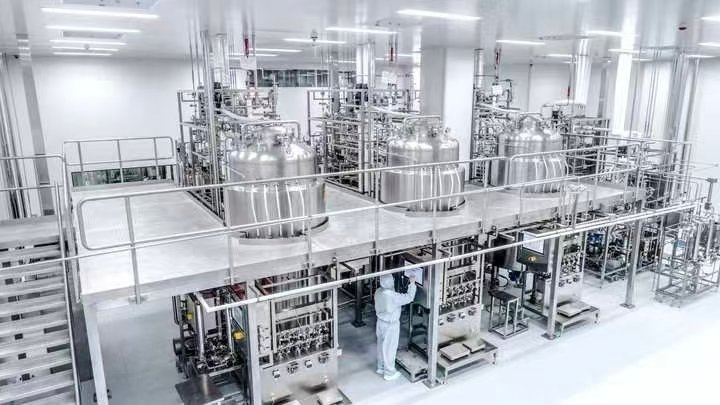
High-viscosity microbial fermentation is a core process for manufacturing high-value bioproducts including microbial polysaccharides, hyaluronic acid, and fungal metabolites in modern industrial biomanufacturing. Unlike conventional low-viscosity bacterial fermentation, the continuous accumulation of extracellular macromolecular metabolites and dense microbial cell populations drastically increases fermentation broth viscosity. This leads to poor fluidity, weakened turbulent diffusion, and severe flow stratification in traditional stirred-tank reactors (STRs).
The most prominent technical challenge arising from high broth viscosity is widespread mixing dead zones distributed at the tank bottom, tank walls, liquid surface, and gaps between impellers. These stagnant regions trigger a series of industrial problems: insufficient dissolved oxygen (DO) supply, uneven nutrient distribution, suppressed microbial metabolic activity, and increased anaerobic byproduct generation. Consequently, enterprises face low target product yield, unstable batch quality, elevated contamination risks, and excessive energy consumption. Conventional optimization methods, such as simply increasing stirring speed and aeration flow, fail to solve the problem fundamentally. Excess shear force damages fragile mycelium and microbial cells, while blind aeration expansion causes unnecessary energy waste. Against this backdrop, targeted and systematic technical upgrades are urgently needed to break the mixing bottleneck of high-viscosity fermentation systems.
To completely eliminate mixing dead zones and improve gas-liquid mass transfer efficiency in viscous fermentation broths, three professional customized technical solutions have been developed, covering impeller system upgrading, aeration strategy iteration, and reactor structural optimization, forming a full-dimensional mixing enhancement system.
1. Custom-Engineered Dual-Impeller (Rushton + Hydrofoil) Setup
Impeller configuration determines the overall flow field distribution and mixing uniformity of fermentation tanks. Traditional single-impeller structures have obvious functional defects for high-viscosity working conditions. A single Rushton impeller delivers strong radial shear force and excellent bubble breaking performance but lacks sufficient axial circulation capacity, resulting in upper and lower broth stratification and large-area stagnant dead zones. In contrast, a single hydrofoil impeller features powerful axial circulation and low shear characteristics but cannot effectively disperse gas, easily causing gas flooding and insufficient oxygen mass transfer.
The customized dual-impeller combined structure perfectly complements the advantages of two types of impellers to adapt to high-viscosity broth characteristics. The lower Rushton impeller is installed close to the aeration outlet, utilizing high radial shear turbulence to instantly crush large rising bubbles into microbubbles, maximizing gas-liquid contact area and solving the problem of insufficient oxygen dissolution in viscous fluids. The upper hydrofoil impeller generates stable vertical axial circulating flow, driving the sinking of stagnant upper broth and the rising of bottom fluid, and finally forming a closed three-dimensional flow field covering the entire tank. This structure effectively eliminates dead zones at tank walls, bottoms and liquid surfaces, controls shear force within a reasonable range to protect microbial cells, and improves full-tank mixing uniformity and volumetric oxygen transfer coefficient (kLa) significantly.
2. Customized Dynamic Aeration Strategy
Aeration is the core power of oxygen supply and gas-liquid mixing in fermentation processes, and its rationality directly determines mass transfer efficiency. Traditional fixed-rate and single-point aeration modes cannot adapt to the dynamic viscosity changes of broths during microbial fermentation. In the early fermentation stage, low broth viscosity leads to fast bubble rising speed and short gas residence time, resulting in low oxygen utilization efficiency. In the middle and late fermentation stages, the sharp growth of microbial biomass and metabolites increases broth viscosity dramatically, causing bubble aggregation, poor diffusion, and local gas retention dead zones, which severely restrict microbial growth and product synthesis.
The customized staged dynamic aeration strategy accurately matches the fluid characteristics of broths at different fermentation stages. Combined with real-time monitoring data of broth viscosity, DO concentration and microbial growth rate, the system realizes intelligent adjustment of aeration parameters and optimized multi-point distributed aeration layout. Low-flow uniform micro-aeration is adopted in the low-viscosity early stage to avoid liquid level fluctuation and microbial flotation. Layered aeration volume upgrading and optimized gas outlet distribution are applied in the high-viscosity middle and late stages to break bubble aggregation barriers, prolong gas-liquid contact time, eliminate gas-phase dead zones, and achieve efficient and stable oxygen supply for microbial metabolism.
3. Customized Fermentation Reactor Structural Design
Standard universal fermentation reactors are designed for low-viscosity fermentation processes, and their fixed aspect ratio, single baffle layout and flat-bottom structure cannot adapt to the low-flow and poor-diffusion characteristics of high-viscosity broths. Long-term material stagnation is prone to form persistent corner and edge dead zones, which cannot be completely eliminated by simple process parameter adjustment.
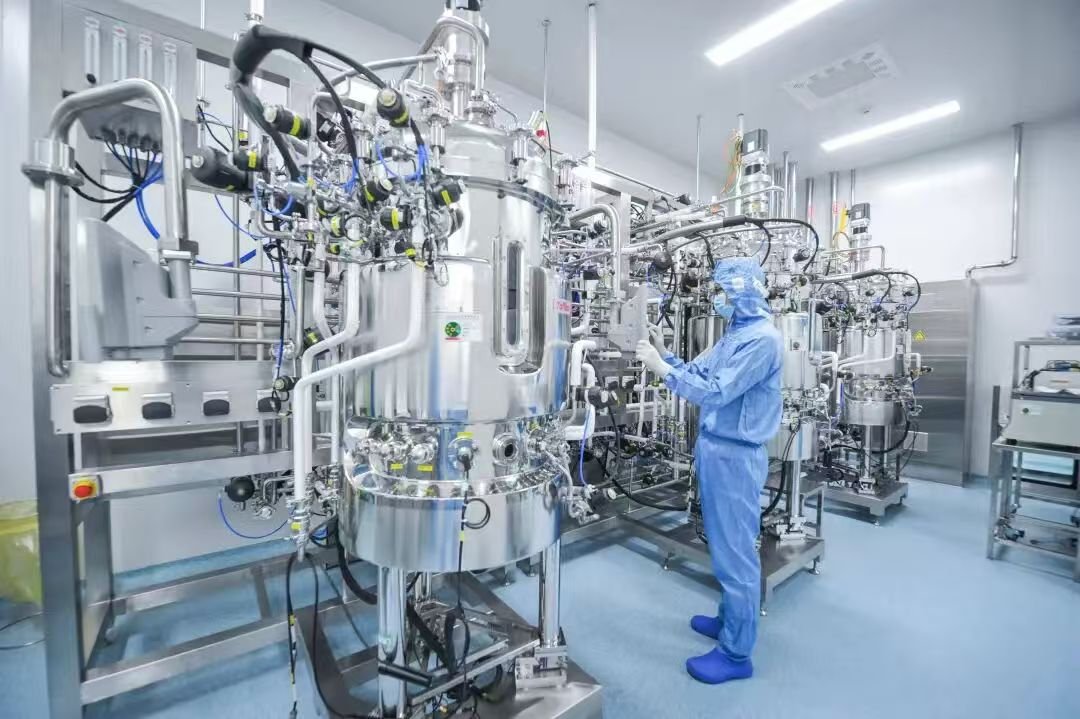
The customized reactor structural design targets the pain points of high-viscosity fermentation scenarios, relying on computational fluid dynamics (CFD) simulation and massive industrial verification to optimize core structural parameters in a targeted manner. It adjusts the tank aspect ratio to match the axial circulation range of the dual-impeller system, optimizes the quantity, width and installation position of tank wall baffles to suppress fluid swirling and avoid secondary dead zones, redesigns arc transitional tank bottoms to eliminate flat-bottom stagnant corners, and matches stirring shaft length and impeller spacing according to actual production scale and broth viscosity. The optimized reactor structure breaks the limitations of standard equipment, realizes full coverage of effective mixing flow field, and completely removes all types of mixing dead zones in the tank.
Industrial Application Benefits
The three-dimensional integrated mixing optimization system achieves synergistic effects of equipment upgrading, process optimization and structural iteration, thoroughly solving the long-standing dead zone and insufficient mass transfer problems in high-viscosity fermentation. Industrial practical verification shows that the optimized system realizes uniform distribution of DO, nutrients and temperature in fermentation broths, significantly improves microbial growth activity, and delivers remarkable economic benefits: the batch fermentation cycle is shortened by 10–20%, target product yield is increased by 15–30%, unit product energy consumption is reduced by more than 20%, and batch-to-batch product quality stability is greatly improved with a significantly reduced contamination rate.
Conclusion
Mixing dead zones and low mass transfer efficiency are key bottlenecks restricting the high-quality development of high-viscosity microbial fermentation industry. Single equipment or process optimization can only achieve limited improvement and cannot fundamentally resolve industrial pain points. Through the integrated solution of customized dual-impeller mixing setup, dynamic staged aeration strategy and personalized reactor structural design, Sino Bioengineering completely eliminates full-tank mixing dead zones in high-viscosity fermentation tanks, realizes efficient gas-liquid mass transfer and uniform material mixing, and provides mature, stable and scalable technical support for energy-saving, high-yield and stable industrial production of high-viscosity bioproducts. In the future, Sino Bioengineering will continue to iterate fermentation process and equipment optimization technologies to empower the upgrading of the global biomanufacturing industry.