
Over the century since insulin first entered clinical use as a life-saving therapy in 1923, peptide drugs have undergone remarkable development. Characterized by high specificity, potent biological activity and low systemic toxicity, peptide drugs demonstrate immense therapeutic potential for metabolic disorders, cancer and autoimmune diseases. In the past decade particularly, GLP-1 receptor agonists such as semaglutide have achieved extraordinary success in the treatment of diabetes and obesity, placing the R&D and production of peptide drugs at the forefront of the pharmaceutical industry. However, as peptide molecular chains grow longer and structural complexity increases, achieving efficient, cost-effective and sustainable large-scale production has emerged as a core industry challenge.
Peptide synthesis, seemingly a simple process of amide bond formation, entails intricate physicochemical complexities. Currently, mainstream industrial production methods include Solid-Phase Peptide Synthesis (SPPS) and Liquid-Phase Peptide Synthesis (LPPS). Boasting well-established theoretical foundations and easy automation, SPPS excels in synthesizing short-chain peptides and sequences containing unnatural amino acids. Nevertheless, chemical synthesis has notable limitations: cumulative yield loss at each synthetic step leads to sharply reduced overall productivity with increasing amino acid sequence length. For long-chain peptides exceeding 20–25 amino acids, production costs surge dramatically. Furthermore, chemical synthesis consumes massive volumes of organic solvents, inflating API manufacturing costs and imposing substantial environmental burdens.
Against this backdrop, recombinant DNA (rDNA) technology—represented by fermentation technology—has demonstrated outstanding commercial value and technical advantages. Unlike chemical synthesis, fermentation utilizes engineered bacteria or yeast as “micro-factories” to precisely encode complex long-chain peptides via in vivo biosynthetic mechanisms. Fermentation production costs are independent of peptide chain length, rendering long-chain peptides such as GLP-1 economically viable. More importantly, fermentation employs water as the reaction medium, relies primarily on renewable sugar-based feedstocks, and generates readily biodegradable waste, markedly enhancing environmental sustainability.
From the advent of recombinant human insulin to the global supply of GLP-1 drugs, the scale-up of fermentation technology has not only resolved the manufacturing challenges of complex molecules but also enabled process optimization through lifecycle assessment, delivering superior performance in energy and water conservation. Fermentation technology and chemical synthesis are not merely substitutes but fulfill distinct roles in pharmaceutical manufacturing. As global market demand for long-chain, high-activity peptides continues to rise, in-depth research into the large-scale scaling-up of fermentation technology and its environmental and economic sustainability will become a pivotal driving force for the advancement of the biopharmaceutical industry.
The Insulin Production Revolution Led by Recombinant DNA Technology
From early animal tissue extraction to modern large-scale fermentation, human insulin production has undergone a historic transformation from resource constraint to precision biomanufacturing. For decades after 1922, bovine and porcine insulin saved countless lives, yet immune rejection reactions induced by animal-derived proteins plagued patients long-term. In 1982, the first recombinant human insulin (Humulin) gained FDA approval, marking the end of the pharmaceutical industry’s reliance on slaughterhouse-derived raw materials and ushering in a new manufacturing era centered on recombinant DNA (rDNA) technology.
Recombinant insulin production predominantly employs microbial expression systems such as Escherichia coli and yeast. Early processes adopted a “divide-and-conquer” strategy, separately expressing insulin A and B chains in E. coli, followed by in vitro chemical oxidation to form disulfide bonds. This approach was cumbersome and low-yielding. Later, the proinsulin pathway was introduced: cDNA encoding proinsulin was integrated into host cells to directly express single-chain precursor molecules, which folded spontaneously to form native disulfide bonds. During production, inclusion bodies accumulate intracellularly; subsequent solubilization, refolding and proteolytic cleavage yield mature insulin identical to naturally secreted human insulin.
Continuous process optimization has gradually revealed the unique strengths of eukaryotic expression systems. Unlike E. coli, which requires cell lysis for inclusion body extraction, yeast systems possess robust secretory capacity, releasing synthesized peptides directly into the fermentation broth and simplifying downstream purification. In particular, the Pichia pastoris system enables high-efficiency target protein expression via strong promoters and high-density cell culture. This production model outperforms traditional animal extraction in sustainability. With simple culture media and no risk of animal-derived viral contamination, it ensures high product purity and consistent quality. Today, industrial manufacturing based on rDNA technology underpins global insulin supply, making this essential hormone affordable and accessible to tens of millions of diabetic patients worldwide.
Semi-Recombinant Fermentation and Green Manufacturing of GLP-1 Analogs
If recombinant human insulin pioneered biopharmaceutical manufacturing, GLP-1 receptor agonists represented by liraglutide and semaglutide have elevated the application of fermentation technology in peptide production to a new level of precision biomanufacturing. As blockbuster drugs for glycemic regulation and weight management, GLP-1 analogs feature more sophisticated molecular structures than native GLP-1, with clinical demand reaching metric-ton scale. Faced with exorbitant solvent costs and environmental pressures associated with SPPS chemical synthesis, fermentation processes based on recombinant DNA technology have not only overcome large-scale production bottlenecks but also achieved dual breakthroughs in economic efficiency and sustainability through a hybrid pathway of biosynthetic expression plus chemical modification.
Liraglutide shares 97% sequence homology with native GLP-1, laying the foundation for a fully biosynthetic production route. In commercial manufacturing, engineered Saccharomyces cerevisiae or E. coli are widely utilized as microbial cell factories. Taking the yeast system as an example, target peptide sequences are integrated into the host genome via genetic engineering. To prevent degradation of target molecules by endogenous host proteases and enhance stability, fusion protein carriers such as polyhistidine tags, ubiquitin or thioredoxin are commonly incorporated into process design. Upon completion of fermentation, yeast secretes target peptides directly into the culture medium. Subsequent pH adjustment (typically alkaline conditions to reverse peptide aggregation), combined with centrifugation and reversed-phase high-performance liquid chromatography purification, enables manufacturers to produce high-purity peptide precursors at low cost. Compared with solid-phase synthesis, which consumes vast amounts of organic solvents, this water-based, sugar-fueled production model delivers remarkable ecological benefits.
Nevertheless, GLP-1 analogs require specific fatty acid side-chain modifications that native microorganisms cannot synthesize via unnatural amino acids, making the semi-recombinant process the industry standard. The core of liraglutide production lies in acylation at lysine 26 (Lys26). Based on the biosynthesized peptide backbone, manufacturers achieve site-specific chemical modification via precise pH control. Under alkaline conditions of pH 10.5–11.5, differential protonation states of amino acid residues enable selective conjugation of fatty acid side chains exclusively at the Lys26 site while protecting the N-terminal histidine from modification. For structurally more complex semaglutide, which incorporates the unnatural amino acid Aib at position 8, the process evolves into a fragment condensation model: fermentation produces truncated peptide backbones, followed by chemical ligation of dipeptide or tetrapeptide fragments containing unnatural moieties. This strategy of “biological framework construction combined with chemical fine-tuning” perfectly balances the high-throughput capability of microbial fermentation and the flexibility of chemical synthesis.
Scale-Up and Robust Process Design for Recombinant Peptide Fermentation
In the biopharmaceutical industry, the successful transition of a peptide drug candidate from laboratory R&D to commercial production hinges on process scalability. Scale-up is not merely proportional volume expansion but a systematic engineering endeavor involving complex variations in bioreaction kinetics, fluid mechanics, and mass and heat transfer. Subtle deviations during scale-up of either E. coli or yeast systems may lead to reduced yield, altered impurity profiles or even batch failure. Thus, establishing a robust scale-up model and identifying critical process parameters are fundamental to ensuring consistent quality of peptide drug substances.
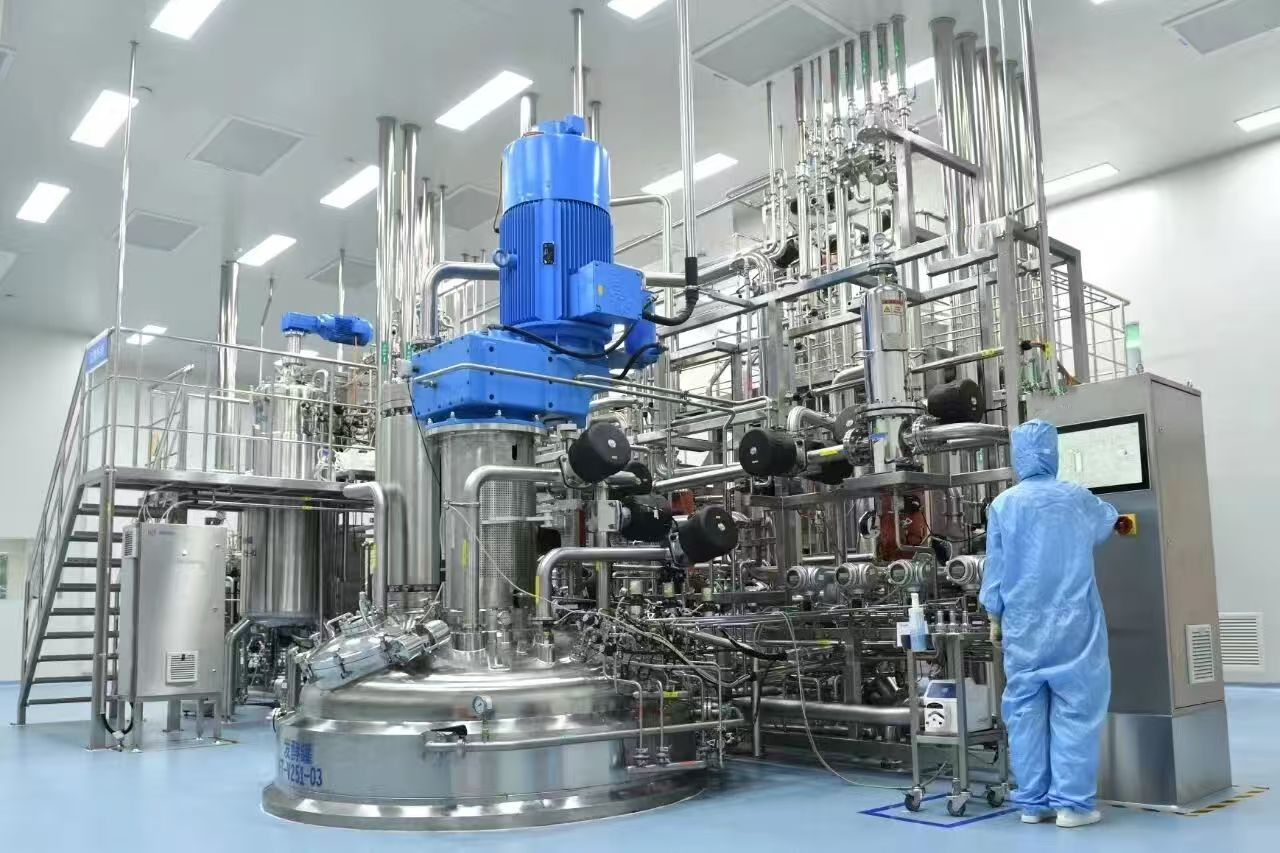
In upstream fermentation, mass transfer equilibrium is the primary prerequisite for reliable scale-up, with the volumetric oxygen transfer coefficient (kLa) being particularly critical. Oxygen often becomes a limiting nutrient in large-scale fermenters due to reduced gas-liquid contact efficiency. To maintain stable cellular metabolism, process developers typically match equipment based on constant kLa or constant volumetric power input (P/V) criteria. For E. coli systems, strict feeding strategies precisely control growth rates to prevent plasmid loss or excessive inclusion body aggregation caused by localized nutrient accumulation. Secretory eukaryotic yeast systems present greater scale-up challenges; oxygen limitation induces accumulation of metabolic byproducts such as ethanol, directly impairing protein folding and secretion. As production scale expands, fermenter specific surface area decreases and heat dissipation efficiency declines. Processes involving methanol induction therefore require high-performance cooling systems and explosion-proof safety measures to manage metabolic heat generation.
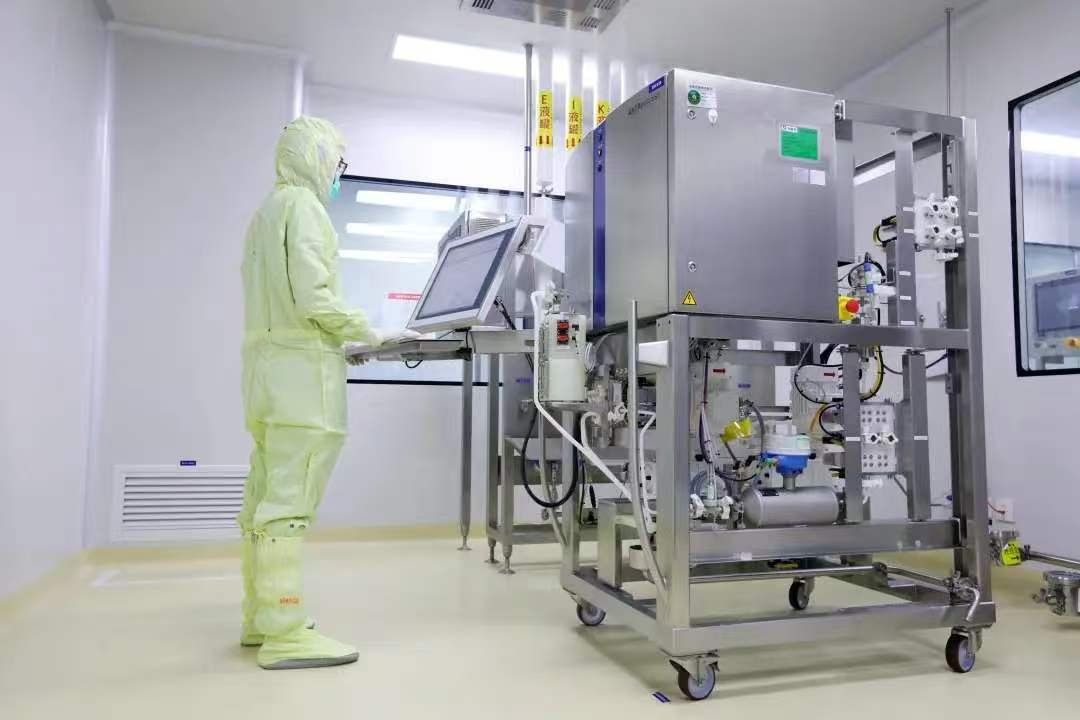
Upon scaling up downstream processing, efficiency optimization and physical stability maintenance become central priorities. The primary downstream objective is efficient volume reduction to improve economic viability. Intracellular expression systems typically employ mechanical methods such as high-pressure homogenization for cell lysis. For yeast secretory fermentation, Tangential Flow Filtration (TFF) is the preferred technology due to excellent scalability. In TFF operation, feed flows parallel to the membrane surface, with adjustable transmembrane pressure maintaining stable filtration flux and eliminating filter cake fouling common in traditional filtration. Subsequent purification begins with capture chromatography, leveraging specific binding between target peptides and functional adsorbents (e.g., IMAC metal chelating resins) to rapidly reduce process volume and remove endotoxins, host cell proteins and other impurities. To enhance purification efficiency, peptides are often expressed as fusion proteins with affinity tags. Although this introduces an additional tag removal step, the gains in product stability and purification simplicity far outweigh incremental costs.
The extended time scale of industrial manufacturing introduces numerous uncertainties during laboratory-to-plant translation. Process developers must recognize that material residence time in industrial facilities far exceeds laboratory conditions, requiring thorough understanding of product chemical and physical stability at all intermediate stages. Local pH gradient fluctuations, concentration inhomogeneities or physical shear stress may trigger peptide aggregation, precipitation or micro-fibrillation, resulting in substantial yield loss.
To address complex scale-up variables, modern process development adopts a Quality by Design (QbD) framework and Design of Experiments (DoE) statistical tools. DoE analysis moves beyond optimizing single operating points to define a viable process design space. Establishment of this design space allows operators to adjust parameters within controlled limits in commercial production, accommodating minor variations in raw material batches or equipment performance while ensuring every peptide drug substance batch meets stringent quality specifications. This systematic scale-up logic underpins the successful global commercialization of peptide drugs.
Culture reached a plateau in yield after 21 days, with a final culture volume of 2.3 L and harvested supernatant of 1.8 L at a product concentration of 21.7 g/L. The viable cell density and viability during the N-stage are presented as follows.
Sustainability Advantages of Fermentation-Based Peptide Manufacturing
While pursuing production efficiency, the pharmaceutical industry faces unprecedented environmental regulatory pressure. Traditional chemical peptide synthesis such as SPPS is widely criticized for consuming large quantities of toxic organic solvents including DMF and DCM. In contrast, microbial fermentation, inherently green in nature, has emerged as a core pathway for sustainable biopharmaceutical development. Evaluated against the 12 Principles of Green Chemistry, microbial fermentation excels in solvent safety, atom economy and resource renewability, earning widespread recognition as an environmentally benign manufacturing technology.
The core advantages of fermentation lie in its solvent and raw material selection. Water serves as the sole reaction medium, completely eliminating the toxicity and flammability risks associated with chemical synthesis. Peptide backbone biosynthesis relies on in vivo enzymatic catalysis; these natural catalysts exhibit exceptional selectivity, eliminating the need for redundant chemical protection and deprotection steps and delivering superior atom economy. Furthermore, fermentation predominantly utilizes renewable sugar-based feedstocks with minimal dependence on fossil-derived raw materials. Throughout the entire lifecycle from raw material input to final product output, fermentation substantially reduces environmental impact. Although fermentation is water-intensive, properly inactivated waste is fully biodegradable and compatible with municipal wastewater treatment systems, far outperforming hazardous chemical waste generated by chemical synthesis.
Nevertheless, ultimate sustainability requires in-depth process optimization. Upgrading production strains into “super strains” is key to boosting efficiency and lowering environmental footprint. Reducing metabolic burden—for example, integrating recombinant genes into the chromosome rather than maintaining plasmids—enables microbes to allocate more metabolic energy toward target peptide synthesis. Meanwhile, culture medium optimization is critical. Replacing costly glucose with agricultural byproducts such as glycerol as carbon sources cuts production costs while advancing circular resource utilization. With expanding production scales, enhancing water recycling rates and thermal energy recovery efficiency have become essential for industrial scale-up.
Energy consumption is another vital factor in lifecycle assessment of fermentation processes. While high-density cultivation requires high-speed agitation to meet oxygen demand, increasing peak power consumption, total energy usage can be significantly reduced by shortening fermentation cycles (e.g., adopting fast-growing E. coli strains) or deploying innovative high-efficiency impellers and low-energy mixing equipment to replace traditional agitators. Leading pharmaceutical enterprises have successfully implemented continuous fermentation processes for insulin and GLP-1 production. By maintaining steady-state production, continuous fermentation further reduces resource consumption per unit product.
In summary, microbial fermentation technology not only enables large-scale manufacturing of complex peptide drugs but also aligns perfectly with green chemistry trends through low toxicity, high efficiency and renewable resource utilization. With continuous advancements in strain engineering and fermenter technology, fermentation will continue to steer the biopharmaceutical industry toward a cleaner, low-carbon and sustainable future.
Conclusion
From the historic breakthrough of insulin to the large-scale manufacturing miracle of GLP-1 analogs, fermentation technology has proven its irreplaceable role in peptide production. Looking ahead, site-specific incorporation of unnatural amino acids is blurring the boundary between biotechnology and chemical synthesis. The integration of bioinformatics and chemoinformatics further provides a rational design framework for process development. The maturation of these cutting-edge technologies will not only shorten R&D cycles and minimize material waste but also propel peptide drug manufacturing into a new era of higher efficiency, greater sustainability and enhanced process certainty.
As a leading process-oriented engineering company, Sino Bioengineering delivers professional bioengineering solutions and comprehensive technical services to clients worldwide.
For more products and solutions: https://sinobioengg.com/category/solution/
For more service: https://sinobioengg.com/category/service/