
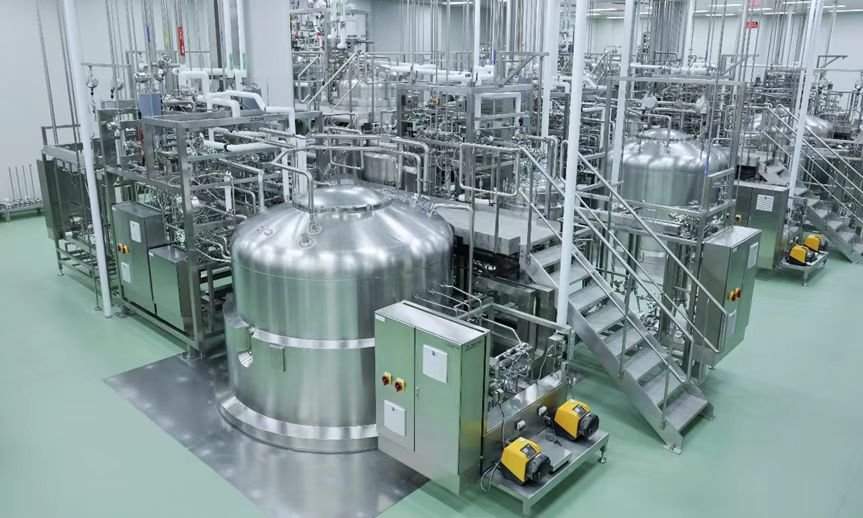

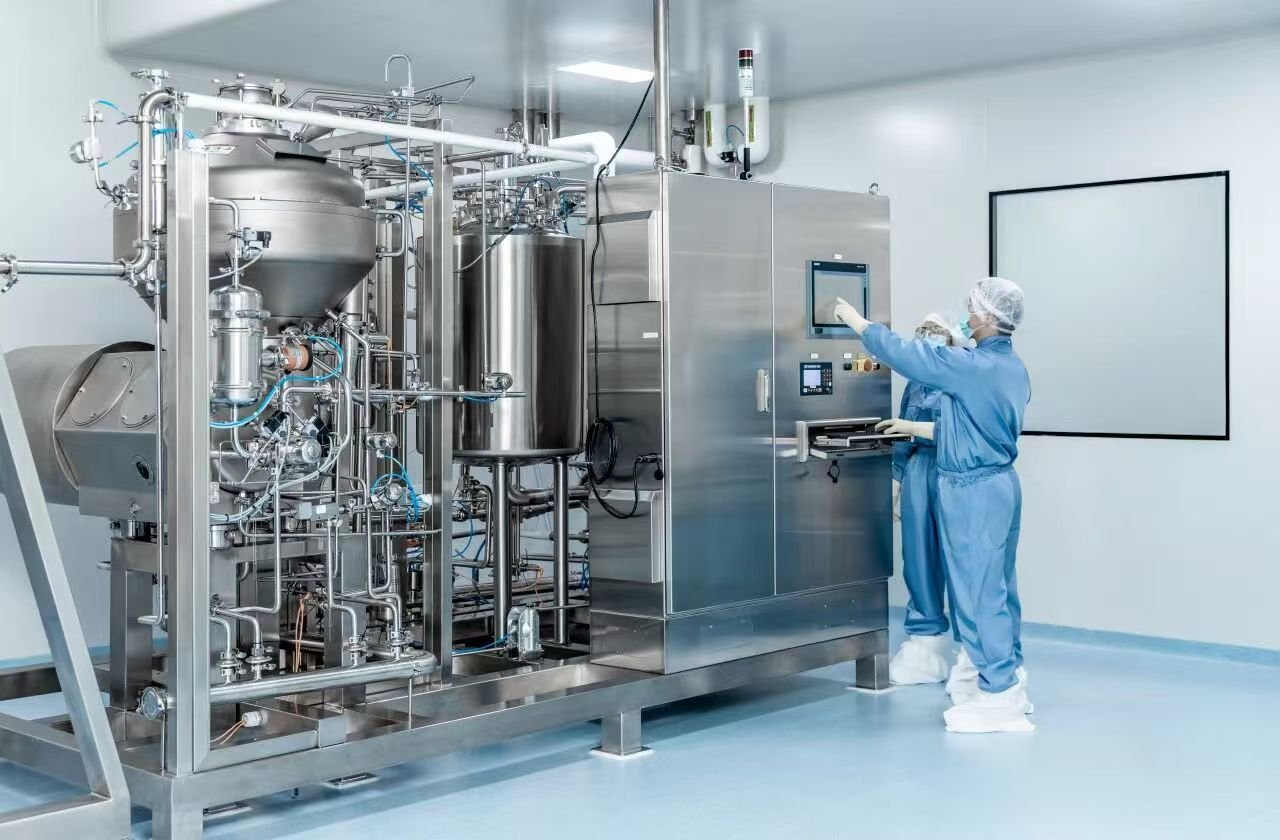
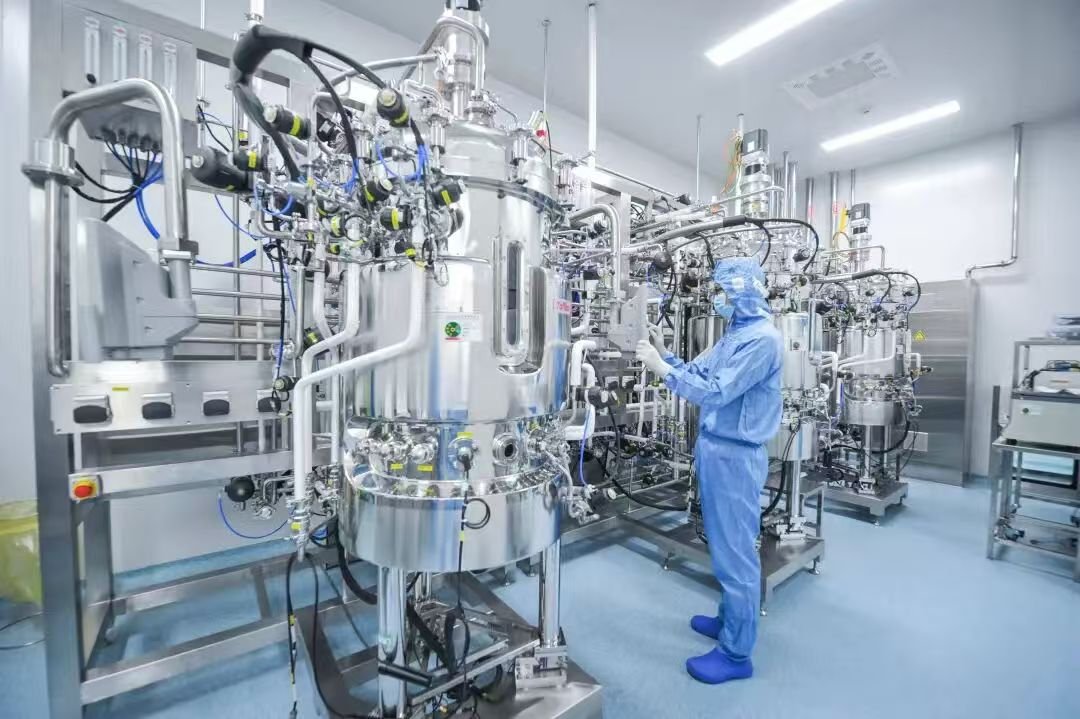
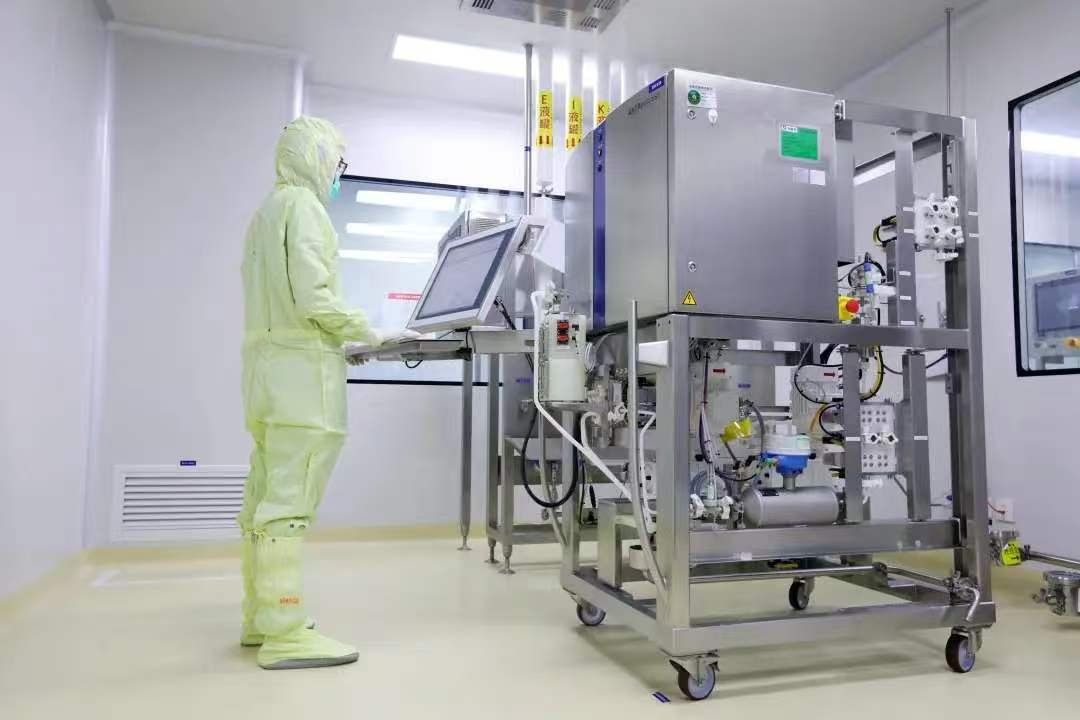

A number of developing trends in biomanufacturing have the potential to change the economics and operability of GMP manufacturing. In particular, closed processing and continuous processing could have a significant impact on the design and operation of GMP manufacturing facilities.
Closed Processing
Closed processing is the idea that the flow path of product and materials could be operated as a closed system, reducing or eliminating the dependence on a controlled clean room environment to prevent environmental contamination and assure quality. Closed processing could apply to both stainless steel and single-use manufacturing facilities, but current interest was stimulated by the ability to close single-use processes through the use of tubing welders and aseptic connectors.
Theoretically, a closed process has significant quality advantages over a process involving open operations or connections in a clean room environment, because a closed process would completely eliminate the chance for adventitious contaminants from the manufacturing environment. A potential economic advantage of closed systems is the corresponding elimination of clean-room based manufacturing, along with a reduction in gowning, cleaning, monitoring, and HVAC costs, as well as the potential for smaller open “ballroom” facilities. The current challenge to closed processing is finding consensus on the definition of what constitutes a closed process and agreement on what is required to demonstrate or validate that a process can be considered reliably closed.
The rise of autologous cell therapy may accelerate the adoption of closed processing standards and clean room simplification. This class of therapy includes many promising new treatments in which cells are removed from the patient, engineered in culture, then returned to the patient. Since each patient is technically getting a unique product, the traditional facility design, in which each different product is made in a dedicated manufacturing suite, is not economically feasible. Closed processing in a shared manufacturing environment is a potential solution that can achieve the parallel goals of insuring quality and producing an affordable treatment.
Continuous Manufacturing
Continuous culture fermentation and perfusion cell culture have been in use in GMP manufacturing for decades. One of the major challenges of perfusion cell culture is the maintenance of sterility, due to the large number of connections that must be made and maintained over the course of the process. The advent of production-scale single-use bioreactors, with the ability to make sterile connections via tubing welders and aseptic connectors, minimized this challenge, spurring a resurgence of interest in perfusion.
Simulated moving bed chromatography (SMB) is a technique in which the volume of chromatography medium required for a process is split into many smaller columns that are run in a complex simulated counter-current mode that can run continuously (until the end of the chromatography resin lifetime) and can reduce resin volume and buffer usage by 50% or more. SMB was developed in the 1950s, but has not been adopted in large-scale biomanufacturing due to the complexity of development and operation. Recently, multicolumn chromatography, a technique with similar advantages to SMB but simpler to implement, has gained in popularity.
Development of in-line dilution and in-line conditioning systems further enable the implementation of continuous manufacturing, allowing continuous dilution or constitution of buffers from concentrated feedstock and purified water.
As a leading process-oriented engineering company, Sino Bioengineering delivers professional bioengineering solutions and comprehensive technical services to clients worldwide.
For more products and solutions: https://sinobioengg.com/category/solution/
For more service: https://sinobioengg.com/category/service/