

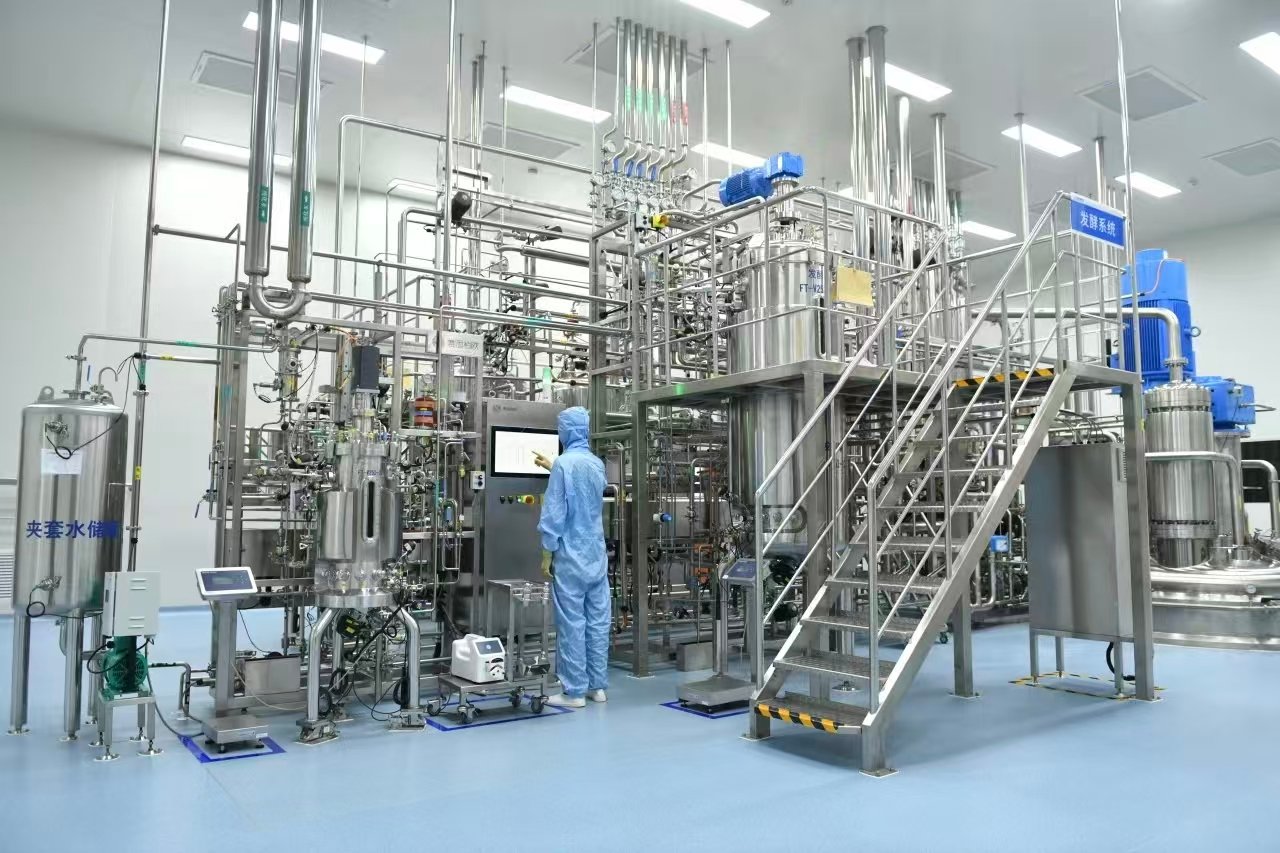
In bioreactor design and operation, hydrodynamic effects constitute a core governing factor. Based on application scenarios, their impacts fall into two distinct categories. The first covers tissue engineering and regenerative medicine, which focuses on sub-lethal mechanical stimulation modulating cellular physiology and differentiation. The second targets biopharmaceutical manufacturing, where hydrodynamic stress dictates cell proliferation and product expression during process scale-up and must be embedded into full-scale process design.
Decades of empirical data have been accumulated for industrial production cell lines such as CHO cells. Alongside lab-scale model platforms, stirred-tank reactors (STRs), the dominant equipment for commercial biomanufacturing, have been extensively characterized for their intrinsic flow behaviors. Agitation and sparging facilitate bulk mixing and oxygen mass transfer yet concurrently generate hydrodynamic shear and turbulent stress, which can inflict cellular damage or perturb metabolic homeostasis. Accordingly, critical operating parameters including agitation speed and aeration rate require deliberate calibration to mitigate adverse stress impacts. Modern suspension-adapted CHO variants feature robust cultivation robustness with well-established baseline processes; nevertheless, continuous improvements in viable cell density and product titer elevate mixing and oxygen demand, intensifying in-reactor fluidic stress and raising the risk of cellular impairment.
While shear susceptibility has long been acknowledged, systematic mitigation of hydrodynamic stress-related detrimental cellular outcomes remains an unmet technical challenge. Current process development heavily relies on empirical correlations centered on lumped bulk metrics such as volumetric power input and mixing time, which fail to resolve heterogeneous flow distributions inside bioreactors. Computational Fluid Dynamics (CFD) enables high-fidelity prediction of intricate flow phenomena yet sees limited routine deployment within mainstream industrial process development workflows.
This manuscript prioritizes agitation-imparted hydrodynamic effects, the predominant source of in-process cell damage. Though bubble coalescence and rupture also induce fluidic stress, published evidence confirms their relative contribution diminishes progressively upon volumetric scale escalation. Subsequent sections elaborate fundamental underlying principles, review prevailing design methodologies, and propose targeted optimization strategies to streamline bioreactor engineering and enhance mammalian cell culture performance.
Hydrodynamic Impacts on Mammalian Cell Cultivation
Research delineating hydrodynamic influences on mammalian cell culture has expanded substantially, shifting from early microcarrier-dependent adherent cell platforms toward industrially relevant suspension cell systems including CHO cells and hybridomas. Relevant investigations bifurcate into two core experimental frameworks: well-defined bench-scale flow models for mechanistic shear-response elucidation, and pilot/commercial-scale stirred-tank reactor trials oriented toward industrial process translation. Bench model systems advance fundamental mechanistic understanding, whereas reactor-based experimentation underpins practical process refinement and scale-up roadmap formulation.
Precise shear quantification is achievable under steady laminar flow configurations; however, complex turbulent flow fields incorporate normal stress, spatially transient fluctuations and dynamic temporal variations, precluding single-value characterization of holistic cellular exposure. Hence the umbrella term “hydrodynamic effects” is universally adopted to describe composite fluidic impacts on cultured cells.
Volumetric energy dissipation rate (EDR) serves as the benchmark metric quantifying mixing intensity within STR systems, subdivided into local volumetric energy dissipation rate (vEDR) and average volumetric energy dissipation rate (vEDR_av), with the latter widely implemented for process benchmarking and scale-up engineering. Commercially viable culture processes typically operate within a vEDR_av range of 10 to several hundred W/m³, with excursions outside this bracket associated with compromised cellular health.
Cellular susceptibility to hydrodynamic loading depends not only on absolute EDR magnitude but also impeller geometry, vessel internals and inherent cell-line-specific stress tolerance. Isovolumetric EDR conditions elicit divergent phenotypic responses across cell lines, with CHO strains exhibiting markedly superior hydrodynamic adaptability. Multi-stage impeller configurations outperform single-impeller setups by abating localized extreme energy dissipation hotspots and homogenizing cultivation environments: at identical bulk vEDR, single-impeller layouts generate discrete high-stress microzones absent in tiered multi-impeller designs.
Findings originating from small-scale bioreactor characterization retain high translational value for large-volume commercial reactor engineering. Most contemporary industrial STRs adopt stacked multi-impeller architecture to curtail peak localized shear magnitudes. Even within safe bulk EDR envelopes, insufficient bulk mixing induces spatial heterogeneities in nutrient and dissolved oxygen availability, suppressing cell proliferation and recombinant protein biosynthesis. Multiple published datasets document retarded cell growth under underpowered, low-agitation operating conditions stemming from inadequate bulk homogenization.
Robust scale-up modeling and accurate in silico replication of full-scale hydrodynamic landscapes therefore represent indispensable prerequisites for consistent high-titer mammalian cell production. Further systematic research is required to delineate definitive operational windows, refine reactor mechanical design and improve process scalability.
Hydrodynamic Effect Evaluation for Process Design in Industrial Bioprocessing
Industrial bioprocess development traditionally leverages empirical correlations and heuristic rules for reactor sizing and scale-up. A prevalent scale-up paradigm preserves consistent vessel geometric proportionality or fixed key performance indicators across development scales, including impeller tip speed, mixing time and volumetric energy dissipation. Average volumetric energy dissipation prevails as the preferred scaling criterion owing to straightforward calculability from agitator power draw and proven capacity to preserve baseline cellular stability within defined operating boundaries.
Direct quantitative linkage between bulk average EDR and cellular phenotypic output remains empirically unvalidated, restricting its application to experience-driven process tuning. Kolmogorov eddy scale theory was introduced to refine agitation-related stress assessment, hypothesizing cellular injury occurs when turbulent eddy dimensions fall below cellular or microcarrier characteristic size. This framework delivers reasonable predictive outcomes for microcarrier-bound adherent cultures yet underperforms for free suspension cultures, attributable to small mammalian cell diameters, wide in-vivo size distribution and omission of localized extreme flow anomalies within core theoretical assumptions.
Alternative research quantifies volumetric occupancy of disparate high-dissipation flow domains via numerical simulation, correlating cellular performance with spatial EDR distribution and introducing the critical volume fraction concept—wherein fractional reactor volume exceeding threshold dissipation correlates with compromised cell growth and productivity—albeit with limited universal predictive efficacy.
Additional assessment relies on coefficient of variation calculation for core hydrodynamic readouts (local flow velocity, shear rate and energy dissipation) to quantify bulk flow uniformity. Axial-radial hybrid impeller assemblies and multi-stage agitation layouts deliver superior flow homogeneity and process reproducibility, dominating modern large-scale biomanufacturing hardware configurations.
Collectively, hydrodynamic inhomogeneity acts as a qualitative screening criterion for reactor qualification yet cannot independently forecast cell growth kinetics or product yields. Multi-parametric integrated evaluation combining flow profiling, cellular physiological profiling and closed-loop process control is mandated for comprehensive process optimization.
Recommended Practices for Bioprocess Development
Conclusive correlative links between hydrodynamics and cellular culture performance are well documented, though no standalone universal metric enables precise prediction of cell phenotypic response across variable operating conditions. Parameter-performance correlations validated for a specific reactor geometry frequently collapse upon equipment reconfiguration or volumetric scale expansion, necessitating multi-variate assessment accounting for spatial and temporal flow field distribution whenever quantifying fluidic impacts on cultured cells.
While shear tolerance routinely informs initial reactor design specifications, intrinsic intravessel flow heterogeneity is frequently overlooked during commercial process formulation, which predominantly relies on bulk lumped parameters: average EDR, mixing time, volumetric mass transfer coefficient, impeller tip speed and dimensional ratios. Local high-shear hotspots and full-vessel flow homogeneity are only qualitatively appraised via CFD in conventional workflows. Recent advances in CFD numerical capability enable granular visualization of localized flow features, especially within steep concentration gradient environments, cementing its standing as an indispensable modern bioreactor design tool.
Incomplete mechanistic understanding of cell-stress interactions dictates persistent dependence on lab-scale experimental screening for process definition. A semi-predictive development workflow integrating CFD simulation and statistically designed experimentation is accordingly recommended to minimize redundant trial runs and deepen fundamental process comprehension.
For novel bioreactor platforms or uncharacterized cell line process development, upfront comprehensive CFD screening across variable agitation speeds and impeller tilt configurations is advised. Simulation scope extends beyond bulk average EDR to characterize peak localized dissipation magnitudes, full-range parameter distribution and anomalous high-risk microdomains defined by excessive local shear or energy dissipation. Overlap mapping between in-simulated high-stress volumetric distribution and experimentally derived cell-line critical stress thresholds guides rational agitation setpoint selection.
Subsequent tiered cultivation trials span the full feasible operating spectrum to validate in silico predictions and narrow down optimal operating envelopes via nested design of experiments (DoE), maximizing information yield with minimized experimental runs. Key performance readouts including viable cell density, volumetric productivity and critical product quality attributes are tracked to flag favorable or detrimental operating conditions, with targeted replicate testing around pivotal setpoints to satisfy statistical validation requirements per current global regulatory expectations.
Pre-existing cell-line stress-response datasets enable reverse calibration of CFD output to pre-emptively bracket feasible operating boundaries; synergistic coupling with formal DoE methodologies further truncates development timelines, reducing experimental overhead and elevating process predictability and regulatory compliance.
Conclusion
Fundamental relationships bridging hydrodynamic behavior and mammalian cell cultivation remain incompletely elucidated, leaving multiple open questions pertaining to industrial process engineering. Conventional design paradigms anchored on bulk-averaged parameters neglect intrinsic spatial flow gradients, a critical limitation exacerbated during volumetric process scale-up, challenging the universal applicability of traditional scaling criteria and necessitating localized flow characterization integration. Published data confirms Kolmogorov eddy scale assumptions lack full consideration of flow field heterogeneity, limiting its reliability for predicting fluid-induced cellular stress responses. Unpredictable localized flow stratification perpetuates mandatory empirical validation throughout process design, underscoring the value of rigorous hydrodynamic profiling.
Most contemporary hydrodynamic datasets originate from bench-scale experimentation, with limited publicly available data translatable to full commercial scale. Despite ongoing scale-up research initiatives, further targeted investigation is required to map direct causal relationships between large-scale flow characteristics and in-vitro cellular behavior. Beyond mechanically driven impeller shear, bubble-derived fluidic loading also modulates cell physiology. Once deemed negligible, bubble-induced stress varies drastically between bench and production scale owing to altered wake-mediated bubble migration dynamics at elevated working volumes.
In summary, notwithstanding progressive enhancement in inherent hydrodynamic tolerance of commercial mammalian cell lines, fluidic impacts merit rigorous consideration throughout process optimization and parameter definition. Synergistic fusion of empirical experimentation and numerical modeling via CFD unlocks deeper mechanistic bioprocess insight, facilitating rational development of robust, highly controllable biomanufacturing workflows.
As a leading process-oriented engineering company, Sino Bioengineering delivers professional bioengineering solutions and comprehensive technical services to clients worldwide.
For more products and solutions: https://sinobioengg.com/category/solution/
For more service: https://sinobioengg.com/category/service/