
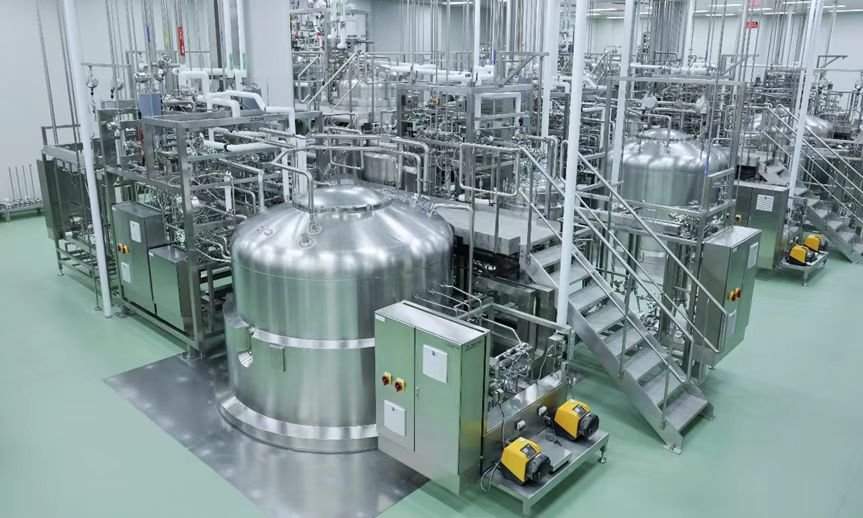

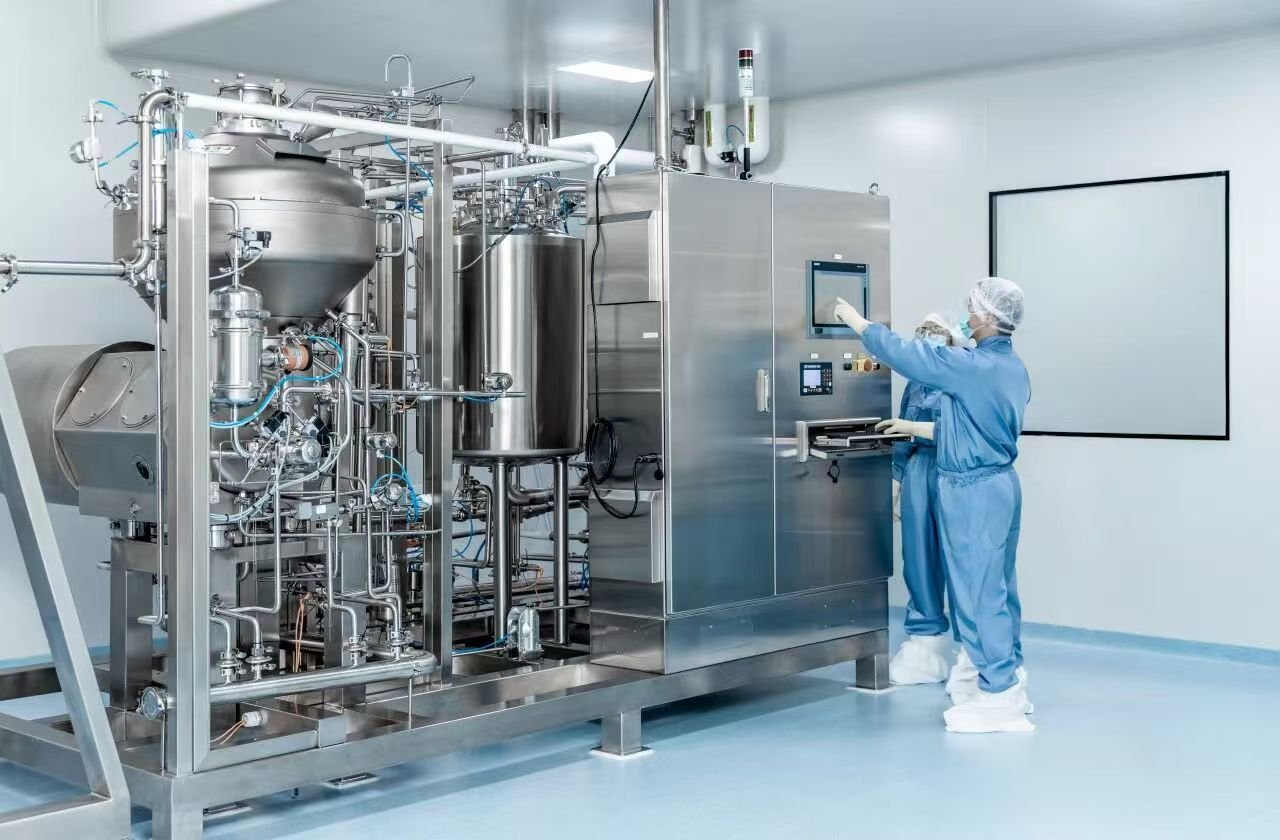
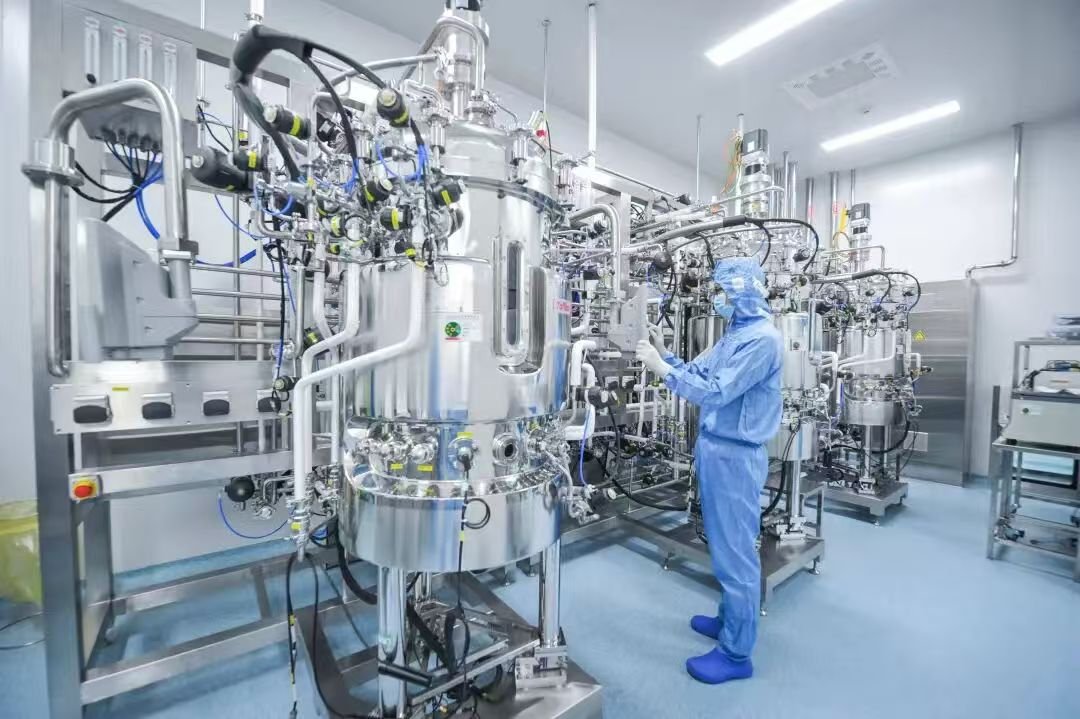
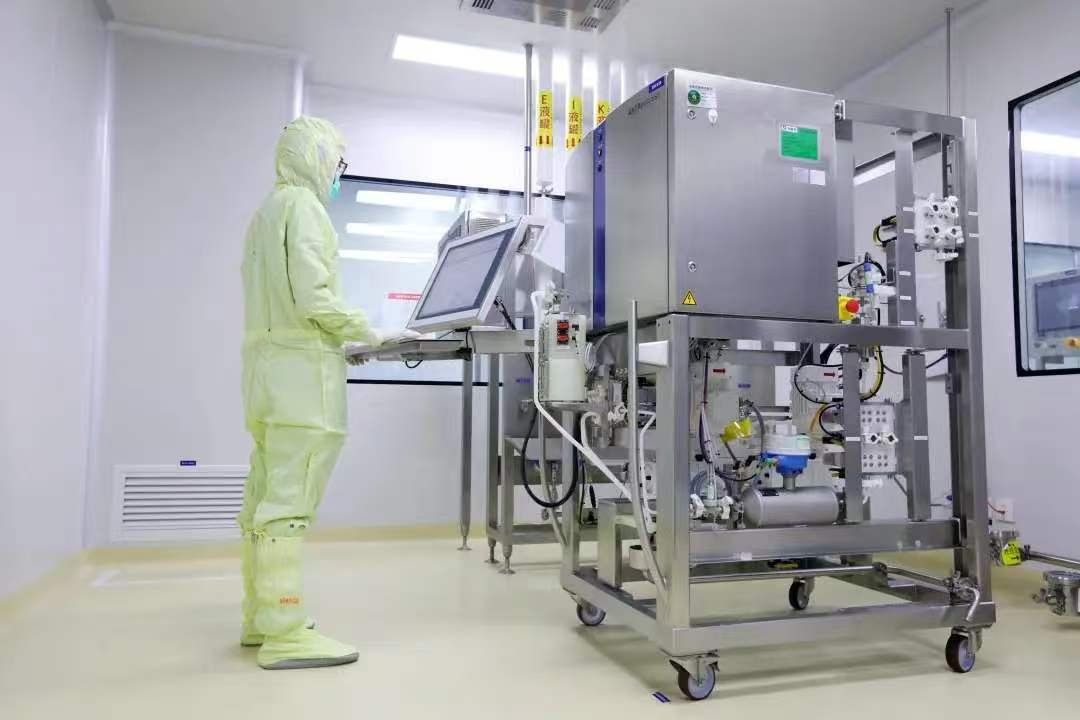
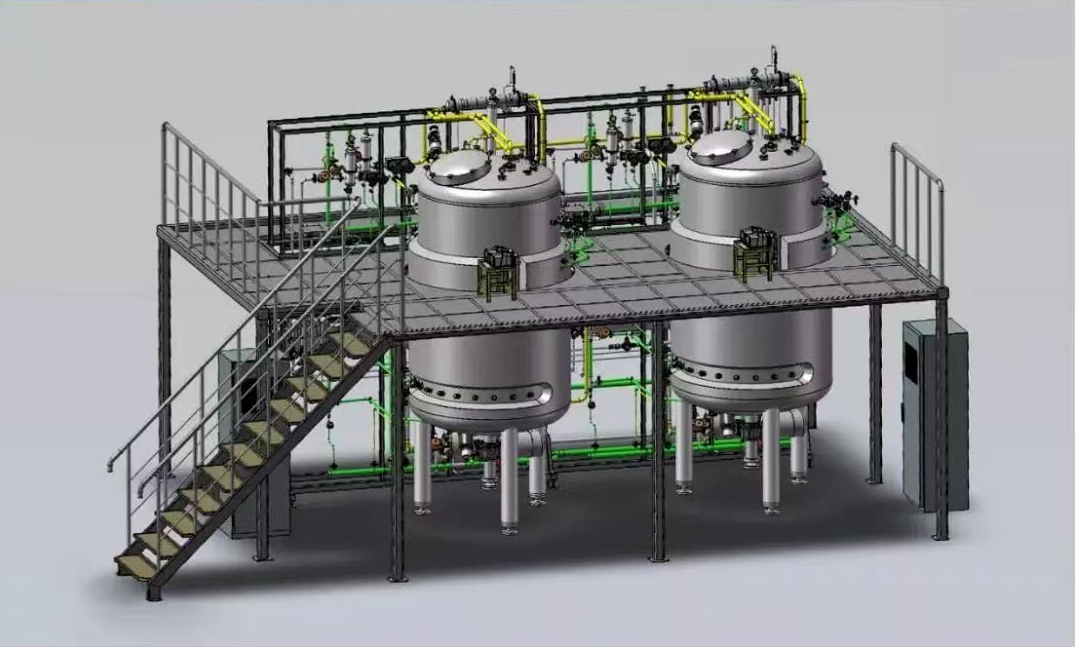
Recombinant Escherichia coli refers to engineered bacterial strains developed through genetic engineering technologies, in which exogenous target genes (derived from humans, other animals, plants or microorganisms) are introduced into E. coli cells to enable the production of required proteins or other products. In industrial production, high-cell-density fermentation of engineered bacteria directly determines the expression level of target products and production costs. This article elaborates on core factors affecting the high-cell-density fermentation of E. coli.
Medium Optimization
Selection and Control of Carbon Sources
Glucose is the most commonly used carbon source for E. coli fermentation due to its rapid support for bacterial growth and simple residual sugar detection methods. However, strict control of glucose concentration is essential in high-cell-density fermentation. Excess residual glucose in the medium triggers massive acetic acid accumulation through glycolysis metabolism, inhibiting bacterial growth and target product synthesis. In contrast, glycerol features a slower metabolic rate and lower acetate production, enabling mild fermentation initiation. It serves as an effective strategy to reduce acetic acid accumulation.
Nitrogen Sources and Carbon-Nitrogen Ratio
Nitrogen sources are categorized into complex and inorganic types. Complex nitrogen sources, including yeast extract (YE) and peptone, are rich in amino acids, vitamins, trace elements and growth factors. They significantly boost rapid bacterial growth and maximize final cell density, yet present drawbacks such as high cost, undefined complex components and increased difficulty in downstream purification. Inorganic nitrogen sources (e.g., ammonium sulfate) have clear chemical compositions, low costs and facilitate downstream processing, but lack essential growth factors, restricting bacterial growth rate and final biomass. Hence, mixed nitrogen sources are widely applied in fermentation, balancing sufficient growth factors, cost control and adequate nitrogen supply.
Inorganic Salts and Trace Elements
In fermentation media, inorganic salts constitute the fundamental framework for cell construction and basic physiological function maintenance, while trace elements precisely regulate microbial metabolism, especially the synthesis of target products. Though required in vastly different dosages, both follow the principle of “moderate dosage benefits growth, while excess causes toxicity”. In practical fermentation process development and optimization, rational regulation of the type and concentration of inorganic salts and trace elements is critical to enhancing cell density and product yield.
Cultivation Strategies
To achieve high cell density for E. coli, concentrated fresh medium is continuously supplemented into bioreactors during cultivation to replenish essential nutrients for bacterial proliferation.
Non-Feedback Feeding Strategies
Constant-Rate Feeding
Constant-rate feeding is a simple, practical yet suboptimal strategy for high-cell-density cultivation. By maintaining a fixed nutrient input rate to restrict microbial growth rate, it addresses three core challenges in high-density culture: substrate inhibition, by-product accumulation and oxygen supply deficiency. It is primarily applied in conventional recombinant protein fermentation with moderate process optimization requirements. Despite non-optimal performance, its simplicity and high reliability ensure extensive application in laboratory research and industrial production.
Exponential Fed-Batch Feeding
As an advanced predictive fermentation strategy based on rigorous theoretical models, exponential fed-batch feeding synchronizes feeding flow rate with the exponential growth trend of microorganisms to achieve precise metabolic control. It is recognized as one of the gold-standard methods for high-cell-density culture of recombinant E. coli to produce high-value proteins. Although it imposes higher requirements on equipment and technical operation, its outstanding advantages in improving product yield, quality and process reproducibility make it a core technology in modern biomanufacturing, widely adopted in high-standard production, scientific research and process optimization.
Feedback Feeding Strategies
The feedback feeding system is a typical closed-loop control system consisting of three core components:
1. Real-time monitoring of key fermentation parameters (e.g., dissolved oxygen/DO, pH, tail gas composition) via sensors;
2. Collection of sensor signals, comparison with preset set values, and calculation of regulatory actions through control algorithms such as PID control based on deviation values;
3. Execution of control commands (mainly adjusting the rotational speed of feeding pumps). This continuous cyclic regulation realizes automatic optimization and stable operation of the fermentation process.
DO-Stat / pH-Stat Control
DO-Stat and pH-Stat strategies are commonly applied in laboratory-scale fermentation, substrate-induced expression systems and special fermentation processes.
RQ-Based Control
Respiratory Quotient (RQ)-based control represents one of the most advanced and reliable industrial control strategies for high-cell-density cultivation of yeast, recombinant E. coli and mammalian cell cultures, enabling comprehensive process optimization and scale-up production.
Brief Summary
In summary, exponential feeding defines the theoretically optimal growth trajectory, while feedback feeding functions like cruise control and navigation systems for vehicles. It continuously monitors real-time fermentation conditions through sensor signals and automatically adjusts feeding rates to stabilize microbial metabolism, ensuring stable operation even under fluctuating environmental conditions. In practical production, combined strategies are commonly adopted: exponential feeding acts as the primary control measure, with feedback signals such as RQ for fine dynamic adjustment.
Induction Methods and Inducers
In most recombinant protein expression systems, target genes are inserted downstream of inducible promoters. Before induction, target gene expression is maintained at an extremely low basal leakage level. Upon addition of specific inducers, promoters are activated to initiate massive gene transcription and translation. The selection of appropriate induction methods and inducers directly determines the success rate, yield and solubility of recombinant proteins. Induction regulation involves systematic fine optimization rather than simple inducer addition.
Induction Timing
Induction is performed when bacteria reach sufficient biomass in the mid-to-late logarithmic growth phase before entering the stationary phase and nutrient depletion, generally evaluated via OD₆₀₀ measurement (optimal range: 0.6–1.0). Premature induction results in insufficient bacterial biomass and low total product yield; delayed induction leads to reduced bacterial activity, accumulated metabolic by-products and impaired expression efficiency.
Inducer Concentration
Inducer dosage requires personalized optimization for each target protein. The conventional working concentration of IPTG ranges from 0.1 to 1.0 mM. High-concentration induction does not always deliver better results; low-concentration mild induction often facilitates soluble protein folding. For arabinose induction, the applicable concentration ranges from 0.0002% to 0.2% (w/v), allowing precise regulation of gene expression intensity.
Post-Induction Culture Conditions
Temperature is the dominant factor affecting recombinant protein solubility. Cultivation at 37 °C accelerates protein synthesis and may increase total yield, yet readily triggers the formation of insoluble inclusion bodies. Low-temperature incubation (16–25 °C) slows down expression rates, promotes correct protein folding and significantly enhances the proportion of soluble target proteins. Immediate temperature reduction after induction is a widely adopted operational strategy.
Induction Duration
The conventional induction period ranges from 4 to 24 hours. Insufficient incubation time causes low product yield, while excessive duration may lead to bacterial lysis and target protein degradation by intracellular proteases.
Brief Summary
Induction serves as the final critical step for efficient recombinant protein expression. The IPTG-induced T7/T5 expression system remains the mainstream choice for E. coli due to its high expression intensity and mature technical system, especially when combined with low-temperature induction to obtain soluble proteins. For special application scenarios such as toxic protein expression and chemical-residue-free production, arabinose-inducible systems or lactose induction are preferred. The optimal induction parameters, including OD value at induction, inducer concentration, culture temperature and induction time, must be determined through experimental optimization.
Conclusion
The ultimate evaluation indicators for successful high-cell-density fermentation of E. coli include not only high biomass (dry cell weight, DCW > 50 g/L) but also high yield and bioactivity of target proteins (accounting for over 20%–30% of total bacterial protein). Systematic fine optimization of induction timing, cultivation temperature, inducer concentration and feeding strategies through repeated experimental verification is indispensable to achieve efficient and high-quality recombinant protein production.
As a leading process-oriented engineering company, Sino Bioengineering delivers professional bioengineering solutions and comprehensive technical services to clients worldwide.
For more products and solutions: https://sinobioengg.com/category/solution/
For more service: https://sinobioengg.com/category/service/