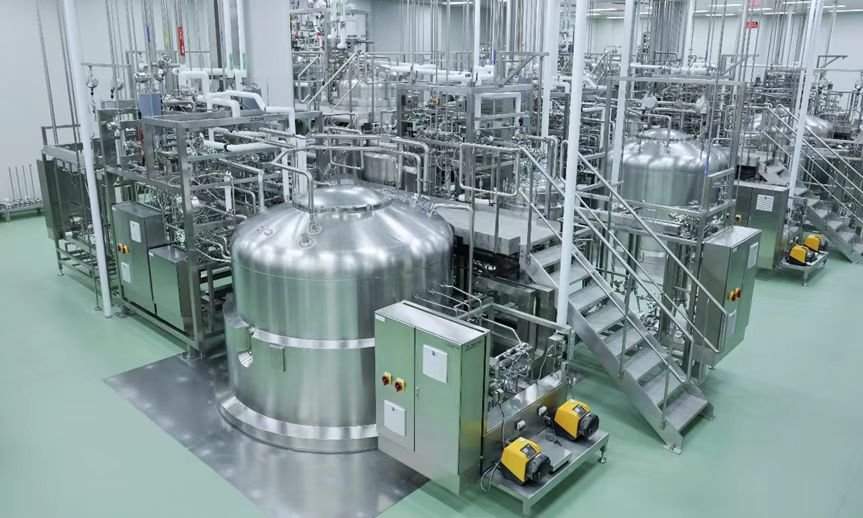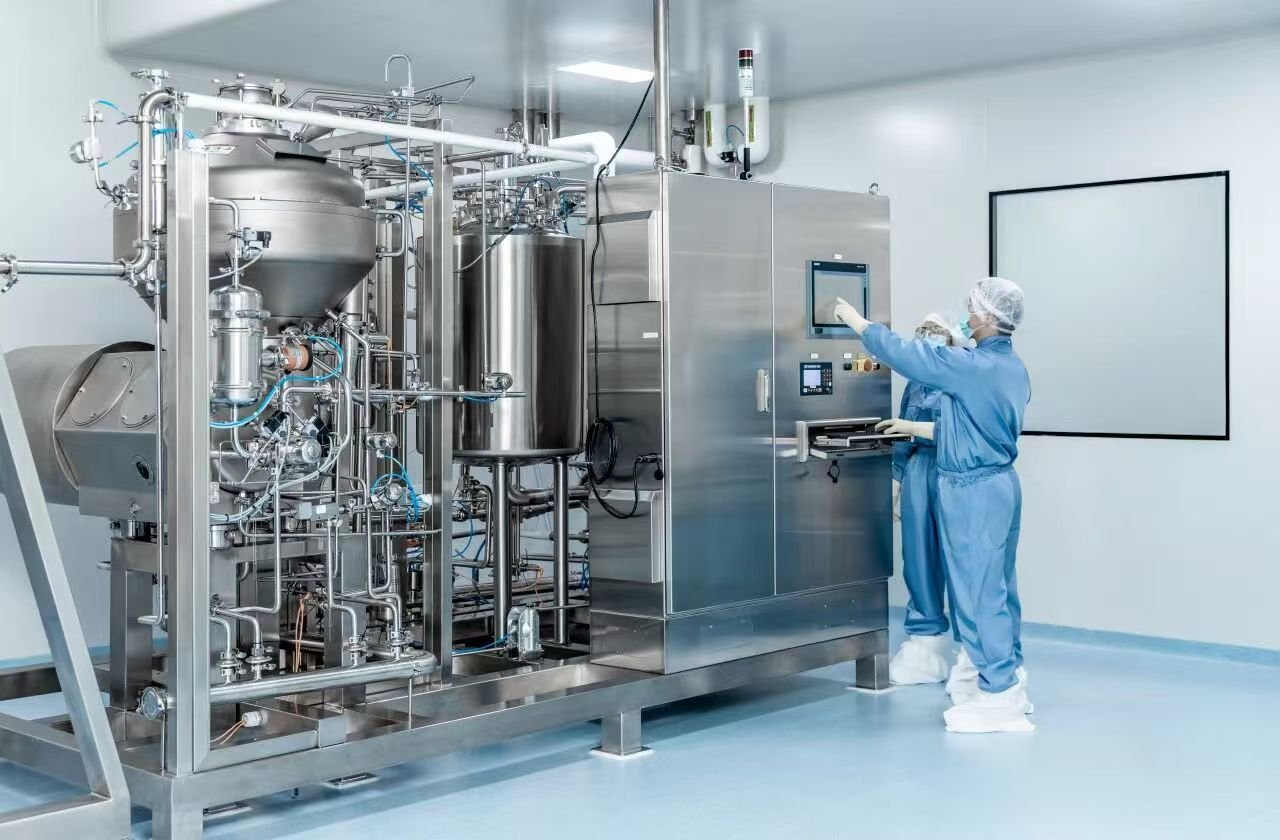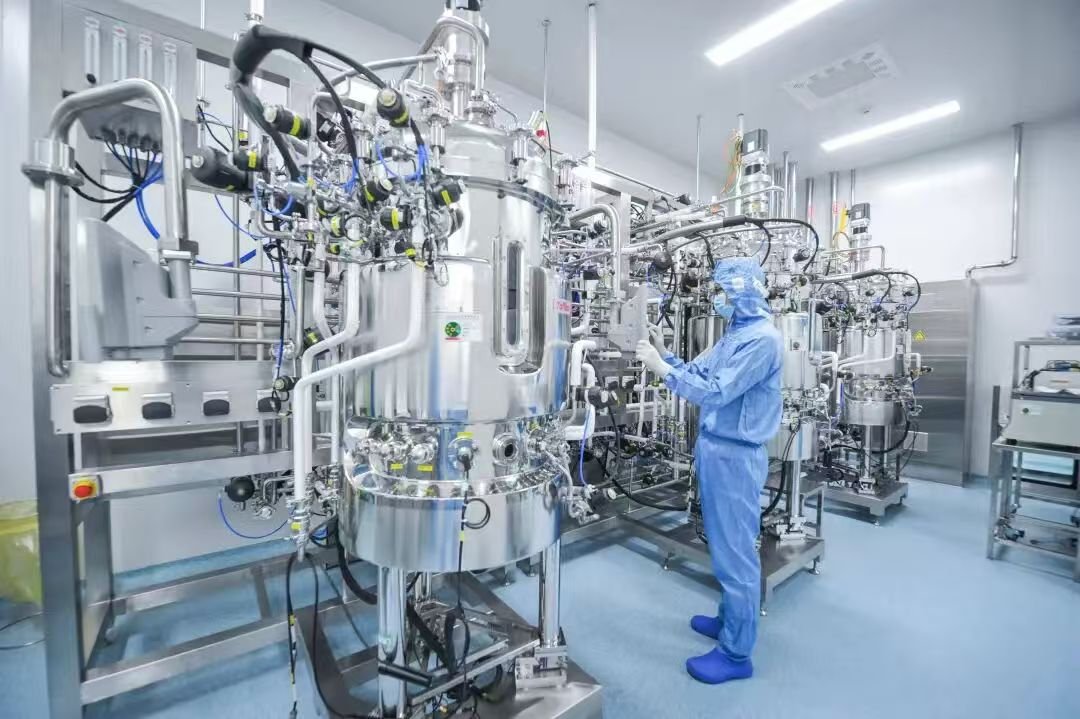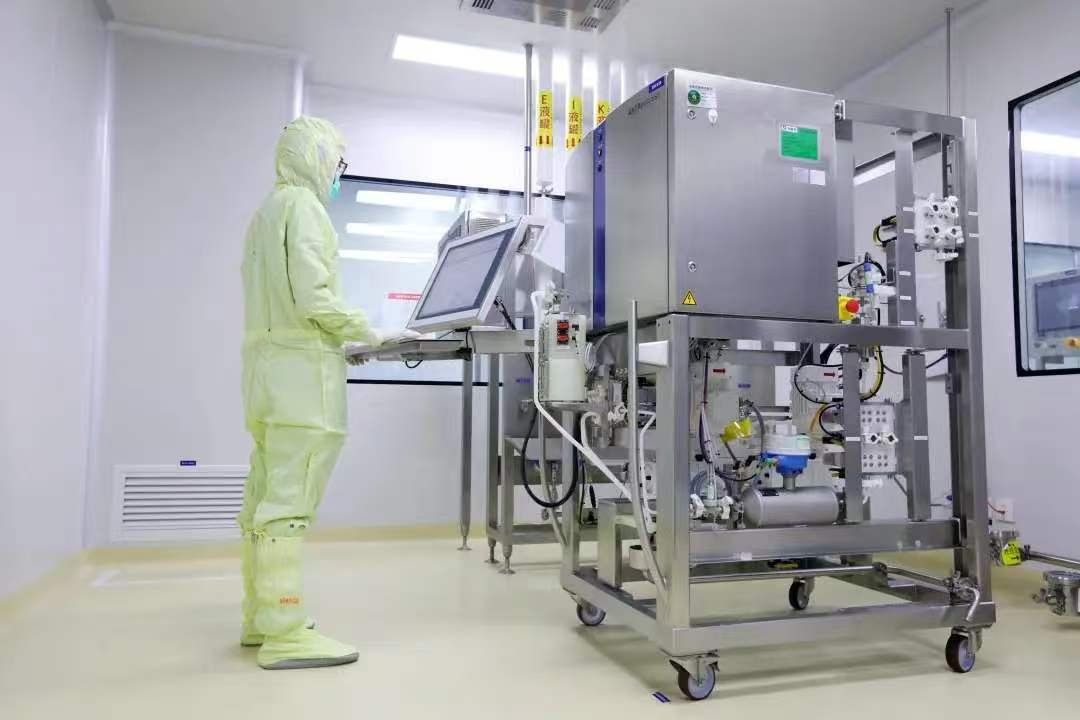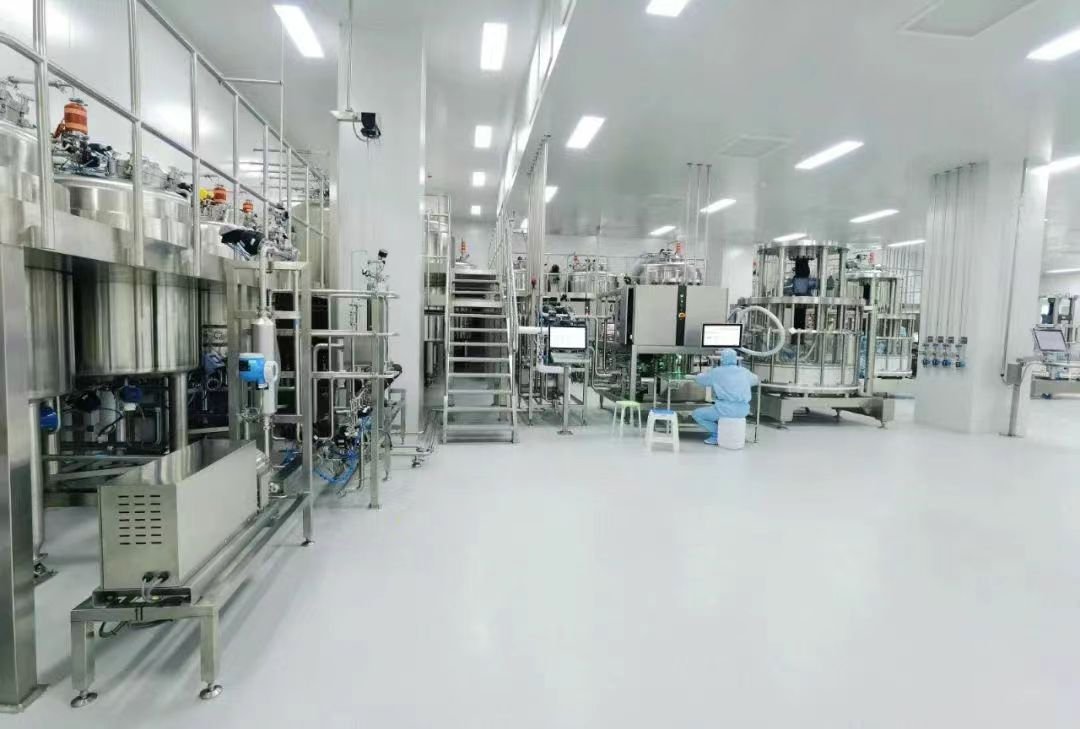
With the rapid adoption of large-scale production processes in the biopharmaceutical industry, enterprises are increasingly pursuing economic benefits from scaled manufacturing, which largely depend on product quality, expression titer and production efficiency.
Currently, over 90% of production processes still adopt traditional control methods for operational execution. Driven by the widespread application of single-use technologies and digital transformation in biomanufacturing — including process modeling, simulation, computerized systems and Industrial Internet of Things (IIoT) — production facilities are required to achieve a higher level of automation. Corresponding equipment is equipped with more precise and intelligent high-density sensors. Nevertheless, the inherent complexity, nonlinearity and digitalization of bioprocesses create an urgent demand for enhanced process control and manufacturing management, so as to establish a new model of comprehensive intensive plant operation.
1 Overview of Bioreactor Systems and Control Strategies
To maintain optimal process conditions and deliver target products as expected, stable equipment configuration, standardized workflows and effective disturbance handling are the fundamental elements of any process control system. Process control, especially disturbance regulation, has long been a research focus. Deviations from the optimal operating state of bioreactors can be corrected by adjusting key parameters such as nutrient feed rate, temperature, pressure, agitation speed, pH and dissolved oxygen concentration.
It should be noted that the development of integrated intelligent control systems does not aim to create error-proof production processes. Instead, it focuses on improving process robustness and efficiency, and ultimately enhancing the economic viability of target products.
The optimal selection of process control schemes is highly dependent on bioreactor configurations. Advances in manufacturing technologies and the launch of new-generation bioreactors have also raised higher requirements for control systems to cope with complex operating conditions.
Biotechnological processes produce a wide range of products, including food additives, antibodies, antibiotics, therapeutic proteins and renewable products such as biofuels and biodiesel. Although bioprocesses are affected by numerous variables and unpredictable factors, precise control enables operating parameters to stay within predefined ranges. While simplified bioprocess models deliver satisfactory predictability and facilitate control, discrepancies between model predictions and actual operations keep growing due to dynamic changes in process parameters, microbial metabolism and strain mutation. As a result, validating both structured and unstructured bioprocess models remains a major challenge.
To address these challenges, process control can be implemented at three hierarchical levels: device/actuator level, process level and plant level. Control algorithms and strategies shall be customized according to the specific requirements of bioprocesses, as well as the design features and operational specifications of bioreactors.
2 Device/Actuator Level Control
Actuators represent the bottom tier of the control hierarchy, responsible for the physical operation of field devices such as pumps, valves, heaters and agitators. PID controllers constitute the core components of most conventional process control systems. As classic controllers, PID has achieved great success in electrical, aerospace and mechanical industries, and performs excellently for single-input single-output linear systems.
With the advancement of digitalization, digital control technologies have been integrated with PID. Functions including adaptive control, gain scheduling and auto-tuning have been embedded into PID frameworks to optimize control performance. Although PID controllers are widely used at the device level to regulate individual parameters such as bioreactor temperature and pH, they are limited when handling highly nonlinear complex bioprocesses. In such scenarios, feed-forward control offers greater flexibility compared with pure feedback control.
3 Distributed Control System (DCS) Strategies
Developed around the 1970s, Distributed Control System (DCS) is a microprocessor-based control architecture built upon PID controllers. In compliance with the ISA-95 Purdue Model, host controllers undertake level-2 tasks such as logic optimization and advanced control strategy execution, while on-site PID controllers perform real-time device-level regulation.
Reliable communication between PID units and main controllers is critical for error-free system operation. Accordingly, various data transmission links, error-proof communication protocols and redundant designs have been developed. With DCS deployed, operators can monitor the entire plant via centralized control stations, which support alarm logging, batch report generation, process trend visualization and real-time video recording and storage. Regulatory control functions (e.g., PID algorithm execution) are undertaken by remote control units, which also collect, store and extract process data for control and analytical purposes. Supporting software enables data interaction between controllers and signal input/output modules. DCS has therefore revolutionized process management, particularly in the large-scale application of advanced control methodologies.
Since the 1980s, the overall performance of DCS has been significantly improved, and digital communication frameworks have been increasingly adopted in process control. DCS supports the implementation of sophisticated advanced control strategies. Most local control units are now equipped with analog-to-digital (A/D) and digital-to-analog (D/A) conversion modules. Digital communication has also driven the popularization of smart transmitters and actuators, which are embedded with microprocessors to realize on-site automatic calibration, range adjustment, signal conditioning, characterization and self-diagnosis.
The core advantages of DCS are summarized as follows:
High-speed data transmission and remote local control reduce wiring and installation costs.
Minimize the quantity and footprint of control panels in central control rooms.
Support personalized customization of human-machine interfaces.
Facilitate system expansion thanks to modular design.
Enhance control architecture flexibility and allow control logic updates without rewiring.
Improve system reliability and redundancy.
Prior to the adoption of client-server PC architectures, control systems were typically supplied by a single vendor due to poor interoperability between devices from different manufacturers. The emergence of software technologies such as CORBA (Common Object Request Broker Architecture) and COM (Component Object Model), together with programming languages including Java and Python, have enabled plug-and-play system deployment.
Personal computers have gradually replaced traditional control panels as main operation consoles, enabling seamless data exchange between control systems and other application programs on PCs or local area networks. Combined with DCS, the Component Object Model (COM) delivers an open solution for bioprocess data storage and analysis, and supports the integration of multi-vendor equipment to achieve plant-wide unified control.
4 Programmable Logic Controller (PLC) Strategies
A Programmable Logic Controller (PLC) is a microprocessor-driven device designed to execute binary logic and interlock control for industrial processes. Optimized for industrial environments, PLCs work in tandem with electromechanical relays, switches, pushbuttons and timers. Featuring simple logic operation, easy configuration and flexible modification, PLCs have been widely deployed in process industries. They can run PID algorithms and replace dedicated hardware PID controllers. PLCs excel at sequential logic control, with built-in functions for programmable delay, alarm triggering and timing, as well as multi-channel signal input and output.
In current industrial practices, PLC and DCS are deployed in an integrated manner, with dedicated operators responsible for on-site I/O operations.
5 Plant-Level Control: MES & ERP Strategies
Driven by ongoing digitalization and networking of bioprocesses, plant-wide control software has been widely applied. Hosted on dedicated plant servers, such integrated solutions start from Process Flow Diagrams (PFD), Piping and Instrumentation Diagrams (P&ID) and electrical & instrumentation engineering designs, and deliver project-based plant-wide management and unified operational visualization for control engineers.
This capability is essential for maintaining product Critical Quality Attributes (CQAs) within specifications amid severe and sustained process disturbances. The software can also simulate the impact of process fluctuations and verify the effectiveness of control strategies in stabilizing CQAs, especially during batch transition and process switching. Some commercial platforms are further equipped with extended functions such as 3D virtual reality modeling.
Built-in software packages enable convenient deployment of customized process engineering strategies, which are executed by central control servers. Process data sheets can be updated automatically even if parameters are modified right before production startup. Plant-level control platforms thus provide a full set of tailored solutions for biomanufacturing.
6 Model Identification and Development: Model Predictive Control (MPC)
Process modeling lays the theoretical foundation for process control, especially for nonlinear systems. Model parameters may fail to match actual field conditions due to insufficient available process variables (which makes it impossible to establish accurate mathematical equations) or plant-model mismatch in large-scale industrial scenarios.
In practice, enterprises often lack sufficient theoretical knowledge to develop first-principles models based on mass balance, while accumulating massive volumes of operational data. It is worth noting that high-precision models do not always require excessive empirical data, and a moderate amount of process data is often adequate to build models with optimal performance.
Bioprocess models can be categorized in two mainstream ways: one based on microbial growth kinetics, and the other based on nonlinear mathematical characteristics. In engineering applications, all relevant models are generally classified under the umbrella of bioprocess modeling.
7 Knowledge-Based Control System (KBCS) Based on Process Knowledge and Data
With the development of new sensors and online/offline Process Analytical Technology (PAT), integrating multi-source online and offline process data into real-time control systems has become a major challenge for bioreactor control development. Biomanufacturing has accumulated massive historical operational data, and leveraging these digital assets requires more intelligent control systems. Against this backdrop, Knowledge-Based Control Systems (KBCS) have emerged and matured over the past decade.
KBCS operates at two tiers:
Primary tier: Direct regulation of individual process parameters via fuzzy logic, namely fuzzy control.
Advanced tier: A comprehensive monitoring framework built on process expertise and historical data, consisting of three core modules:
Knowledge Base: Stores theoretical principles and accumulated historical process data, and converts raw data into executable control instructions.
Database: Archives multi-dimensional data, including physical, chemical and biochemical parameters of cultures, operational status of actuators and full lifecycle bioprocess records.
Inference Engine: Performs data quality assessment, equipment fault diagnosis, biochemical state prediction and control logic execution.
In practical applications, KBCS is often combined with classic control methods such as PID and model-based control, together with fuzzy logic, to achieve superior overall control performance. Its effectiveness has been validated by numerous industrial cases.
8 Development History and Trends of Bioprocess Control Systems
Research on bioprocess modeling, monitoring, control and optimization spans over a century. Since the 1970s, integrated control systems including PLC, DCS and SCADA have been widely adopted in the biopharmaceutical industry. In recent years, advanced control theories have been developed, such as Internal Model Control (IMC), Model-Based Predictive Control (MBPC) and Economic Model Predictive Control (EMPC).
In the post-digital era, Hierarchical Structure Control System (HSCS) has become mainstream, which connects multiple computer subsystems via industrial networks. DCS and PLC are the two core components of HSCS.
Fieldbus Control System (FCS) serves as an alternative to HSCS, which is divided into two parts: field devices (sensors, actuators and communication links) and upper-layer computer systems. Thanks to mobile and wireless communication technologies, FCS has been adopted across multiple industries. Network Control System (NCS) and FCS have achieved remarkable results in bioreactor control.
Nevertheless, the popularization of PAT has brought new challenges in integrating offline and online analytical data into real-time control loops, which further promotes the development of KBCS. As mentioned above, KBCS implements fuzzy control at the basic level and runs an advanced monitoring system integrated with knowledge base, database and inference engine at the upper level. The combination of KBCS and conventional control technologies has proven highly effective in industrial applications.
This article systematically elaborates bioreactor process principles and control technologies covering actuators, PID, PLC, DCS, SCADA, plant-level control, MPC modeling and KBCS, as well as the evolution and future directions of bioprocess control systems.
It is foreseeable that bioprocess control will achieve higher precision with denser parameter monitoring in the future. Supported by network-based intelligent control architectures, field equipment will operate more intelligently, and biomanufacturing will deliver further improved economic benefits.