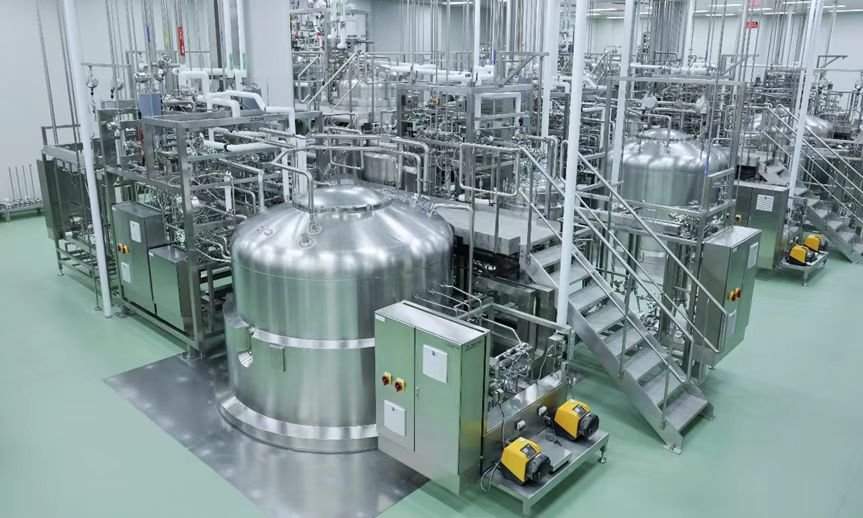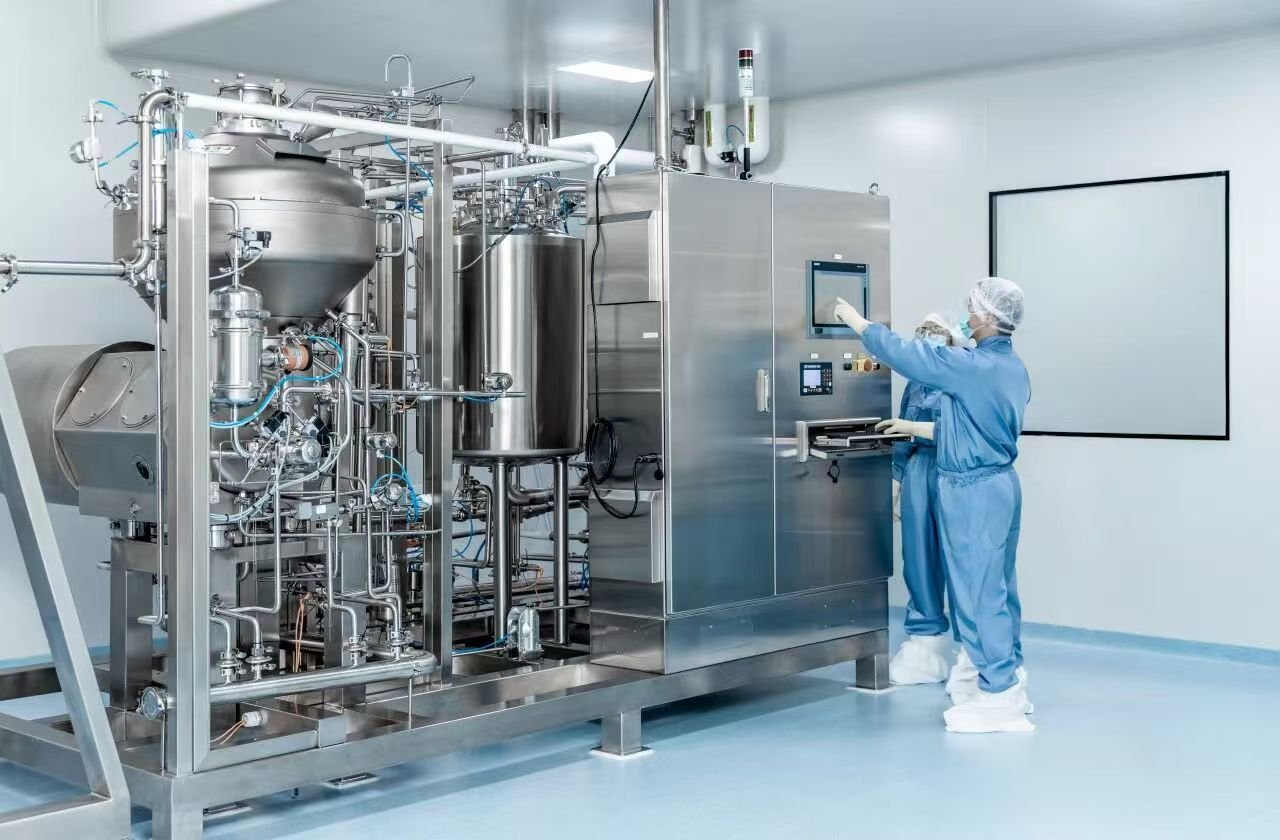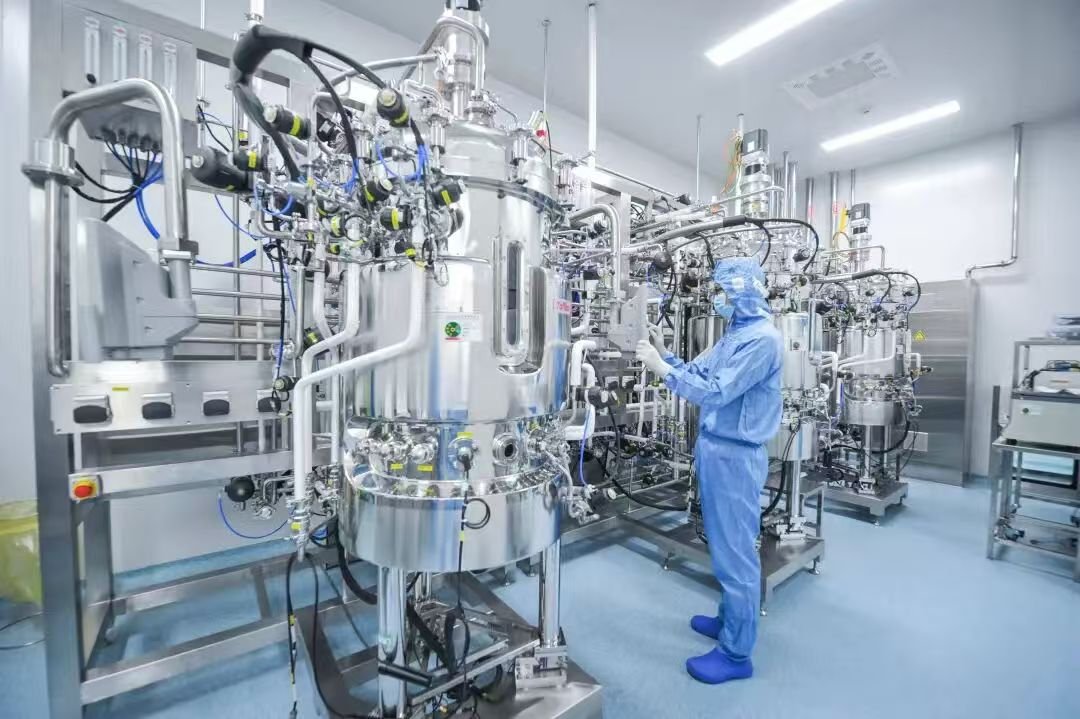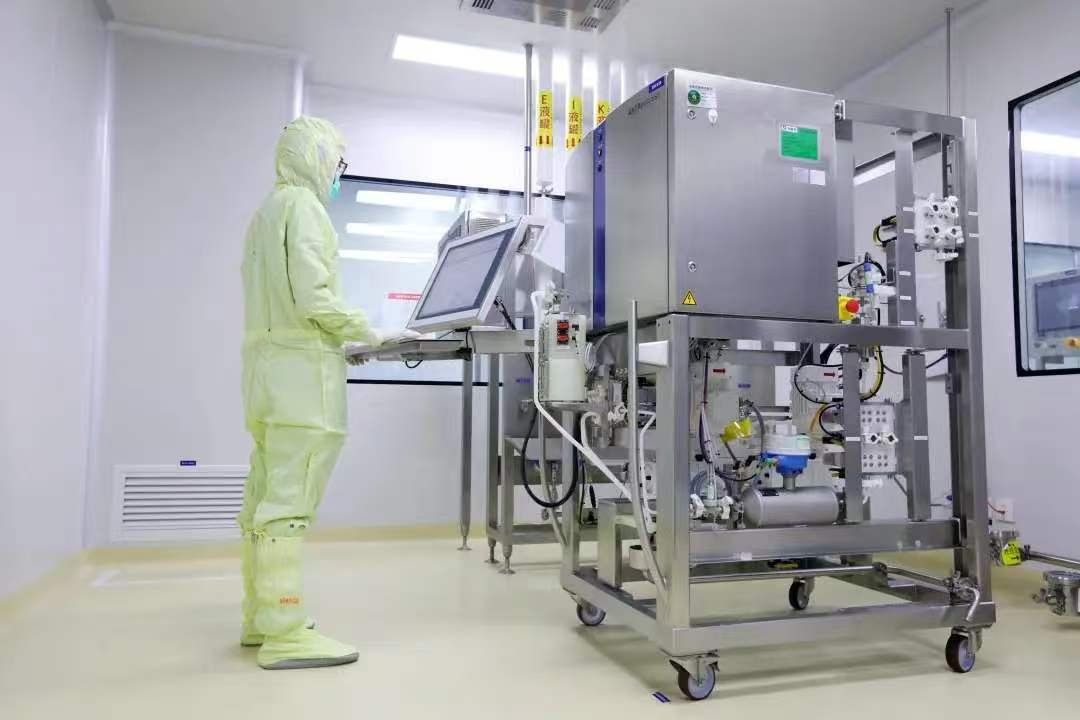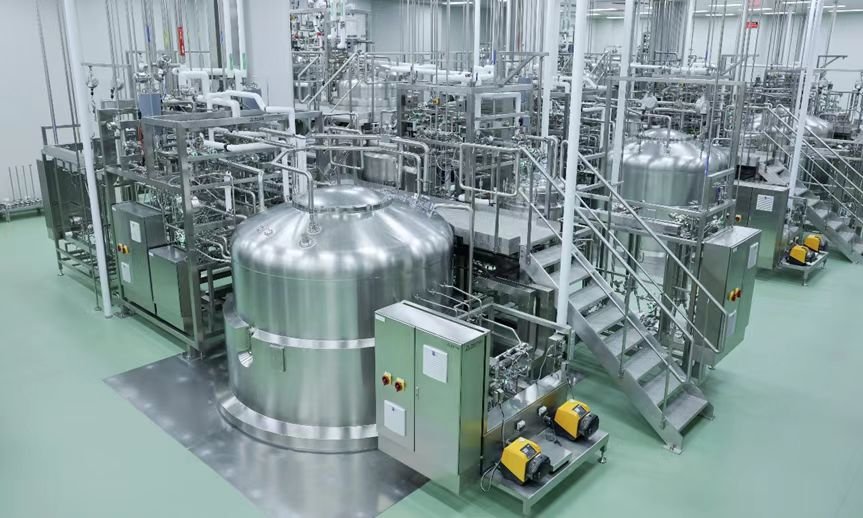
Monoclonal antibodies (mAbs), other recombinant proteins and viral vectors have emerged as major pharmaceutical products. Their manufacturing predominantly relies on mammalian cell culture, which has achieved remarkable advances over the past two decades. Fundamental chemical engineering principles including heat and mass transfer, fluid dynamics and reaction kinetics are widely applied in biopharmaceutical development and production. For cell culture-based processes, researchers and engineers leverage these principles to optimize the delivery of nutrients and oxygen, homogenize mixing, eliminate unwanted metabolic byproducts, and facilitate harvesting and purification of target biomolecules.
Cell culture process development involves investigation of scale-dependent and scale-independent bioreactor parameters. Scale-independent parameters such as pH, temperature, dissolved oxygen (DO), medium composition and osmotic pressure are routinely optimized in small-scale bioreactors and maintained consistently throughout scale-up. In contrast, scale-dependent parameters are governed by bioreactor geometric configurations and operational settings. Agitation speed (N), aeration rate and working volume collectively determine flow patterns and mixing homogeneity, further regulating physical stress exerted on cells. Accordingly, bioreactor scale-up necessitates optimized operational parameters for large-scale production vessels.
Scale-up imposes profound impacts on physical, chemical and biological conditions within cell cultures. Physical variations cover bioreactor geometry, aeration, agitation, heat exchange and mixing efficiency. Chemical alterations stem from acid-base dosing for pH regulation, water quality fluctuation and foam formation induced by surface tension changes. Biological deviations involve cumulative passage numbers linked to seed culture and production phases, elevated mutation risks, heightened contamination susceptibility and diminished selective pressure.
Biopharmaceutical manufacturing typically undergoes sequential scale escalation, ranging from high-throughput miniature bioreactors (15–250 mL), laboratory-scale glass or single-use bioreactors (1–10 L), to pilot and commercial-scale production vessels (200–5,000 L or larger). Bioreactor scale-up constitutes an intricate and challenging task, requiring delicate coordination between equipment design and operational manipulation to replicate equivalent hydrodynamic and mass transfer environments for cell growth and biosynthesis. Substantial discrepancies exist in hardware design and operational performance across different scales. Major obstacles arise from the inherent complexity of biological systems and heterogeneous hydrodynamic and mass transfer profiles in large-scale bioreactors, which trigger substrate and pH gradients. Such heterogeneity leads to deviations in cell proliferation, metabolism and protein synthesis, as well as inconsistent product quality attributes, collectively defined as process variability induced by scale transition.
With the widespread adoption of single-use bioreactors, contract development and manufacturing organizations (CDMOs) and commercial manufacturers deploy production facilities across multiple domestic and global sites. These bioreactors differ significantly in geometric specifications, including height-to-tank diameter (H/T) ratio, impeller-to-tank diameter (D/T) ratio, gas sparger layout and impeller configuration. Nevertheless, mainstream single-use bioreactor suppliers provide geometrically similar product series covering development scale (10–50 L) to pilot and commercial scale (200–2,000 L).
Critical Considerations in Bioreactor Scale-Up
Key challenges encountered during scale-up are summarized as follows:
Nonlinear behavioral changes
Disparities in biochemical equilibrium
Variations in fluid dynamics and agitation regimes
Formation of temperature, oxygen, pH and carbon dioxide gradients
Material properties and equipment selection
Nonlinearity in Bioreactor Scale Transition
Geometric similarity, characterized by consistent H/T and D/T ratios across scales, serves as the fundamental prerequisite for scale-up, with all dimensional parameters scaled proportionally. Laboratory-scale bioreactors generally adopt an H/T ratio of 2:1, while large-scale vessels feature H/T ratios ranging from 2:1 to 4:1. The D/T ratio is commonly controlled within 1/3 to 1/2.
Constant H/T ratio leads to a sharp decline in surface area-to-volume (SA/V) ratio accompanied by drastic volume expansion. For instance, maintaining an H/T ratio of 1.5 with a scale-up factor of 6.4 elevates bioreactor volume from 147 cubic feet to 38,604 cubic feet, representing a 26-fold increment.
Reduced SA/V ratio poses formidable heat dissipation challenges for large-scale microbial fermenters. For mammalian cell culture bioreactors, increased liquid height, diminished headspace surface area and elevated hydrostatic pressure impair carbon dioxide stripping efficiency. Extended circulation time and stagnant flow zones further induce uneven shear stress distribution and compromised overall mixing performance.
Multiple parameters undergo drastic shifts during scale-up, including flow regime transition from laminar flow to turbulent flow. Scale expansion amplifies discrepancies in process indicators and scale-up criteria. Even with preserved geometric similarity, large-scale bioreactors cannot perfectly replicate microscale culture conditions due to inherent parameter deviations.
Sufficient homogenization in large vessels demands intensive power input, which is constrained by mechanical limitations and shear sensitivity of mammalian cells. Consequently, substrate and pH gradients inevitably emerge, resulting in inconsistent productivity and product quality profiles.
Apart from H/T ratio control, designers regulate additional structural parameters including impeller diameter, bottom clearance, liquid level, tank height and baffle width ratio. Conventional scale-up criteria applied to microbial and mammalian cell culture include:
Constant impeller tip speed
Constant power per unit volume (P/V)
Constant volumetric oxygen mass transfer coefficient (kLa)
Constant mixing time
Constant Reynolds number (Re)
Constant gas volume per liquid volume per minute (vvm)
Combined criteria such as synchronized P/V and vvm, or matched kLa and aeration rate
Scale-dependent parameters are determined by tank diameter (D) and agitation speed (N). Variations in these two core variables alter hydrodynamic environments, disrupt homogeneous chemical distribution, and potentially cause cellular damage or metabolic perturbation. Altered cellular metabolism further modulates physiological characteristics across scales.
Scale-up based on constant P/V yields lowered agitation speed, elevated tip velocity, prolonged circulation time and enhanced kLa value. Scale-up anchored on fixed agitation speed drastically reduces P/V ratio, while constant Reynolds number scaling results in a 625-fold P/V decline. Circulation time, positively correlated with mixing time, is rarely adopted as primary scale-up benchmark. Most scale-up strategies extend circulation time except identical agitation speed retention. Constant circulation time scaling triggers a 25-fold P/V surge, whereas fixed tip speed scale-up cuts P/V by 50% and lowers kLa, alongside a fivefold extension of circulation duration.
Essentially, scale-up difficulties originate from heat, mass and momentum transfer phenomena. Process control shifts from cell kinetic dominance at laboratory scale to mass transfer limitation at commercial scale. Temporal characteristics of mixing and reaction rates govern homogeneity in large bioreactors. The ultimate scale-up objective is not rigid preservation of scale-sensitive parameters, but establishment of feasible operational ranges to stabilize cellular physiology, productivity and product quality attributes.
Biochemical and Chemical Equilibrium
Uniform substrate distribution secured by efficient mixing is indispensable for biochemical reactions and cellular metabolism. Metabolic activity generates heat that requires timely removal to sustain isothermal conditions. SA/V ratio variation during scale-up undermines heat transfer efficiency and distorts biochemical reaction progression. Mammalian cells require narrow stable ranges of temperature, pH, osmotic pressure and substrate concentration for optimal growth and biosynthesis, necessitating targeted process optimization for large-scale cultivation.
Mixing, Agitation and Fluid Dynamics
Constant P/V scale-up nearly triples mixing and circulation time, giving rise to heterogeneous substrate, pH and DO distribution. Dynamic environmental fluctuations disrupt regular cellular metabolic performance. Mammalian cell cultures adopt mild power input compared with microbial fermentation, leading to prolonged mixing time up to several minutes in large-scale bioreactors.
Fluid dynamics exhibit nonlinear variations with vessel enlargement, accompanied by unpredictable laminar-turbulent transition. Reynolds number monitoring facilitates flow pattern judgment and thermal mixing efficiency maintenance. Flow regime requirements vary between adherent and suspension cell cultures. Reynolds number deviation induced by diverse scale-up criteria alters hydrodynamic characteristics across scales, hindering reliable process amplification.
Gradient Formation in Large-Scale Bioreactors
Low specific power input extends mixing duration and forms stagnant regions, exposing cells to transient pH and DO fluctuations that perturb physiological status. Lactic acid accumulation from mammalian metabolism generates acidic microenvironments in poorly mixed zones. Local oxygen depletion occurs in high-metabolic active regions.
Complex parameter interactions driven by bioreactor heterogeneity trigger cascading gradient effects, potentially altering cell phenotypes and compromising genetic stability of recombinant vectors and plasmids.
Oxygen exhibits low aqueous solubility, requiring continuous aeration supplementation. Prolonged mixing time induces oxygen stratification. Studies confirm oxygen gradient formation in 20 L stirred-tank bioreactors when cell density exceeds 20 × 10⁶ cells/mL, a common density level in large fed-batch cultures.
Lactic acid accumulation gradually reduces culture pH during fed-batch cultivation, necessitating alkaline neutralization. Insufficient mixing creates transient hyperalkaline microregions around dosing ports, impairing cellular metabolism and intracellular pH homeostasis. Intracellular pH fluctuation disturbs glucose transportation, ATP/ADP balance and final product quality attributes.
Biomass proliferation elevates dissolved carbon dioxide (dCO₂) concentration. Despite superior solubility compared with oxygen, dCO₂ is normally eliminated via gas stripping. Reduced SA/V ratio restricts interfacial gas exchange, while increased hydrostatic pressure enhances gas solubility, resulting in dCO₂ accumulation in large bioreactors.
Elevated dCO₂ disrupts carbonate-bicarbonate equilibrium, lowering culture pH and intracellular pH, and increasing osmotic pressure under fixed pH control. Practical data indicates that 500 L CHO cell perfusion bioreactors require 2–3 mm bubble size and 0.005 vvm aeration rate to avoid oxygen limitation and excessive dCO₂ buildup.
Material Properties and Equipment Selection
Physical and chemical properties of bioreactor construction materials profoundly influence cultivation performance and final outcomes. High-throughput miniature and single-use bioreactors dominate laboratory-scale operations, while contemporary commercial manufacturing predominantly adopts 2,000 L single-use vessels. Traditional large-scale stainless steel bioreactors demand rigorous cleaning validation procedures.
Scale-Up Implementation: Roles of Process Parameters
Process scientists and engineers conduct bioreactor scale-up via agitation-based and aeration-based parameter regulation.
Agitation-Dependent Scale-Up Parameters
Mixing time, P/V ratio and impeller tip speed constitute core agitation-related indicators, which cannot be simultaneously maintained constant during scale transition. Fixed mixing time requires excessive P/V input, while constant tip speed may trigger oxygen supply deficiency. Comprehensive evaluation is mandatory to achieve balanced operational parameters.
Specific power input (P/V) represents mechanical energy transmitted to culture broth per unit volume, calculated by the formula:
\(P/V = P_0 \rho N^3 D^2\)
Where \(P_0\) = impeller power number, N = agitation speed, D = impeller diameter, \(\rho\) = liquid density.
Constant P/V scale-up satisfies the equation:
\((P_0 \rho N^3 D^2)_2 = (P_0 \rho N^3 D^2)_1\)
Stable medium density, geometric similarity, fully developed turbulence and identical impeller configuration ensure constant \(P_0\), simplifying the equation to:
\((N^3 D^2)_2 = (N^3 D^2)_1\)
Large-scale agitation speed is calculated as:
\(N_2 = N_1 \left(\frac{D_1}{D_2}\right)^{\frac{2}{3}}\)
Impeller tip speed reflects shear intensity applied to cell suspension. Tip speed-based scale-up commonly reduces P/V ratio, thus rarely applied in mammalian cell cultivation. Corresponding speed conversion formula:
\(\pi D_2 N_2 = \pi D_1 N_1\)
\(N_2 = N_1 \frac{D_1}{D_2}\)
Mixing time denotes the duration required to achieve homogeneous broth composition, governed by turbulence intensity and volumetric turnover rate. Mixing time reaches approximately 160 seconds in 100 m³ industrial fermenters. Extended mixing time causes heterogeneous pH, oxygen and substrate distribution. Speed calculation under fixed mixing time criteria:
\(N_2 = N_1 \left(\frac{D_1}{D_2}\right)^{\frac{1}{4}}\)
Practical scale-up compromises partial parameter consistency, relying on industrial experience, process database and historical operational performance.
Aeration-Dependent Scale-Up Parameters
Elevated H/T ratio in large vessels restricts gas backmixing, generating vertical and radial DO gradients. Sustained oxygen transfer rate (OTR) equivalent to small-scale conditions stands as the core difficulty in scale-up. Successful OTR maintenance depends on accurate kLa estimation and specific aeration power (Pg/V) regulation.
OTR and oxygen uptake rate (OUR) follow the kinetic balance:
\(OTR = kL_a (C_{sat} – C_L)\)
\(OUR = \mu X Y_{X/O_2}\)
Where \(C_{sat}\) = saturated DO concentration, \(C_L\) = actual dissolved oxygen level, \(\mu\) = specific growth rate, X = viable cell density, \(Y_{X/O_2}\) = biomass yield per oxygen consumption.
Hydrostatic pressure and backpressure variation alter oxygen solubility and actual DO distribution. Logarithmic mean concentration is adopted to eliminate vertical stratification deviation. Minimum tolerable DO threshold ranges from 30% to 70% saturation to guarantee sufficient oxygen supply in low-mixing zones.
Empirical correlation for kLa prediction:
\(kL_a = C \left(\frac{P_g}{V}\right)^\alpha V_s^\beta\)
Where C, \(\alpha\), \(\beta\) = process-specific constants, \(V_s\) = superficial gas velocity. The dependency of kLa on Pg/V weakens with scale enlargement.
Constant kLa retention via fixed vvm or superficial gas velocity serves as mainstream mammalian cell scale-up strategies, yielding comparable P/V performance and verified commercial applicability. Vvm and Vs require coordinated adjustment: constant vvm may induce impeller flooding in large vessels, while fixed Vs demands reduced vvm in scaled-up systems. Excessive aeration aggravates foaming and gas holdup, which remains stable under synchronized Pg/V and Vs control.
Offset-mounted customized impellers in single-use bioreactors enhance mixing efficiency. Experimental calibration is essential to determine optimal P/V and aeration parameters satisfying oxygen demand and broth homogeneity.
Aeration fulfills dual functions of oxygen supplementation and dCO₂ stripping. Oxygen transfer correlates with superficial gas velocity, whereas carbon dioxide elimination relies on total gas volumetric flow. Vvm-based scale-up may lead to insufficient CO₂ removal, particularly problematic for bioreactors exceeding 2,000 L operational volume.
As a leading process-oriented engineering company, Sino Bioengineering delivers professional bioengineering solutions and comprehensive technical services to clients worldwide.
For more products and solutions: https://sinobioengg.com/category/solution/
For more service: https://sinobioengg.com/category/service/