Advancements in technology and deeper insights into biological process mechanisms enable large-scale production of high-purity biomolecules. Fermentation is currently applied to manufacture a wide spectrum of bio-products, including organic acids, biofuels, bioplastics, biopesticides, pharmaceuticals and flavorants. Nevertheless, bioprocesses are generally more intricate than chemical synthesis routes, owing to the specific physicochemical growth requirements of microbial cells. Strict standardized procedures and rational scale-up approaches are also indispensable to commercialize bio-products.
Fermenters serve as core equipment in diverse biomanufacturing workflows. Specialized fermenter technologies have been developed to accommodate varied production demands. Bioprocess scale-up encompasses research, pilot and commercial industrial scale development.
Bioprocess development typically proceeds through three progressive scales: laboratory, pilot and industrial production. Optimal cultivation conditions are first screened and validated at lab scale to facilitate seamless process transfer to larger volumes. Reproducible operational performance poses a major challenge during scale transition, as aeration and agitation critically govern microbial growth. Targeted scale-up strategies are therefore adopted to preserve process stability, formulated based on geometric similarity, agitation intensity and aeration parameters, and tailored to specific bioprocesses and microbial strains. Operational parameters profoundly impact cell proliferation, subsequent biomolecular biosynthesis, and must be faithfully replicated at elevated production scales. One or multiple key operational variables are maintained constant throughout scale-up, supporting predictive calculation of power consumption and aerobic aeration parameters for large-scale fermenters.
Lab-scale cultivation is carried out in shake flasks ranging from 50 mL to 500 mL or bench-top fermenters with volumes of 1 L to 15 L, focusing on condition screening and process optimization. Researchers can conveniently evaluate the effects of nutrient sources, temperature, pH, agitation speed and aeration rate on biomass accumulation, product yield and production cost. Experimental design and numerical simulation are also implemented to establish and verify kinetic models. After confirming and validating optimal parameters in lab fermenters, the process is upgraded to pilot scale with reactor volumes from 50 L to 500 L.
Critical parameters including aeration, agitation and fermenter geometric proportions are kept consistent across scales. The pilot phase verifies technical feasibility and characterizes unmeasurable lab-scale indicators such as shear stress induced by stirring. Once economic and technical viability is validated at pilot stage, the process proceeds to industrial commercial production, following identical scale-up criteria for reliable operation. Fermenter design is fundamental to bioprocess scaling, as these bioreactors sustain microbial cultivation for product synthesis. Rational fermenter selection matching operational modes, microbial properties and capital investment is essential at all production scales.
Bioprocess performance and fermenter scale-up are inherently correlated. Scale expansion requires precisely maintained microbial growth and biosynthesis conditions while ensuring economic and technical sustainability.
Key Bioprocess Factors Governing Scale-Up
Operational Modes
Bioprocess operations are classified into three mainstream modes based on substrate consumption, product formation and inhibition characteristics: batch, fed-batch and continuous cultivation, differentiated by medium feeding and fermentation broth harvesting protocols.
Batch cultivation represents the simplest mode, with no medium supplementation or broth withdrawal throughout fermentation. Metabolic activities induce dynamic changes in broth composition, resulting in unsteady cultivation status. This mode is widely adopted for preliminary lab-scale trials and optimal condition screening for biomolecule synthesis.
Fed-batch fermentation excludes broth extraction but allows intermittent or continuous supplementary medium feeding during cultivation. Feedstock can be pure carbon sources, concentrated nutrient solutions or complete culture medium, determined by microbial metabolic demands. The primary objective is to prolong the exponential growth phase, so as to maximize biomass density and product titer. Precise feeding timing is determined by residual carbon content, peak microbial concentration and growth curve characteristics. Scientific feeding strategies prevent excessive dilution of medium and microbial biomass, avoiding compromised final productivity. Nutrient supplementation alters biomass, substrate and product concentrations, dissolved oxygen level and growth rate. Both open-loop and closed-loop control systems are commonly deployed, with innovative control algorithms continuously developed to enhance fed-batch cultivation efficiency.
Continuous fermentation maintains steady chemostat conditions with synchronized fresh medium inflow and spent broth outflow, retaining constant reactor volume throughout production.
Agitation, Aeration and Broth Viscosity
Most industrial aerobic fermentation adopts aqueous culture media abundant in macro and micronutrients, presenting non-Newtonian fluid properties with variable viscosity. Oxygen supply is vital for microbial metabolism and target metabolite synthesis. Limited oxygen solubility in water and multiple diffusion barriers hinder oxygen mass transfer to microbial cells, making aeration a prominent challenge during scale-up. Customized agitation and aeration systems coupled with real-time viscosity regulation deliver sufficient oxygen supply, efficient mass and heat transfer, and homogeneous broth distribution. Agitation configuration is selected according to fermenter type and microbial shear tolerance.
The aeration system consists of air compressors, coolers and spargers, working synergistically with stirrers to distribute gas evenly. Aeration rate is regulated based on Oxygen Uptake Rate (OUR). Oxygen Transfer Rate (OTR) directly correlates with volumetric mass transfer coefficient kLa, both serving as core scale-up benchmarks to guarantee sufficient oxygen supply.
Agitation and aeration inevitably generate foam. Bio-surfactant synthesis and specific metabolite production tend to trigger severe foaming, which impedes gas diffusion. Fermenter design reserves adequate headspace volume, equipped with defoaming control systems and anti-foam additives as required.
Broth viscosity significantly affects oxygen transfer efficiency and bubble coalescence and dispersion. Increased viscosity derives from solid particles, high biomass concentration and viscous metabolite accumulation. Elevated viscosity deteriorates agitation and aeration performance. Agitator impeller layout and aeration flow rate are thoroughly optimized at lab and pilot scales prior to industrial deployment.
Scale-Up Similarity Criteria
Bioprocess reproducibility and scalability rely on consistent parametric ratios and operational characteristics across different volumes. Complete duplication of all properties is impractical, while essential chemical, biochemical, mechanical, thermal and geometric similarities must be preserved.
Core geometric ratios remain constant during scale transition, primarily including height-to-diameter ratio (H/D) of fermenters. Higher H/D ratio exacerbates broth heterogeneity, hence large fermenter design optimizes impeller quantity and installation position to achieve uniform stirring. Liquid height to reactor height ratio is controlled within 0.7 to 0.8 to reserve proper headspace for foam management. Diameter proportional relations among impellers, baffles and reactor vessels are also standardized. Multivariate analysis integrating geometric specifications and biochemical indicators such as microbial growth rate ensures accurate process replication after scale expansion.
Bioprocess development initiates from lab-scale parameter optimization, followed by sequential transfer to pilot and industrial scales. Successful process migration depends on appropriate scale-up strategies centered on agitation and aeration consistency. Each bioprocess features unique optimal matching of operational parameters to facilitate microbial growth and target product synthesis. Proper fermenter model selection, operational mode configuration and combined scale-up criteria collectively enhance overall process performance. Continuous research and structural modification of fermenters further adapt reactor design to evolving biotechnology industrial demands.
Donning Bio fully supports microbial-based biomanufacturing, covering recombinant protein, nucleic acid and synthetic biology product production. Our bench-top glass fermenters and stainless steel bioreactors fulfill full-scale demands from laboratory process development to pilot testing and commercial manufacturing, enabling accelerated, efficient and sustainable bioproduction.
Sino Bioengineering Parallel Glass Fermenter
This advanced microbial cultivation reactor system delivers superior performance, comprehensive functions and user-friendly operation. A single computer can synchronously control 1 to 8 independent or parallel-connected glass fermenters, drastically accelerating bioprocess development. The system is widely applied in fermentation research and development for biopharmaceutical industry.
Advantages
Multiple vessel specifications: 3 L, 5 L, 7 L, 15 L optional volumes
Satellite chassis design enables flexible expansion, supporting parallel linkage and collective control of up to 8 reactors
Integrated system realizes parameter setting, procedure calling, data backup and cross-batch trend comparison on a unified interface
Multi-dimensional control modes based on feedback, timing, conditional response and script formula meet stringent technical requirements
Wincc industrial architecture compliant with GMP and 21 CFR Part 11 standards, applicable to pharmaceutical and medical production
Complete communication interfaces connect with SCADA system for data acquisition and remote monitoring
Reserved analog input ports integrate CO₂, weighing and biomass sensors into closed-loop feedback control
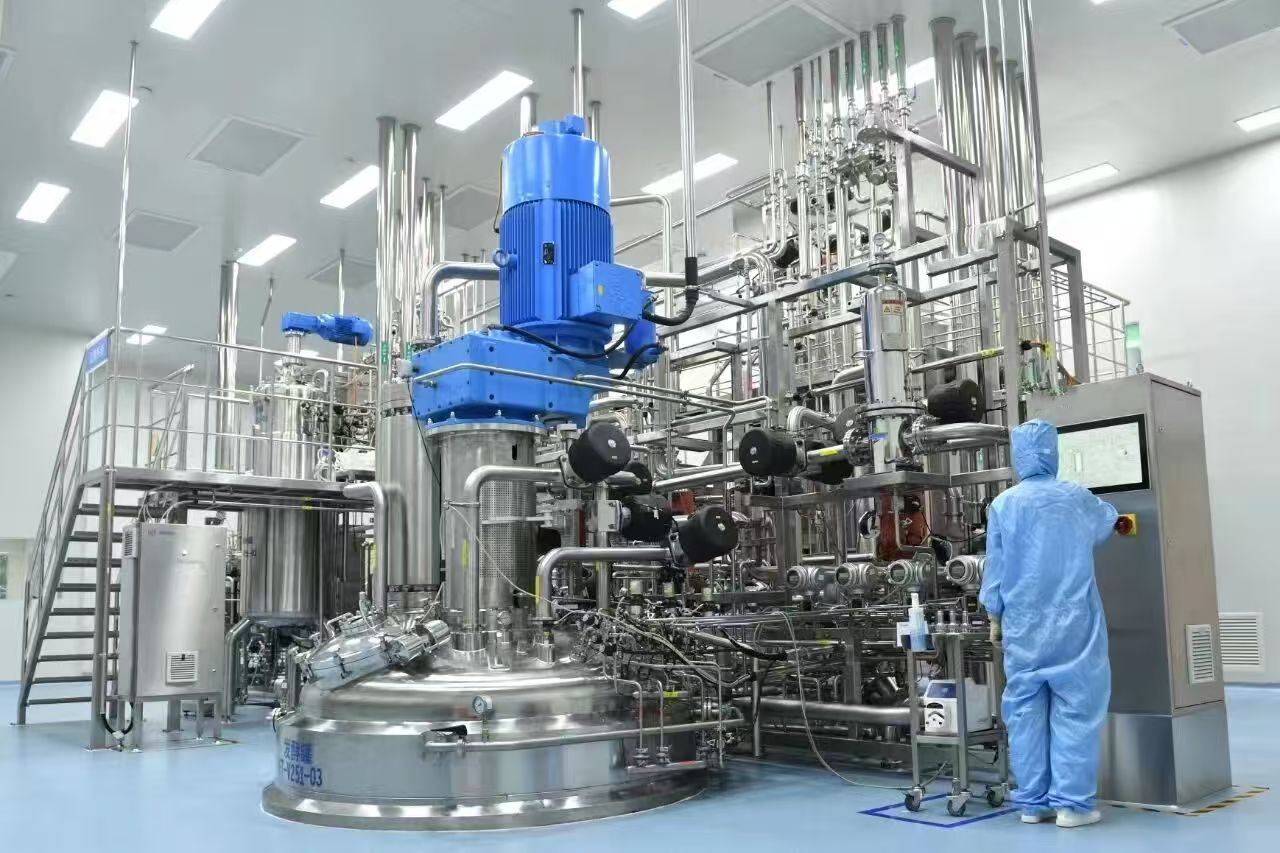
Stainless Steel Microbial Fermentation System
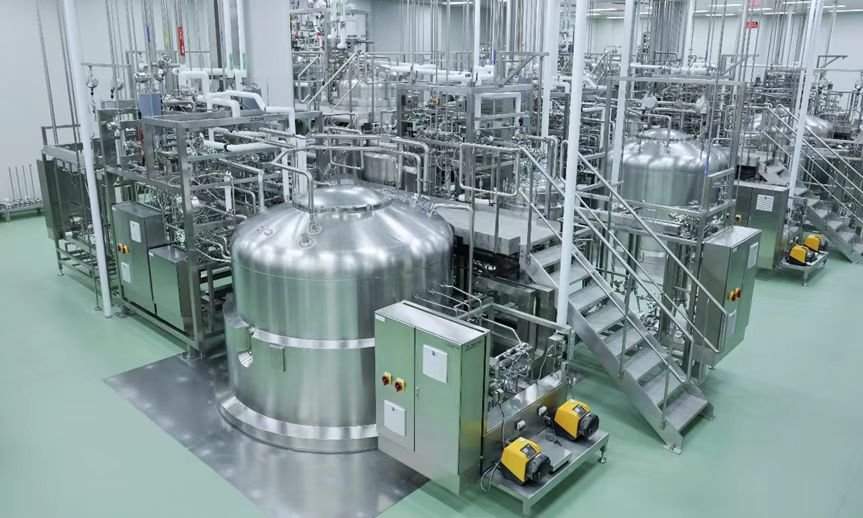
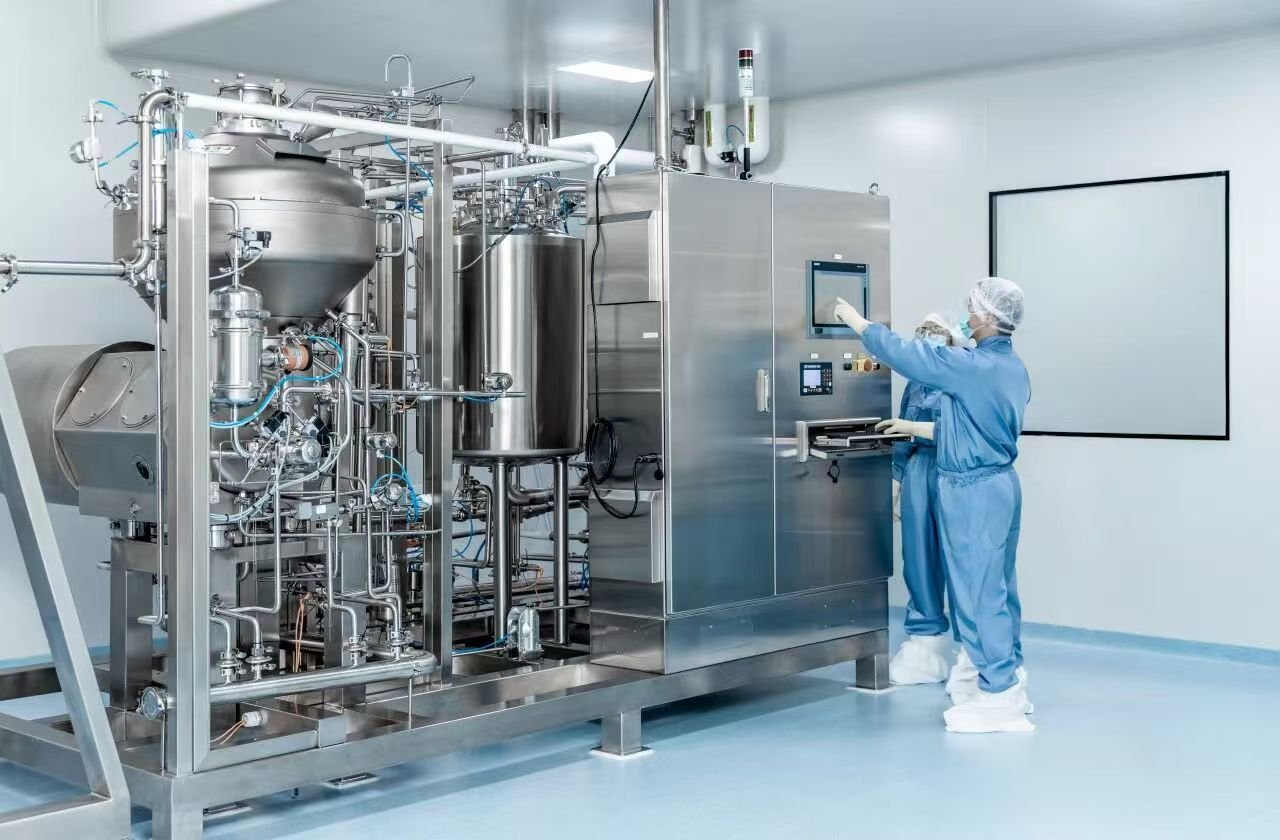
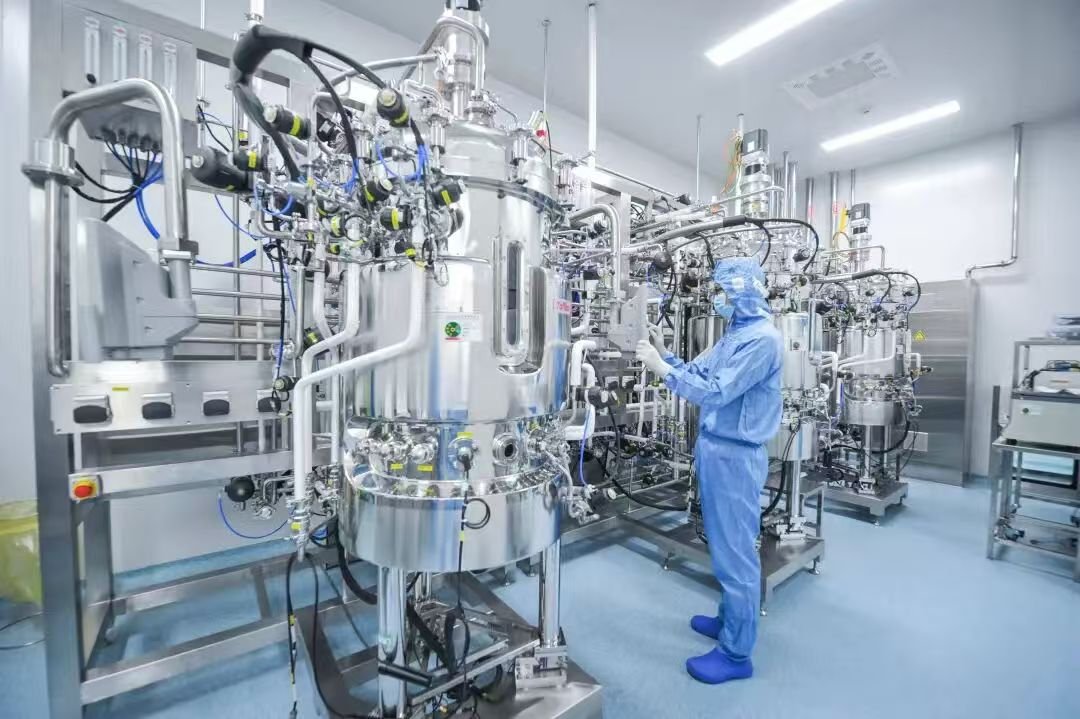
Backed by mature manufacturing expertise, Sino Bioengineering provides compact modular pilot fermenters ranging from 15 L, 30 L, 50 L to 100 L, and customized commercial bioreactors up to 10,000 L. The system adapts to cultivation of bacilli, cocci, filamentous fungi, plant cells and yeast. Professional technical teams deliver full services including process design, pipeline installation, system integration and control software customization.
Advantages
Modular layout minimizes floor occupation
In-situ sterilization simplifies operation and reduces labor cost
Equipped with aseptic sampling valves for sterile broth collection
Combined axial and radial flow impellers achieve high oxygen transfer capacity for high-density cultivation
Electric heating enables rapid temperature adjustment, suitable for thermo-induced product synthesis
Remote monitoring and communication supported
Dual PID temperature control via jacket and internal sensors ensures precise temperature regulation with accuracy of ±0.1℃
Convenient needle-type feeding ports, optional sterilizable feeding valve assemblies
Standard rotor flow meters, optional air-oxygen mixers and mass flow meters
Independent sterilization design for inlet and exhaust filters facilitates filter replacement during cultivation
Open-style pipeline and frame structure simplifies daily operation and maintenance
Pipelines comply with 3A, GMP and BPE industrial standards
One-click manual/automatic switching for all valves and meters on main control panel
Dissolved oxygen regulated by adjusting aeration proportion or stirring speed
Multi-level user authority management with password protection prevents unauthorized parameter modification
Integrated functions: parameter configuration, real-time monitoring, curve analysis, data storage and report printing
Hierarchical access control available
As a leading process-oriented engineering company, Sino Bioengineering delivers professional bioengineering solutions and comprehensive technical services to clients worldwide.
For more products and solutions: https://sinobioengg.com/category/solution/
For more service: https://sinobioengg.com/category/service/