

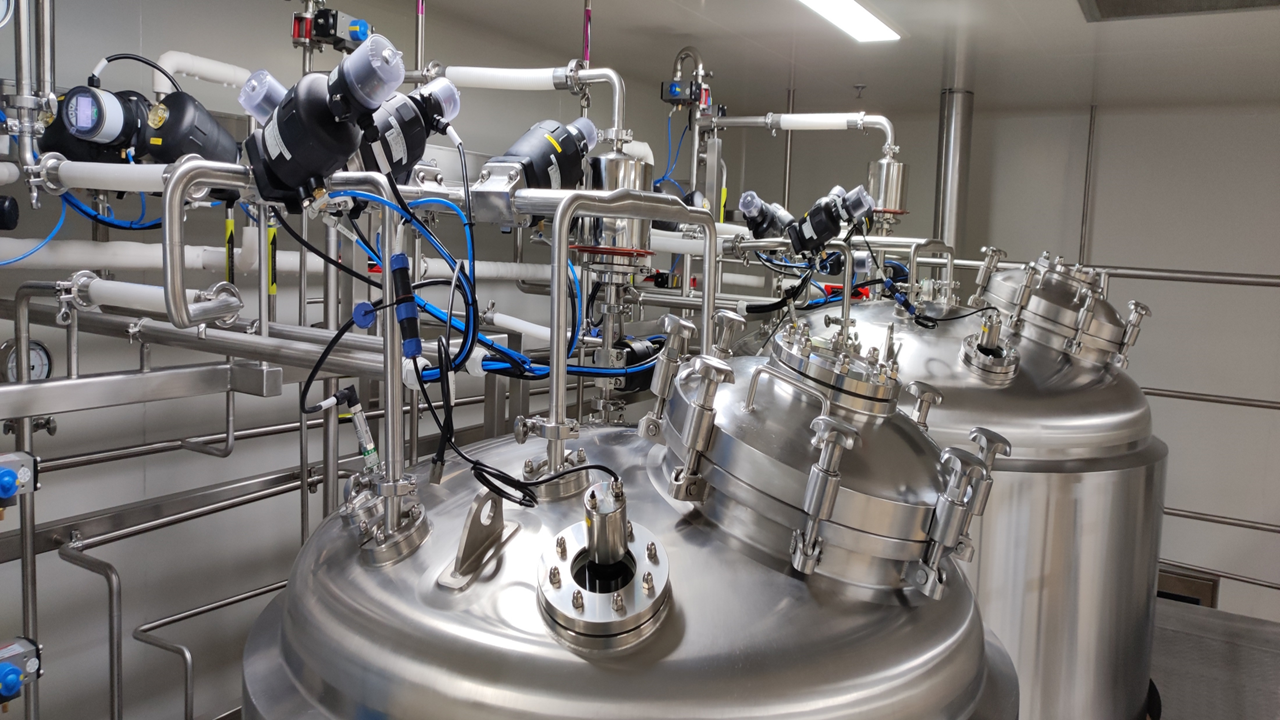
Synthetic biomanufacturing has emerged as a sustainable alternative to traditional chemical synthesis, enabling the microbial production of high-value chemicals, pharmaceuticals, biofuels, and biomaterials. However, the translation of high-yield, stable laboratory-scale fermentation processes to industrial-scale production is frequently hindered by metabolic instability in engineered cell factories. Scale-up-induced environmental fluctuations, genetic mutations, metabolic pathway imbalance, and cellular stress collectively disrupt intracellular metabolic homeostasis, leading to reduced product titer, impaired cell growth, inconsistent batch performance, and increased production costs. This article systematically analyzes the core causes of metabolic instability during biomanufacturing scale-up, summarizes state-of-the-art strain engineering, dynamic metabolic regulation, and bioprocess optimization strategies, and prospects future technical directions for robust and scalable synthetic biomanufacturing. The key findings provide practical guidelines for bridging the gap between laboratory research and industrial commercialization.
1.Introduction
Synthetic biology empowers the rational design and modification of microbial metabolic networks, transforming microorganisms into efficient cell factories for customized biosynthesis. With the rapid advancement of metabolic engineering, genome editing, and biosensing technologies, engineered strains have achieved remarkable production performance in bench-scale shake-flask and small-bioreactor experiments. Nevertheless, industrial scale-up remains the biggest bottleneck restricting the industrialization of synthetic biological products . Laboratory culture environments feature homogeneous nutrient distribution, stable oxygen supply, and mild stress conditions, while large-scale bioreactors inevitably generate heterogeneous microenvironments characterized by gradient fluctuations of dissolved oxygen, pH value, substrate concentration, and hydraulic shear force .
Such environmental variations break the delicate metabolic balance of engineered microbial cells. Unlike native strains with evolved environmental adaptability, artificially modified cell factories carry exogenous synthetic pathways and rewired metabolic networks, making them more vulnerable to metabolic perturbations. Long-term industrial fermentation further exacerbates genetic drift, toxic metabolite accumulation, and cell aging, resulting in progressive metabolic instability . Metabolic instability manifests as pathway flux imbalance, growth-production trade-off disorders, strain degeneration, and batch-to-batch inconsistency, which severely compromises the efficiency, stability, and reproducibility of large-scale biomanufacturing. Therefore, maintaining metabolic stability throughout the scale-up process is a core prerequisite for the industrial application and commercialization of synthetic biology technologies. This review elaborates on the scale-up-specific metabolic instability mechanisms and targeted mitigation strategies, aiming to provide a theoretical and technical reference for stable, high-efficiency industrial bioproduction.
2.Core Causes of Metabolic Instability During Scale-Up
Metabolic instability in scaled-up biomanufacturing is a synergistic result of environmental heterogeneity, genetic variation, and intracellular metabolic dysregulation. Different from laboratory-scale instability, scale-up-related metabolic disorders are closely coupled with bioreactor hydrodynamic characteristics and long-term industrial cultivation conditions, which can be categorized into three major dimensions.
2.1 Environmental Heterogeneity and Physiological Stress
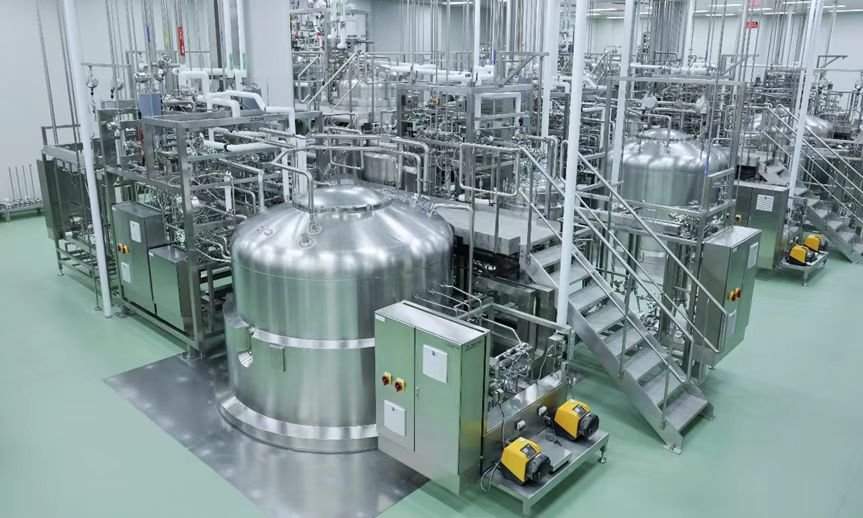
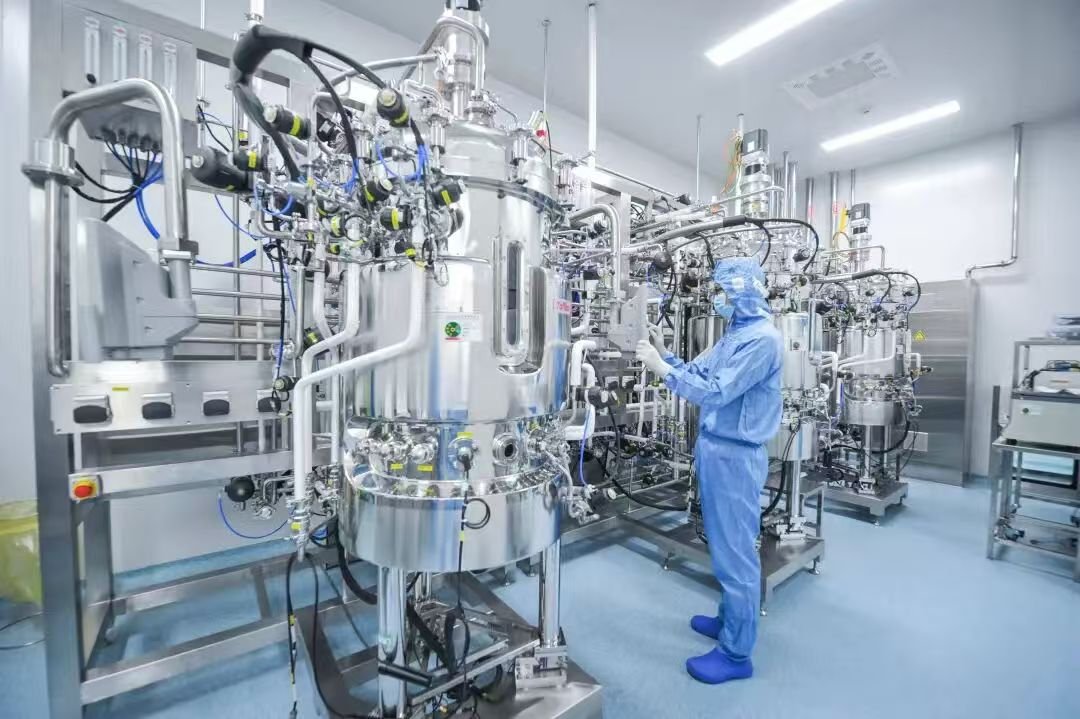
The most intuitive difference between laboratory and industrial bioprocesses lies in environmental homogeneity. In large-scale stirred-tank bioreactors, insufficient mixing efficiency leads to the formation of spatial gradients of substrates, oxygen, and pH . Cells circulating in the bioreactor periodically switch between nutrient-rich/oxygen-sufficient zones and nutrient-starved/oxygen-limited zones, triggering frequent physiological adaptation responses. Repeated environmental fluctuations induce intracellular oxidative stress, energy metabolism disorders, and membrane structural damage, disrupting the steady-state of central carbon metabolism and product synthesis pathways.
Additionally, high-speed stirring in industrial reactors generates hydraulic shear force, which damages microbial cell membranes, impairs material transport functions, and interferes with normal metabolic cycles . Long-term suboptimal environmental stress further alters cellular gene expression profiles, inhibits the transcription of key synthetic pathway genes, and activates stress response pathways that compete for cellular energy and carbon sources, ultimately reducing product synthesis efficiency and causing metabolic instability.
2.2 Genetic Instability and Strain Degeneration
Engineered microbial cell factories rely on exogenous gene expression and artificial metabolic pathway rewiring to produce target products. During long-term continuous fermentation and scale-up cultivation, microbial genome replication errors and adaptive mutations are inevitable . Most exogenous synthetic pathways impose metabolic burdens on host cells, consuming substantial carbon sources, ATP, and amino acid resources. To reduce survival pressure, microbial cells tend to generate loss-of-function mutations in exogenous pathway genes or regulatory elements, leading to strain degeneration.
Moreover, repetitive sequence fragments in engineered plasmids and integrated genomes easily cause homologous recombination and gene deletion. The accumulation of mutant strains in industrial-scale fermentation systems is accelerated by the competitive growth advantage of low-burden degenerated strains. Over multiple fermentation batches, the proportion of functional engineered strains decreases sharply, resulting in continuous decline in product yield and irreversible metabolic instability . Error codon suppression, gene silencing, and plasmid loss further aggravate genetic and metabolic heterogeneity of industrial microbial populations.
2.3 Imbalanced Metabolic Flux and Growth-Production Trade-Off
Synthetic bioproduction requires precise coordination between microbial cell growth and target product synthesis. In laboratory-scale optimized conditions, metabolic flux can be finely balanced to ensure normal cell proliferation and efficient product accumulation. However, scale-up environmental perturbations break this balance, triggering severe growth-production trade-off conflicts . Excessive substrate supplementation in industrial processes may lead to overflow metabolism, generating toxic byproducts such as acetic acid and reactive oxygen species that inhibit cell growth and pathway activity.
Conversely, insufficient oxygen and substrate supply restrict central carbon metabolism flux, resulting in insufficient energy and precursor supply for synthetic pathways. In addition, artificial metabolic pathways often lack native regulatory mechanisms, making them unable to dynamically adjust flux in response to environmental changes. Static pathway expression leads to local metabolite accumulation, feedback inhibition, and metabolic bottlenecks, further amplifying pathway flux imbalance and destabilizing the overall metabolic network.
3.Key Strategies for Maintaining Metabolic Stability in Scale-Up Processes
To address scale-up-induced metabolic instability, current technical solutions focus on three complementary directions: enhancing strain robustness via synthetic biology engineering, realizing dynamic metabolic flux regulation, and optimizing industrial bioprocess control systems. The integration of strain modification and process optimization effectively locks metabolic homeostasis during large-scale fermentation.
3.1 Robust Strain Engineering for Enhanced Stress and Genetic Stability
Improving the inherent robustness of engineered strains is the fundamental solution to resist scale-up environmental stress and genetic variation. Membrane engineering is an effective strategy to enhance cellular environmental adaptability. By modifying the fatty acid and lipid composition of cell membranes—including adjusting lipid saturation, carbon chain length, and cyclopropane fatty acid content—researchers can improve membrane integrity, permeability regulation, and shear resistance . For instance, modulating the CpxRA two-component system to upregulate fabA and fabB genes increases unsaturated fatty acid synthesis, significantly enhancing microbial tolerance to oxygen fluctuation and hydraulic shear stress.
Genetic stability engineering prevents strain degeneration during long-term fermentation. Construction of mutation robustness defense systems, including error codon suppression and gene circuit insulation, reduces the probability of exogenous pathway mutation and deletion . Orthogonal gene circuit design isolates synthetic pathways from host native regulatory networks, avoiding unwanted crosstalk between endogenous metabolism and exogenous pathways, and improving the stability of heterologous gene expression . Furthermore, longevity engineering optimizes microbial chronological lifespan, alleviating cell aging and toxic metabolite accumulation during prolonged industrial cultivation to maintain sustained metabolic activity .
3.2 Dynamic Metabolic Flux Regulation to Balance Growth and Production
Static metabolic engineering cannot adapt to dynamic environmental changes in scale-up fermentation, while dynamic metabolic control enables real-time flux adjustment to maintain metabolic balance. Biosensor-based dynamic regulation systems sense intracellular metabolite concentration or extracellular environmental signals and autonomously adjust the expression intensity of pathway genes. Metabolite-specific biosensors can precisely respond to key intermediate levels, relieving feedback inhibition and eliminating metabolic bottlenecks. Quorum-sensing-based circuit regulation realizes automatic switching between cell growth and product synthesis modes: prioritizing cell proliferation in the early fermentation stage and shifting to high-efficiency product synthesis in the stable stage, which perfectly resolves the growth-production trade-off conflict .
Global metabolic network regulation further optimizes overall flux distribution. By modifying central carbon metabolism, energy metabolism, and redox balance pathways, researchers enhance the metabolic flexibility of cell factories under fluctuating industrial conditions. Adaptive laboratory evolution (ALE) is also widely applied to screen robust mutant strains with stable metabolic phenotypes under scale-up simulation stress, providing superior chassis cells for industrial biomanufacturing .
3.3 Industrial Bioprocess Optimization and Intelligent Control
Bioreactor process optimization eliminates environmental heterogeneity-induced metabolic perturbations from the macroscopic perspective. Optimizing stirring speed, aeration rate, and feeding strategy improves mixing uniformity and oxygen transfer efficiency in large-scale reactors, reducing substrate and oxygen gradient fluctuations . Fed-batch and continuous fermentation strategies avoid overflow metabolism caused by high initial substrate concentration, maintaining stable nutrient supply and physiological state of microbial cells.
Intelligent biosensing and process control technologies realize real-time monitoring and closed-loop regulation of fermentation parameters. High-throughput online detection of pH, dissolved oxygen, biomass, and key metabolites provides data support for precise process adjustment . Machine learning and big data analysis establish metabolic prediction models for scale-up fermentation, realizing early warning and intervention of metabolic instability, and significantly improving batch-to-batch consistency of industrial production. The combination of optimized reactor design, precise feeding control, and intelligent monitoring systems builds a stable external environment for intracellular metabolic homeostasis.
4.Current Challenges and Future Perspectives
Despite significant progress in metabolic stability regulation for biomanufacturing scale-up, several challenges remain unsolved. First, the molecular mechanisms of microbial metabolic response to complex industrial multi-stress coupling are not fully clarified, limiting the precise design of robust strains. Second, most dynamic regulation circuits are designed for laboratory conditions, with poor adaptability and stability in complex large-scale fermentation environments. Third, the integration efficiency of strain engineering and industrial process optimization is low, lacking systematic scale-up theories and universal technical paradigms from bench to factory.
Future research will focus on three key directions. First, multi-omics technologies will be applied to systematically resolve scale-up-specific metabolic perturbation mechanisms, identifying core stability-related genes and regulatory modules for targeted strain engineering. Second, intelligent and orthogonal dynamic regulation circuits with anti-interference performance will be developed to adapt to complex industrial environments and achieve autonomous and precise metabolic flux control. Third, the integration of synthetic biology, process engineering, and artificial intelligence will build digital scale-up models, realizing the predictive design of stable fermentation processes and accelerating the industrial transformation of synthetic biological products.
5.Conclusion
Metabolic instability is the core technical barrier restricting the scale-up and industrialization of synthetic biomanufacturing, which is jointly caused by environmental heterogeneity, genetic variation, and metabolic flux imbalance. The combination of robust strain engineering, dynamic metabolic regulation, and intelligent bioprocess optimization effectively maintains intracellular metabolic homeostasis, eliminates scale-up metabolic disorders, and improves the stability and efficiency of industrial bioproduction. With the continuous development of synthetic biology and intelligent manufacturing technologies, the precise regulation of metabolic stability throughout the full-scale process will become a universal technical standard for industrial biomanufacturing, laying a solid foundation for the large-scale application of sustainable synthetic biological production modes.