
Biopharmaceutical manufacturing is undergoing a profound paradigm shift from conventional batch-oriented production to intensified continuous manufacturing workflows. As the core bottleneck of modern bioprocessing, downstream purification, especially chromatographic separation, determines the overall production efficiency, product quality consistency, and manufacturing cost of biotherapeutics including monoclonal antibodies (mAbs), recombinant proteins, and viral vectors. Traditional batch chromatography systems, as the mainstream downstream processing technology for decades, suffer from inherent limitations such as low resin utilization, lengthy production cycles, large buffer consumption, and discontinuous operation gaps. In contrast, continuous downstream processing (CDSP) integrates multi-column continuous chromatography, real-time process analytical technology (PAT), and automated flow control to achieve steady-state, uninterrupted purification. This article systematically compares the technical characteristics of continuous downstream processing and traditional batch chromatography, analyzes the core advantages of CDSP in process efficiency, cost control, product quality stability, and production flexibility, and discusses the industrial application value, existing challenges, and future development trends of continuous downstream purification. It further clarifies the essential reasons why continuous downstream processing is gradually replacing traditional batch chromatography systems and becoming the mainstream direction of next-generation biopharmaceutical downstream manufacturing.
1.Introduction
With the rapid expansion of the global biopharmaceutical market and the escalating demand for high-efficiency, low-cost, and high-consistency biotherapeutics, traditional biomanufacturing workflows are facing unprecedented optimization pressure. Bioproduction is divided into upstream cell culture and downstream purification processes, and numerous industrial practices have proven that downstream chromatography purification has become the main rate-limiting step restricting overall production capacity and economic benefits. For a long time, batch chromatography has dominated biopharmaceutical downstream processing, relying on independent, discontinuous unit operations including column loading, washing, elution, regeneration, and equilibration. Each batch operation is independent, with frequent start-stop operations, intermediate material holding, and manual intervention, resulting in low overall process integration and prominent production inefficiencies.
In recent years, driven by process intensification technology and intelligent manufacturing upgrades, continuous downstream processing has achieved breakthrough technological maturity and large-scale industrial verification. Different from the discrete operation logic of batch systems, CDSP realizes seamless connection of all purification units through periodic countercurrent chromatography and automated pipeline control, forming a closed, steady-state continuous purification workflow. When matched with continuous upstream perfusion bioreactors, it can construct a full-process continuous biomanufacturing system, completely breaking the efficiency bottleneck of traditional batch production. More and more biotech enterprises and pharmaceutical manufacturers are gradually phasing out outdated batch chromatography production lines and deploying continuous downstream processing systems. This article focuses on the technical iteration logic of downstream purification, deeply explores the competitive advantages of CDSP over traditional batch chromatography, and analyzes its industrial replacement trend.
2.Technical Principles and Operational Characteristics of Traditional Batch Chromatography
Traditional batch chromatography is a discrete unit operation mode based on single-column independent circulation, which is the most widely used purification technology for biopharmaceutical downstream separation and purification. Its core working principle is to complete the entire purification cycle through sequential independent steps: column equilibration, sample loading, impurity washing, target product elution, column regeneration, and re-equilibration. After one complete batch cycle ends, the next batch of sample purification can be started, with no overlapping or continuous operation between cycles.
This batch operation mode has obvious structural limitations in practical industrial applications. First, the sample loading capacity of single batch chromatography is limited by resin saturation. To avoid target product breakthrough, the resin is usually only loaded to 60%–70% of its saturated capacity, resulting in extremely low resin utilization efficiency and serious waste of expensive chromatographic media such as Protein A resin. Second, each batch operation requires repeated buffer replacement and column regeneration, accompanied by massive consumption of purification buffer and cleaning reagents, which greatly increases production costs and environmental treatment pressure. Third, there are inevitable intermediate holding links between batch cycles and different purification units. The long-term storage of intermediate products increases the risk of protein degradation, impurity proliferation, and product activity loss, reducing the overall yield and quality stability of finished products.
In addition, batch chromatography relies heavily on manual parameter setting, sampling detection, and equipment operation. The differences in operation parameters and manual intervention errors between different batches easily lead to fluctuations in product purity, potency, and impurity content, increasing the difficulty of quality control and batch consistency verification. Moreover, the discontinuous operation mode requires the configuration of large-volume material storage tanks and standby equipment, occupying a large factory building footprint and restricting the scale expansion and flexible production capacity of production lines. Although traditional batch chromatography has the advantages of simple equipment structure and low initial investment threshold, its inherent defects in efficiency, cost, and quality control have made it difficult to adapt to the high-standard and large-scale production needs of modern biopharmaceuticals.
3.Core Mechanisms and Technical Advantages of Continuous Downstream Processing
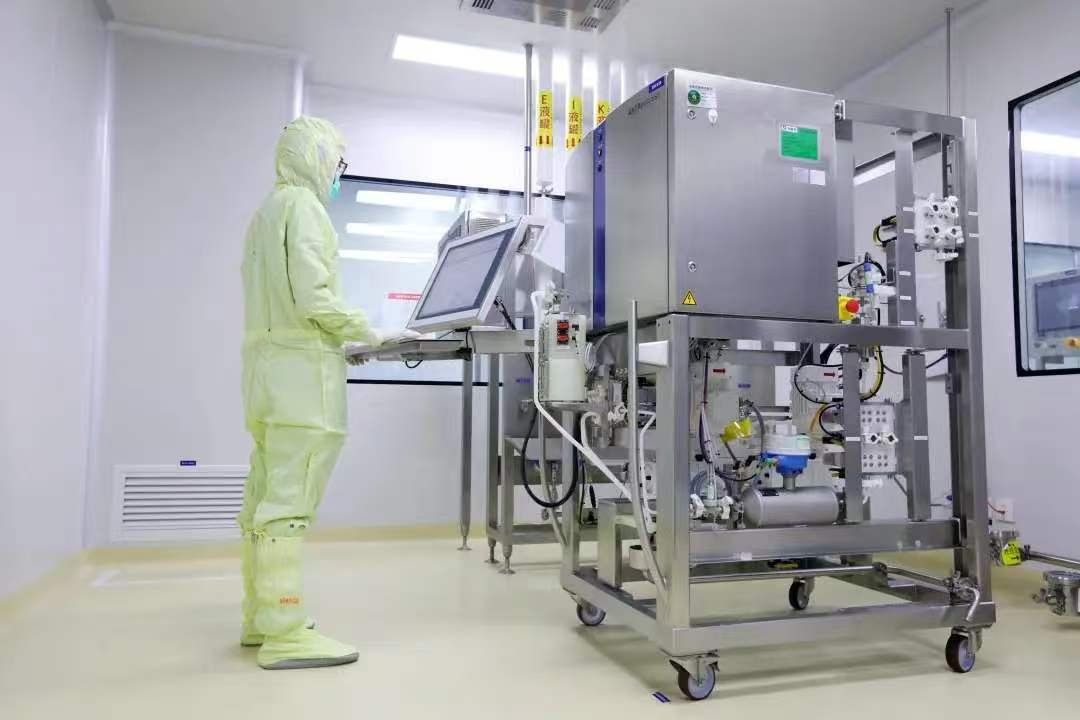
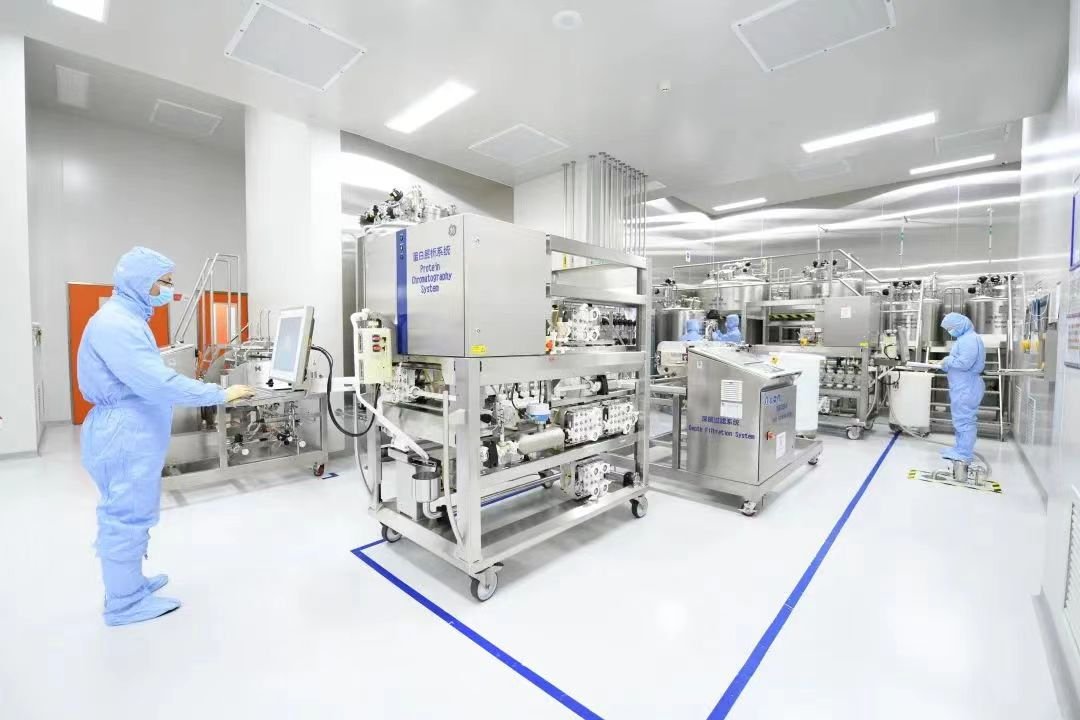
Continuous downstream processing represented by multi-column continuous chromatography is an intensified purification technology optimized based on countercurrent mass transfer principle and automated cycle control. It deploys multiple small-scale chromatographic columns to work in parallel and staggered cycles, realizing uninterrupted sample loading, continuous elution and online regeneration, and breaking the discrete operation limitations of single-column batch systems. Combined with real-time PAT and intelligent control systems, CDSP achieves full-process closed-loop monitoring and steady-state operation, showing comprehensive technical and economic advantages over traditional batch chromatography.
3.1 Significant Improvement in Resource Utilization Efficiency
Low resin utilization is the core pain point of traditional batch chromatography, while continuous downstream processing fundamentally solves this problem through staggered countercurrent operation. In the continuous system, multiple columns undertake different functional stages of loading, washing, elution, and regeneration respectively. The unadsorbed target product penetrating from the previous column is captured by the subsequent column, enabling each chromatographic column to be loaded to nearly 100% saturation. Optimized industrial continuous systems can increase resin utilization rate to more than 95%, far exceeding the 60%–70% level of batch systems. The efficient utilization of resin greatly reduces the demand for expensive chromatographic media, cutting the core material cost of downstream purification.
At the same time, continuous processing eliminates repeated equipment startup and shutdown and redundant buffer replacement operations in batch production. Industrial data show that continuous downstream chromatography can reduce buffer consumption by 30%–50% compared with traditional batch systems, and the demand for cleaning reagents and auxiliary materials is also significantly reduced. In addition, the continuous system adopts small-volume chromatographic columns and integrated pipeline design, which saves more than 40% of factory footprint and eliminates large intermediate storage tanks, realizing intensive utilization of production space and equipment resources.
3.2 Shortened Production Cycle and Improved Manufacturing Capacity
Traditional batch chromatography has long idle waiting time and intermediate holding time between cycles, resulting in low effective production efficiency. A complete batch purification cycle often lasts several hours, and the overall production cycle of biopharmaceuticals is further prolonged due to the superposition of multiple batch unit operations. Continuous downstream processing realizes seamless docking of all purification links through cyclic alternate operation of multi-column modules, without idle waiting and intermediate material storage links, achieving 24-hour uninterrupted steady-state production.
When matched with continuous upstream perfusion cell culture technology, CDSP constructs a full-process continuous biomanufacturing system, completely synchronizing upstream fermentation and downstream purification. This linkage mode eliminates the time difference between batch fermentation and batch purification, greatly compressing the overall production cycle. For mainstream mAb products, continuous downstream processing can shorten the purification cycle from several days in batch mode to less than 24 hours, and the annual production capacity of a single production line can be increased by 2–3 times compared with the traditional batch mode, significantly improving the market supply capacity of biopharmaceuticals.
3.3 More Stable Product Quality and Lower Batch Fluctuation
Product batch inconsistency caused by discrete batch operation is a key problem restricting the quality upgrade of biopharmaceuticals. In traditional batch systems, differences in manual operation, parameter adjustment, and material storage conditions will lead to fluctuations in key quality indicators such as product purity, aggregate content, and charge heterogeneity between different batches. Continuous downstream processing adopts fully automated closed-loop control and real-time PAT monitoring, with all process parameters including flow rate, pH value, conductivity, and elution concentration maintained in a stable steady-state range, eliminating human intervention errors and batch operation differences.
Moreover, the continuous operation mode avoids long-term holding of intermediate products, effectively reducing the degradation, oxidation and impurity generation of active biological products during storage, and improving the stability and safety of finished products. A large number of verification data show that the key quality attribute fluctuation range of products purified by continuous downstream processing is less than 5% of that of batch products, which is more in line with the strict quality consistency requirements of regulatory authorities such as FDA and EMA for biopharmaceuticals.
3.4 Optimized Economic Benefits and Scalable Production Flexibility
From the perspective of full life cycle cost, continuous downstream processing has significant economic advantages despite slightly higher initial equipment investment. The high-efficiency utilization of resin and buffer materials greatly reduces the direct material cost of production; the shortened production cycle and improved capacity reduce labor costs and equipment depreciation costs; the reduction of product degradation rate and batch scrapping rate further improves the overall yield and economic benefits of production. Cost modeling data of biopharmaceutical downstream processing show that continuous processing can reduce the cost of goods (COGS) of mAb products by 20%–35% compared with traditional batch processing, and the cost advantage is more prominent in large-scale and high-titer production scenarios.
In terms of production flexibility, continuous systems support modular scale-up and flexible capacity adjustment. Enterprises can adjust the number of operating chromatographic columns and process parameters according to market demand, realizing rapid switching between small-batch clinical trial production and large-scale commercial production. In contrast, traditional batch production lines have fixed scale and poor flexibility, which are difficult to adapt to the diversified and personalized market demand of modern biopharmaceuticals such as personalized precision medicine and small-batch multi-variety production.
4.Industrial Replacement Logic and Application Status
The replacement of traditional batch chromatography by continuous downstream processing is an inevitable result of the dual drive of technological progress and industrial upgrading. In the early stage, continuous downstream technology was limited by the maturity of automated control systems and PAT technology, and was mostly in the laboratory and pilot-scale research stage. In recent years, with the iterative upgrading of intelligent detection equipment, high-precision fluid control valves and automated process management systems, the stability and reliability of CDSP have been fully verified in commercial production scenarios.
At present, global mainstream biopharmaceutical enterprises have successively deployed continuous downstream production lines, which have been successfully applied to the purification of mAbs, recombinant proteins, peptides, oligonucleotides and other biotherapeutics. Different from the traditional batch process that is limited by purification efficiency, continuous downstream processing can perfectly match the high-density perfusion culture of upstream cells, solve the downstream purification bottleneck of high-titer fermentation broth, and provide strong technical support for large-scale and low-cost production of biopharmaceuticals. In addition, the continuous closed production process can reduce the risk of microbial contamination and cross-contamination, which is more in line with the current GMP production management specifications.
From the perspective of industrial development trend, process intensification and full-process continuity have become the core direction of biomanufacturing upgrading. Traditional batch chromatography, due to its inherent defects of low efficiency, high consumption and poor consistency, can no longer meet the development needs of the high-end biopharmaceutical industry. Although some old factories with built batch production lines are limited by site and equipment conditions and cannot be quickly renovated, new production lines and new projects have basically taken continuous downstream processing as the preferred technical solution.
5.Current Challenges and Future Development Trends
While continuous downstream processing has obvious replacement advantages over traditional batch chromatography, its large-scale comprehensive popularization still faces some challenges. First, the system design and operation of continuous downstream processing are more complex, involving multi-column collaborative control, real-time data monitoring and closed-loop adjustment, putting forward higher requirements for enterprise equipment automation level and personnel professional capability. Second, the industry lacks unified and perfect continuous process verification specifications and quality evaluation standards, and the regulatory compliance verification of continuous production processes is more difficult than traditional batch processes. Third, the initial investment cost of continuous production equipment is high, which brings certain cost pressure for small and medium-sized biopharmaceutical enterprises to upgrade their production lines.
In the future, with the continuous maturity of supporting technologies and the gradual improvement of industry specifications, continuous downstream processing will usher in a more comprehensive popularization trend. On the one hand, the continuous iteration of single-use continuous chromatography equipment will further reduce equipment investment and maintenance costs, lowering the threshold for industrial application. On the other hand, the deep integration of artificial intelligence and big data technology will realize intelligent prediction and automatic optimization of continuous purification processes, further improving process stability and production efficiency. In addition, the continuous improvement of regulatory guidelines for continuous biomanufacturing will standardize the process verification and quality management system of CDSP, accelerating its comprehensive replacement of traditional batch chromatography systems in the global biopharmaceutical industry.
6.Conclusion
Traditional batch chromatography systems, as the classic downstream purification technology for biopharmaceuticals, have played an important role in the early development of the industry, but their inherent limitations in resource utilization, production efficiency, product quality control and economic benefits have become the main obstacles to the upgrading of modern biomanufacturing. Continuous downstream processing, relying on process intensification, automated continuous operation and intelligent quality control, achieves comprehensive breakthroughs in efficiency, cost, quality and flexibility, fundamentally solving the bottleneck problems of traditional batch purification technology.
Driven by market demand, technological progress and industrial upgrading, continuous downstream processing has become an irreversible development trend of biopharmaceutical downstream manufacturing. With the continuous improvement of supporting equipment, control technology and regulatory specifications, CDSP will completely replace traditional batch chromatography systems in more application scenarios, promote the biopharmaceutical industry to develop towards high efficiency, low cost, intelligence and standardization, and provide solid technical support for the large-scale and high-quality supply of global biotherapeutics.