

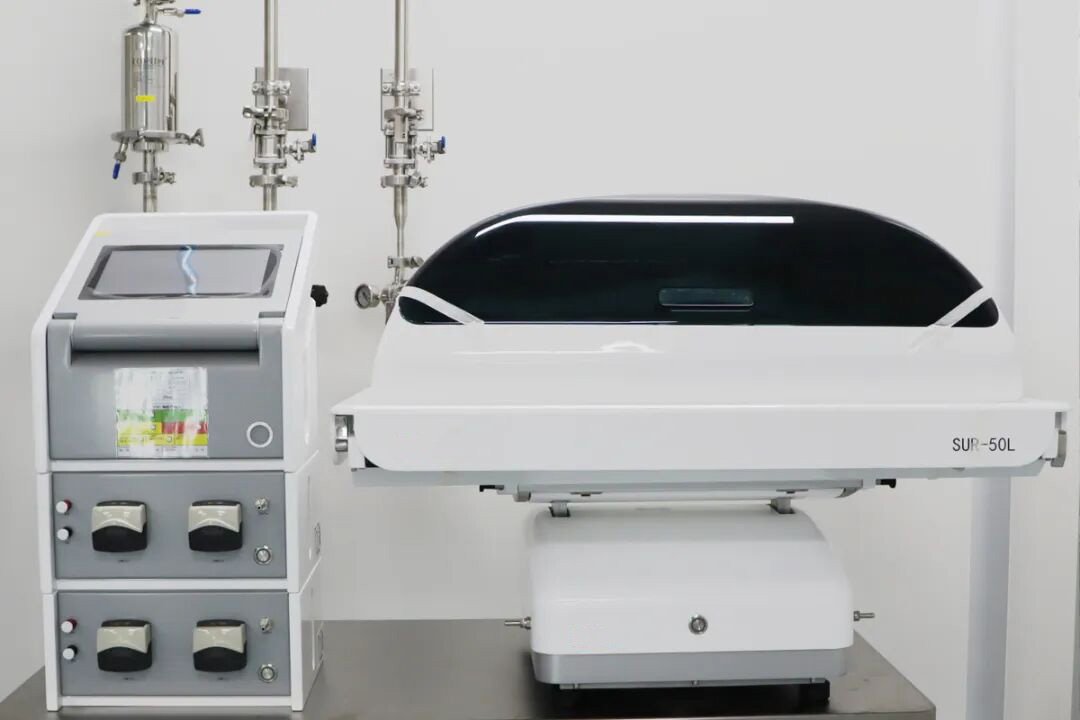
Suspension culture has been successfully validated for monoclonal antibody production using CHO cells as the optimal strategy to boost product titers and meet large-scale commercial demands. Nevertheless, adherent cell culture technologies still hold an important position in biopharmaceutical manufacturing. On one hand, some anchorage-dependent cell types are difficult to adapt to suspension culture, as they are sensitive to the dynamic fluid flow environment in stirred-tank bioreactors. For certain specialized applications or early-stage research projects, the productivity of adherent culture is sufficient to meet stage-specific requirements. Examples include applications based on human mesenchymal stem cells (hMSCs), whose multi-lineage differentiation potential, as well as their homing and migration capabilities to injured tissues, have been exploited for the treatment of neurological, osteoarticular, and cardiovascular diseases. Recent studies have also demonstrated their paracrine and immunomodulatory functions, such as through secreted extracellular vesicles or exosomes.
Traditional adherent cell production relies on T-flasks or multilayer planar vessels such as cell factories, where the efficient utilization of accessible surface area dictates the maximum unit volume productivity and batch size. Adherent cell culture in planar systems involves extensive manual operations and occupies a large footprint; when demand increases, scale-out rather than scale-up is the only feasible approach. To further scale up processes, microcarrier systems compatible with stirred-tank bioreactors offer a much higher surface area-to-volume ratio, maximizing space utilization. However, production processes using microcarrier systems differ significantly from those of standardized, well-established planar culture. For instance, microcarrier culture requires dynamic fluid flow to suspend microcarriers and homogenize the bulk culture medium.
This enables convective mass transfer of oxygen, nutrients, and cellular metabolites, which is far more efficient than diffusion-dependent mass transfer in planar culture. At the same time, dynamic fluid flow introduces shear stress on cells, along with frequent cell-to-bead and cell-to-cell collisions. The inherent sensitivity of cells to mechanical and physical forces is known to impact cell growth and product quality. Another critical distinction lies in the cell growth surface: microcarriers provide a markedly different environment compared to the flat surfaces of planar vessels. In planar culture, cells spontaneously attach to the flat surface within hours post-inoculation due to gravity. In contrast, sufficient cell attachment on microcarriers depends not only on adhesion but also on cell-to-bead collisions, and may take more than one day to complete. Furthermore, the surface provided by microcarriers is discontinuous relative to the monolithic surface in planar culture, preventing cell migration between beads. In other words, the observation that cells primarily proliferate within individual microcarriers underscores the importance of initial seeding efficiency, a factor that is not critical in planar culture.
The advantages of suspended microcarrier culture in bioreactors are evident, including readily scalable vessel design, uniform access to nutrients and oxygen, real-time in-line/off-line monitoring of cells and medium, and flexible feeding strategies. However, the original protocols developed for planar culture must be adapted to meet the requirements of suspended microcarrier culture. Additionally, screening critical process parameters and understanding the impact of deviations on final product quality is essential. Differences in the microenvironment between planar and microcarrier culture include discontinuous surfaces, convex curvature, microcarrier rigidity, shear stress, collisions, and aggregation.
A variety of commercial microcarrier products are currently available on the market. Evaluation and selection of microcarriers for adherent cell production mainly focus on three key culture steps: (1) attachment efficiency, (2) growth rate and cell expansion, and (3) ease of cell detachment. Overall, microcarrier selection may vary across different systems and specific cell types. Despite the diversity of options, most microcarriers share a similar spherical geometry with diameters ranging from 100 to 300 µm. Within this range, microcarriers provide sufficient volumetric surface area without compromising support for cell attachment and proliferation. Combining microcarriers designed for maximal space utilization with bioreactor systems enabling precise environmental control is key to achieving optimal process performance. This article provides an overview of optimization considerations for two critical stages in microcarrier-based adherent cell culture: seed expansion and inoculation.
Seed Expansion
For large-scale adherent cell production (e.g., >50 L), direct inoculation of cells from cryovials into production-scale bioreactors is impractical and uneconomical. Therefore, a seed expansion cascade, in which cells are thawed from cryopreservation and serially passaged into progressively larger-volume vessels, is an essential stage of the production process. Seed culture processes have been effectively developed to generate sufficient viable cells for bioreactor inoculation, transferring cultures from one scale to the next larger scale to seed the final production bioreactor. Each seed culture step must reliably produce the predefined cell number required for inoculation of the subsequent step, while consistently maintaining cell quality. Thus, beyond ensuring fold expansion, the quality of seed culture ultimately determines the success of downstream cell production. The most important factor influencing seed culture quality optimization is the time dimension: over-confluent cell growth can lead to cell-cell contact inhibition, and prolonged passaging imposes excessive cellular stress, which negatively impacts downstream stages.
This process is predominantly performed using planar culture systems due to their relative simplicity, shorter process times, low variability in cell expansion, and consistent cell yield. However, microcarrier culture can also be integrated into seed culture if the target inoculum exceeds the scale achievable by planar culture. A simplified process alternative is the direct transfer of seeded microcarriers from the seed culture stage to a scale-up bioreactor containing fresh medium and blank microcarriers. This approach requires efficient cell migration from inoculated beads to un-inoculated beads but bypasses passaging steps such as enzymatic treatment, mechanical dissociation, centrifugation, and resuspension of cell pellets. Due to the high complexity of passaging in microcarrier culture, planar culture remains the preferred choice for seed expansion.
Inoculation
For larger-scale systems, more effort is required to establish set-point culture conditions. Prior to cell inoculation, microcarriers must be fully hydrated and equilibrated with culture medium, and the entire culture environment must be stabilized at optimal temperature, pH, and dissolved oxygen (DO) to enable rapid recovery of culture conditions following the disturbance of inoculation. Post-inoculation, cells tend to attach to surfaces, similar to planar culture. Nevertheless, cell attachment on microcarriers is more challenging than in planar culture, not only due to the dynamic environment but also the curved surface of microcarriers. Consequently, most process development studies initially focus on achieving high cell attachment efficiency. Assuming no cell growth or death within the analytical timeframe, attachment efficiency can be determined as the ratio of adherent cells on microcarriers and/or cells remaining suspended in the supernatant relative to the initial inoculum. An acceptable timeframe for measuring cell attachment while neglecting cell proliferation is 18 to 24 hours.
Beyond cell attachment, seeding efficiency is equally critical. Due to the discontinuity of accessible expansion surfaces on individual microcarriers, cell proliferation is largely restricted to the seeded microcarriers, regardless of bead-to-bead transfer. Seeding efficiency determines the utilization of microcarrier surface area, which can affect final cell yield. Generally, the seeding efficiency of microcarriers is estimated via Poisson distribution based on the cell-to-bead ratio, assuming that cell-microcarrier collisions and successful attachment are random, independent, and constant events. For example, a cell-to-bead ratio of 3 theoretically predicts 95% microcarrier occupancy, while a ratio of 6 predicts 99.8% occupancy. Accordingly, a cell-to-bead ratio of 3 to 6 is commonly employed. In practice, the quantity of microcarriers is selected based on the surface area required to achieve the target cell number, and cell seeding density is calculated from prior planar culture experience, typically ranging from 3000 to 5000 cells/cm². To improve the cell-to-bead ratio and achieve higher seeding efficiency, increasing the inoculated cell number is generally more favorable than reducing the loaded microcarrier quantity.
Several studies have enhanced cell attachment in suspended microcarrier culture using intermittent agitation. For instance, results in spinner flasks have shown that intermittent agitation—stirring at 60 rpm for 3 minutes followed by 27 minutes of rest—improves cell attachment efficiency by 1.5 to 2-fold compared to continuous agitation at 60 rpm, measured 24 hours post-inoculation. In intermittent agitation regimes, the static phase enhances cell attachment, while the agitation phase promotes cell seeding. Excessively long static periods may accelerate initial growth due to improved cell attachment but can result in suboptimal final cell yield due to limited microcarrier utilization. Furthermore, since anchorage-dependent cells lose viability the longer they remain unattached to surfaces, the balance of intermittent agitation regimes must be carefully optimized and scaled accordingly.
Several methods have been developed to promote cell attachment without compromising seeding efficiency. Successful attachment requires both cell-microcarrier collisions and sufficient cell-microcarrier binding during collision. One approach to this challenge is increasing collision probability. A straightforward method to increase collision probability is reducing the working volume during the cell attachment phase. Increasing agitation speed can also elevate collision frequency; however, reduced contact time during collisions and enhanced fluid shear stress from higher kinetic energy may ultimately decrease successful attachment. Another strategy is selecting microcarriers made from specialized materials, such as protein-coated microcarriers or positively charged microcarriers that enhance cell attachment. Additionally, the impact of culture medium must be considered. Reduced cell attachment and prolonged log-phase growth have been observed in serum-free and xeno-free media compared to serum-supplemented media, demonstrating the important role of serum in cell attachment. Despite some progress, developing strategies to improve cell attachment efficiency in suspended microcarrier culture remains a challenge.
As a leading process-oriented engineering company, Sino Bioengineering delivers professional bioengineering solutions and comprehensive technical services to clients worldwide.
For more products and solutions: https://sinobioengg.com/category/solution/
For more service: https://sinobioengg.com/category/service/