

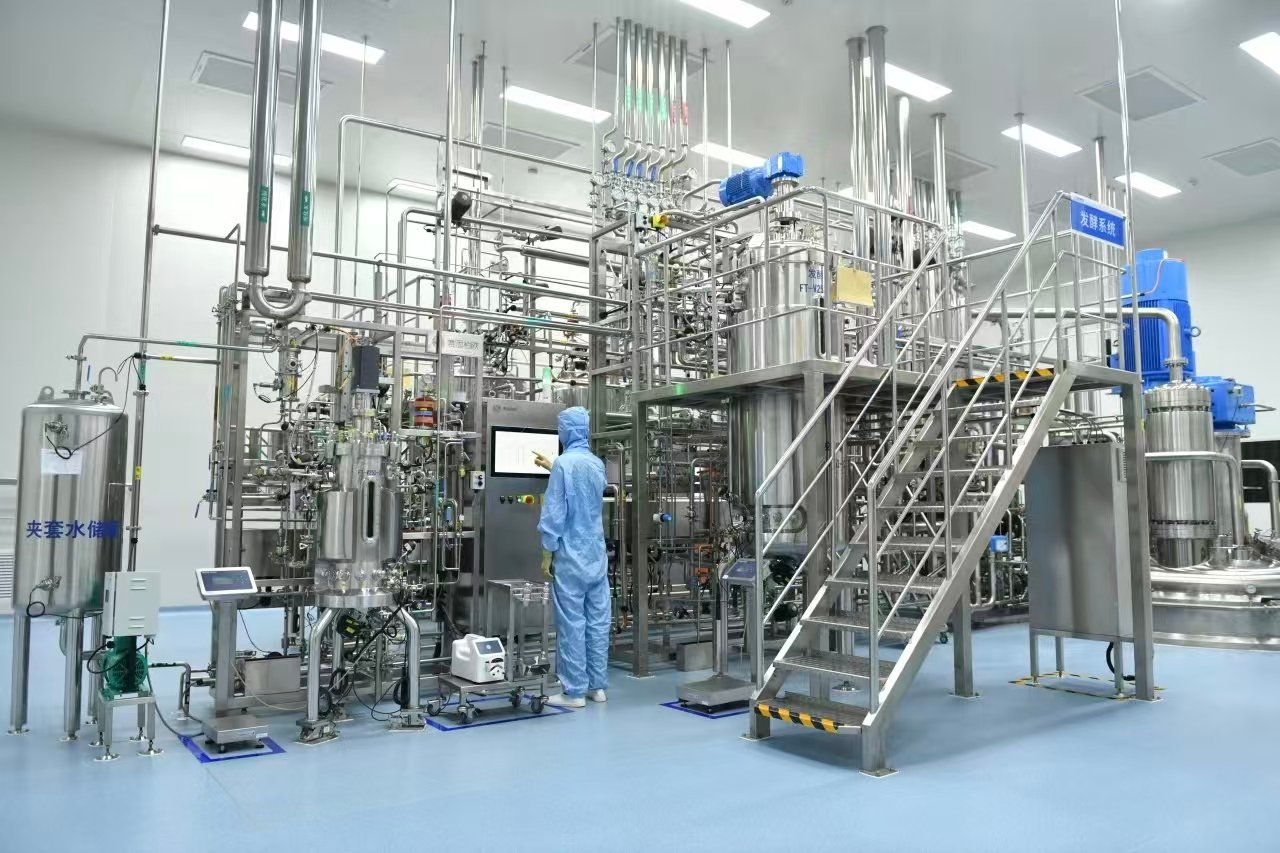
Oxygen mass transfer is a core limiting factor dictating the efficiency and yield of microbial fermentation and mammalian cell culture processes in large-scale stainless steel stirred-tank bioreactors (STBRs). Unlike bench-scale bioreactors, industrial-grade stainless steel bioreactors (500–20,000 L) suffer from inherent drawbacks including prolonged mixing time, severe dissolved oxygen (DO) gradients, bubble coalescence, and reduced volumetric oxygen mass transfer coefficient (kLa), which collectively restrict cell growth, metabolite synthesis, and batch process consistency. This article systematically analyzes the key factors influencing oxygen mass transfer efficiency in large stainless steel bioreactors, including reactor structural design, hydrodynamic parameters, medium physicochemical properties, and operational strategies. Combined with industrial scale-up principles and recent bioprocess engineering advances, this paper proposes targeted optimization schemes covering impeller configuration, sparger design, aeration-agitation coupling control, pressure regulation, and medium modification. The optimized strategies effectively enhance gas-liquid interfacial area, extend gas-liquid residence time, and eliminate DO heterogeneity, while avoiding excessive shear force and foaming issues. Practical industrial application results demonstrate that the integrated optimization method can increase kLa values by 40%–70%, stabilize DO levels in high-density culture systems, and significantly improve bioprocess yield and batch-to-batch reproducibility. This study provides a reliable technical reference for efficient, stable, and scalable operation of large-scale stainless steel bioreactor bioprocesses.
1.Introduction
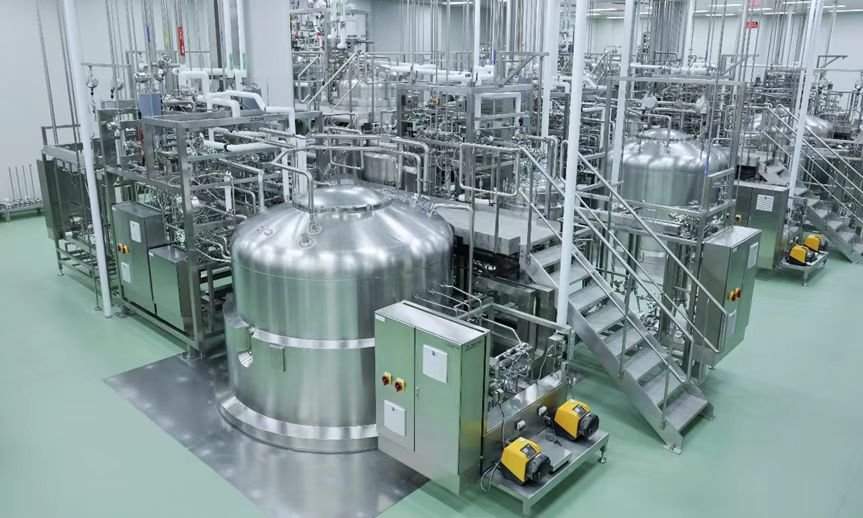
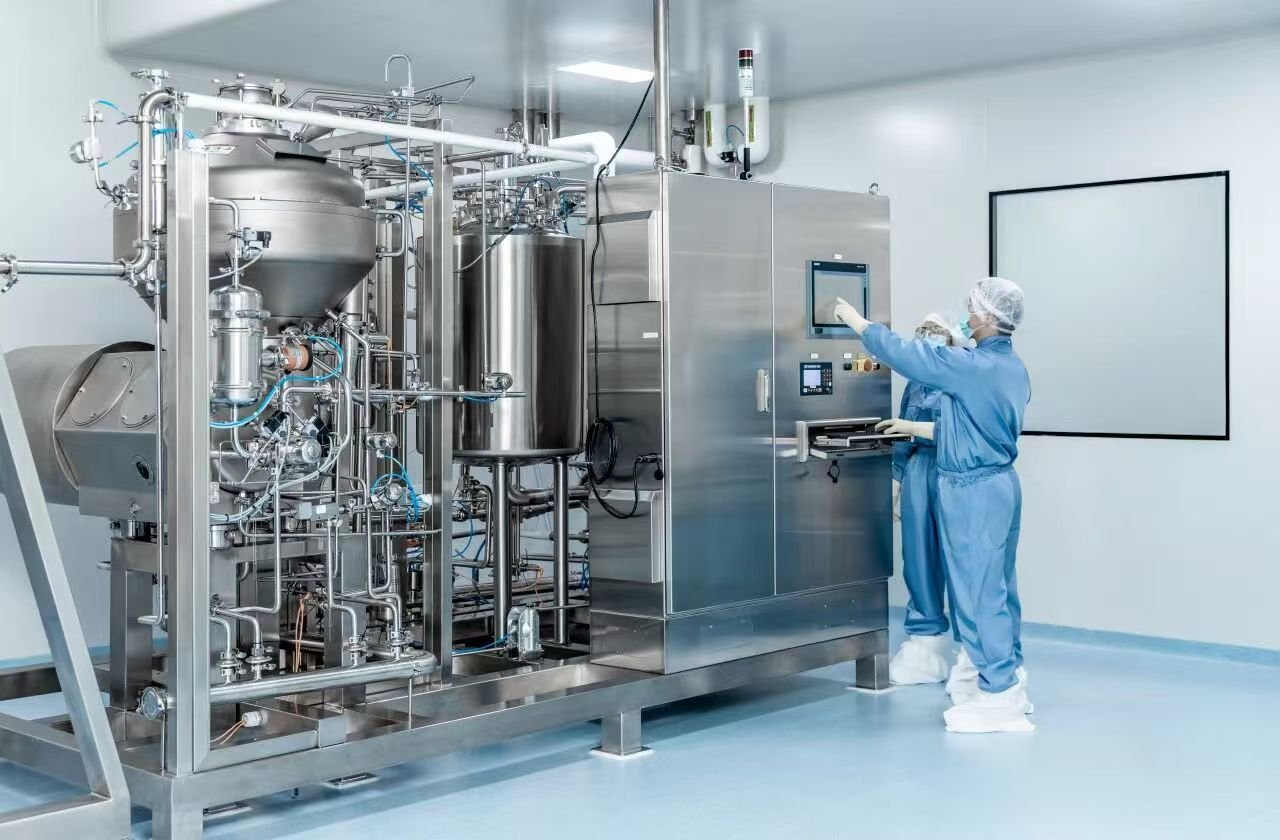
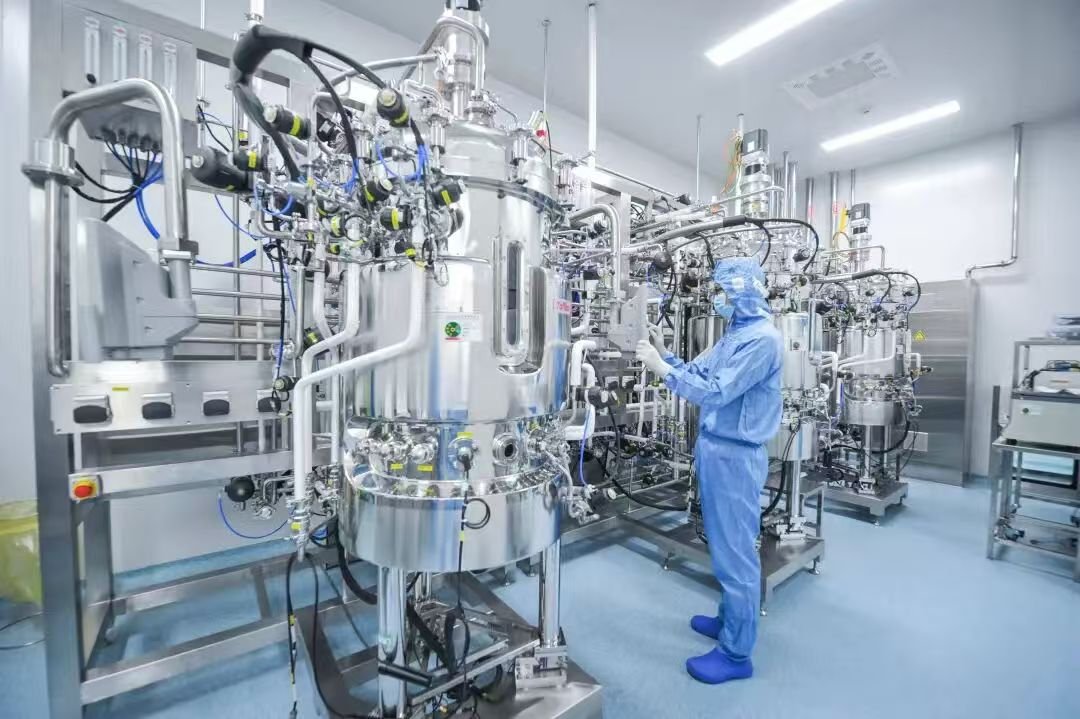
Stainless steel stirred-tank bioreactors remain the dominant equipment for industrial biomanufacturing, covering microbial fermentation, recombinant protein production, monoclonal antibody culture, and biochemical synthesis. Compared with single-use bioreactors, stainless steel bioreactors feature high mechanical strength, excellent temperature and pressure resistance, repeated sterilization compatibility, and low long-term operational cost, making them irreplaceable for large-volume (cubic meter level) industrial bioproduction. However, scale-up from laboratory (5–50 L) to industrial scale fundamentally changes the hydrodynamic and mass transfer characteristics of bioreactors. The most prominent challenge is the attenuation of oxygen mass transfer capacity and the formation of spatial DO gradients in the liquid phase.
Oxygen is an essential substrate for aerobic bioprocesses, and its low solubility in aqueous culture media (approximately 8 mg/L at 37 °C and atmospheric pressure) determines that continuous efficient gas-liquid mass transfer is required to meet microbial and cellular metabolic demands. In large-scale stainless steel bioreactors, the enlarged liquid height and tank volume lead to uneven mixing, insufficient bubble dispersion, and rapid bubble coalescence, resulting in significantly reduced kLa and oxygen transfer rate (OTR). Localized DO deficiency in the reactor triggers metabolic shifts, inhibits cell proliferation, reduces target product synthesis efficiency, and even causes cell apoptosis, severely limiting the upper limit of process scaling and production efficiency.
kLa is the core quantitative index for evaluating bioreactor oxygen mass transfer performance, representing the volumetric oxygen mass transfer capacity of the gas-liquid system. Industrial bioprocess scale-up universally takes kLa and OTR as core control criteria to ensure consistent oxygen supply across different reactor scales. Current industrial operations often adopt blind increases in agitation speed and aeration rate to improve DO, which easily causes excessive fluid shear force (damaging fragile mammalian cells), severe foaming (triggering medium overflow and contamination risks), and increased energy consumption. Therefore, targeted, systematic optimization of oxygen mass transfer based on the structural characteristics of large stainless steel bioreactors is critical to break through the bottleneck of industrial bioprocess efficiency improvement.
This paper systematically elaborates the influencing mechanism of key parameters on oxygen mass transfer in large stainless steel bioreactors, summarizes feasible structural and operational optimization strategies, and discusses the application effects and adaptability of different optimization schemes, aiming to provide practical technical guidance for industrial biomanufacturing process upgrading.
2.Core Mechanism and Evaluation Indicators of Oxygen Mass Transfer
2.1 Oxygen Mass Transfer Mechanism
Oxygen mass transfer in stirred-tank bioreactors follows the classic double-film theory, involving three core processes: oxygen diffusion from gas phase to gas-liquid interface, transmembrane dissolution into liquid phase, and convective diffusion and dispersion in the culture medium. The overall mass transfer efficiency depends on the gas-liquid interfacial area per unit volume and the mass transfer driving force. In large stainless steel bioreactors, the main resistance to oxygen mass transfer lies in the liquid-phase boundary layer, and the mass transfer rate is positively correlated with the gas-liquid contact area and turbulence intensity of the liquid phase.
During bioreactor operation, agitation breaks large bubbles into microbubbles to increase specific interfacial area, while aeration provides continuous oxygen source. The coupling of agitation and aeration maintains liquid-phase turbulence, accelerates boundary layer renewal, and avoids bubble coalescence and floating escape. However, the oversized tank body of large reactors leads to insufficient turbulence in the tank center and bottom, forming a low-mass-transfer dead zone, which is the root cause of DO gradient formation.
2.2 Key Evaluation Indicators
Volumetric oxygen mass transfer coefficient (kLa): The most intuitive indicator of oxygen mass transfer efficiency, with the unit of h. A higher kLa indicates stronger oxygen supply capacity of the reactor. The kLa value of industrial large stainless steel bioreactors is generally maintained in the range of 20–200 h, which varies significantly with reactor structure and operating parameters.
Oxygen transfer rate (OTR): Represents the mass of oxygen transferred to the liquid phase per unit volume per unit time, directly reflecting the actual oxygen supply capacity matching cell metabolism. It is the core control parameter for high-density cell culture and high-yield fermentation processes.
Dissolved oxygen (DO) homogeneity: Evaluates the spatial distribution uniformity of DO in the reactor. Excellent large-scale bioreactor systems require a DO gradient of less than 10% to avoid inconsistent metabolic states of cells in different tank regions.
Mixing time: Refers to the time required for the liquid phase to reach uniform concentration and temperature. Short mixing time corresponds to strong turbulence and efficient mass transfer, which is essential to eliminate mass transfer dead zones in large reactors.
3.Key Factors Limiting Oxygen Mass Transfer in Large-Scale Stainless Steel Bioreactors
3.1 Reactor Structural Defects
Most traditional large stainless steel bioreactors adopt standardized tank body designs with single radial flow impellers and simple single-layer spargers. After scale-up, the ratio of liquid height to tank diameter increases significantly, leading to weakened axial mixing capacity. Single impellers cannot form effective circulating turbulence in the full tank range, resulting in insufficient bubble dispersion in the upper and bottom areas of the reactor. In addition, the smooth inner wall of stainless steel reactors reduces liquid-phase turbulence disturbance, exacerbating bubble coalescence and floating, and greatly reducing effective gas-liquid interfacial area. Unoptimized baffle structures also easily cause flow field disorder and local dead zones, further deteriorating mass transfer conditions.
3.2 Hydrodynamic Operational Parameters
Agitation speed and aeration rate are the most direct factors affecting kLa. Low agitation speed fails to shear bubbles effectively and provides insufficient liquid turbulence, leading to low oxygen dissolution efficiency. Excessively high agitation speed produces ultra-high shear force, which damages cell activity, especially for fragile animal and plant cells, and increases equipment energy consumption and mechanical loss. Excessively high aeration rate causes a large number of bubbles to accumulate and coalesce in the liquid phase, triggering severe foaming. Foam layers cover the liquid surface, blocking gas-liquid exchange and reducing oxygen mass transfer efficiency conversely. Meanwhile, unreasonable aeration flow distribution leads to uneven bubble distribution in the tank.
3.3 Physicochemical Properties of Culture Medium
Industrial fermentation and cell culture media contain proteins, sugars, surfactants, and cell metabolites, which increase medium viscosity and surface tension. High viscosity weakens liquid turbulence, slows bubble dispersion and boundary layer renewal, and significantly reduces oxygen diffusion rate. Surfactant substances in the medium will adsorb on the bubble surface, inhibiting bubble coalescence but also increasing liquid-phase foaming stability, making it difficult to eliminate foam and further hindering gas-liquid oxygen transfer. In addition, the accumulation of metabolites in the late fermentation stage changes medium density and viscosity, causing dynamic attenuation of mass transfer efficiency.
3.4 Pressure and Temperature Conditions
Stainless steel bioreactors can withstand positive pressure operation, and headspace pressure directly affects oxygen solubility. Atmospheric pressure operation limits oxygen dissolution capacity, while excessive pressure increases carbon dioxide solubility, causing medium acidification and affecting cell growth. Temperature affects oxygen solubility and molecular diffusion rate: high temperature reduces oxygen solubility but accelerates molecular diffusion, and the two factors have a coupled effect on mass transfer efficiency. Unreasonable temperature control will break the balance of oxygen supply and diffusion, restricting stable mass transfer.
4.Systematic Optimization Strategies for Oxygen Mass Transfer
4.1 Structural Optimization of Reactor Internal Components
4.1.1 Impeller Configuration Optimization
Replacing the traditional single radial flow impeller with a combined impeller system is the core structural optimization scheme for large bioreactors. The layered combination of axial flow impellers and radial flow impellers can form a three-dimensional circulating flow field, effectively solving the problem of insufficient axial mixing in high liquid-level reactors. The upper axial flow impellers drive the downward circulation of the upper liquid and bubbles, while the lower radial flow impellers shear large bubbles into microbubbles and enhance bottom turbulence. Relevant studies show that the matched dual or triple impeller configuration can increase the kLa value by 50%–77% compared with single impellers under the same power consumption.
In addition, optimizing impeller blade structure and diameter ratio can further improve bubble shearing efficiency. Wide-blade axial flow impellers and open-type radial flow impellers have lower shear force and stronger fluid driving capacity, which can balance mass transfer efficiency and cell shear protection. Reasonably adjusting the impeller spacing to match the liquid height can eliminate mixing dead zones in the middle layer of the reactor and realize full-tank uniform turbulence.
4.1.2 Sparger Design Upgrading
Traditional single-hole and straight-pipe spargers have uneven aeration and large bubble particle size, which cannot meet the mass transfer demand of large reactors. Optimizing to porous micropore spargers and annular distributed spargers can disperse gas into uniform microbubbles with a particle size of 0.5–2 mm, significantly increasing the specific gas-liquid interfacial area. The annular sparger arranged at the bottom of the reactor realizes full-circle uniform aeration, avoiding local gas accumulation, and cooperates with the impeller flow field to extend bubble residence time in the liquid phase.
For high-viscosity medium fermentation processes, a composite sparger scheme combining micropore aeration and jet aeration can be adopted. Jet aeration enhances the turbulent diffusion of bubbles in high-viscosity media, prevents bubble floating and escape, and effectively improves mass transfer efficiency in high-viscosity systems.
4.1.3 Baffle and Tank Structure Optimization
Optimizing the number, width and installation position of baffles can eliminate liquid vortex and improve turbulence uniformity. Appropriately increasing the number of baffles and adopting arc transition baffles can reduce flow field dead zones and enhance liquid-phase disturbance. For ultra-large bioreactors, adding auxiliary flow-guiding components can optimize the internal flow field, shorten mixing time, and realize rapid uniform diffusion of dissolved oxygen.
4.2 Coupled Optimization of Agitation and Aeration Parameters
Blindly increasing agitation speed and aeration rate has limited improvement on mass transfer and brings side effects. Adopting a staged aeration-agitation coupling control strategy can realize efficient and low-consumption oxygen supply. In the early stage of cell growth with low metabolic oxygen demand, low-speed agitation and low aeration rate are adopted to reduce shear force and energy consumption. In the logarithmic growth stage with high oxygen demand, the agitation speed and aeration rate are increased in a gradient, and the two parameters are matched based on real-time DO feedback to maintain stable OTR.
Controlling stirrer tip speed within a reasonable range (2–5 m/s) balances bubble shearing efficiency and cell shear damage. Excessively high tip speed will cause irreversible damage to mammalian cells, while excessively low tip speed cannot achieve effective bubble dispersion. In addition, segmented aeration control is adopted: pure oxygen enrichment is used in the late high-density culture stage to increase oxygen partial pressure, improve oxygen solubility, and avoid excessive gas flow caused by high aeration rate.
4.3 Pressure and Temperature Regulation Optimization
Precise positive pressure control is an effective means to improve oxygen mass transfer. Maintaining a headspace pressure of 0.1–0.15 MPa can significantly increase oxygen solubility in the medium, improve the mass transfer driving force, and increase kLa by 20%–30% without increasing aeration and agitation intensity. Meanwhile, pressure fluctuation is strictly controlled to avoid instantaneous changes in oxygen solubility affecting cell metabolic stability.
Temperature is optimized in stages according to process requirements. In the cell proliferation stage, the optimal growth temperature is maintained to ensure cell activity and metabolic rate. In the metabolite synthesis stage, appropriate temperature adjustment is carried out to balance oxygen diffusion efficiency and product synthesis efficiency, avoiding the reduction of dissolved oxygen capacity caused by high temperature and the slowdown of metabolic rate caused by low temperature.
4.4 Medium Modification and Foam Control
Appropriately adjusting medium composition can reduce viscosity and surface tension, improve fluidity, and enhance oxygen diffusion performance. Reducing excessive macromolecular substances and optimizing salt ion concentration can effectively reduce medium viscosity and weaken bubble coalescence tendency. For processes prone to foaming, a low-dose, high-efficiency defoamer is added in a targeted manner to eliminate foam without affecting cell growth and gas-liquid mass transfer. Real-time foam monitoring and automatic defoaming control avoid foam accumulation blocking oxygen transfer channels, ensuring continuous and stable gas-liquid exchange.
4.5 Intelligent Closed-Loop Control Optimization
Building a DO-PID closed-loop control system realizes automatic linkage regulation of agitation speed, aeration rate, oxygen partial pressure and pressure. The system collects real-time DO data in the reactor, dynamically adjusts operating parameters, and compensates for the attenuation of mass transfer efficiency caused by medium viscosity changes and cell density increases in real time, maintaining DO stability within the optimal process range. Combined with computational fluid dynamics (CFD) simulation, the flow field and mass transfer field of large reactors are pre-optimized to predict dead zones and mass transfer bottlenecks, realizing precise scale-up and parameter matching of industrial processes.
5.Industrial Application Effect and Discussion
The integrated oxygen mass transfer optimization strategy has been verified in multiple 500–20,000 L industrial stainless steel bioreactor fermentation and cell culture processes. After adopting combined impeller configuration, micropore annular sparger, aeration-agitation coupling control and intelligent closed-loop regulation, the kLa value of the reactor is stably increased by 40%–70%, the full-tank DO gradient is controlled within 5%, and the mixing time is shortened by 30%–40%. In microbial fermentation processes such as amino acids and enzymes, the biomass and target product yield are increased by 15%–25%; in mammalian cell high-density culture processes, the viable cell density is significantly improved, and batch-to-batch process reproducibility is greatly enhanced.
Compared with the traditional single parameter adjustment method, the systematic optimization scheme avoids excessive energy consumption and cell shear damage, reduces the failure rate of foaming and contamination, and significantly reduces industrial production costs. It is worth noting that different bioprocesses have different adaptability to optimization parameters: fragile cell culture processes focus on low-shear mass transfer optimization, while high-viscosity fermentation processes focus on sparger upgrading and flow field optimization. In actual industrial production, personalized optimization schemes need to be formulated combined with process characteristics and reactor specifications.
At present, the combination of CFD simulation prediction and intelligent real-time control has become the mainstream development direction of large bioreactor mass transfer optimization. Subsequent research can further explore the synergistic optimization mechanism of reactor structure, fluid dynamics and microbial metabolism, and develop more efficient and low-energy mass transfer enhancement technologies to adapt to the rapid development of high-density and high-yield industrial biomanufacturing.
6.Conclusion
Oxygen mass transfer attenuation and DO heterogeneity are the core bottlenecks restricting the efficient operation of large-scale stainless steel bioreactors. The mass transfer efficiency is affected by multiple factors including reactor structure, hydrodynamic parameters, medium characteristics and operating conditions. Systematic optimization based on structural upgrading, parameter coupling regulation, medium improvement and intelligent control can effectively break through the mass transfer limitation of large reactors, significantly improve kLa and OTR levels, eliminate mass transfer dead zones, and ensure stable and efficient oxygen supply for aerobic bioprocesses.
The integrated optimization strategy proposed in this paper has strong industrial practicability and scalability, which can effectively improve bioprocess yield, reduce production energy consumption, and enhance batch stability. With the continuous upgrading of industrial biomanufacturing towards high density, high efficiency and intelligence, the precise and personalized oxygen mass transfer optimization technology will become the key support for the scale-up and industrialization of new bioprocesses.