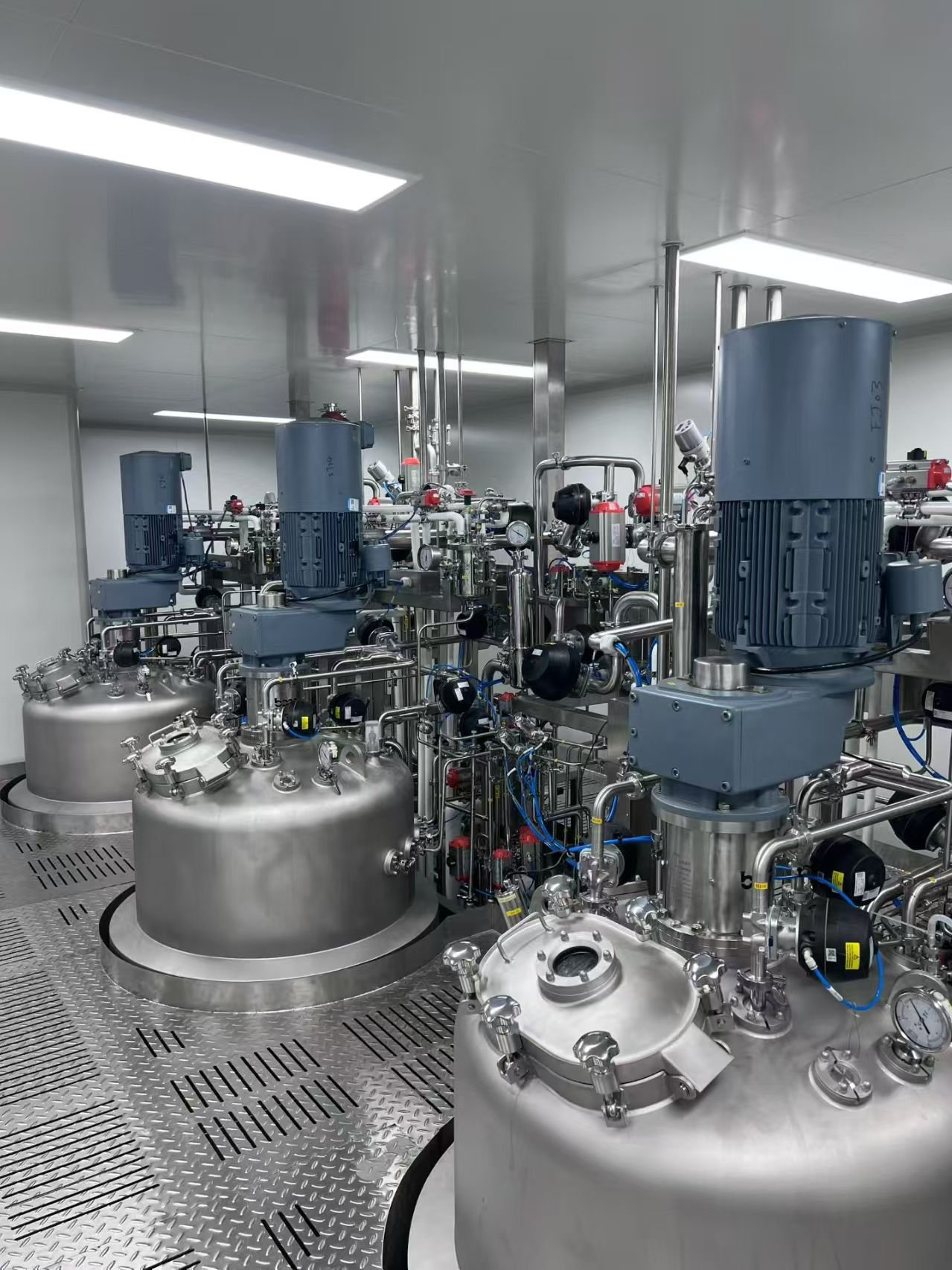
pH is a core process parameter throughout the entire fermentation cycle, and an intuitive indicator reflecting microbial growth status, metabolic activity and product synthesis tendency, serving as a vital barometer of fermentation system conditions.
The pH value of fermentation broth directly affects intracellular enzymatic activity, cell membrane permeability, dissociation state of nutrients and metabolic pathway distribution, ultimately determining product yield, purity and production stability. For industrial fermentation, maintaining pH within a stable fluctuation range and adopting appropriate regulation strategies are critical to improving productivity, reducing material loss and controlling production costs.
Microbial strains possess distinct pH tolerance and adaptability. Dynamic pH changes during fermentation are jointly influenced by medium composition, microbial metabolism, manual operations and fermentation phases. This article systematically analyzes pH adaptation rules, fluctuation causes and mainstream industrial control strategies, providing practical references for process optimization.
1. Optimal pH Preferences of Common Microorganisms
The optimum pH range is a hereditary adaptive characteristic of microbes, laying the foundation for formulating fermentation parameters. Deviation from suitable pH conditions will hinder microbial growth, disturb metabolism and cause abnormal product formation.
1.1 Bacteria: Neutrophilic Microbes
Most industrial bacteria thrive in neutral environments with the optimal growth pH ranging from 6.5 to 7.5. Intracellular pH is strictly maintained at 7.2–7.8. Abnormal pH leads to enzyme inactivation, protein denaturation and collapsed transmembrane proton gradient, blocking ATP synthesis and nutrient transport, and severely inhibiting cell proliferation.
Bacterial peptidoglycan cell walls and membranes are highly sensitive to pH variations. Extreme acidity or alkalinity breaks transmembrane electrochemical balance, resulting in growth retardation and cell autolysis. Bacterial fermentation features a narrow effective pH range and stringent stability requirements.
1.2 Fungi (Molds & Yeasts): Acidophilic Microbes
Fungi adapt well to acidic habitats. The optimal pH for molds is 4.0–5.8, while yeast grows best at pH 3.8–6.0. Their cell walls composed of chitin and β-glucan maintain stable structure under acidic conditions. Key metabolic enzymes such as cellulase and pectinase exhibit maximum catalytic activity in low-pH environments.
Fungi enjoy broad pH tolerance and can effectively avoid competitive contamination by bacteria, hence widely applied in organic acid and secondary metabolite fermentation.
1.3 Actinomycetes: Alkaliphilic Microbes
Actinomycetes favor weakly alkaline conditions with the optimum pH of 6.5–8.0, consistent with their natural neutral to slightly alkaline soil habitats. Synthetic enzymes and secreted proteins remain structurally stable and highly active under mild alkalinity.
With filamentous morphology and thick cell walls, actinomycetes withstand minor pH fluctuations steadily, suitable for continuous industrial production of antibiotics and high-value secondary metabolites.
2. Core Factors Triggering pH Fluctuation
Fermentation pH dynamically changes during cultivation, driven by multiple controllable and inherent factors. Mastering fluctuation mechanisms enables predictive, proactive and accurate regulation.
2.1 Medium Composition
Carbon sources, nitrogen sources and buffer substances fundamentally determine initial pH and fluctuation trends. Excess readily available sugars accumulate organic acids and lower pH; depleted carbon sources reverse the tendency.
Different nitrogen sources exert opposite pH effects:
Nitrate consumes hydrogen ions and elevates pH;
Ammonium salts release hydrogen ions and gradually reduce pH;
Urea decomposes into ammonia to raise pH initially, followed by pH decline with subsequent metabolism.
Phosphate and calcium carbonate serve as buffering agents to mitigate pH variation amplitude.
2.2 Microbial Metabolism
Cell growth, energy metabolism and product biosynthesis constitute the biological driving force of pH shift. Acid-producing strains continuously secrete organic acids to decrease pH, while certain metabolites present alkaline properties. The pH curve visually reflects metabolic pathway switching and physiological activity.
2.3 Manual Process Operation
Feeding strategy, regulator selection and dosing method are dominant artificial intervention approaches. Ammonia water, urea and acid-base regulators differ greatly in response speed, buffering performance and side effects, governing overall pH tendency and cell physiological state.
2.4 Fermentation Phases
pH variation follows obvious stage-specific patterns matching microbial growth cycles:
Lag phase: Sharp and frequent pH fluctuation occurs during microbial acclimation and initial nutrient consumption;
Exponential phase: Metabolic activity peaks, with pH changing synchronously with sugar consumption and product generation;
Stationary and decline phase: Substrate exhaustion slows cell reproduction and triggers autolysis. pH tends to stabilize or rebound as secondary metabolism dominates.
3. Mainstream Industrial pH Regulation Methods
No universal pH control protocol fits all scenarios. Regulation schemes are selected according to strain characteristics, product requirements and automation level.
3.1 Ammonia Water Dosing
25%–28% ammonia water is widely adopted in large-scale automated fermentation requiring high-precision pH stabilization, such as glutamate, lysine and streptomycin production.
Advantages: Rapid neutralization reaction compatible with online pH electrodes and PID automatic control system for narrow-range stable regulation. Low dilution effect, cost-effective raw material, and dual function as nitrogen nutrient supply.
Disadvantages: Free ammonia accumulates and causes toxicity above pH 7.5–8.0, impairing cell membrane potential and respiratory metabolism. Volatility and corrosiveness impose strict requirements on equipment materials; instant neutralization may trigger local pH spikes and cell stress damage.
3.2 Urea Fed-batch Regulation
pH rises slowly via urease-mediated urea hydrolysis, ideal for ammonia-sensitive strains.
Advantages: Mild and uniform pH variation with negligible over-regulation risk and minimal physiological impact on microbes. Strong buffering capacity and easy operation without sophisticated automatic control equipment.
Disadvantages: Obvious time lag of 10–60 minutes fails to meet high-precision real-time control demands. Hydrolysis generates carbon dioxide and aggravates acidification. Large dosage dilutes fermentation liquor and interferes with downstream separation and purification processes.
3.3 Calcium Carbonate Passive Control
Classical strategy applied in heavy acid-producing fermentation including lactic acid, citric acid and itaconic acid manufacturing. Calcium carbonate neutralizes organic acids sustainably to stabilize pH.
Advantages: Low material cost and simple equipment configuration reduce production investment. Generated calcium salts match well with crystallization and ion exchange extraction without introducing foreign impurities. Mild reaction avoids acute cell damage.
Disadvantages: Low regulation accuracy restricted by particle size, stirring speed and acidity, incapable of phase differentiated pH adjustment. Early-stage acid drop inhibits initial growth and extends fermentation cycle. Excess calcium causes membrane fouling, resin saturation and reduced crystallization yield.
4. Conclusion
pH control is a systematic process combining microbial physiological traits, growth phases and industrial production demands, rather than simple acid-base adjustment. Bacterial, fungal and actinomycetic pH preferences define basic technological parameters. Medium composition, microbial metabolism, manual operation and growth stages dominate dynamic pH changes.
Ammonia water, urea and calcium carbonate possess respective merits and applicable conditions. Stable batch production, high yield, low consumption and superior product purity rely on thorough understanding of pH fluctuation mechanisms and optimized regulation tactics. Modern fermentation management evolves from passive correction to predictive and refined pH control.
As a leading process-oriented engineering company, Sino Bioengineering delivers professional bioengineering solutions and comprehensive technical services to clients worldwide.
For more products and solutions: https://sinobioengg.com/category/solution/
For more service: https://sinobioengg.com/category/service/