Basic Principle of kLa
The volumetric oxygen mass transfer coefficient kLa characterizes the oxygen transfer rate from gas phase to liquid phase, derived from the two-film theory. This theory states that mass transfer between two phases occurs across the interfacial boundary layer.
Gas diffusion rate within a single phase depends on the liquid-phase mass transfer coefficient kL, while the overall interphase mass transfer rate is also governed by gas-liquid interfacial contact area a. The combination of these two parameters forms the volumetric oxygen mass transfer coefficient kLa.
The variation rate of dissolved oxygen concentration in liquid culture medium is determined by kLa and the concentration difference between actual dissolved oxygen level CL and saturated oxygen concentration C*. Meanwhile, the oxygen concentration change rate equals the difference between oxygen transfer rate (OTR) and oxygen uptake rate (OUR) in the medium.
When OTR exceeds OUR, the culture medium gradually becomes oxygen saturated until equilibrium is reached. In contrast, insufficient oxygen supply occurs if OUR surpasses OTR. Both scenarios impair cultivation performance. Excess dissolved oxygen may alter metabolic pathways, whereas oxygen deficiency restrains cell proliferation and product synthesis. Dissolved oxygen is commonly regulated by adjusting agitation intensity, aeration flow rate and feeding strategies.
Evaluation Feasibility of kLa
kLa assessment serves as a critical reference for bioreactor selection tailored to specific cultivation processes. Scale-up from laboratory results to pilot and industrial production frequently adopts theoretical formulas for kLa estimation. Nevertheless, practical limitations restrict the accuracy of theoretical calculation, including variable chemical compositions of culture media and applicable parameter ranges of empirical kLa correlations.
Theoretical Calculation of kLa
The Van’t Riet correlation is the most widely adopted theoretical method, which correlates kLa with power input and superficial gas velocity inside bioreactors.
Experimental Determination of kLa
Common experimental approaches for kLa measurement include sulfite oxidation method, static gassing-out method, dynamic gassing-out method and oxygen balance method.
Impacts of Bioreactor Design on kLa
kLa formulas reflect the influences of agitation and aeration systems, yet fail to elaborate specific effects imposed by impeller and sparger configurations.
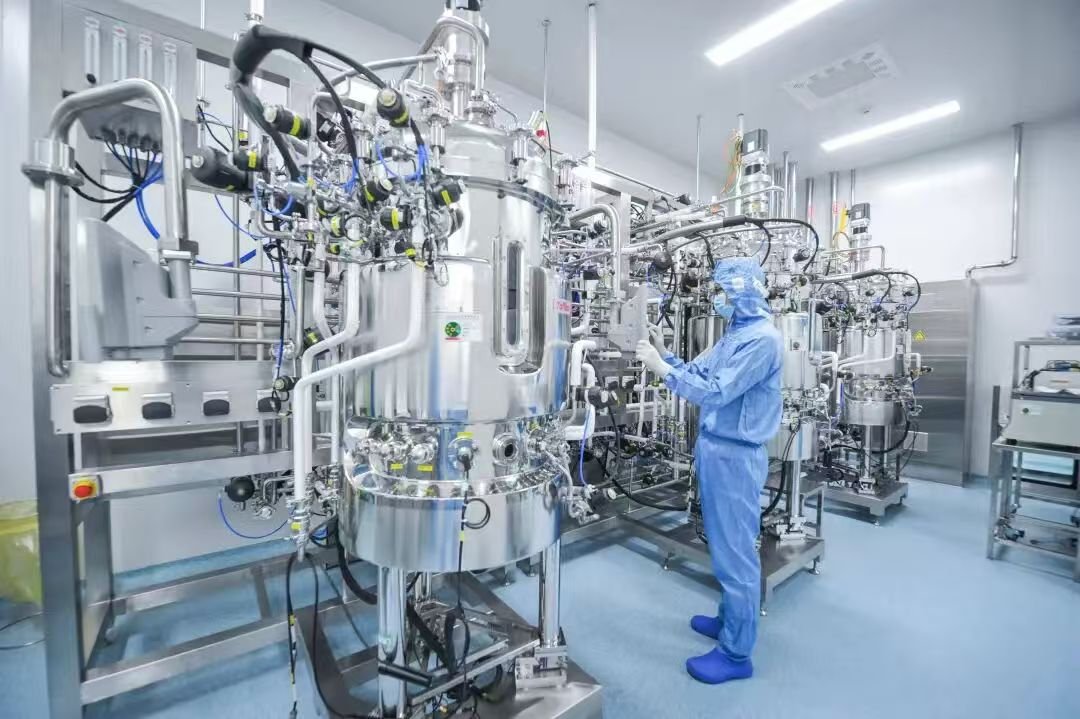
Impellers undertake dual functions of homogeneous mixing and bubble dispersion. Dual axial flow marine impellers guarantee uniform mixing throughout the reactor but deliver suboptimal bubble fragmentation. Excessive aeration flow may trigger flooding phenomenon, drastically declining oxygen transfer efficiency. Installation of high-dispersion Rushton impeller right above the sparger effectively enhances bubble breakup performance.
Sparger design dictates bubble size distribution across reactor volume. Smaller bubbles expand interfacial contact area and theoretically elevate kLa, while excessively tiny bubbles exert adverse impacts on oxygen transfer.
Micro bubbles behave as rigid spheres with negligible internal circulation, hindering oxygen molecule migration toward bubble surface. Additionally, small bubbles ascend slowly and carry limited oxygen content. Literature indicates the optimal bubble diameter ranges from 2 mm to 3 mm.
Correlation between kLa and Cell Growth Rate
Theoretically, higher kLa corresponds to accelerated cell growth. In practical cultivation, however, intensive agitation and aeration for elevated kLa may generate negative effects. Optimal theoretical reactor design cannot always secure superior biomass growth under high kLa conditions.
Discrepancies between predicted kLa performance and actual biomass yield stem from multiple factors:
Fluid property variations: Rushton impellers work efficiently under low-viscosity conditions, while remarkable energy transfer attenuation and reduced OTR arise in high-viscosity broth.
Microbial morphological changes: Excess shear force from vigorous agitation damages mammalian cells, plant cells, filamentous microorganisms and algae, suppressing cell growth.
Foam formation: Intense agitation and aeration induce foam accumulation that impedes oxygen transfer. Defoamers, categorized as surfactants, further deteriorate mass transfer efficiency.
OUR and OTR
OUR (Oxygen Uptake Rate) is calculated as the product of specific oxygen consumption rate per cell and biomass concentration, with distinct values varying among cell strains.
OTR (Oxygen Transfer Rate) is defined as the product of volumetric mass transfer coefficient and liquid-phase mass transfer driving force.
Cells grow under oxygen-limited conditions when OTR is lower than OUR. Specific oxygen consumption rises with increasing dissolved oxygen until reaching critical dissolved oxygen concentration Ccrit.
Ccrit varies with cell species and cultivation parameters, generally accounting for 10% to 20% of saturated oxygen concentration C*. The typical range of C* falls between 6 mg/L and 9 mg/L.
Critical biomass concentration Xcrit can be calculated using known kLa, C* and Ccrit. Conversely, required kLa capacity is determined by target maximum biomass Xmax based on maximum operational agitation speed and aeration flow rate.
Maximum biomass accumulation is achieved when OTR equals OUR and dissolved oxygen stabilizes at Ccrit. The calculated theoretical maximum biomass is attainable only when no other cultivation limiting factors exist.
Conclusion
Theoretical kLa formulas maintain satisfactory accuracy for bioreactors with volume no more than 3000 L equipped with conventional Rushton and marine impellers.
Experimental kLa measurement consumes substantial time and labor, yet it is recommended for process scale-up involving unconventional impeller configurations.
Stable fluid characteristics, intact cell morphology and minimized foaming are prerequisites for valid correlation analysis between kLa and biomass growth.
Oxygen consumption rate differs by cell strain and carbon source type. Specific oxygen consumption rate QO2 should be clarified to select bioreactors with qualified kLa capacity, ensuring sufficient oxygen supply to meet target biomass and product yield requirements during process scale-up and parameter optimization.
As a leading process-oriented engineering company, Sino Bioengineering delivers professional bioengineering solutions and comprehensive technical services to clients worldwide.
For more products and solutions: https://sinobioengg.com/category/solution/
For more service: https://sinobioengg.com/category/service/