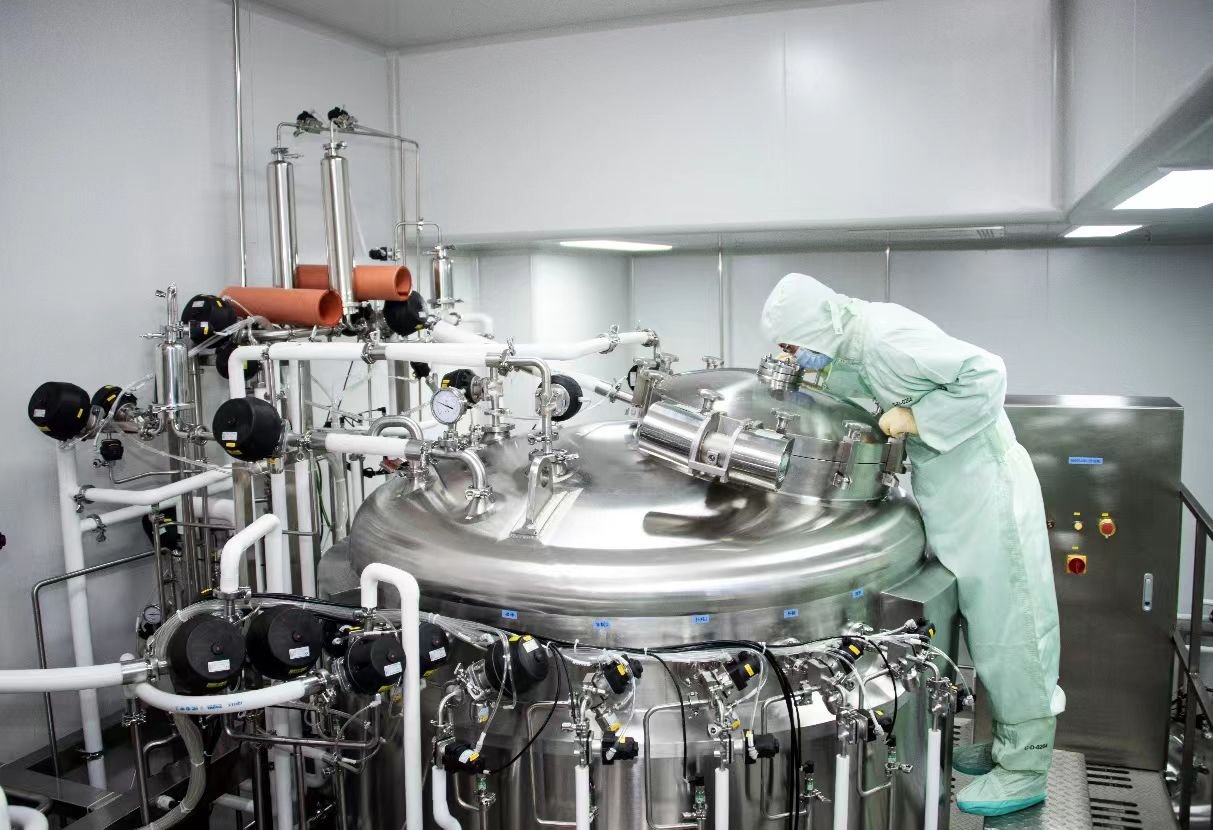
Over 70% of recombinant macromolecular biotherapeutics are produced using Chinese Hamster Ovary (CHO) cells to date. This is primarily attributed to two key advantages: CHO cells generate proteins with post-translational modifications highly similar to human proteins, and they are amenable to large-scale suspension culture. Additionally, decades of accumulated experimental data on CHO cells have earned thorough recognition from regulatory authorities. Nevertheless, CHO cells comprise numerous subclones that differ significantly in growth profiles, metabolic patterns and protein expression capabilities. This paper presents a comparative study on three commonly used CHO cell lines — CHO-S, CHO-DG44 and CHO-K1 — for monoclonal antibody production under diverse culture modes.
CHO-S (Thermo Fisher Scientific, formerly Life Technologies)
CHO-DG44 (Thermo Fisher Scientific, formerly Life Technologies)
CHO-K1 (ATCC CCL-61)
All cell lines were initially cultured in CD CHO Medium (Thermo Fisher Scientific) supplemented with 8 mM L-glutamine and 0.5 g/L G418. Post-transfection clonal selection was performed subsequently. The cell lines were then adapted to ActiCHO P Medium (currently renamed Cytiva ActiPro Medium). All cell lines achieved rapid adaptation, with viable cell density and cell viability comparable to or higher than those obtained in CD CHO Medium during serial passaging.
Each cell line was cultured separately in CD CHO Medium and ActiCHO P Medium, with an initial seeding density of 0.3×10⁶ cells/mL. Cultivation was terminated when cell viability dropped below 60%.
CD CHO Medium and ActiCHO P Medium were used as basal media for respective groups.
For the CD CHO group: CHO CD EfficientFeed A and FunctionMax Titer Enhancer were adopted as feeds, added at proportions of 10% and 3.3% on Day 4, Day 6 and Day 8 respectively.
For the ActiCHO P group: ActiCHO Feed A and Feed B (currently Cytiva Cell Boost 7a/7b) were used for feeding, with daily supplementation of 3% and 0.3% starting from Day 3.
A small-scale semi-continuous perfusion model was applied. CD CHO Medium and ActiCHO P Medium served as perfusion media for corresponding groups. A full medium volume was replaced via daily centrifugation. The initial seeding density was set at 5×10⁶ cells/mL, and semi-continuous cultivation lasted for 11 days.
1 Cell Growth and Protein Expression
Batch Culture
CHO-S exhibited the fastest growth rate across all test groups. Cultivation in ActiCHO P Medium yielded higher viable cell density compared with CD CHO Medium for all cell lines. CHO-K1 achieved the highest antibody titer, and ActiCHO P Medium further improved product titer relative to CD CHO Medium.
Fed-Batch Culture
CHO-S maintained the highest specific growth rate. The maximum protein titer was observed in CHO-DG44 cultured with ActiCHO P Medium, while CHO-K1 delivered the highest titer in the CD CHO group. These results demonstrate distinct medium formulation preferences among different cell lines. Characterized by relatively low viable cell density, CHO-K1 has a lower nutritional demand than CHO-DG44. Excessive nutrients would impose metabolic stress on CHO-K1, which explains its superior performance in nutritionally lean CD CHO Medium. For future fed-batch cultivation of CHO-K1, moderate reduction of feed supplement dosage is recommended.
Perfusion Culture
The peak viable cell density (VCD) of CHO-S and CHO-DG44 reached 50–70×10⁶ cells/mL, whereas CHO-K1 had the lowest peak VCD at only 25×10⁶ cells/mL. Notably, CHO-K1 achieved the highest protein titer and specific productivity (pcd). The specific productivity of CHO-K1 ranged from 13 to 16 pcd, compared with 4–5 pcd for CHO-DG44 and approximately 2 pcd for CHO-S.
Glycosylation distribution was analyzed using samples harvested from fed-batch cultures. Under identical culture conditions, the three cell lines presented divergent glycosylation patterns. Taking high-mannose glycan Man5 as an indicator: the Man5 content was 2–3% in CHO-S, 5–9% in CHO-K1, and 11–13% in CHO-DG44.
The experimental data reveal distinct metabolic preferences among the three cell lines: CHO-K1 is metabolically biased toward protein production, CHO-S prioritizes cell proliferation, and CHO-DG44 shows intermediate characteristics. With moderate viable cell density, superior specific productivity and favorable glycosylation profiles, CHO-K1-derived cell lines are widely adopted in current bioproduction projects.
A variety of derivatives have been developed based on CHO-K1, including wild-type strains from ATCC and ECACC, as well as commercial GS-knockout cell lines such as Lonza Xceed System, Merck SAFC CHOZN GS⁻ and Horizon Discovery CHO GS Null. Most of these CHO-K1 variants can rapidly adapt to chemically defined (CD) media represented by ActiPro. However, certain strains (e.g., the CHOZN series) are highly dependent on growth factors. For such cell lines, it is recommended to use HyCell CHO Medium or ActiPro supplemented with 2–5% Cell Boost 5 as the basal medium, combined with Cell Boost 7a/7b for fed-batch supplementation.