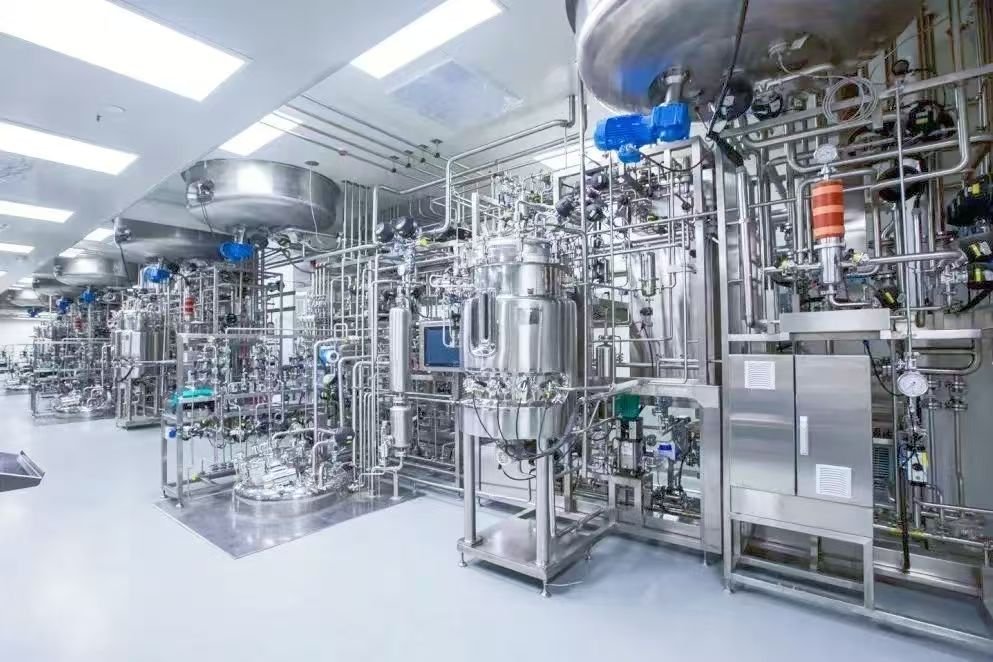
During mammalian cell fed-batch and perfusion cultivation for monoclonal antibodies, viral vectors and recombinant proteins, cells enter the peak exponential growth phase with explosive proliferation and sharp rises in oxygen consumption rate (OUR). Dissolved oxygen (DO) depletion emerges as one of the most common and disruptive upstream bottlenecks in commercial bioreactors.
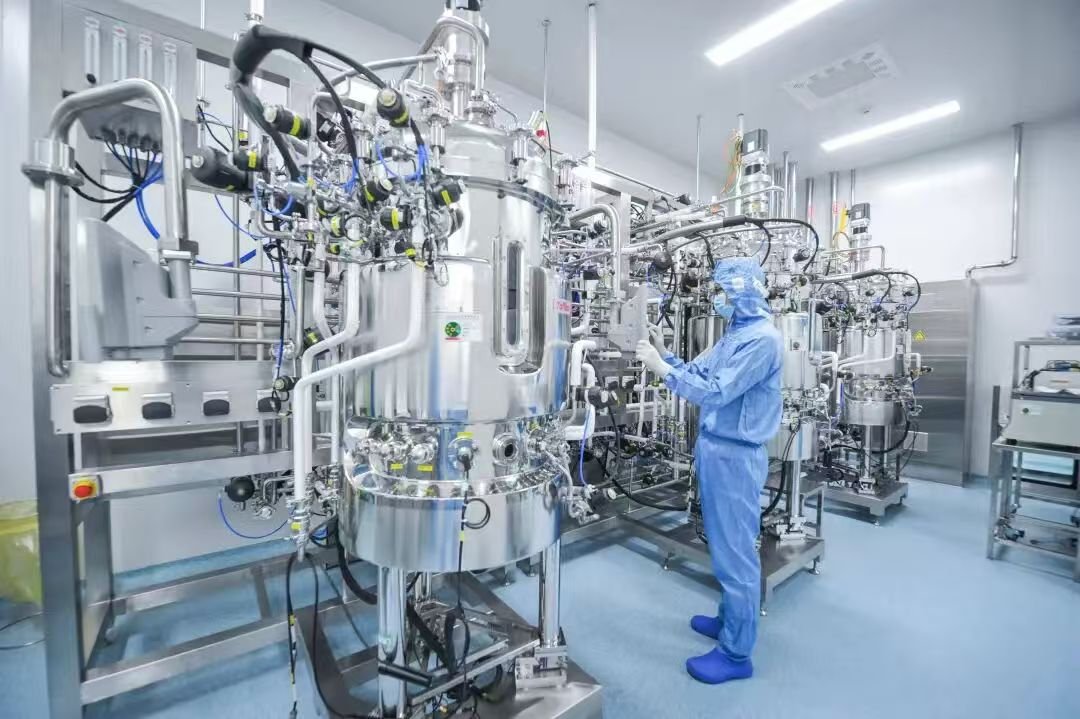
Traditional conventional sparger designs face an inherent tradeoff: boosting aeration flow to raise DO triggers severe bubbling, vigorous agitation and excessive hydrodynamic shear that ruptures fragile mammalian cells; keeping low gas flow to protect cell integrity inevitably leads to sustained DO undershoot, suppressed cell expansion, reduced peak viable cell density and declined final product titre. This article elaborates on the risks of DO collapse at rapid cell growth stage and introduces the targeted integrated solution from Sino Bioengineering combining micro-spargers and automated MFC control systems.
1. Critical Consequences of DO Deficit at Exponential Growth Peak
In the mid-to-late exponential phase, cell density surges rapidly, and cellular aerobic metabolism reaches its peak oxygen demand. Standard large-hole spargers generate coarse, oversized air bubbles with limited total specific interfacial area for gas-liquid mass transfer. Even with elevated agitation speed, the oxygen transfer rate (OTR) fails to match the oxygen uptake rate (OUR), resulting in continuous DO decline below the set control threshold.
Insufficient dissolved oxygen directly alters intracellular metabolic pathways, inhibits cell division and proliferation, lowers maximum achievable viable cell density, and triggers elevated host cell protein (HCP) release and product aggregation. More importantly, uneven DO stratification forms across the bioreactor vessel, creating inconsistent cell growth conditions and poor batch-to-batch repeatability, which cannot satisfy cGMP commercial production requirements.
If operators ramp up sparging flow rate forcibly to compensate for low OTR, large bubbles violently churn the culture broth, intensify shear stress at the impeller and bubble rupture interfaces. Mammalian suspension cells suffer severe physical damage, viability drops sharply, and the entire production batch faces scrapping risks. This irreconcilable contradiction between oxygen supply capacity and cell protection has long troubled upstream process teams during scale-up and commercial manufacturing.
2. Sino Bioengineering Integrated Solution: Micro-Sparger + Automated MFC Control System
We break the traditional aeration dilemma by adopting two synergistic technical upgrades: high-efficiency micro-sparger hardware for enhanced oxygen mass transfer, paired with closed-loop mass flow controller (MFC) automation for dynamic gas composition and flow regulation.
2.1 High-Efficiency Micro-Sparger to Boost Oxygen Transfer Efficiency
Unlike conventional spargers that produce large bubbles, the micro-sparger adopts precision porous structure to split inlet gas into massive tiny microbubbles. The total gas-liquid contact surface area increases exponentially, greatly improving volumetric oxygen transfer coefficient kLa.
1.Sufficient oxygen dissolves into the culture broth at low total gas flow rates; no need to drastically raise sparging volume;
2.Low aeration velocity eliminates violent broth agitation and surface splashing, effectively cutting fluid shear stress imposed on sensitive mammalian cells;
3.Microbubbles rise slowly and disperse uniformly inside the tank, avoiding localized oxygen shortage and DO gradients.
The micro-sparger delivers adequate oxygen supply without compromising cell viability, fundamentally resolving the OTR-OUR mismatch during peak cell growth.
2.2 Closed-Loop MFC Automated Gas Regulation System
Simply upgrading the sparger alone cannot cope with dynamically changing oxygen consumption throughout the entire culture cycle. Our integrated MFC automation system links real-time DO probe feedback with multi-channel gas supply loops (air, pure oxygen, nitrogen overlay):
1.The PLC continuously reads actual DO measurements and compares them with target setpoints;
2.When DO tends to drop in exponential growth stage, the MFC automatically increases pure oxygen proportion and adjusts total sparging flow in real time, rather than blindly raising total gas volume;
3.During lag phase or stationary phase with low oxygen demand, the system reduces oxygen blending ratio automatically to save pure oxygen consumption and suppress excessive foaming.
All gas flow parameters, blending ratios and DO trending curves are automatically logged with timestamps, forming complete audit trails compliant with 21 CFR Part 11 and ISA-88 batch control standards, fully supporting GMP validation and regulatory audits.
3. Practical Production Benefits
1.Stable DO maintenance throughout peak growth: Eliminates DO undershoot without raising shear stress, maintains high cell viability and maximizes peak cell density and antibody expression titre.
2.Optimized gas consumption: Dynamic oxygen blending via MFC cuts pure oxygen usage and reduces production running costs.
3.Eliminates manual intervention: Closed-loop automatic regulation avoids operator frequent adjustments and human-induced batch deviations.
4.Easy scale-up compatibility: The combined micro-sparger and MFC control strategy can be directly replicated from lab scale to 1000 L+ commercial bioreactors, shortening process transfer cycles.
5.Low foaming tendency: Low total sparging flow avoids violent turbulence, alleviates foam accumulation and reduces antifoam agent dosage.
The classic tradeoff between sufficient oxygen supply and cell shear protection has long restricted stable operation of large-scale mammalian cell culture lines during exponential growth. Conventional sparger layouts plus fixed manual gas adjustment can no longer adapt to high-density fed-batch and perfusion production demands.
Sino Bioengineering’s integrated micro-sparger and MFC automatic control system efficiently enhances gas-liquid oxygen mass transfer while keeping hydrodynamic shear at a safe low level, locking stable DO concentrations across the critical rapid cell proliferation window. This mature upstream optimization scheme reliably safeguards batch consistency and high product yield for mAbs, viral vectors and advanced therapy manufacturers, delivering a practical and audit-ready solution for modern cGMP biomanufacturing facilities.