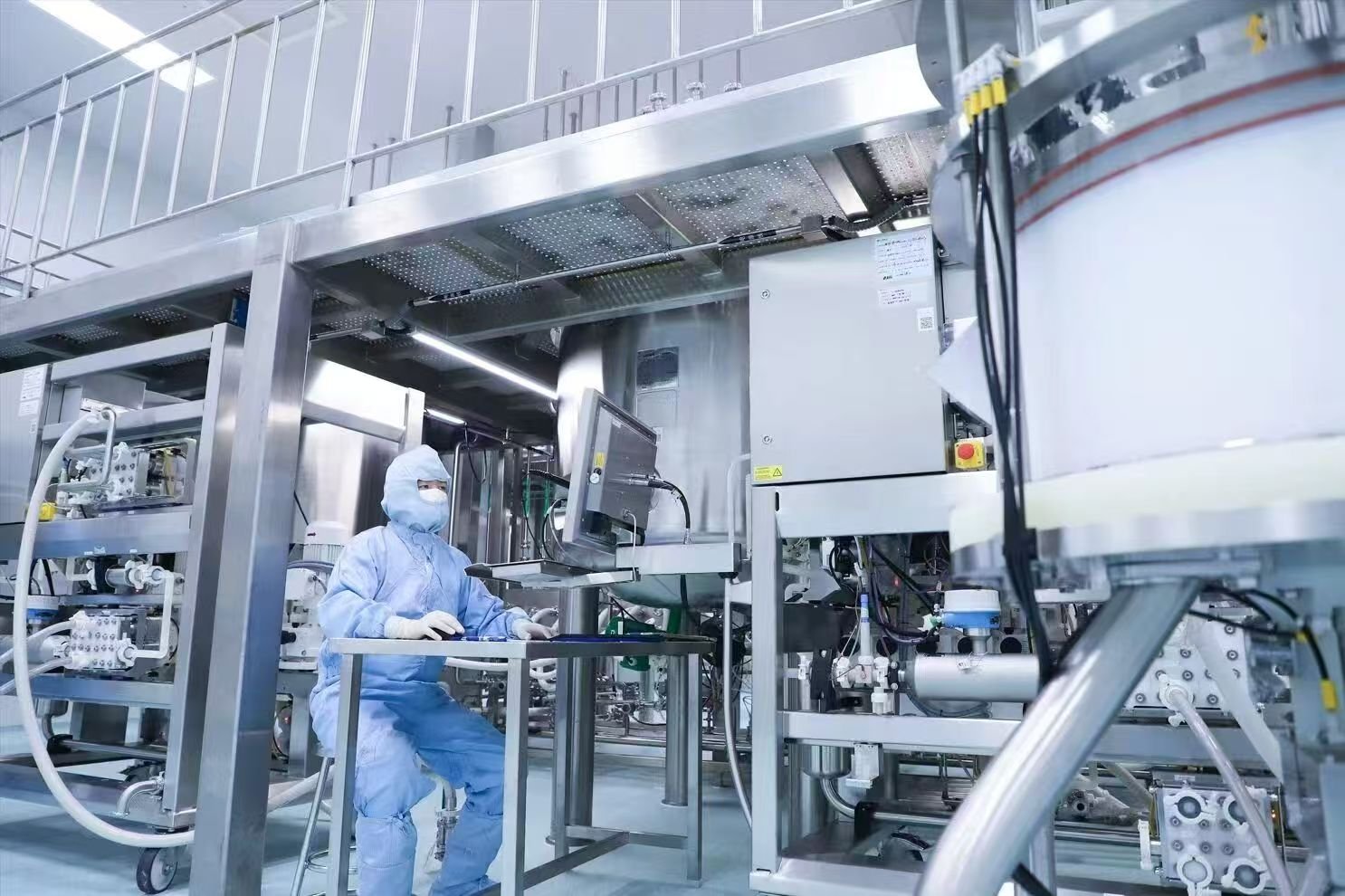
In commercial-scale biopharmaceutical manufacturing, bioreactor occupancy directly determines annual output capacity, equipment utilization rate and project return on investment. Long inter-batch turnaround downtime has evolved into a prominent pain point for traditional stainless steel bioreactor production lines.
Traditional workflows rely heavily on manual disassembly, internal rinsing, component removal, offline autoclaving, manual reassembly and leak testing after each production batch. These serial operations stretch idle equipment waiting time to several days, occupying valuable cleanroom space and limiting the number of annual production campaigns. This article analyzes the losses caused by prolonged batch changeover cycles and introduces Sino Bioengineering’s one-touch automated modular CIP/SIP solution to drastically compress bioreactor turnaround intervals.
1. Losses Brought by Long Manual Batch Changeover Cycles
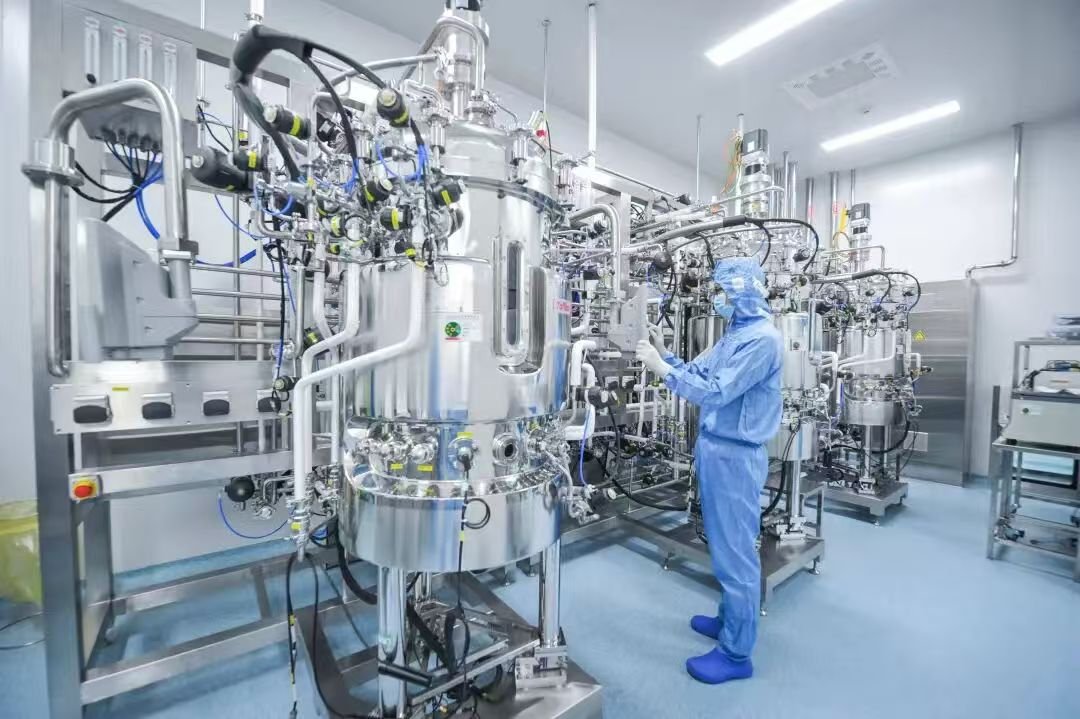
After completing a cell culture batch, traditional bioreactor processing requires multiple labor-intensive steps: draining residual broth, opening the tank lid, manually detaching sensors, sampling ports and connecting piping, transporting critical components to standalone autoclaves for offline sterilization, manually reinstalling every fitting, tightening clamps, conducting repeated leak checks and pre-run integrity verification.
Several core drawbacks emerge from this manual workflow:
First, the entire changeover sequence takes multiple working days, keeping high-value bioreactors and cleanroom assets idle without generating product output. For mAb, viral vector and advanced therapy drug manufacturers, extended downtime directly cuts annual batch quantity and total drug yield.
Second, frequent manual disassembly and reassembly introduce human error risks. Improper installation may trigger leaks, sterile barrier damage and cross-contamination between batches, leading to full batch scrappage.
Third, massive manual operations require large on-site operator teams, elevating labor costs and creating heavy workloads for cleaning validation document preparation.
Fourth, repeated disassembly and reinstallation accelerate wear on gaskets, seals and sensors, raising routine maintenance and component replacement expenses.
As market demand for biologic drugs continues to expand, manufacturers can no longer afford prolonged equipment idling caused by outdated manual cleaning and sterilization modes. Accelerating bioreactor turnaround has become an urgent optimization target for upstream production lines.
2. Sino Bioengineering Modular One-Touch Automated CIP/SIP Solution
To eliminate the bottleneck of manual batch switching, Sino Bioengineering adopts a modular piping layout paired with fully integrated automated CIP (Clean-in-Place) and SIP (Sterilize-in-Place) control architecture. Operators can launch the full cleaning and sterilization sequence with a single button click, with zero disassembly required for the bioreactor and connected process loops.
2.1 Modular Integrated Piping & Valve Manifold Design
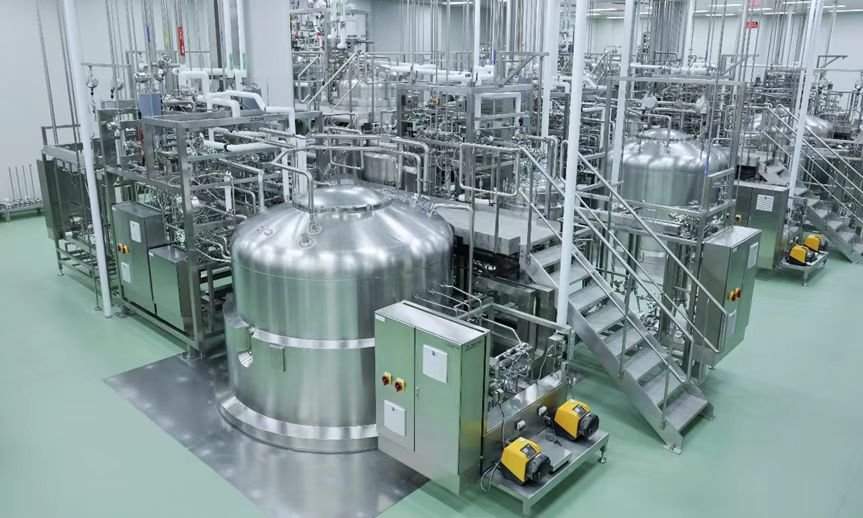
The bioreactor and associated media feeding, sampling, harvest and vent pipelines are pre-assembled into a unified modular skid with sanitary diaphragm valve manifolds. All fluid contact paths form closed fixed loops permanently connected to CIP supply, waste discharge and pure steam pipelines. No pipe disconnection, component removal or manual re-plumbing is needed between batches.
The modular layout standardizes every fluid route, eliminates dead legs and hidden corners that are hard to clean, and delivers consistent flow velocity across all pipeline segments to guarantee uniform cleaning effectiveness.
2.2 Fully Automated One-Click CIP & SIP Execution
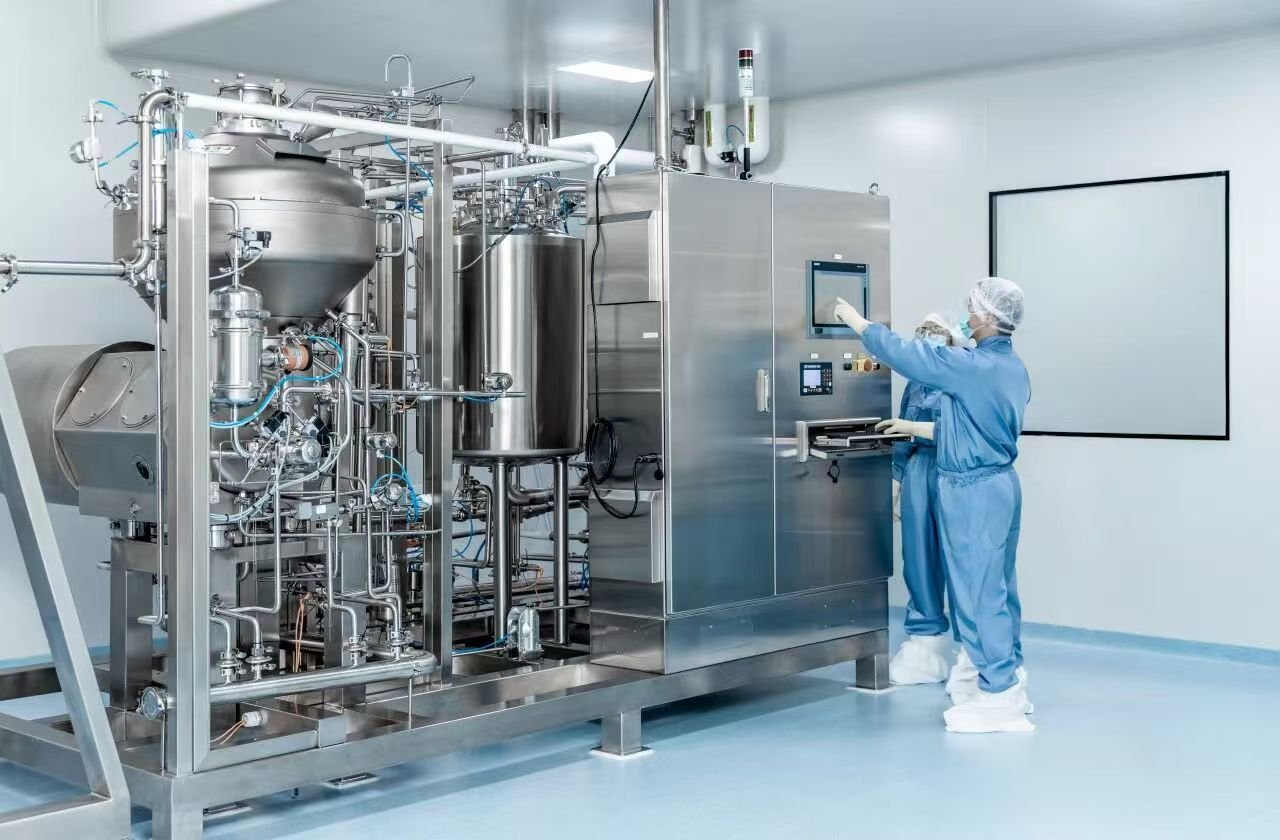
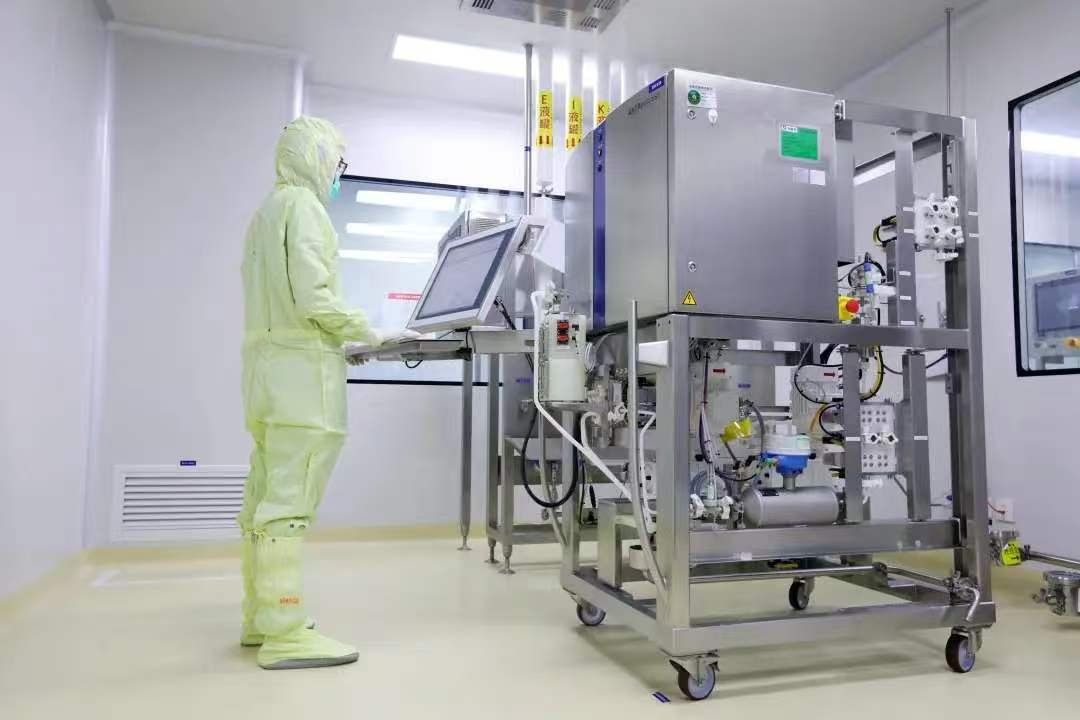
The PLC+HMI control system stores standardized validated CIP and SIP recipes for different product campaigns:
1.CIP cycle: Automatic sequential delivery of WFI, alkaline detergent, acid rinse and final purified water flush; flow rate, temperature, circulation duration and conductivity end-point judgment run automatically without manual supervision.
2.SIP cycle: Pure steam is automatically introduced to the entire tank and connected loops; holding temperature, sterilization dwell time and pressure are closed-loop regulated, with automatic cooling and pressure equalization upon cycle completion.
Every action timestamp, operating parameter, cycle status and end-point judgment value is automatically recorded, generating complete audit trails compliant with 21 CFR Part 11 and ISA-88 batch standards, directly supporting GMP qualification and regulatory inspections.
3. Core On-Site Production Benefits
1.Sharply compressed inter-batch turnaround time: Days-long manual disassembly, offline sterilization and reassembly work are eliminated; full CIP/SIP cycles finish automatically overnight or during off-shift hours, significantly raising bioreactor annual utilization rate and total production capacity.
2.Guaranteed sterile safety: Closed-loop fixed pipelines avoid human contact with sterile boundaries, eliminating batch cross-contamination risks brought by manual assembly errors.
3.Drastically reduced labor input: Operators are freed from repetitive disassembly, installation and on-site monitoring work, cutting labor costs and lowering operator exposure to cleanroom environments.
4.Stable and repeatable process performance: Fixed recipes deliver identical cleaning and sterilization effects batch after batch, simplifying ongoing cleaning validation maintenance work.
5.Extended service life of wearing parts: Seals, gaskets and sensors remain permanently installed without repeated disassembly and clamping, reducing component consumption and maintenance downtime.
Manual disassembly, offline autoclaving and on-site reassembly have long acted as major constraints restricting bioreactor operating efficiency. For commercial biomanufacturing facilities pursuing high capacity and low unit production cost, shortening batch changeover cycles delivers clear economic advantages.
Sino Bioengineering’s modular automated one-button CIP/SIP system completely abandons traditional manual changeover workflows. It greatly shortens bioreactor idle intervals, improves equipment turnover efficiency and cleanroom space utilization, while maintaining full cGMP compliance and batch safety. This mature engineering optimization solution helps biologic manufacturers maximize output from existing production assets and accelerate product delivery to the market.