

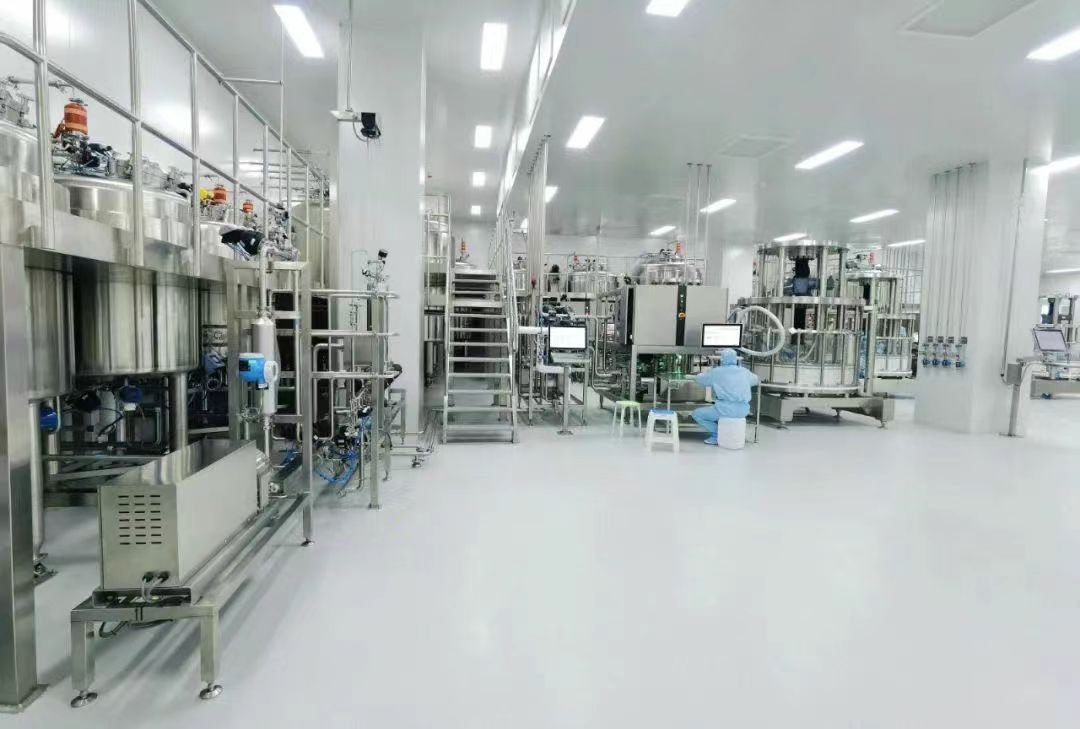
In the field of cell and gene therapy (CGT), high-quality plasmid DNA (pDNA) serves as an indispensable foundational raw material. Whether applied in viral vector manufacturing, in vitro transcription of mRNA, or directly used as nucleic acid therapeutics, the quality, stability and scalability of plasmid DNA directly determine the safety and efficacy of downstream therapeutic products.
With the rapid global growth of CGT projects, the demand for plasmid DNA and corresponding quality standards have risen simultaneously, posing unprecedented challenges to its manufacturing processes. Achieving stable, scalable production while complying with stringent quality requirements has become a widespread industry priority.
Why Is Large-Scale Production of Plasmid DNA So Challenging?
Compared with traditional biomacromolecules, plasmid DNA exhibits several inherently process-unfriendly characteristics:
1. Large molecular weight and complex structure
2. High sensitivity to shear stress
3. High viscosity, impeding mass transfer and filtration
4. High physicochemical similarity to host genomic DNA, RNA and other impurities
These properties render plasmid DNA susceptible to yield loss and quality fluctuations throughout fermentation, lysis, purification and filtration. Consequently, meticulous design and systematic optimization are required at every stage from upstream cultivation to downstream purification.
Culture Medium and Fermentation Conditions: The First Barrier to Yield Improvement
Plasmid yield is governed by the synergistic effect of multiple parameters rather than individual factors, including:
1. Selection of bacterial strains and master cell banks
2. Growth rate and induction strategies
3. Culture medium formulation
4. Carbon-to-nitrogen (C:N) ratio
5. Culture conditions such as pH, temperature, osmotic pressure and dissolved oxygen
In terms of medium composition, standard formulations consist of carbon sources, nitrogen sources, phosphates, magnesium salts and trace elements. Minimal media offer excellent batch-to-batch reproducibility, while semi-defined media containing complex components such as yeast extract enable higher cell density.
Glucose is an economical and easily metabolized carbon source, yet it tends to accumulate acetate and suppress plasmid yield. Partial substitution with glycerol alleviates acetate toxicity, reduces the maximum specific growth rate, and facilitates stable plasmid replication.
Practical studies have demonstrated that the carbon-to-nitrogen ratio exerts a significant impact on plasmid recovery, with systematic screening typically performed within the range of 2:1 to 8:1. Optimal ratios vary across different medium systems.
Plasmid Instability: Issues Extend Beyond Sequence Itself
Plasmid stability remains a major bottleneck during process scale-up. On one hand, structural features of the inserted sequence are critical:
Large inserts and inverted repeat sequences substantially increase instability risks. For large genes, vectors with minimal backbones are preferred; low-copy replication strategies are adopted when instability persists.
On the other hand, process conditions exert profound influences:
1. Reduction of cultivation temperature
2. Replacement of host bacterial strains
3. Optimization of lysis and intermediate buffer systems
In addition, DNase contamination and pH fluctuations are hidden threats to plasmid stability. Rational buffer formulation, DNase inhibition and low-temperature storage are essential for long-term plasmid stability.
Why Are GMP-Grade Plasmids Scarce and Costly?
The high cost and tight supply capacity of GMP-compliant plasmid DNA are attributable to three core reasons:
1. Elevated manufacturing standards: Raw materials, facilities, personnel and validation systems must fully comply with GMP regulations.
2. Complex quality control requirements: Extensive validated multi-dimensional testing is required for each batch.
3. Explosive market demand: Surging development of gene therapy, vaccine and oncology therapeutic projects, alongside post-pandemic expansion of DNA and mRNA vaccine pipelines, have further driven plasmid demand.
The supply-demand imbalance for GMP-grade plasmids will persist in the short term.
Downstream Purification: The Critical Determinant of Process Success
Downstream purification accounts for the greatest plasmid yield loss compared with fermentation. Key challenges include:
1. Separation of supercoiled plasmid from open-circle isoforms
2. Difficult separation from genomic DNA and RNA impurities
3. Shear stress risks and membrane fouling
A typical downstream workflow consists of:
Harvest → Lysis → Clarification → Tangential Flow Filtration (TFF) → Chromatography → Final Concentration & Sterile Filtration
Alkaline lysis remains the dominant industrial method, yet precise control of pH, duration and mixing intensity is imperative. Clarification and filtration require a delicate balance between impurity removal and preservation of plasmid structural integrity.
Chromatography & Filtration: The Final Line of Defense for High Purity
Anion exchange chromatography (AEC) and hydrophobic interaction chromatography (HIC) are the most widely adopted purification techniques. Conventional chromatography resins suffer from low binding capacity and slow mass transfer due to the extremely large size of plasmid DNA relative to proteins.
Process design therefore focuses heavily on:
1. Mass transfer mechanisms (convection vs. diffusion)
2. Binding capacity and residence time
3. Shear stress risks and recovery yield
During final sterile filtration, filtration performance is markedly affected by salt concentration, membrane materials and plasmid isoform distribution. High supercoiled plasmid ratios generally improve filtration flux and recovery.
Quality Control: Beyond Compliance to Usability
Plasmid DNA quality directly governs transfection efficiency and downstream vector quality. Key analytical attributes include:
1. Concentration and purity (A260/A280 ratio)
2. Endotoxin residues
3. Host genomic DNA and RNA residues
4. Supercoiled plasmid percentage
5. pH and osmotic pressure
Endotoxin and organic solvent residues induce significant cytotoxicity and are strictly controlled critical quality attributes (CQAs).
In-House Manufacturing vs. Outsourcing: Depends on Your Strategic Positioning of Plasmids
Most enterprises currently outsource plasmid production to specialized CDMOs to accelerate project timelines and reduce upfront capital investment. Rising demand has also driven increasing numbers of companies to evaluate internal capacity building.
There is no universally superior model; the optimal choice depends on:
Whether plasmid DNA constitutes your core product or merely a key raw material.
1. In-house manufacturing is strategically valuable if plasmids are core products or long-term capabilities.
2. Outsourcing offers greater flexibility for temporary or auxiliary requirements.
All decisions require systematic evaluation based on long-term product pipelines, regulatory strategies and cost models.
Conclusion
Plasmid DNA is far more than a simple raw material—it is a critical quality element spanning the entire CGT value chain. Minor deviations at any step, from medium selection and lysis conditions to chromatography strategies and final storage, will be exponentially amplified during scale-up.
As cell and gene therapy advances toward large-scale commercialization, systematic understanding of plasmid DNA manufacturing processes is far more important than isolated point optimization.
As a leading process-oriented engineering company, Sino Bioengineering delivers professional bioengineering solutions and comprehensive technical services to clients worldwide.
For more products and solutions: https://sinobioengg.com/category/solution/
For more service: https://sinobioengg.com/category/service/