
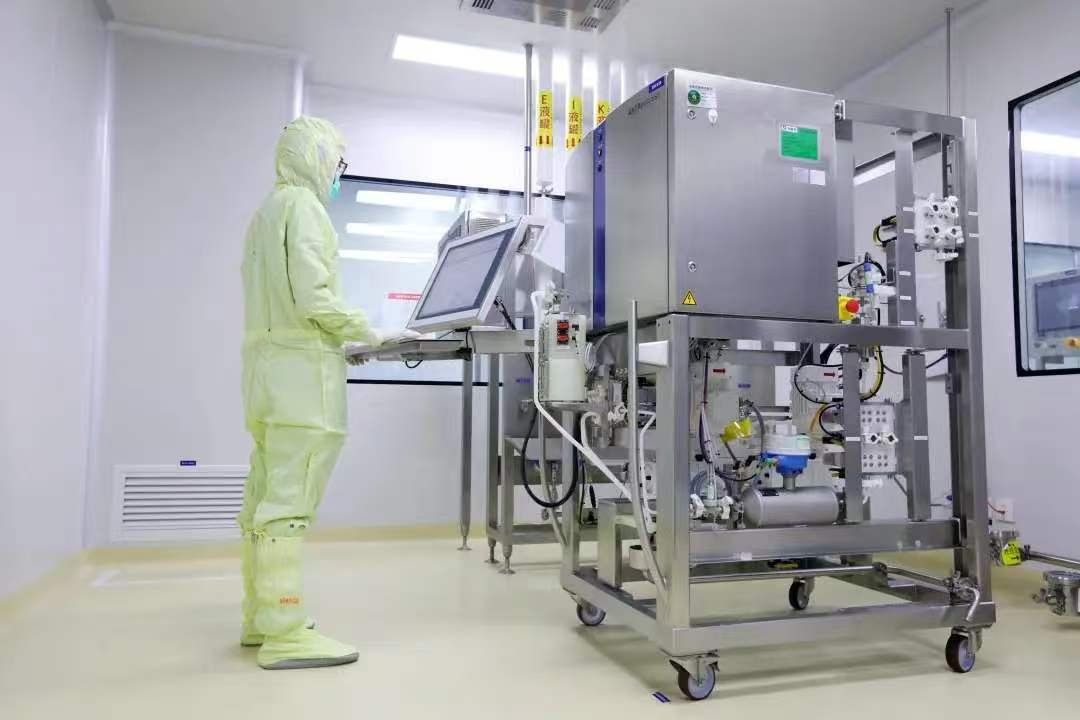
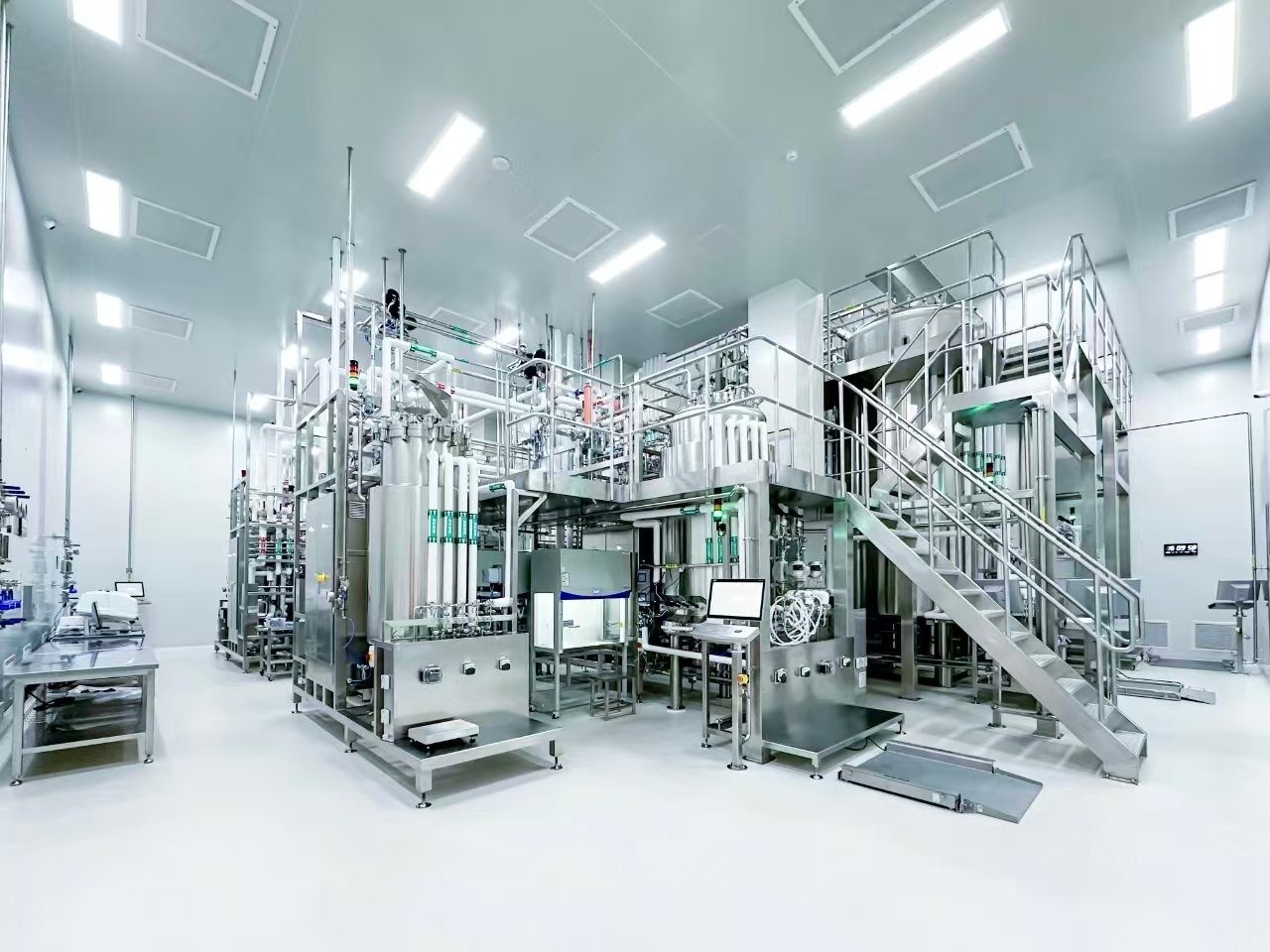
Against the backdrop of the rapid commercialization of cell and gene therapy, lentiviral vectors (LVVs)—as critical gene delivery tools—are evolving from laboratory-scale methods to industrial-scale manufacturing. A core industry focus is achieving scalable production while ensuring high titers, consistency, and GMP compliance. Toward this goal, LVV manufacturing has undergone continuous upgrades, shifting from transient transfection to stable cell lines and from adherent to suspension culture systems.
Transient Transfection: The Current Mainstream LVV Production Method
At present, LVV production predominantly relies on transient transfection. This approach introduces plasmid DNA carrying viral genes into suitable host cells (typically 293T or its derivative cell lines), enabling cells to transiently express viral structural proteins and packaging elements for the assembly and release of viral particles.
The widespread adoption of transient transfection stems primarily from its speed, efficiency, and flexibility. It allows rapid plasmid combination switching during R&D to accommodate diverse vector construction needs, making it highly suitable for preclinical research and early-stage clinical programs.
In practice, multiple transfection reagents are employed, with selection dependent on process requirements, cost control, and scalability feasibility.
1. Calcium Phosphate (CaPO₄) Co-Precipitation
Calcium phosphate co-precipitation is a classic, low-cost transfection method. It works by forming CaPO₄-DNA precipitates that settle onto cell monolayers and enter cells via endocytosis.
Key characteristics of this method include:
1. Requirement for static culture conditions;
2. Medium replacement approximately 24 hours post-transfection to mitigate cytotoxicity;
3. Multiple harvests commonly performed to maximize total titers.
Despite its cost advantages, CaPO₄ exhibits moderate cytotoxicity, often necessitating serum or albumin supplementation to reduce cell damage. This introduces animal-derived component risks and regulatory compliance challenges for clinical-grade production. Additionally, the method is highly pH-sensitive, demanding stringent process control and posing significant scale-up difficulties.
2. PEI and Liposomal Transfection
To improve consistency and scalability, the industry has gradually adopted polyethylenimine (PEI) or liposomal reagents (e.g., Lipofectamine) for transfection.
Liposomal reagents deliver high transfection efficiency but incur high costs, limiting their utility for large-scale production.
In contrast, PEI has emerged as a preferred choice for industrial manufacturing. As a highly charged cationic polymer, PEI complexes with negatively charged plasmid DNA and enters cells through endocytosis.
Advantages of PEI include:
1. Relatively low cost;
2. Good batch-to-batch consistency;
3. Low cytotoxicity;
4. Serum-independent operation;
5. Simpler workflow with less stringent pH control than CaPO₄.
Notably, transfection efficiency remains influenced by multiple factors:
1. Plasmid ratio;
2. Reagent-to-DNA ratio;
3. Mixing and incubation time;
4. Host cell viability and status.
Theoretically, vector quality should be consistent within the same system, but in practice, cellular and process parameter variations lead to heterogeneity in viral particle production. Systematic process optimization is therefore required during scale-up to enhance transfection efficiency and production stability.
Stable Packaging Cell Lines: A Key Strategy for Cost Reduction and Consistency Improvement
To further refine production workflows, researchers have developed packaging cell lines stably expressing viral components. These cell lines constitutively express the structural and envelope proteins required for vector production, reducing reliance on GMP-grade plasmid DNA, simplifying DNA preparation, and lowering contamination risks.
Compared to transient transfection, stable cell lines offer the following benefits:
1. Reduced plasmid costs;
2. Enhanced batch reproducibility;
3. Streamlined production processes;
4. Improved scalability for large-scale production.
However, constitutive expression of certain viral components can be cytotoxic to host cells. To address this, the industry has adopted inducible expression systems, such as the tetracycline-inducible system (Tet-on/Tet-off). Viral gene expression is triggered by doxycycline addition, initiating production on demand and alleviating long-term cytotoxic pressure on cells.
Selecting envelope proteins with lower cytotoxicity represents another optimization strategy.
Overall, stable cell lines hold superior cost and scalability potential over transient transfection and are regarded as a pivotal direction for commercial production.
BAC Stable Integration System: A Next-Generation High-Efficiency Production Platform
In recent years, breakthroughs have been achieved in stable production cell lines developed from suspension-adapted 293T cells. A novel technology utilizes a single bacterial artificial chromosome (BAC) DNA construct to integrate all LVV components into the host cell genome for stable expression.
This system is typically coupled with an inducible expression mechanism. Upon doxycycline supplementation in the culture medium, viral transcription and production are initiated, yielding high titers comparable to transient transfection.
Key advantages of this technology include:
1. Stable gene integration;
2. Consistent functional expression;
3. Scalable amplification in single-use stirred-tank bioreactors;
4. Favorable genetic and functional stability;
5. Suitability for industrial manufacturing.
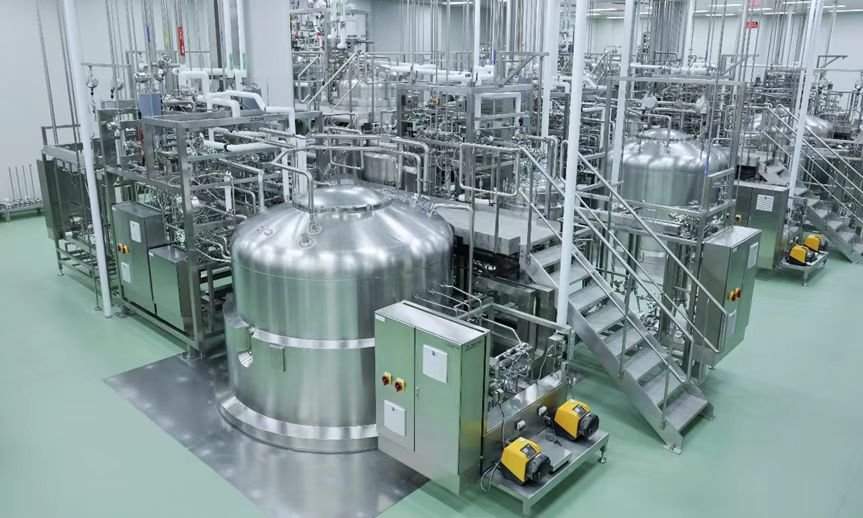
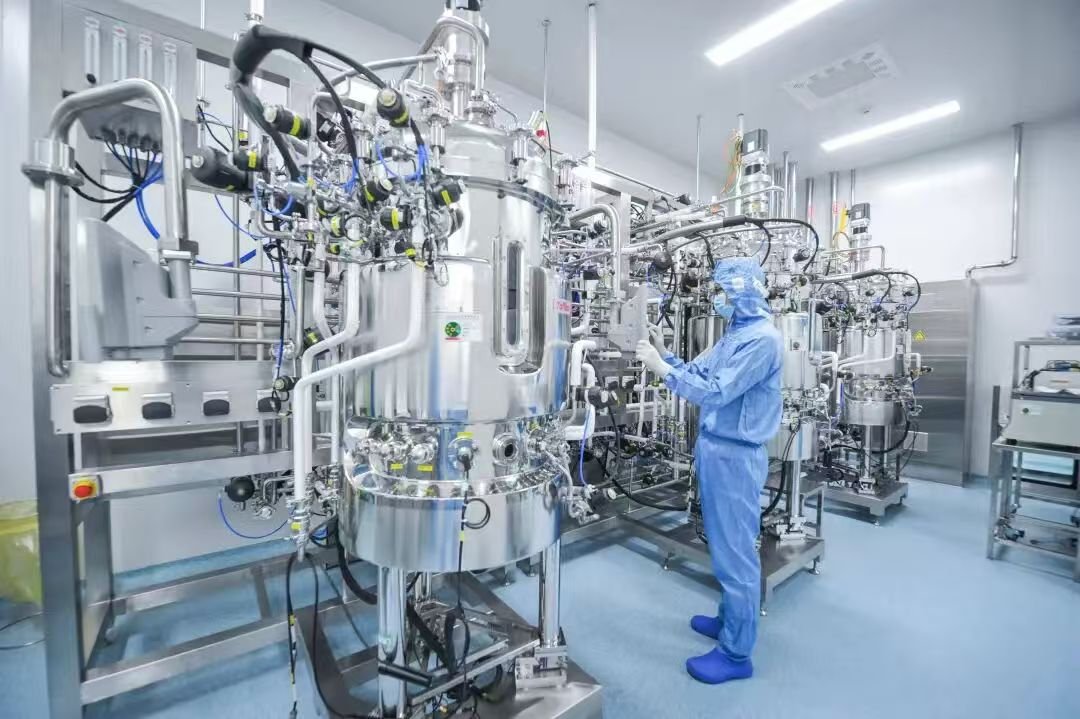
Coupled with advances in single-use bioreactor technology, stable suspension production cell lines integrated with stirred-tank systems provide a viable pathway for large-scale commercial LVV production.
Suspension Cell Systems: The Core Solution for True Scale-Up
Both transient transfection and stable cell line technologies remain limited in scalability if reliant on adherent culture. In recent years, suspension culture has become the industry standard.
Advantages of suspension cells include:
1. Direct cultivation in shake flasks or stirred-tank bioreactors;
5. Independence from attachment surfaces;
6. Support for higher cell densities;
7. Facilitated true scale-up rather than scale-out;
8. Reduced footprint;
9. Compatibility with automated and continuous production.
Particularly in the commercial phase, suspension culture has become virtually indispensable for meeting large-scale clinical-grade LVV market demand. Compared to traditional adherent systems, suspension culture circumvents the space, labor, and cost burdens associated with multi-unit parallel scale-out.
Conclusion: Technological Evolution from Rapid R&D to Industrial Manufacturing
LVV production is undergoing a profound transformation. Transient transfection retains a critical role in R&D and early clinical stages due to its flexibility and speed. PEI transfection has improved industrial feasibility, while stable packaging cell lines and inducible expression systems offer solutions for cost reduction and consistency enhancement.
Furthermore, stable suspension cell lines incorporating BAC integration technology standardize and scale up LVV production. The widespread adoption of suspension culture has effectively bridged the final gap between laboratory research and commercialization.
Moving forward, continuous optimization of high-density suspension culture, stable expression systems, single-use bioreactors, and automated control platforms will further enhance LVV production efficiency and quality, providing robust support for the large-scale implementation of the cell and gene therapy industry.
As a leading process-oriented engineering company, Sino Bioengineering delivers professional bioengineering solutions and comprehensive technical services to clients worldwide.
For more products and solutions: https://sinobioengg.com/category/solution/
For more service: https://sinobioengg.com/category/service/