Introduction to Collagen
Collagen is a general term for a class of biological macromolecular proteins. As the most abundant structural protein in animals, it accounts for 25%–35% of the total protein content. It is widely present in connective tissues, bones, skin and blood vessels, playing key roles in supporting tissue structure, repairing damage and anti-aging. Natural collagen molecules possess a quaternary structure, with the triple helix structure as their hallmark feature.
The excellent properties of collagen are rooted in its sophisticated molecular structure:
Basic Unit – Tropocollagen: The fundamental structural unit of collagen is tropocollagen. Instead of a single peptide chain, it consists of three independent α-peptide chains intertwined like braids to form a superhelical structure. Each tropocollagen chain contains approximately 1,000 amino acid monomers.
Characteristic Sequence – Gly-X-Y: The amino acid sequence of the three chains features a highly repetitive Gly-X-Y pattern. Glycine (Gly), with the smallest molecular size, locates at the tightly coiled axis of the triple helix. The X and Y positions are frequently occupied by hydroxyproline and hydroxylysine, two collagen-specific amino acids. They are formed by hydroxylation modification of proline and lysine catalyzed by hydroxylases with the assistance of vitamin C (VC). This explains why vitamin C deficiency causes scurvy: impaired collagen synthesis weakens the vascular walls and connective tissues. Hydroxyproline is a unique amino acid of collagen, and its hydroxyl groups are critical for stabilizing the triple helix structure and forming intermolecular crosslinks.
Quaternary Structure and Fiber Formation:
Primary structure: A specific sequence composed of about 1,000 amino acids with repeated Gly-X-Y motifs.
Secondary/Tertiary structure: A single α-chain forms an atypical left-handed helix; three left-handed helices further intertwine to form a right-handed superhelix, namely tropocollagen.
Quaternary structure: Multiple tropocollagen molecules are covalently crosslinked, arranged end-to-end in parallel with a quarter-staggered pattern, and assembled into visible collagen fibrils. This staggered arrangement presents characteristic alternating light and dark stripes under an electron microscope. Collagen fibers are arranged differently in tissues such as tendons, skin and cornea to adapt to distinct mechanical requirements. The highly ordered self-assembly capability from molecular to macroscopic levels underpins its structural support function.
Collagen is classified into multiple types based on structure and function, mainly including Type I, II, III and V collagen.
Type I Collagen: The most prevalent type, widely distributed in skin, bones, tendons and ligaments, providing structural strength and support.
Type II Collagen: Mainly found in cartilage with excellent cushioning and supporting properties, commonly used in joint health products.
Type III Collagen: Predominantly present in skin, blood vessels and visceral organs, responsible for tissue elasticity and flexibility.
Type V Collagen: Abundant in placenta and hair follicles, participating in cell and tissue development and regeneration.
Collagen Preparation Methods
At present, there are three mainstream preparation methods for collagen on the market: natural extraction, chemical synthesis and recombinant gene technology.
Natural Extraction Method: Collagen is extracted from animal skin and Achilles tendon via acid, alkali or enzymatic methods. It features low cost but carries high risks of immunogenicity.
Chemical Synthesis Method: Solid-phase synthesis can produce short-chain collagen peptides, yet fails to assemble them into natural triple helix structures. Novel biomimetic synthesis (e.g., temperature gradient assembly) can partially mimic natural collagen but comes with exorbitant costs.
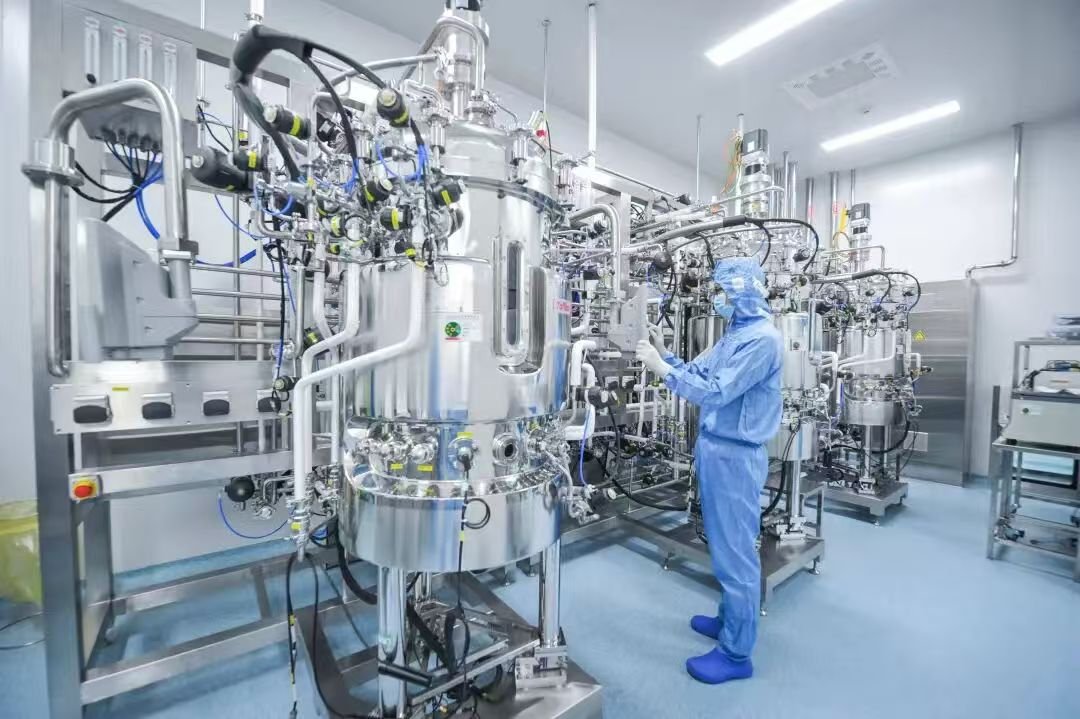
Recombinant Gene Method: The human collagen gene sequence is specially designed, enzymatically digested, spliced and ligated into a vector, then transferred into engineered cells for collagen production via fermentation and expression. Compared with naturally extracted collagen, recombinant collagen boasts stable quality, controllable composition, high biosafety and editable modification properties.
Production and Purification of Recombinant Collagen
Collagen traditionally extracted from animal tissues such as cattle, pigs and fish faces multiple challenges: risks of viruses and pathogens (mad cow disease, swine fever, etc.), immunogenicity issues (xenogeneic proteins may trigger allergies or rejection), batch-to-batch quality variations (affected by animal age, breed and breeding environment), religious and ethical restrictions (certain groups avoid specific animal-derived sources), and potential damage to the natural structural integrity of collagen during chemical extraction.
Collagen produced by genetic engineering technology is defined as recombinant collagen. Based on the characteristics and main functional domains of human collagen, the gene sequence is optimized and redesigned, followed by expression in various host cells such as Escherichia coli, yeast and mammalian cells. Different expression systems have distinct characteristics.
Recombinant collagen is more than a substitute for traditional products; it represents a fundamental paradigm shift in biomanufacturing — transitioning from extraction and purification to design and construction. The core of this shift is transforming collagen from a naturally occurring substance into a precisely designable biological functional module.
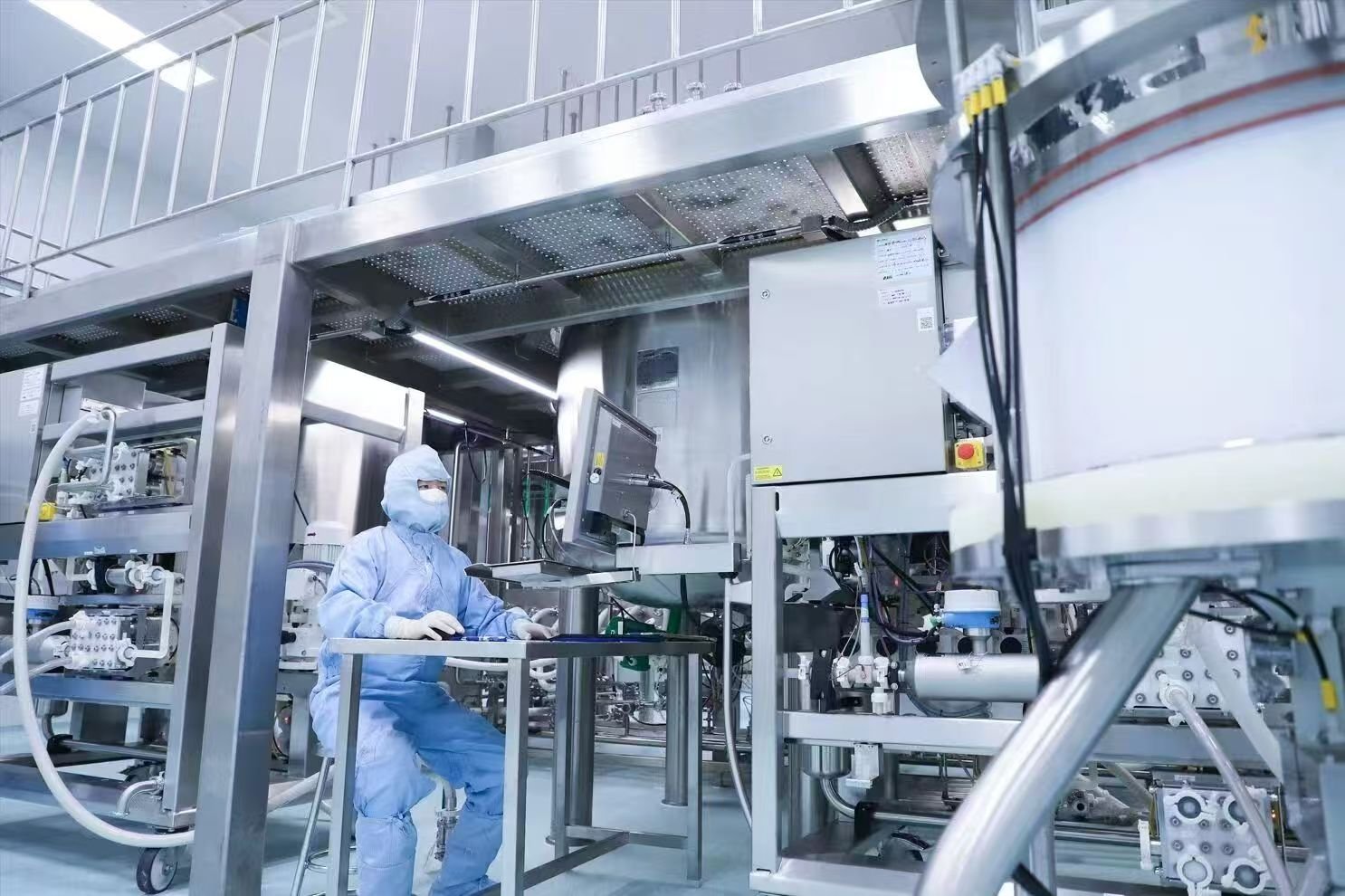
A qualified recombinant collagen product requires in-depth integration at three levels: precision molecular design (genetic engineering), process precision control (expression and purification), and application-oriented intelligent matching (formulation and delivery tailored to specific needs).
BioLamina’s collagen process development platform is committed to building a complete technical closed loop at these three levels, converting cutting-edge scientific research into reliable, scalable industrial solutions.
With the continuous advancement of synthetic biology, computational protein design and advanced manufacturing technologies, recombinant collagen is poised to evolve from the current bionic stage to a higher-level supernatural design stage. It enables the creation of naturally non-existent collagen variants with enhanced or brand-new functions, opening up new possibilities for improving human health and quality of life.
The establishment of a suitable expression system is critical for recombinant collagen production. Mammalian cell systems such as CHO and HEK293 feature protein translation mechanisms most similar to human cells, but low yield and high cost hinder their large-scale industrial application. In contrast, bacterial and yeast expression systems offer cost-effectiveness, easy operability and high suitability for industrial production.
Application Cases of Recombinant Collagen Purification
Case 1: Purification of Tagged Recombinant Collagen via Affinity Chromatography
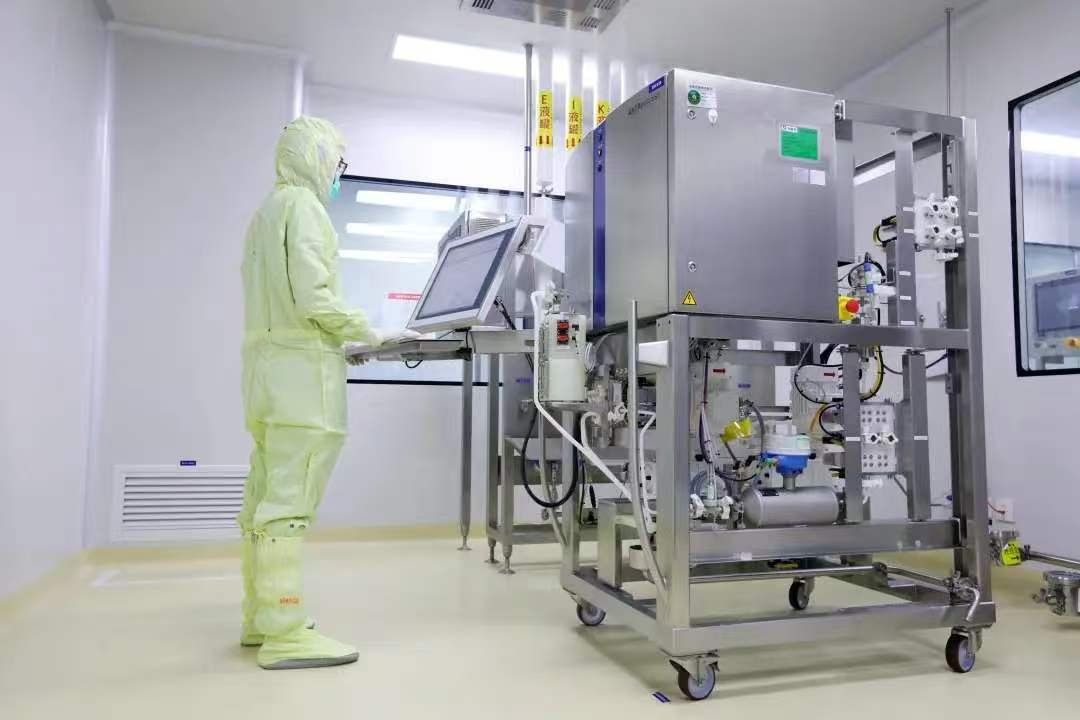
The target protein in this case is His-tagged recombinant collagen expressed by E. coli, which was purified by Ni affinity chromatography. Single-step purification achieved a purity of over 95% and a yield of more than 80%.
For untagged collagen, separation relies on its physicochemical properties. For instance, common Type I, III and V collagen (pI > 7) differ significantly in charge from most acidic host proteins. Cation exchange chromatography or mixed-mode chromatography is recommended to remove host proteins and degraded fragments.
Case 2: Recombinant Collagen Purification via Cation Exchange Chromatography
The target protein is a 29 kDa recombinant collagen expressed by Pichia pastoris. The project required a one-step purification with purity ≥ 95% and yield ≥ 70%. The process finally achieved a purity above 97% and a yield over 70%.
Case 3: Recombinant Collagen Purification via Mixed-Mode Chromatography
The target protein is a 30.4 kDa recombinant collagen expressed by Pichia pastoris, with a required purity of ≥ 95% after purification. Mixed-mode chromatography delivered a final protein purity exceeding 95%, fully meeting the technical requirements.
As a leading process-oriented engineering company, Sino Bioengineering delivers professional bioengineering solutions and comprehensive technical services to clients worldwide.
For more products and solutions: https://sinobioengg.com/category/solution/
For more service: https://sinobioengg.com/category/service/