

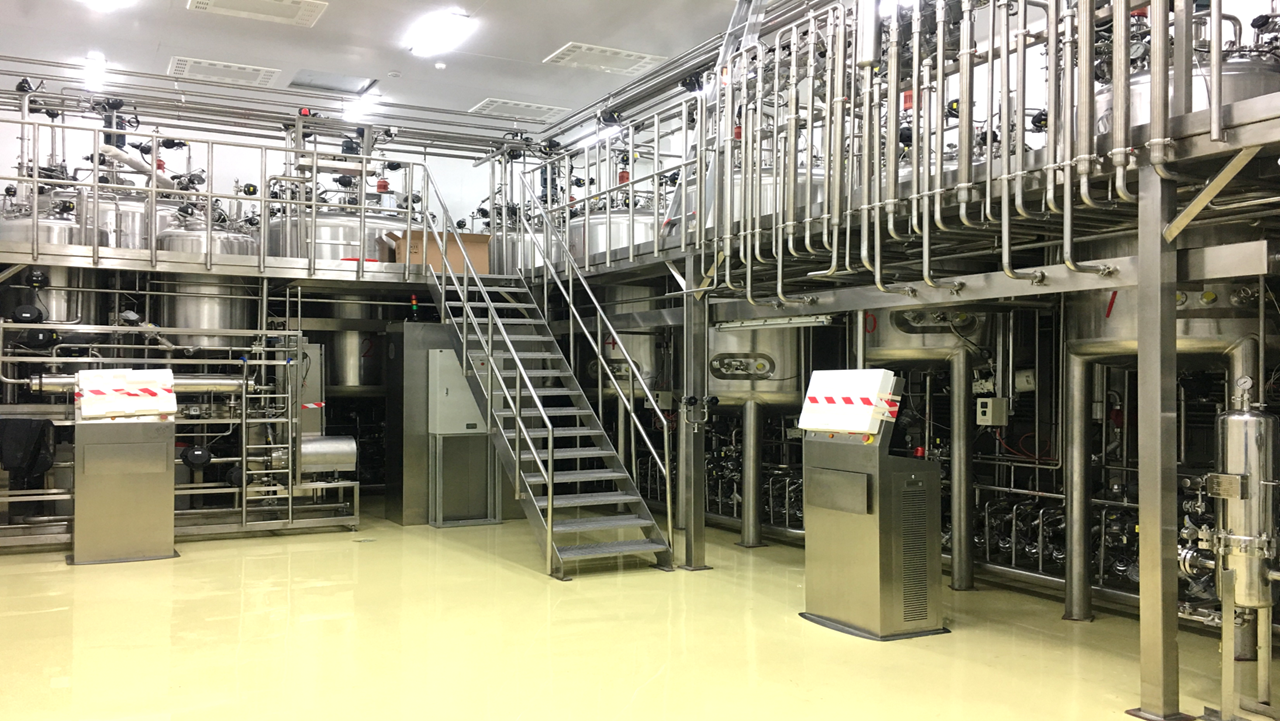
Cell culture process scale-up is a critical step in the production of therapeutic proteins. To meet market demand for therapeutic proteins, production must be scaled up to commercial mass manufacturing, which requires a series of scaled-up culture procedures.
The development and scale-up of the cell culture process commence with cell line construction. After transfecting CHO cells with the target gene, a stable transfected cell bank is established. Single cells are isolated from the transfected cell bank, namely monoclonal cells. Several candidate production clonal cell lines are then selected based on growth characteristics, productivity, and product (protein) quality attributes. The selected candidate clones are transferred to the upstream process development department for process development and gradual scale-up.
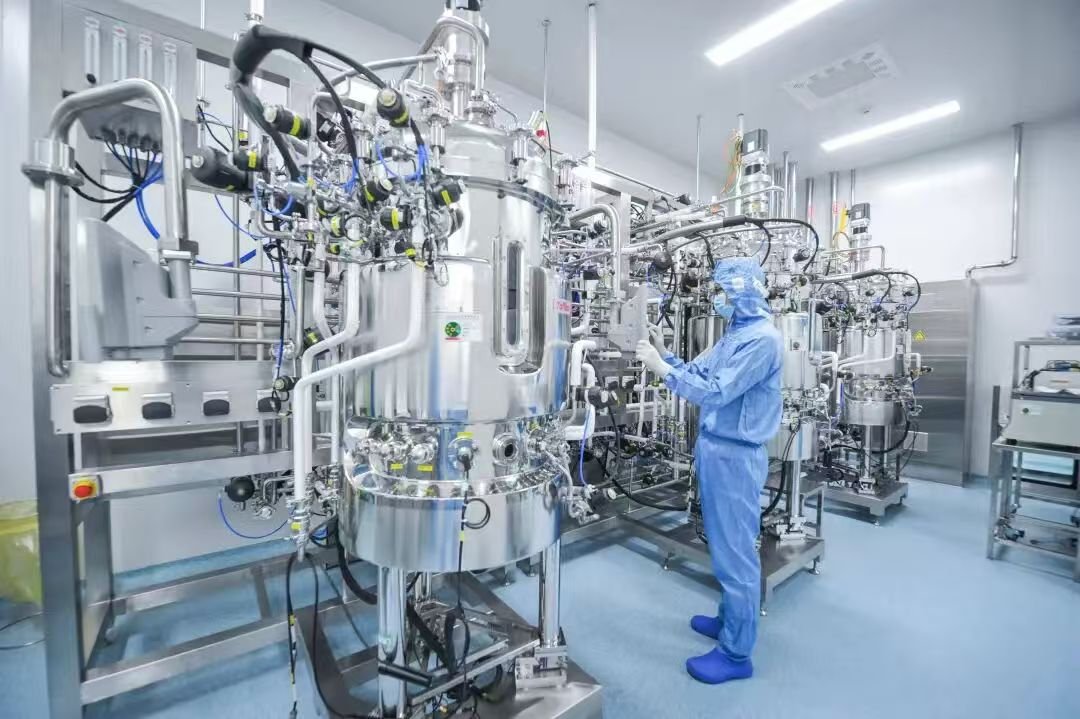
Small-scale cultivation is first performed using deep-well plates, shake tubes, and shake flasks, focusing on the development, screening and optimization of basal and feed media, as well as investigation of culture temperature and feeding strategies, to preliminarily define key cell culture process parameters. Subsequently, the process is transferred to bench-top bioreactors (1 L–50 L) for further optimization of culture conditions, including pH, temperature, dissolved oxygen (DO), feeding modes, culture additives (such as antifoams and surfactants), agitation speed, and aeration strategies. Once the process is finalized and locked, it is scaled up to pilot-scale bioreactors (50 L – 250 L – 500 L), and ultimately to commercial-scale stainless steel bioreactors (500 L – 2,000 L – 30,000 L) or single-use bioreactors (250 L – 2,000 L) for commercial batch production.
Bioreactor scale-up for cell culture has long been a challenging task in the biopharmaceutical industry. The cell culture environment is affected by multiple operational strategies and parameters. As living organisms, mammalian cells are highly sensitive to subtle deviations in process parameters; slight improper control of one or two parameters may lead to completely different outcomes in viable cell density, cellular productivity, and cell metabolism before and after scale-up.
Operational parameters in cell culture are categorized into volume-independent parameters and volume-dependent parameters. Volume-independent parameters remain unchanged regardless of bioreactor scale, such as pH, DO, temperature, inoculation density, and feeding strategies, which can be kept consistent across scale-up stages. By contrast, volume-dependent parameters include aeration rate, agitation speed, mass transfer coefficient, mixing time, and impeller tip speed. These parameters are interdependent and interactive, making it nearly impossible to maintain all scale-dependent parameters at constant levels during scale-up.
A typical example lies in mixing discrepancies during scale-up. If agitation speed is kept identical across all scales to maintain consistent mixing time, the impeller tip speed will increase with reactor size, potentially causing cell damage. Conversely, if impeller tip speed is maintained constant across scales, the agitation speed of large-scale bioreactors will decrease significantly, prolonging mixing time. In addition, gas transfer characteristics are also markedly affected. As culture scale increases, the surface-area-to-volume ratio decreases, reducing the contribution of headspace to overall gas transfer. This requires a higher gas flow rate to meet oxygen demand, yet the resulting bubbles generate elevated shear force and cause cell damage. Optimal scale-up protocols for industrial cell culture are generally kept confidential. The inherent complexity and challenges of cell culture process scale-up can only be addressed through iterative experimentation and process review.
Key Process Conditions for Cell Culture Scale-Up
Current research on cell culture process scale-up mainly focuses on three technical bottlenecks: aeration, mixing, and shear force. These issues directly lead to reduced cell density, shortened culture duration, significant decline in protein titer, and poor controllability of product quality, serving as the primary causes of suboptimal or failed scale-up.
2.1 Aeration
Aeration is an indispensable component of bioreactor cell culture. In high-density cell culture, sufficient oxygen must be supplied to support cell growth and metabolism, while carbon dioxide needs to be stripped out. Combined aeration via bottom gas spargers and headspace aeration is commonly adopted. Oxygen is typically supplied from the reactor bottom using micro-pore Frit spargers or DHS spargers. Frit spargers deliver superior oxygen mass transfer but tend to generate excessive bubbles and hinder CO₂ removal. Currently, dual-sparger design has become the mainstream configuration.
2.1.1 Oxygen Supply
In CHO cell culture, a DO level of 10–80% can satisfy cellular oxygen demand. Excessive oxygen induces unnecessary accumulation of reactive oxygen species (ROS), alters mitochondrial respiratory chain function and intracellular redox state, and ultimately inhibits cell growth and reduces specific productivity. Similarly, hypoxic conditions also trigger ROS accumulation and lactic acid buildup. Therefore, the selection of DO setpoints is critical during scale-up.
The oxygen mass transfer coefficient (kLa) is used to quantify the oxygen transfer capacity of a bioreactor system. For a given bioreactor configuration, kLa is primarily correlated with volumetric power input (P/V) and superficial gas velocity (vs). Process parameters including bubble size, mixing speed, gas flow rate, working volume, and bioreactor geometry all influence kLa. Medium components such as salts, antifoams, and surfactants also exert corresponding effects on oxygen mass transfer efficiency.
2.1.2 Carbon Dioxide Stripping
Carbon dioxide in cell culture mainly originates from cellular respiration and exogenous aeration for pH maintenance. Accumulation of CO₂ beyond the normal partial pressure range (28–54 mmHg) is detrimental to cell culture. Excess CO₂ causes medium acidification, which triggers base addition and subsequent elevation of osmotic pressure, altering the entire culture microenvironment and impairing cell growth and productivity.
A major challenge in large-scale bioreactors is the difficult removal of accumulated CO₂. It is necessary to adjust gas flow rate and agitation speed according to overall culture conditions to achieve efficient CO₂ stripping and ensure smooth cell culture scale-up.
2.2 Mixing
Mixing is closely associated with agitation and aeration. It not only ensures homogeneous culture conditions but also facilitates mass transfer, which is essential for oxygen supply and carbon dioxide removal. Agitation contributes to mixing via volumetric power input (P/V), a core engineering parameter widely adopted as a scale-up criterion.
Volumetric power input is calculated by the corresponding formula, where Np represents the dimensionless power number, N is agitation speed, Di is impeller diameter, and V is working volume. The power number of a stirred vessel can be evaluated via empirical correlations tailored to impeller types, usually as a function of Reynolds number and aspect ratio. For CHO cell culture in bioreactors, agitation speed is adjusted to achieve optimal P/V values.

Meanwhile, impeller tip speed is another critical factor to be considered when setting agitation speed. A high tip speed creates regions of intense shear force that cause cell damage, so tip speed should be minimized. To maintain a constant kLa during cell culture scale-up, reducing agitation speed is often required, which in turn prolongs mixing time and may induce heterogeneity in the culture broth with localized variations in kLa and formation of dissolved oxygen concentration gradients.
Mixing time increases substantially at larger culture scales, leading to steeper concentration gradients of pH, dissolved oxygen, carbon dioxide, and nutrients. These gradients exert profound impacts on culture performance, as cells may reside in suboptimal microenvironments, resulting in inferior overall culture outcomes. Dissolved oxygen gradients affect protein glycosylation patterns, while pH heterogeneity impairs viable cell density, cell viability, and protein expression titer.
2.3 Shear Force
Gas sparging is recognized as a major source of shear force-induced cell damage. Cell injury may occur during bubble formation, sparging, bubble-impeller interaction, bubble rising, and bubble bursting at the liquid surface, among which bubble bursting is the dominant cause of cell damage. Smaller bubbles dissipate higher specific energy upon surface rupture, leading to more severe cell injury.
Mammalian cells are highly sensitive to shear stress, so mixing and aeration rates must be controlled below threshold levels. The addition of surfactants such as Pluronic® F-68 to the medium can reduce surface tension and lower the specific energy dissipation rate associated with bubble rupture at the liquid interface. Furthermore, Pluronic® F-68 enhances cell membrane strength and may reduce membrane hydrophobicity, minimizing cell adhesion to bubbles and subsequent cell damage.
Common Strategies for Cell Culture Process Scale-Up
3.1 Constant Volumetric Power Input (P/V)
Maintaining constant volumetric power input (P/V) is one of the most widely used scale-up criteria for stirred and aerated bioreactors. Mechanical power delivered by the impeller governs gas transfer properties and culture mixing. P/V can be adjusted by modifying impeller type, size, and speed to adapt to different working volumes. This criterion can be applied independently or combined with other parameters such as constant volumetric gas flow rate (vvm). Constant P/V is also validated as an effective scale-down criterion. However, constant P/V may cause discrepancies in kLa between small-scale and large-scale bioreactors, necessitating adjustments to aeration strategies to compensate and maintain target DO levels.
3.2 Constant Oxygen Mass Transfer Coefficient (kLa)
Maintaining adequate oxygen transfer is critical for CHO cell culture, especially in high-cell-density bioreactor operation. Accordingly, keeping kLa constant during process scale-up and scale-down is a mainstream strategy in process development. Constant kLa is achieved by fine-tuning gas flow rate and agitation speed.
3.3 Constant Volumetric Gas Flow Rate (vvm)
CO₂ accumulation in bioreactors during CHO cell culture scale-up exerts adverse effects on culture performance. The constant vvm criterion is adopted to ensure sufficient CO₂ stripping, with agitation speed adjusted simultaneously to maintain target DO levels. In most industrial applications, a combination of minimum constant vvm and constant P/V is used as the scale-up standard to stabilize cell growth, gas transfer, and protein expression across different scales.
Industrial-scale bioreactors require higher gas flow rates for oxygen supply and CO₂ removal. Nevertheless, high gas inlet velocity (>60 m/s) is harmful to cell culture, making the selection of an appropriate minimum gas flow rate particularly important.
3.4 Constant Impeller Tip Speed
Constant impeller tip speed is applied as a scale-up criterion to maintain equivalent maximum shear force levels across manufacturing scales. However, for scale-up with dramatic volume variations, constant tip speed may lead to insufficient oxygen mass transfer and poor mixing, accompanied by a significant drop in volumetric power input, which adversely affects cell growth and metabolism.
Conclusion
Cell culture process scale-up is an indispensable yet challenging step in the manufacturing of therapeutic proteins. To address associated challenges, it is essential to characterize cellular properties through iterative experimentation, provide optimal growth conditions including tailored media and bioreactor environments, and establish robust culture protocols alongside simple and reliable scale-up methodologies.
Constant P/V is well-suited for scale-up with minor production volume differences, while constant kLa is more applicable to scale-up involving substantial volume variations. Regardless of reactor scale, the selection of scale-up criteria — either a single method or a combined approach — should be tailored to the specific requirements of the cell culture process and actual equipment conditions.
As a leading process-oriented engineering company, Sino Bioengineering delivers professional bioengineering solutions and comprehensive technical services to clients worldwide.
For more products and solutions: https://sinobioengg.com/category/solution/
For more service: https://sinobioengg.com/category/service/