
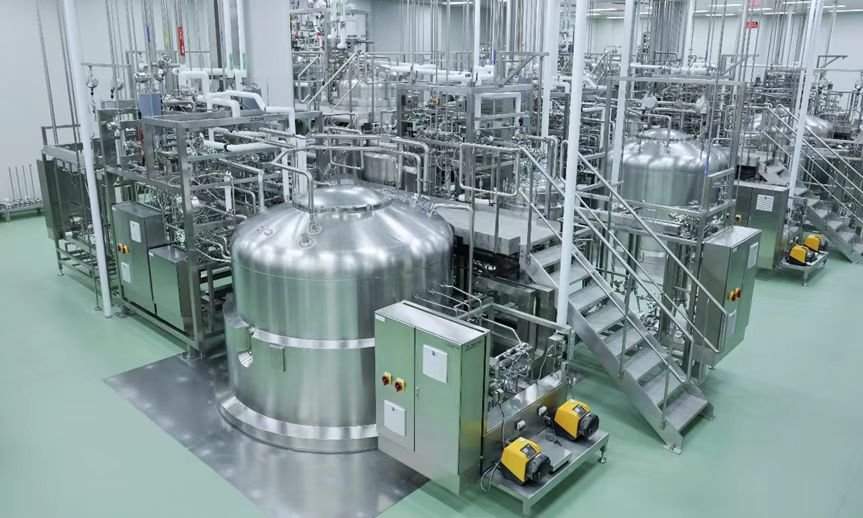

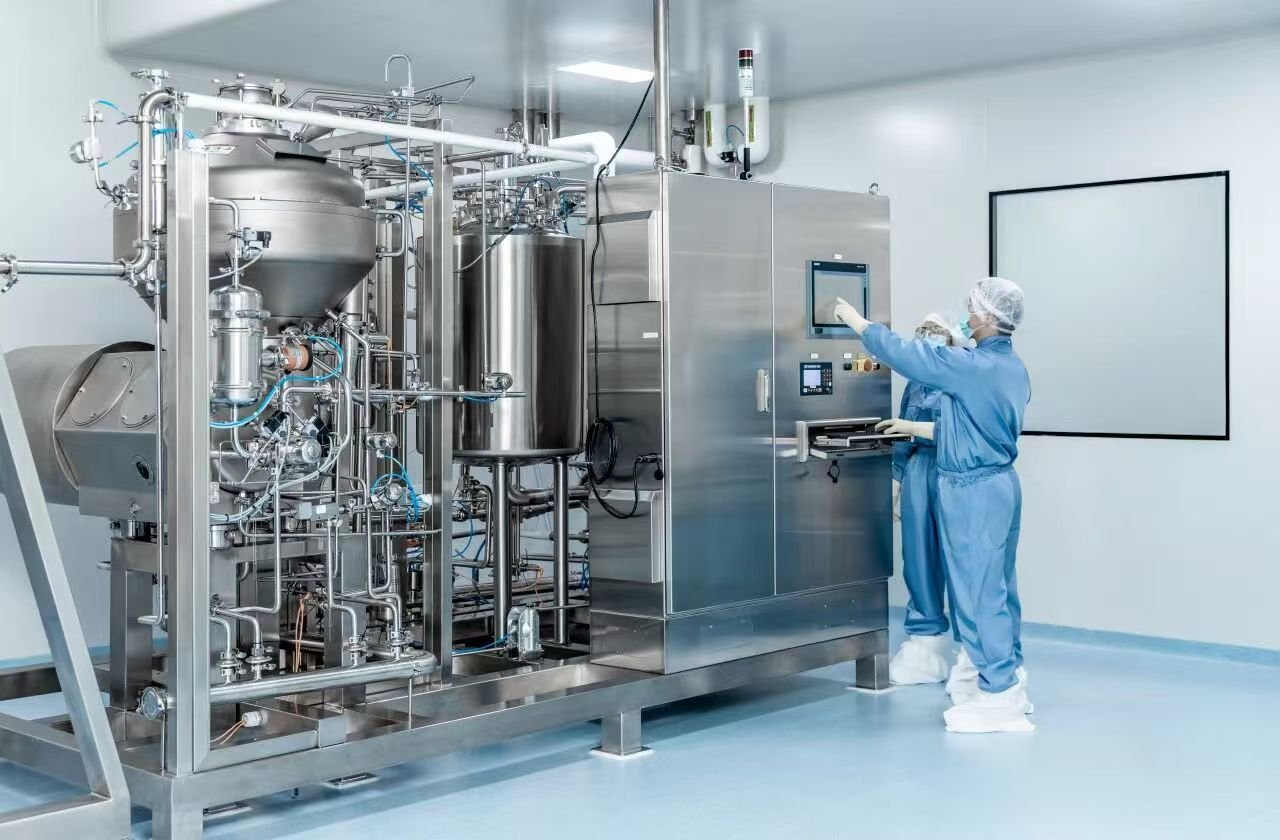
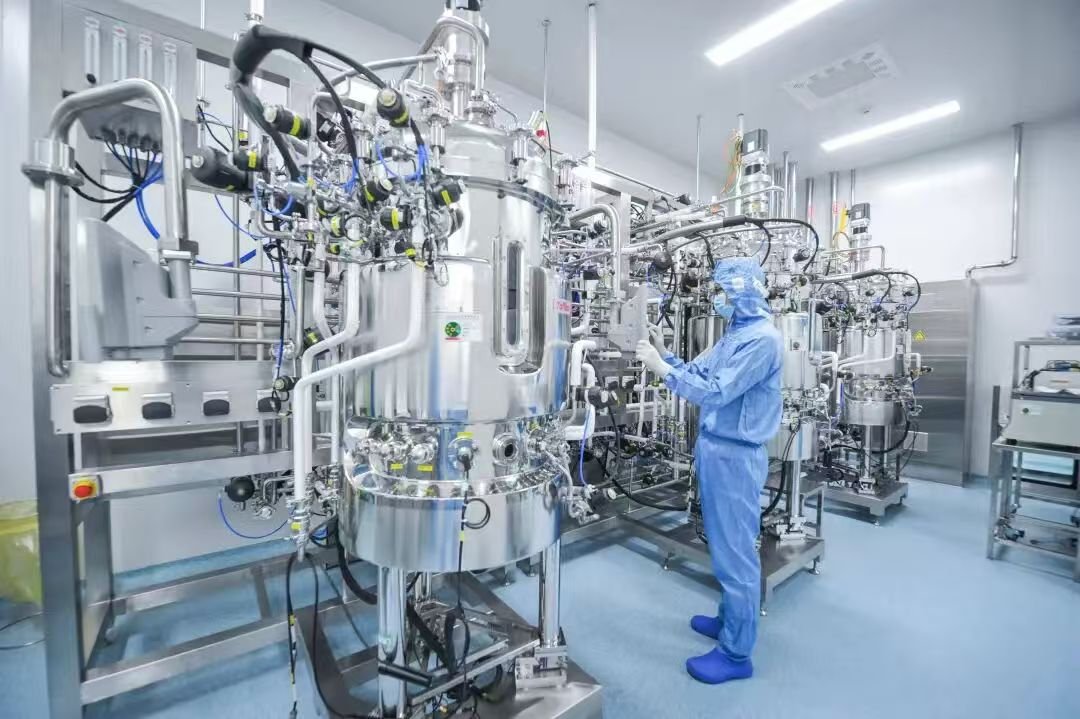
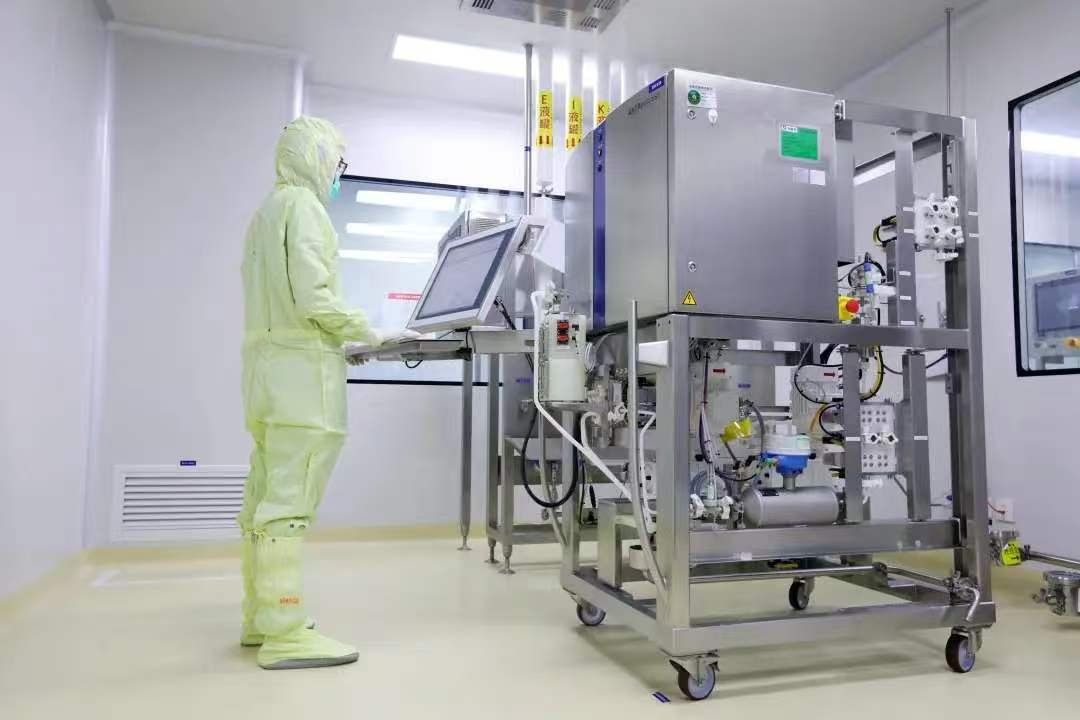
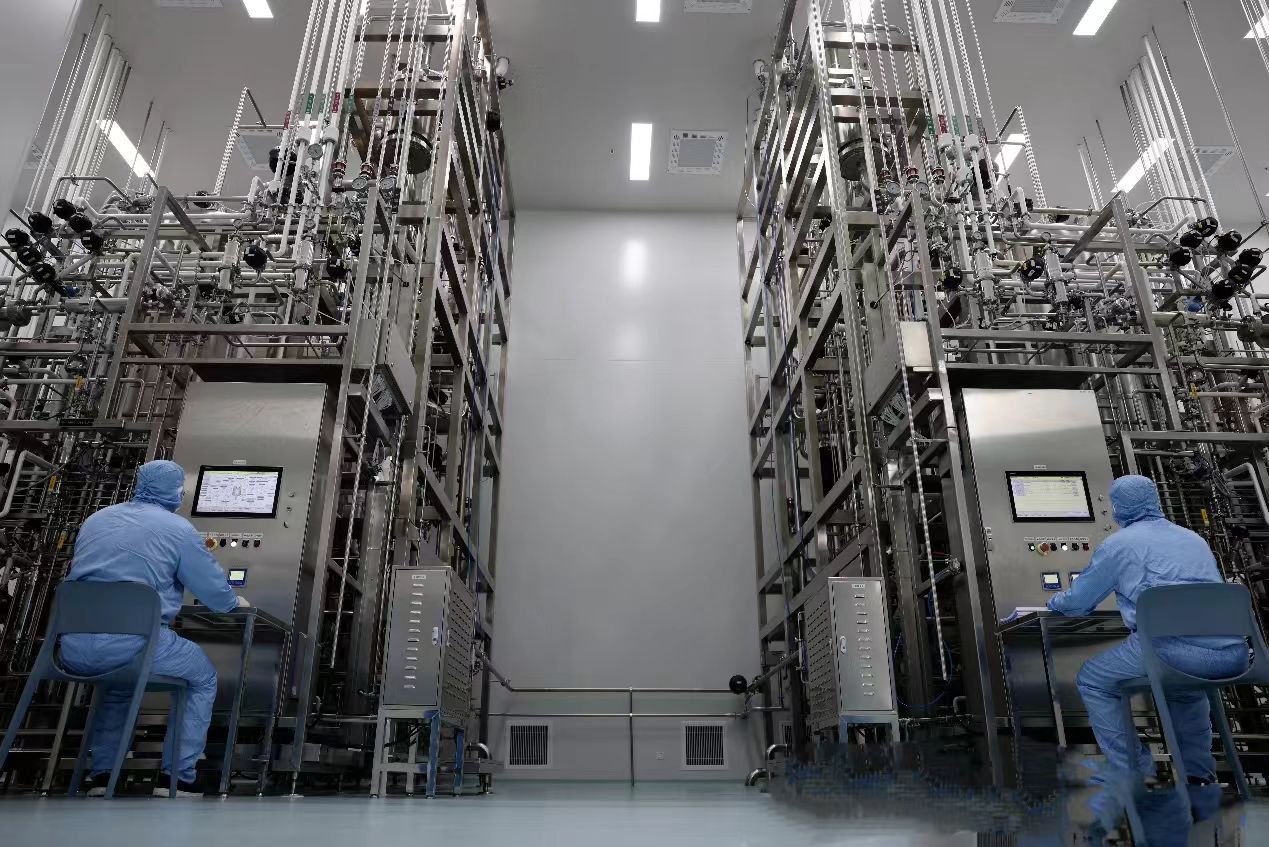
In the modern biopharmaceutical industry, fermentation stands as a cornerstone for manufacturing diverse therapeutic products due to its versatility and high efficiency. It enables the large-scale production of complex biomolecules with excellent adaptability and cost-effectiveness, making it an indispensable technology across the sector. During fermentation process development, scaling-down and scaling-up studies occupy a core position. They are decisive for the smooth transition of processes from laboratory scale to commercial production, as well as for guaranteeing the efficiency, safety and batch-to-batch consistency of final products.
1. Fermentation Process Scaling-Down
Ideally, conducting fermentation experiments directly at the target production scale could completely eliminate problems associated with process scale-up. However, this approach is rarely feasible in practical production due to cost constraints. Large-scale trials consume massive quantities of raw materials and energy, and also result in considerable production downtime. In industrial fermentation, scaling-down itself poses substantial technical challenges.
Small-scale equipment experiments are primarily designed to investigate how variations in process parameters affect overall performance under conditions representative of full-scale production fermenters. Most biotechnological processes are developed around existing production hardware: full-scale fermenters are installed and operated long-term in advance. Accordingly, the scope of available equipment for process development is predefined. This requires laboratory-scale development to focus on maximizing volumetric productivity, which relies on properly scaled-down fermenters that deliver results correlatable with full-scale production.
Small-scale experimentation plays an irreplaceable role in acquiring fundamental process knowledge, driven by demands for cost efficiency, rapid process development and optimization, precise control of critical process parameters (CPPs), seamless technology transfer and shortened time-to-market. Nevertheless, improperly designed small-scale systems may become bottlenecks for subsequent process commercialization, drawing increasing research attention worldwide. Research on miniature fermentation systems is dedicated to two major directions: gaining deeper insights into the engineering fundamentals of small-scale agitation systems and exploring performance improvements, as well as developing novel equipment that serves as reliable analogues of full-scale fermenters.
Practical experience demonstrates that each type of small-scale system offers unique advantages while presenting distinct limitations in cross-scale process development. Shake flasks are widely adopted to screen fermentation conditions such as microbial growth rates and evaluate their impacts on the initial recovery of heterologous proteins. Advances in non-invasive optical sensing technologies and in-depth understanding of engineering principles have further enhanced process characterization and monitoring capabilities for shake flask cultures. With appropriate scale-up criteria established, successful process transfer from shaking systems to stirred-tank bioreactors is achievable.
Most milliliter-scale stirred fermenters are designed to maintain geometric similarity with bench-top bioreactors. This characteristic makes them highly compatible with conventional scale-up methodologies based on constant volumetric power input, impeller tip speed, dissolved oxygen tension (DOT), volumetric oxygen mass transfer coefficient (\(K_La\)) and mixing time.
2. Fermentation Process Scaling-Up
The ultimate goal of process scale-up is to accurately translate the optimal operating parameters defined at laboratory or pilot scale into robust commercial-scale production workflows, so as to achieve maximum volumetric productivity in full-scale fermenters. A series of preparatory tasks must be completed prior to formal scale-up activities, including strain screening and modification, medium formulation adjustment and comprehensive process parameter optimization.
Typically, preliminary strain screening is performed using parallel micro-cultivation devices. After narrowing down candidate production strains, strain characterization and primary parameter optimization are carried out in bench-scale stirred fermenters ranging from 0.5 L to 20 L. In-depth process optimization is then finalized at the pilot scale.
Laboratory and pilot-scale fermenters feature high operational flexibility, supporting diverse fed-batch strategies and straightforward integration of standard sensors. Even so, inherent physical discrepancies between lab/pilot units and large industrial fermenters create major challenges for cross-scale result comparison.
In real industrial settings, fermentation scale-up generally follows empirical iterative workflows rather than rigorous mathematical modeling or designed experiments. Technicians compare process performance data generated in pilot plants with full-scale production results. Scale-up is deemed successful if pilot outcomes are stably reproduced at commercial scale. In case of deviations, additional pilot trials are launched to analyze the effects of extra process variables.
Divergent fluid flow patterns arising from physical differences across scales are the primary cause of scale-related issues. The broth in laboratory fermenters approximates a perfectly mixed system, whereas large-scale fermenters require several minutes to reach 95% homogeneity. Insufficient mixing leads to localized oxygen depletion. Furthermore, large-scale cultivation commonly generates gradients of glucose concentration, pH and temperature. Such inhomogeneous microenvironments profoundly affect biomass growth and represent core challenges for fermentation scale-up.
The Reynolds number (Re) is a key indicator reflecting differences in fluid flow regimes across scales. For fermenters with identical geometric proportions and equal volumetric power input, the broth in full-scale units operates under turbulent flow, while laboratory-scale systems fall into transitional or laminar flow regimes. Variations in mixing characteristics further induce disparities in mass and heat transfer. In particular, oxygen transfer into the broth and carbon dioxide removal are critical to cultivation performance.
The volumetric oxygen mass transfer coefficient (\(K_La\)) is widely adopted as a core scale-up parameter, requiring consistent \(K_La\) values across all scales. Other vital parameters include oxygen transfer rate (OTR), volumetric power input (\(P/V\)) and superficial gas velocity (\(V_g\)). Since it is practically impossible to maintain all parameters constant during scale transition, reasonable compromises must be made. To achieve high volumetric power input in small fermenters, agitators run at higher rotational speeds, which in turn generates elevated shear rates within miniature vessels.
3. Mass Transfer in Fermentation Systems
Mass transfer is a critical performance criterion for high-biomass fermentation processes, governing the distribution of oxygen and nutrients as well as the elimination of toxic metabolites. The definition of “high biomass” is relative and highly dependent on the specific microbial host employed.
Mass transfer consists of multiple sub-processes strongly influenced by broth viscosity. Broth rheology is closely correlated with biomass concentration and the morphological characteristics of production strains. The intricate interplay among these variables greatly complicates both process scaling-up and scaling-down.
Agitation and aeration are indispensable for nearly all fermentation and cell culture processes to ensure sufficient oxygen supply. However, mechanical agitation may alter microbial morphology and subsequently impair target product formation. The shear sensitivity of host organisms must be fully considered in aerated stirred-tank fermenters.
Bacteria and yeast generally exhibit strong resistance to mechanical stress. Their tiny cell size makes them smaller than the Kolmogorov turbulent microscale, so their morphology remains largely unaffected by mixing. Notably, although biomass concentration tends to decrease after scale-up, cell viability may improve. This phenomenon is attributed to heterogeneous environmental conditions within large-scale fermenters.
A major challenge is to decouple multiple influencing factors and correlate productivity changes with actual microenvironments, such as balancing concentration gradients in culture broth and intracellular gradients, as well as reconciling higher OTR under low viscosity with enhanced cell growth and protein secretion at elevated biomass densities.
4. Process Monitoring and Control
Industrial fermenters are normally equipped with only limited sensors for pH, dissolved oxygen (DO) and temperature. These sensors are installed at fixed positions inside large-volume vessels, where concentration gradients inevitably exist. While the measured average values can reflect overall process status, they provide minimal information regarding spatial heterogeneity within the fermenter.
Proportional-Integral-Derivative (PID) controllers are the standard tool to keep controlled variables near setpoints or predefined profiles. However, conventional PID control cannot always maintain optimal fermentation performance, as setpoints are only calibrated for nominal operating conditions. Disturbances such as fluctuations in raw material quality, moisture content and ambient temperature necessitate dynamic setpoint adjustment, namely advanced process monitoring and optimization.
Under compliance with Good Manufacturing Practice (GMP), soft sensing serves as an effective approach to improve the quality of online sensor data. It performs synchronous computational analysis on available real-time data to enhance data reliability and predictive capability. Robust, delay-free online measurements from soft sensors can be used to calculate expected values of secondary control parameters. Moreover, soft sensing is widely applied in industrial production under the frameworks of Quality by Design (QbD) and Process Analytical Technology (PAT), enabling real-time in-line process monitoring.
Computational Fluid Dynamics (CFD) has gained extensive attention for its powerful predictive capacity, with continuously improving accuracy for simulations across laboratory, pilot and full-scale fermentation. CFD models have become powerful tools for evaluating mixing time, mass transfer efficiency, shear stress distribution and dead volume. Such numerical simulations streamline experimental design and reduce trial workloads: fermenter geometry and operating strategies (e.g., fed-batch protocols) with unsatisfactory performance predicted by CFD can be eliminated from experimental plans in advance. CFD also facilitates analysis of uneven distribution of key components including biomass, substrates and target products.