
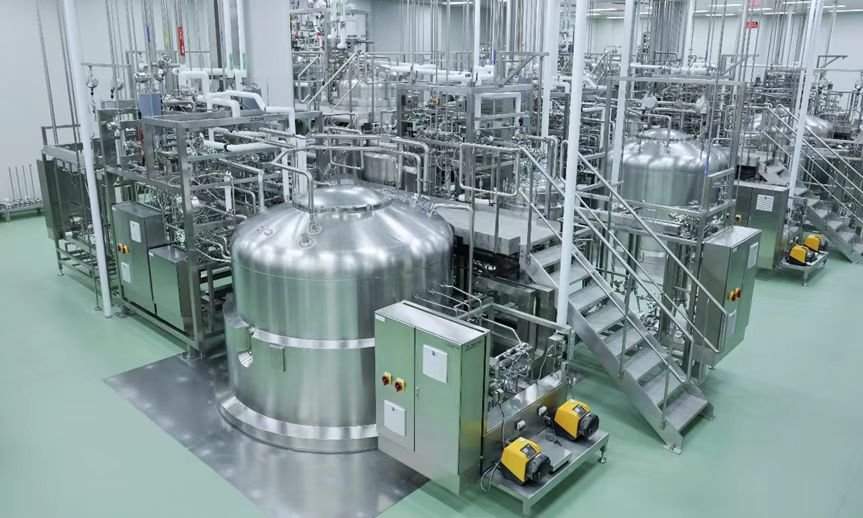

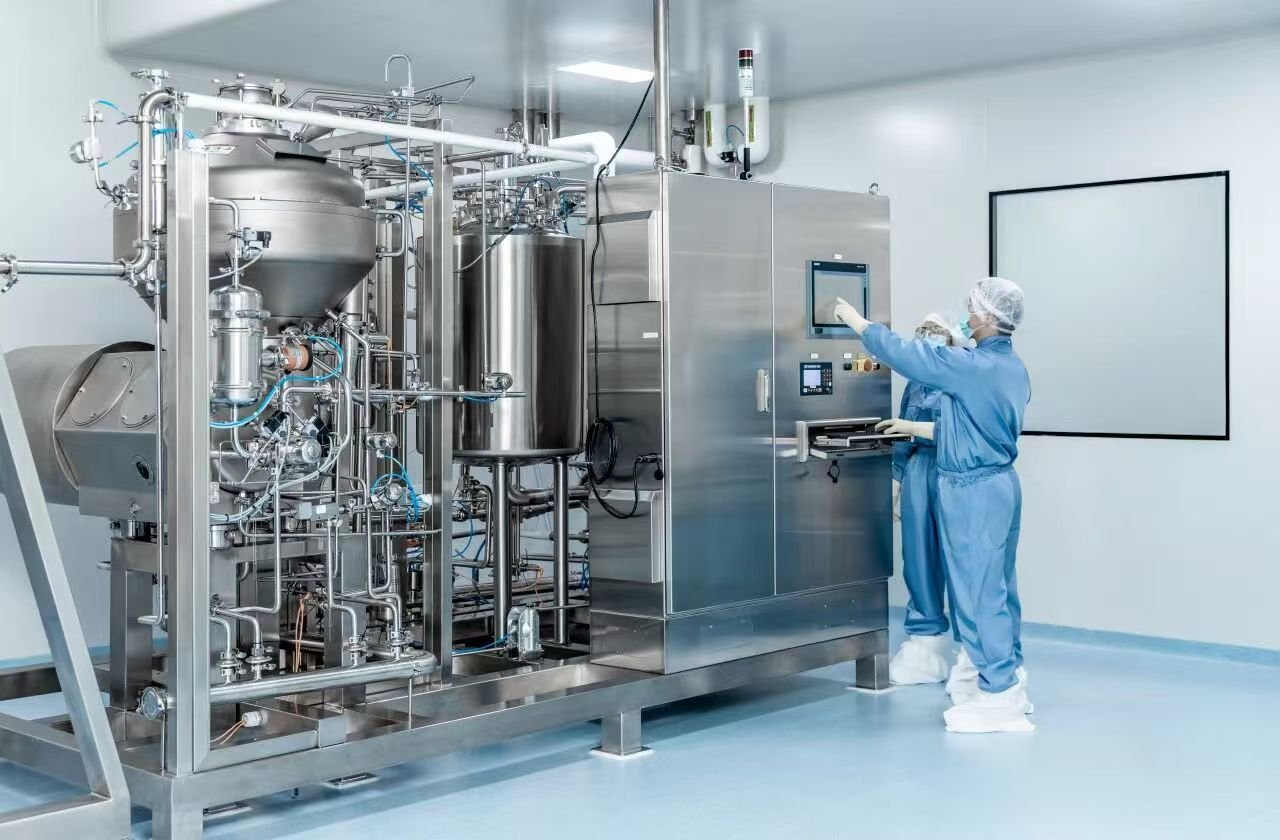
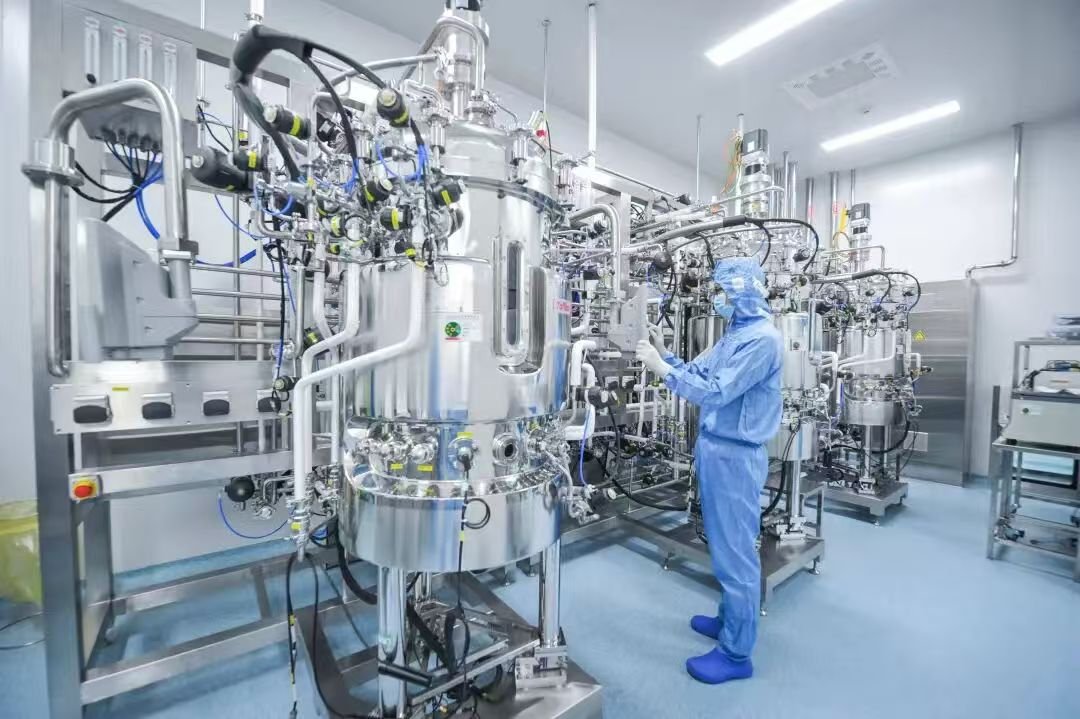
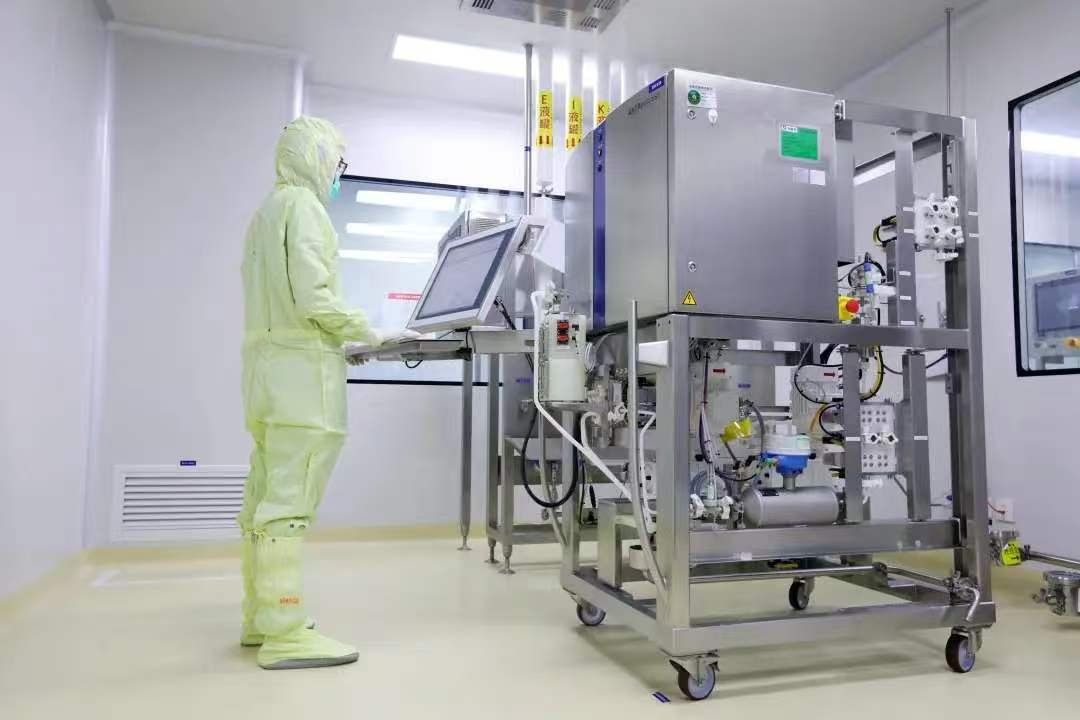
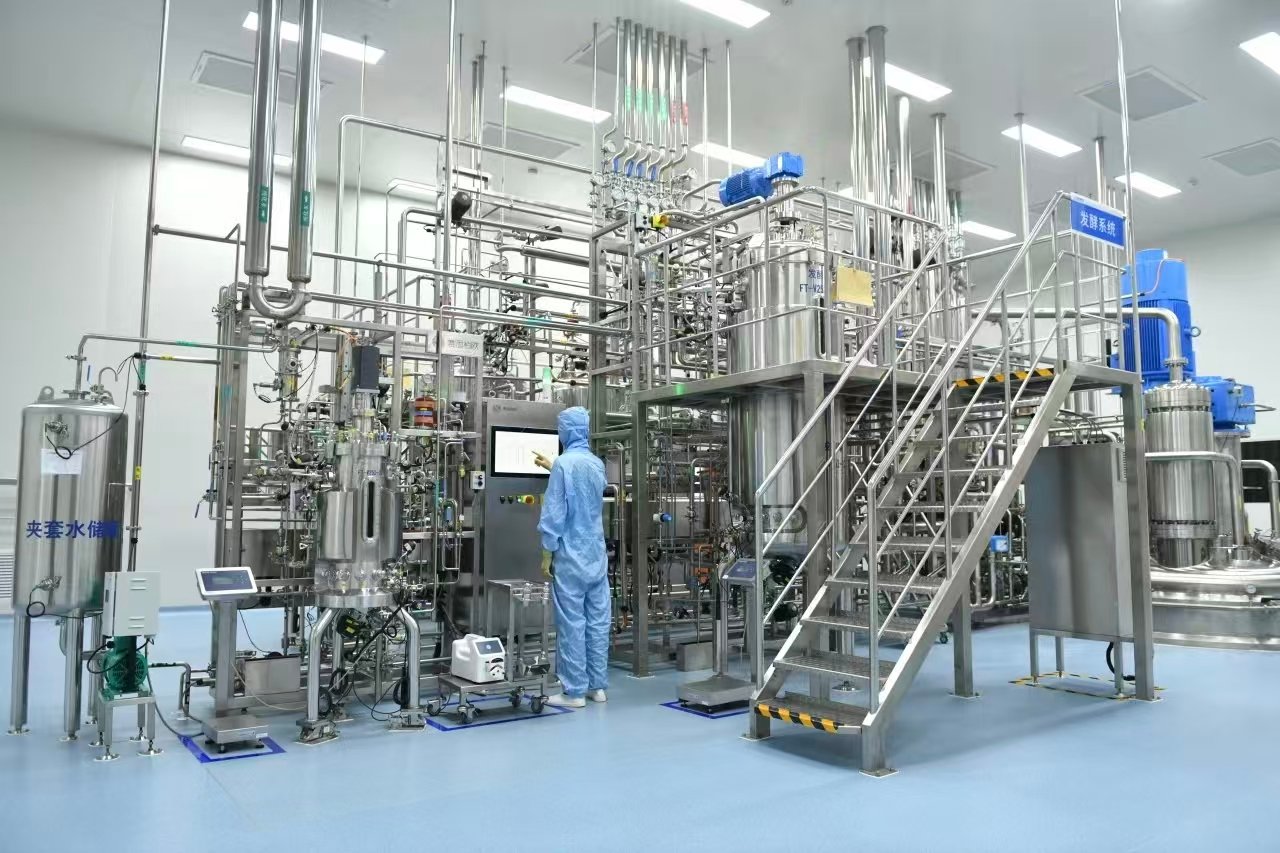
Biopharmaceutical downstream processing has long been constrained by the bulky infrastructure, excessive resin consumption, and large facility footprint inherent to traditional batch chromatography workflows. As biomanufacturing shifts toward process intensification, flexible production, and sustainable operation models, continuous chromatography has emerged as a transformative solution to reshape downstream purification layouts. This article systematically analyzes the spatial optimization mechanisms of continuous chromatography, compares its structural and operational advantages with conventional batch systems, and elaborates on how multi-column cyclic operation, full resin capacity utilization, and streamlined unit operations minimize equipment footprint, reduce auxiliary facility demands, and compress overall production space. Combined with industrial application data and practical cases, this paper further discusses the practical value, technical scalability, and implementation prospects of continuous chromatography in footprint reduction, providing technical references for compact, high-efficiency, and low-carbon downstream biomanufacturing layout optimization.
1.Introduction
Downstream purification serves as the core link determining the yield, purity, and production cost of biopharmaceutical products, including monoclonal antibodies, recombinant proteins, and enzymes. Traditional downstream processes rely heavily on single-column batch chromatography, which features independent and discontinuous unit operations, substantial idle time of chromatographic media, and low utilization efficiency of resin binding capacity. To meet large-scale production demands, batch workflows require oversized chromatographic columns, massive resin reserves, and supporting auxiliary equipment such as buffer tanks, pipeline systems, and column packing devices, resulting in a huge facility footprint and high infrastructure investment costs.
In recent years, the biopharmaceutical industry has accelerated the transformation from traditional batch manufacturing to continuous and intensified production, with compact factory layout and space-efficient process design becoming key development indicators of modern biomanufacturing. Continuous chromatography, represented by Periodic Counter-Current Chromatography (PCC) and multi-column continuous purification systems, breaks through the technical bottlenecks of batch chromatography through cyclic switching and parallel operation of multiple small-volume columns. It not only improves purification efficiency and product yield but also fundamentally optimizes downstream spatial layout by minimizing redundant equipment and ineffective space occupation. This paper focuses on the spatial optimization advantages of continuous chromatography, explores its core working principles, practical optimization effects, and industrial application value in downstream process space compression.
2.Spatial Pain Points of Traditional Batch Chromatography Downstream Layout
The oversized space occupation of traditional batch downstream purification is rooted in the inherent defects of discontinuous process operation and inefficient resource utilization, which are mainly reflected in three dimensions: equipment scale, resin consumption, and facility supporting space.
First, batch chromatography adopts a single large-volume column for one-time loading, washing, elution, and regeneration. Limited by the discontinuous operation mode, each chromatographic column needs to be equipped with independent buffer storage, pipeline delivery, and detection systems. Meanwhile, to cope with peak production capacity requirements, enterprises often configure oversized columns and standby equipment, leading to massive idle equipment space. Second, the resin utilization rate of batch processes is extremely low. Traditional single-column operation cannot fully utilize the dynamic binding capacity of resins, and a large amount of resin binding sites remain unused in each cycle. To ensure purification efficiency and production stability, manufacturers need to reserve excessive resin materials and large-scale resin storage space, further expanding the production footprint.
Third, the batch process features scattered unit operations and long process cycles. Each purification step is independent, requiring separate operation platforms and transition buffer zones. The discontinuous material transfer leads to redundant pipeline layout and idle operation space. In addition, frequent column packing, resin cleaning, and equipment maintenance in batch production require dedicated operating channels and auxiliary working areas, further increasing the overall footprint of the downstream workshop. Statistically, traditional batch downstream purification systems usually occupy more than 70% of the total biomanufacturing workshop space, with low space utilization efficiency and high unit product space cost.
3.Core Mechanisms of Continuous Chromatography for Downstream Space Optimization
Continuous chromatography realizes continuous feeding, cyclic purification, and synchronous regeneration through the collaborative switching of multiple small-volume chromatographic columns. Its unique operational logic and process design fundamentally solve the spatial waste problem of batch processes, and its space optimization advantages are mainly derived from three core mechanisms.
3.1 Full Utilization of Resin Capacity to Reduce Media and Column Scale
The biggest advantage of continuous chromatography lies in the full exploitation of resin dynamic binding capacity. Different from batch columns that stop feeding after reaching partial saturation, multi-column continuous systems can capture the breakthrough stream of one column through subsequent columns, realizing 100% effective utilization of resin binding sites. Industrial verification data shows that continuous chromatography can reduce resin consumption by up to 80% compared with traditional batch processes under the same production capacity. The sharp reduction in resin demand allows the replacement of large-volume single columns with multiple miniaturized columns. While ensuring stable production capacity, it greatly reduces the volume and occupied space of chromatographic main equipment, eliminating the space waste caused by oversized column configuration in batch processes.
3.2 Cyclic Continuous Operation to Eliminate Idle Equipment Space
In batch chromatography, equipment is in a long-term idle state during resin regeneration, buffer replacement, and product elution stages, and a large number of standby equipment and transition spaces are required to ensure continuous production. Continuous chromatography realizes seamless switching of loading, washing, elution, and regeneration through program-controlled multi-column cyclic operation. Each column undertakes different process links in an orderly manner, and the entire purification line maintains a continuous working state without equipment idle time. This synchronous operation mode eliminates the demand for standby chromatographic columns and redundant buffer supporting equipment, realizing the intensive integration of main and auxiliary equipment and greatly compressing invalid operating space.
3.3 Streamlined Process Integration to Simplify Spatial Layout
Continuous chromatography can be tightly coupled with upstream perfusion bioreactors and inline conditioning systems to realize end-to-end continuous downstream purification. It cancels the intermediate material storage, transfer buffering, and repeated detection links required by batch processes, simplifying the complex pipeline layout and scattered operation platforms. The integrated process design centralizes all purification units in a compact system, reducing the occupied area of auxiliary facilities such as material transition zones and equipment maintenance channels. At the same time, the automated centralized control system of continuous chromatography reduces the space occupied by manual operation stations, further improving the compactness of the downstream workshop layout.
4.Practical Spatial Optimization Effects and Industrial Data Verification
A large number of industrial application cases and experimental data have verified the significant space optimization value of continuous chromatography in downstream biomanufacturing. Compared with traditional batch purification lines, continuous chromatography systems can achieve comprehensive compression of equipment footprint, workshop space, and supporting facilities while maintaining consistent product purity and yield.
In monoclonal antibody purification scenarios, the traditional batch process requires an 88.20 mL large-volume chromatographic column to meet the set production capacity, with supporting buffer tanks and auxiliary equipment occupying a huge area. After switching to a multi-column continuous chromatography process, the column volume can be reduced by 11.22 times, and the overall equipment footprint of the purification line is reduced by more than 60%. In the purification of low-titer enzymes and unstable biomolecules, continuous chromatography shortens the process cycle through high-frequency cyclic operation, avoids product degradation caused by long-term residence, and further reduces equipment scale and space occupation by improving unit time production efficiency.
From the perspective of overall workshop layout, the intensified continuous downstream system integrates chromatography, ultrafiltration, inline dilution, and other unit operations into a compact modular platform. Compared with the scattered layout of batch processes, the overall workshop footprint can be reduced by 50%–70%. In addition, the reduction of resin consumption and equipment scale also reduces the demand for storage space, maintenance space, and safety protection space, realizing full-link space optimization from main equipment to auxiliary facilities. For small-batch, multi-variety flexible production scenarios, the miniaturized modular design of continuous chromatography systems can further adapt to flexible layout adjustments, avoiding the space waste caused by fixed oversized batch production lines.
5.Application Challenges and Optimization Prospects
Although continuous chromatography has significant advantages in downstream space optimization, its large-scale industrial promotion still faces certain challenges. First, multi-column cyclic operation puts forward higher requirements for system automation control, pipeline switching accuracy, and real-time monitoring capability, requiring supporting digital control systems and professional operation and maintenance teams. Second, the modular integrated design of continuous equipment increases the difficulty of equipment debugging and process verification in the initial stage, and enterprises need to carry out targeted process development and validation work.
With the continuous maturity of process intensification technology and digital biomanufacturing systems, the spatial optimization potential of continuous chromatography will be further released. The emerging miniaturized 3D-printed continuous chromatography systems can further reduce system dead volume and equipment size, realizing ultra-compact purification layout. In addition, the deep integration of continuous chromatography with intelligent monitoring and automatic adjustment technology will realize adaptive optimization of process parameters and equipment layout, further improving space utilization efficiency. In the future, continuous chromatography will become the core technology for building compact, efficient, and low-carbon biomanufacturing factories, helping the industry reduce infrastructure investment and realize green and intensive development.
6.Conclusion
Traditional batch chromatography downstream processes suffer from low resin utilization, scattered equipment layout, and serious idle space occupation, which restrict the intensive and high-efficiency development of biomanufacturing. Continuous chromatography optimizes downstream spatial layout fundamentally through full resin capacity utilization, seamless cyclic operation, and integrated streamlined process design. It achieves significant reductions in equipment scale, resin consumption, and workshop footprint, while improving production efficiency and product yield. Industrial practice proves that continuous chromatography is an effective technical means to solve the spatial bottleneck of downstream purification.
As the biopharmaceutical industry continues to advance process intensification and sustainable production transformation, continuous chromatography will gradually replace traditional batch processes and become the mainstream layout scheme for downstream purification. Its unique space optimization advantage not only reduces enterprise production costs and workshop construction investment but also provides strong technical support for the construction of flexible, compact, and intelligent modern biomanufacturing systems.