
Against the backdrop of the rapid development of the global biopharmaceutical industry, innovative therapies are entering clinical practice and the market at an unprecedented pace. From monoclonal antibodies and recombinant proteins to cell and gene therapies, biopharmaceuticals are continuously pushing the boundaries of human responses to major diseases. Meanwhile, the market and regulatory environment have imposed higher requirements on production efficiency, product quality, and cost control. How to bring new therapies to market faster and more efficiently while ensuring safety and consistency has become a core challenge shared by biopharmaceutical enterprises.
Biologics themselves are highly complex, with structures and functions extremely sensitive to production conditions. Any slight process fluctuation can exert a profound impact on the quality, yield, and even stability of the final product. Therefore, compared with traditional small-molecule drugs, biopharmaceuticals demand stricter controllability and reproducibility of production processes. To achieve stable and scalable production workflows, the industry has continuously invested substantial resources in optimizing upstream and downstream processes, such as cell line development, optimization of bioreactor control strategies, and improvements in chromatography and purification processes.
Throughout the biopharmaceutical production workflow, culture media and buffers serve as fundamental elements supporting process operations. For instance, culture media directly determine cell growth status, metabolic levels, and the expression of target proteins, making their “correct” preparation critical. Nevertheless, compared with core upstream and downstream unit operations, this basic link has long been regarded as a “mature auxiliary process that requires little attention”. In fact, this perception is clearly biased. Culture media and buffers feature complex compositions, and their preparation involves multiple raw materials, ratio control, and dissolution steps; fluctuations in their inputs can easily be amplified in subsequent processes. Without strict control, this will inevitably lead to variations in product quality and yield. Thus, eliminating uncertainties in solution preparation is an important prerequisite for building a stable and efficient biopharmaceutical production process.
At present, many biopharmaceutical enterprises still mainly rely on the traditional hydration method of powdered culture media and buffer salts for liquid raw material preparation. Although this method has been used in the industry for many years, its limitations have become increasingly prominent. First, the traditional hydration process is highly dependent on manual operation, with cumbersome procedures, high labor intensity, and long time consumption. Second, manual weighing, feeding, and mixing processes are prone to introducing batch-to-batch variations, which are known sources of process deviations. In addition, powder handling may also pose safety and compliance risks such as dust exposure and cross-contamination. Consequently, the industry is gradually exploring new technical approaches to solution preparation to reduce human intervention and enhance process controllability.
With the maturity of automation technologies and single-use systems, an increasing number of manufacturers have introduced solutions such as in-line dilution and in-line conditioning in solution preparation. These technologies enable precise proportioning, pH, and conductivity adjustment in closed systems, thereby reducing uncertainties caused by human operations. Even so, the hydration of powdered raw materials remains an unavoidable key step, whose efficiency and stability still directly affect the overall production rhythm. The rapid development of the biopharmaceutical industry has made any process link that may trigger fluctuations no longer a “secondary issue”. Against the backdrop of pursuing higher productivity, shorter production cycles, and lower costs, the long-overlooked link of solution preparation is gradually showing great optimization potential. By introducing more advanced preparation concepts and technical means, enterprises can not only reduce process input fluctuations but also lay a solid foundation for achieving end-to-end process consistency.
This article will focus on the current status of solution preparation (especially culture media preparation) in the biopharmaceutical industry, systematically sort out the challenges it faces, and explore innovative strategies expected to improve the efficiency and reliability of this key link, providing new insights for building a more robust and efficient biopharmaceutical production system.
From “Formula Selection” to “Process Leverage”: Why Culture Media Determine the Production “Ceiling”
In biopharmaceutical production, cell culture media are among the fundamental elements supporting the entire process. Culture media not only provide the nutritional environment required for cell growth and metabolism but their composition and formula design also directly influence cell growth status, target product expression levels, and final product quality. Therefore, selecting an appropriate and stable culture medium formula is a key prerequisite for ensuring efficient, reproducible, and scalable processes.
Over the past few decades, the industry has developed a variety of high-performance culture media, which have been widely used in R&D and production in commercialized forms. With the deepening understanding of cell metabolic mechanisms and nutritional requirements, culture media development has gradually evolved from “universal solutions” to “customized formulas”. By optimizing formulas for specific cell lines and production objectives, enterprises can not only achieve higher yields but also reduce nutritional waste, delivering better performance in cell growth consistency and product quality stability.
In recent years, one of the most representative changes in the field of cell culture has been the industry’s strategic shift toward chemically defined culture media systems. Compared with traditional media containing hydrolysates or complex additives, chemically defined media eliminate issues of unclear component sources and batch variations, significantly improving the stability and controllability of the media themselves. This transition not only helps enhance cell line performance but also lays the foundation for the standardization and compliance of production processes.
Within the framework of chemically defined formulas, culture media developers can finely regulate key components such as amino acids, vitamins, inorganic salts, and trace elements, thereby systematically optimizing cell metabolic pathways. This precise design makes platform culture media more conducive to achieving batch consistency, providing a more stable and economical solution for the large-scale production of therapeutic biologics.
However, alongside the gradual maturity of high-performance culture media formulas, an often underestimated issue has emerged: formula advantages do not necessarily translate into production advantages. In actual production, culture media are usually stored and transported in powder form, and their final performance is highly dependent on subsequent preparation and hydration processes. Insufficient dissolution efficiency, uneven mixing, local concentration deviations, and human operational variations can all undermine the effects of carefully designed formulas, and even become potential sources of process fluctuations. With the continuous expansion of production scales and rising requirements for consistency, stably and reproducibly converting “excellent formulas” into “high-quality liquid culture media” has gradually become a key challenge limiting the full realization of culture media value, posing new topics for subsequent process and technological innovation.
The Trade-off Logic Between Liquid and Powdered Culture Media
In biopharmaceutical R&D and production, choosing between liquid and powdered culture media has always been a critical decision requiring comprehensive trade-offs. Each form has its own advantages, suitable for different application scenarios, and reflects enterprises’ different priorities in terms of scale, cost, flexibility, and risk management. For commercial production requiring large-scale, continuous supply of culture media, powdered culture media are often a more attractive option.
The most significant advantage of powdered culture media lies in logistics and storage. By removing water, the weight and volume of culture media are greatly reduced, cutting transportation costs and simplifying handling and storage. Meanwhile, powdered culture media are relatively less sensitive to temperature conditions and typically do not rely on cold-chain transportation or strict environmental control like liquid media. This characteristic grants them greater flexibility in multi-region and multi-plant layouts. In addition, powdered culture media usually have a longer shelf life, allowing enterprises to purchase and stock raw materials in advance with appropriate facilities, mitigating risks from supply chain fluctuations, surging demand, or emergencies.
Nevertheless, powdered culture media are not the optimal solution in all scenarios. As hygroscopic powders, they have high requirements for packaging integrity and storage environments; once damp, product quality may be compromised. Furthermore, powdered culture media must undergo hydration and preparation before use, a process that is not only time- and labor-consuming but also demands higher operational standardization. In contrast, liquid culture media are often more convenient in scenarios with low culture media demand, short production cycles, or high flexibility requirements, such as early drug R&D, process development stages, or personalized therapy applications like cell and gene therapies. Their ready-to-use nature reduces pre-treatment steps and operational complexity, offering higher efficiency and cost-effectiveness without the need for long-term storage.
In the current market environment, with the approach of patent cliffs, intensified competition from biosimilars, and mounting cost pressures, an increasing number of drug R&D and production enterprises are re-evaluating the impact of culture media forms on overall economics. With significant cost and supply advantages, powdered culture media are still regarded as a highly promising solution, but their value is somewhat limited by the resource input required for the preparation process. It is against this backdrop that the introduction of automation and single-use technologies has provided new possibilities for solving the problem of “formula advantages of powdered culture media being difficult to fully translate into production advantages”.
How Technologies Reshape Culture Media Preparation Methods
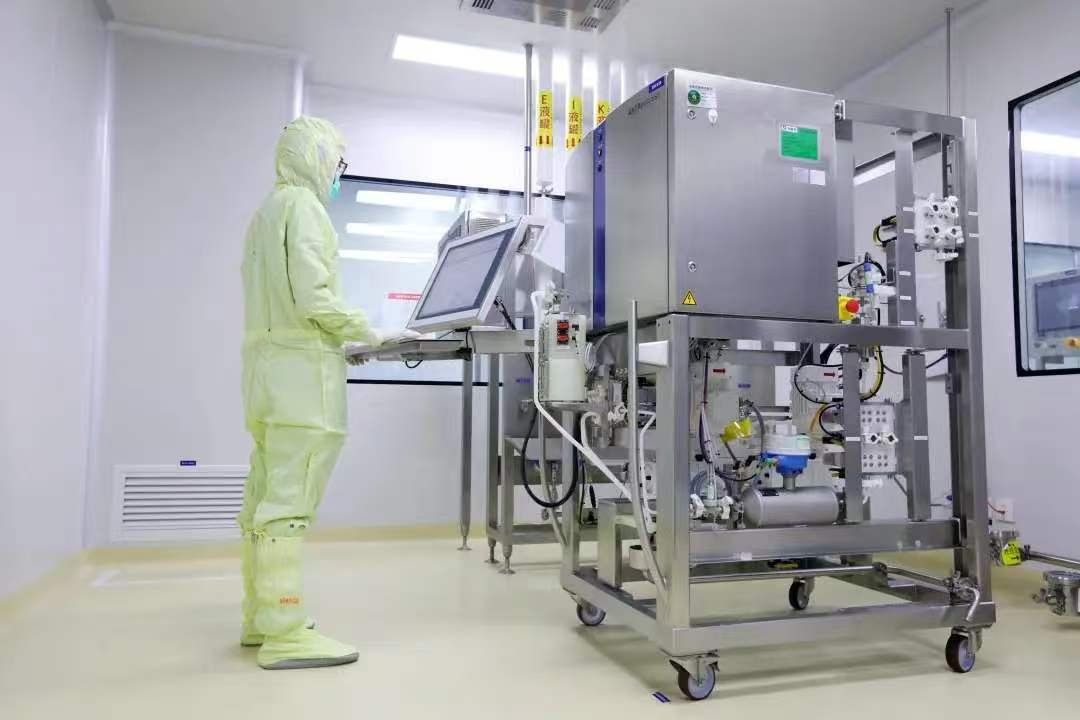
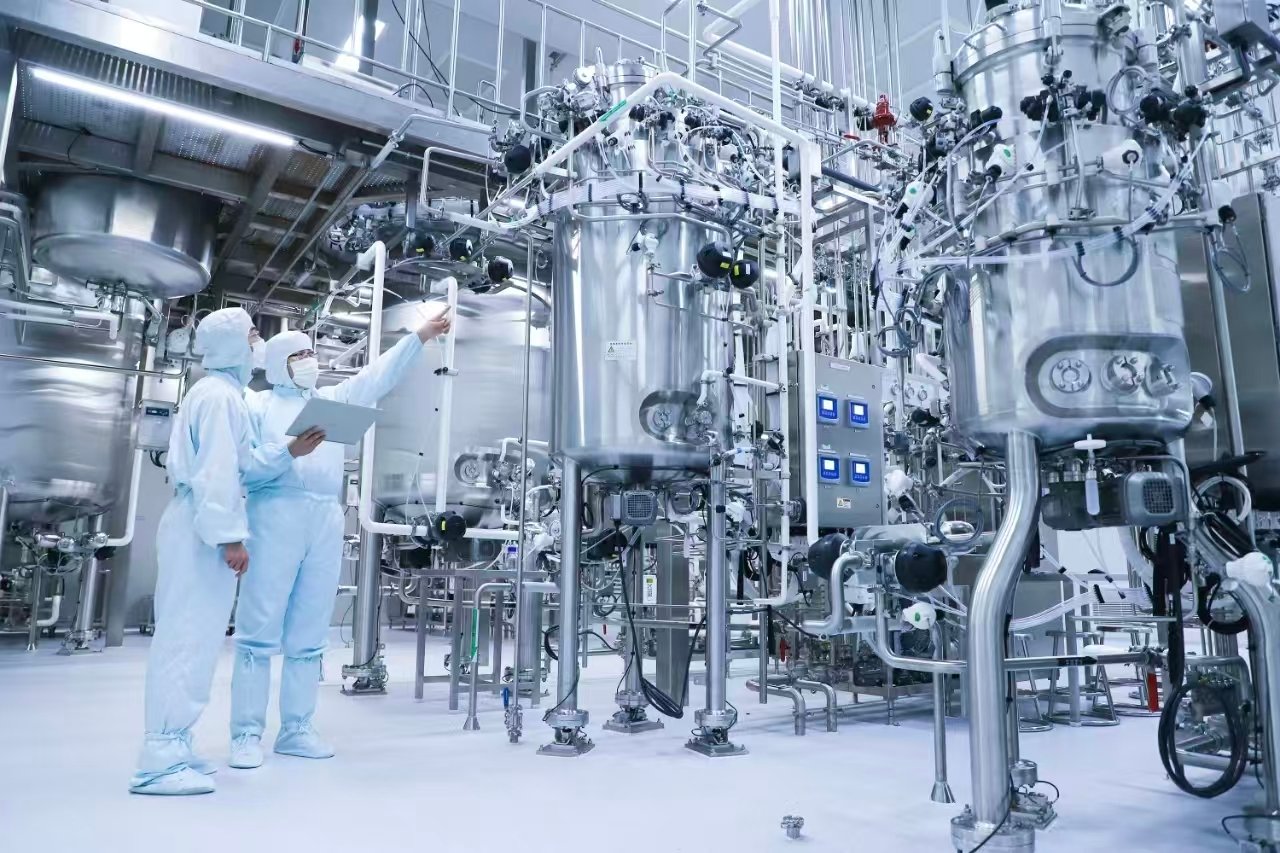
Faced with the labor-intensive, time-consuming, and fluctuation-prone nature of traditional powdered culture media hydration processes, automated culture media hydration has gradually become an important technical path driving process transformation. By integrating key steps such as weighing, feeding, mixing, hydration, and parameter control into closed and controllable systems, automation technologies enable culture media to be prepared faster and with higher consistency, providing a more reliable process foundation for modern biopharmaceutical production. One of the most direct benefits brought by automated culture media hydration is the significant reduction in reliance on manual labor. In addition to substantially cutting labor costs, automated systems can also significantly shorten preparation time, freeing operators from repetitive, low-value-added tasks to focus on more strategically significant work such as process optimization and quality management. Meanwhile, reduced human intervention lowers the probability of human errors, ensuring high consistency in culture media preparation across different batches and operators. This consistency is particularly critical for subsequent process scale-up and commercial production.
Developing in parallel with automation technologies is the widespread application of single-use technologies (SUT) in bioprocessing. In the field of culture media preparation, SUT helps users more stably control process input conditions through pre-validated consumables and standardized components. This input consistency is crucial for enterprises seeking seamless process transfer between laboratories, development workshops, and production workshops. If the preparation conditions of culture media, feed solutions, or buffers cannot be stably replicated at different scales, any process improvement will be difficult to truly implement.
Notably, the combination of automation and SUT also offers new solutions for the sustainable development of biomanufacturing. More efficient and stable preparation workflows can reduce the consumption of water, electricity, and cleaning chemicals, thereby lowering the overall environmental burden. In addition, by improving plant operational efficiency and increasing annual batch numbers, enterprises can achieve higher output with the same infrastructure, indirectly reducing the carbon footprint per unit product. Coupled with structured sustainability initiatives such as waste and energy recovery, technological innovation is helping the biopharmaceutical industry move toward a greener and more responsible direction while enhancing productivity.
Conclusion
Powdered culture media remain the primary physical form of cell culture media in biopharmaceutical production, with their lightweight, stable, and easy-to-store characteristics granting them significant advantages in large-scale commercial production. However, the process of converting powdered culture media into liquid form is still time-consuming, labor-intensive, and susceptible to human variations, which directly affects cell growth, yield stability, and product quality consistency. Therefore, developing rapid and stable preparation methods for powdered culture media is essential to ensuring the reproducibility and reliability of biopharmaceutical processes. As the industry’s requirements for efficiency and stability continue to rise, introducing automation and single-use technologies to compensate for the shortcomings of traditional hydration workflows has become a key path to improving overall productivity, and will continue to drive biopharmaceutical manufacturing toward greater efficiency and sustainability.
As a leading process-oriented engineering company, Sino Bioengineering delivers professional bioengineering solutions and comprehensive technical services to clients worldwide.
For more products and solutions: https://sinobioengg.com/category/solution/
For more service: https://sinobioengg.com/category/service/