

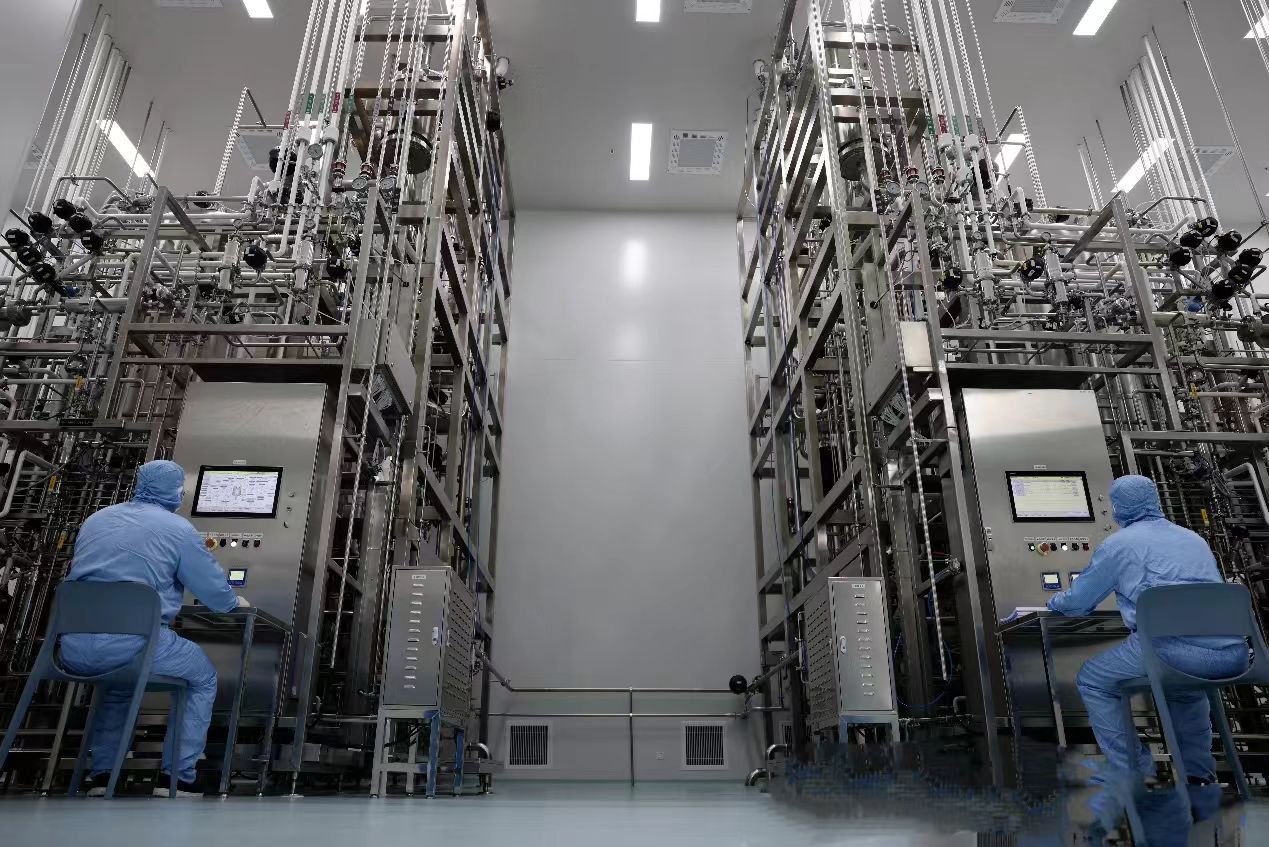
Batch variance remains one of the most persistent and costly challenges in biomanufacturing, directly impacting product yield, purity, consistency, and regulatory compliance. Subtle deviations in bioreactor operating parameters, manual operation inconsistencies, disjointed process sequencing, and unstandardized recipe management often lead to significant batch-to-batch differences in microbial growth, metabolite production, and final bioproduct quality. As a globally recognized batch control standard developed by the International Society of Automation (ISA), ISA-88 (S88) establishes a unified, modular, and hierarchical framework for batch process modeling, equipment management, and recipe execution. This article analyzes the root causes of bioreactor batch variance, elaborates on the core technical advantages of ISA-88 compliant control systems, and demonstrates how standardized process architecture, decoupled recipe-equipment management, consistent state transition logic, and full-process traceability effectively eliminate batch discrepancies. Combined with industrial application practices, this paper further verifies that ISA-88 compliance is an indispensable foundation for stable, scalable, and compliant bioreactor batch production.
1.Introduction: The Plague of Batch Variance in Bioreactor Manufacturing
Bioreactor batch processes are the core of biopharmaceutical production, microbial fermentation, and synthetic biology manufacturing, featuring multi-step sequential operations, strict parameter threshold requirements, and high sensitivity to environmental and operational changes. Unlike continuous industrial production, batch biomanufacturing relies on cyclic execution of complex process flows, where minor fluctuations in temperature, pH, dissolved oxygen (DO), agitation speed, feeding rate, and sterilization time can accumulate throughout the culture cycle, ultimately resulting in unacceptable batch variance.
Batch variance manifests in multiple production indicators, including inconsistent cell density, variable product titer, fluctuating impurity content, and unstable batch cycle duration. For biopharmaceutical enterprises, such discrepancies not only reduce production yield and increase raw material and energy consumption but also trigger risks of unqualified products and batch rejection. More critically, inconsistent batch processes hinder process validation, violate current Good Manufacturing Practices (cGMP) requirements, and create major obstacles for product market approval and industrial scale-up.
Most traditional bioreactor control systems adopt customized decentralized control logic, with fragmented process modeling, coupled recipe and equipment management, and inconsistent operation execution standards. Manual intervention in process sequencing, parameter adjustment, and batch switching further amplifies artificial errors and process randomness. In the absence of unified batch control specifications, process optimization and replication across production lines and workshops become extremely difficult. Against this backdrop, the standardized batch control framework defined by the ISA-88 standard provides a systematic solution to eliminate bioreactor batch variance and achieve consistent batch production.
2.Root Causes of Bioreactor Batch Variance in Traditional Control Systems
To eliminate batch variance fundamentally, it is essential to clarify the intrinsic defects of non-standardized bioreactor control systems that lead to process inconsistencies. The main root causes are summarized into four dimensions.
2.1 Coupled Recipe and Equipment Logic
Traditional bioreactor control programs tightly bind production recipes to specific equipment hardware and control logic. Process parameters, operation sequences, and phase control rules are solidified in equipment-specific codes. When production is switched between different bioreactors of the same model or different production lines, recipes need repeated modification, debugging, and verification. Customized code differences inevitably lead to inconsistent process execution, resulting in obvious batch-to-batch differences even with the same production formula.
2.2 Unstandardized Process State and Sequencing Control
Bioreactor batch production consists of multiple sequential phases, including tank sterilization, medium feeding, inoculation, cultivation, feeding supplementation, fermentation termination, and tank cleaning. Non-standard control systems lack unified state division and transition rules, leading to ambiguous boundaries between process phases. Operators may manually adjust the start and end timing of each phase based on experience, and automatic control logic lacks unified judgment criteria. Random deviations in phase execution directly disrupt the stability of the entire batch culture process.
2.3 Inconsistent Manual and Automatic Operation Standards
Traditional batch processes rely heavily on manual intervention in parameter calibration, process switching, and exception handling. Different operators have distinct operating habits and judgment standards for abnormal conditions such as DO fluctuation and pH drift. Meanwhile, the switching logic between manual and automatic modes in old control systems is not standardized, resulting in inconsistent parameter adjustment amplitude and response speed across batches, forming uncontrollable process variance.
2.4 Incomplete Process Traceability and Deviation Analysis Mechanisms
Non-standardized control systems lack systematic full-process data recording and event tracing capabilities. Most only record key parameter values, ignoring phase transition time, operator behavior, equipment status changes, and abnormal intervention records. When batch variance occurs, enterprises cannot accurately locate the deviation link and root cause, making it impossible to implement targeted process rectification and closed-loop optimization, resulting in repeated recurrence of batch inconsistencies.
3.Core Architecture and Standardized Logic of ISA-88 Batch Control
ISA-88 is a universal batch process control standard formulated by the International Society of Automation, focusing on unifying the modeling method, terminology, control logic, and operation specification of discrete batch production processes. Its core value lies in building a decoupled, modular, and standardized batch control system, which perfectly fits the process characteristics of bioreactor batch production. The standard defines three core models that lay the foundation for eliminating batch variance.
3.1 Physical Model: Standardized Equipment Hierarchy Management
ISA-88 divides production physical resources into a hierarchical structure of enterprise, site, area, process cell, unit, equipment module, and control module. For bioreactor production, this model standardizes the division of core equipment such as fermentation tanks, feeding systems, temperature and pH control modules, and auxiliary sterilization equipment. All equipment units have unified attribute definitions and state management rules, eliminating control logic differences caused by equipment heterogeneity. This standardized physical architecture ensures consistent hardware execution conditions for each batch of production.
3.2 Procedural Model: Modular Process Phase Execution
The standard decomposes complex batch processes into hierarchical and reusable procedural units: process, operation, and phase. Each bioreactor batch cycle is split into independent, standardized phase modules such as sterilization phase, constant-temperature cultivation phase, and feeding phase. Each phase has fixed execution logic, parameter threshold ranges, and state transition conditions. The modular phase design avoids personalized programming differences in different batches, realizing standardized execution of every process step.
3.3 Recipe Model: Decoupled Recipe and Equipment Control
The most critical advantage of ISA-88 is the decoupling of production recipes and physical equipment. The standard divides recipes into general recipes, site recipes, and master recipes, which are independent of specific equipment control codes. Unified standard recipes can be deployed to any ISA-88 compliant bioreactor equipment, realizing “one recipe, universal execution”. This fundamentally eliminates batch variance caused by recipe adaptation and code modification across equipment.
4.Key Mechanisms of ISA-88 Compliant Systems to Eliminate Bioreactor Batch Variance
Based on the three core models, ISA-88 compliant control systems solve the pain points of traditional bioreactor batch production from multiple technical dimensions, realizing precise and consistent control of batch processes.
4.1 Eliminate Equipment-Derived Batch Deviations via Decoupled Design
The recipe-equipment decoupling mechanism of ISA-88 completely separates process formula logic and equipment control logic. Standardized master recipes solidify optimal process parameters and execution sequences, while equipment modules are only responsible for executing unified control instructions. When producing the same product on different bioreactors, there is no need to rewrite or adjust process logic, and the system can automatically adapt to equipment differences through standardized interface protocols. This avoids parameter drift and sequence errors caused by manual code modification, ensuring consistent process execution across all batches and all production equipment.
4.2 Standardize Full-Process State Transition to Stabilize Process Rhythm
ISA-88 defines unified state transition rules for all batch process phases, including idle, running, completed, suspended, aborted, and fault states. The system automatically judges phase switching conditions based on preset parameter thresholds and time logic, completely replacing subjective manual judgment. For key bioreactor links such as inoculation timing, feeding window, and fermentation termination condition judgment, standardized automatic state transition ensures that the process rhythm of each batch is completely consistent, eliminating random deviations in process cycle and operation timing.
4.3 Standardize Human-Machine Interaction to Reduce Artificial Errors
ISA-88 compliant systems standardize manual intervention scenarios and operation specifications, limiting arbitrary human interference in automatic batch processes. All manual operations such as parameter adjustment, process suspension, and exception handling are triggered based on standardized permissions and fixed operation flows, with unified operation response logic. Meanwhile, the system isolates unauthorized arbitrary operations through authority management, effectively reducing batch variance caused by inconsistent operator experience and irregular operation behaviors.
4.4 Realize Full-Lifecycle Traceability and Closed-Loop Variance Optimization
In accordance with ISA-88 specifications, the control system records full-process batch data, including recipe version information, equipment status parameters, phase execution time, operator operation logs, and abnormal alarm records. All data is time-stamped and cannot be tampered with, forming a complete batch production traceability chain. When individual batch deviations occur, engineers can quickly locate problematic phases and root causes through data reverse tracing, and optimize standardized recipes and phase logic in a targeted manner. This forms a closed-loop management mechanism of “execution-tracing-analysis-optimization”, continuously reducing batch process fluctuations.
5.Industrial Application Value and Practical Benefits
A large number of industrial biomanufacturing practices have verified that ISA-88 compliant bioreactor control systems can significantly reduce batch variance and bring comprehensive production and quality benefits. In biopharmaceutical fermentation and microbial synthesis production scenarios, enterprises that have completed ISA-88 standardization transformation have reduced batch-to-batch parameter fluctuation rates by more than 30%, improved product yield stability by 25%–40%, and greatly reduced batch rejection rates caused by process inconsistencies.
In addition to quality stability improvements, ISA-88 standardization also enhances production scalability and regulatory compliance. Standardized modular process modules support rapid process replication from laboratory scale to pilot scale and industrial scale, avoiding process distortion and batch variance in scale-up production. At the same time, the standardized process architecture and complete traceability data fully meet cGMP, FDA, and other international regulatory requirements, simplifying enterprise process validation and product certification work.
From the perspective of operational efficiency, the decoupled recipe management mode reduces the time cost of product switching and process debugging, improves the flexibility of multi-variety batch production, and reduces human error losses and equipment debugging costs brought by non-standard operations.
6.Conclusion
Batch variance is a core bottleneck restricting the stable production and high-quality development of bioreactor batch processes. The non-standard process modeling, coupled recipe-equipment logic, irregular operation execution, and incomplete traceability mechanism of traditional control systems are the fundamental causes of batch inconsistencies. As a universal batch process control standard, ISA-88 builds a modular, decoupled, and standardized batch production control system through hierarchical physical models, phased procedural models, and unified recipe management specifications.
ISA-88 compliant control systems eliminate equipment and artificial interference factors affecting batch consistency, realize precise and unified execution of each production phase of bioreactors, and support full-process traceability and closed-loop optimization of process deviations. For modern biomanufacturing enterprises, deploying ISA-88 standardized control systems is not only a key technical means to eliminate batch variance, stabilize product quality, and improve production efficiency, but also a necessary foundation for realizing standardized production, scale-up replication, and international regulatory compliance of bioprocesses. With the continuous upgrading of biomanufacturing intelligence, ISA-88 compliance will become a standard configuration for high-precision bioreactor batch production systems.