

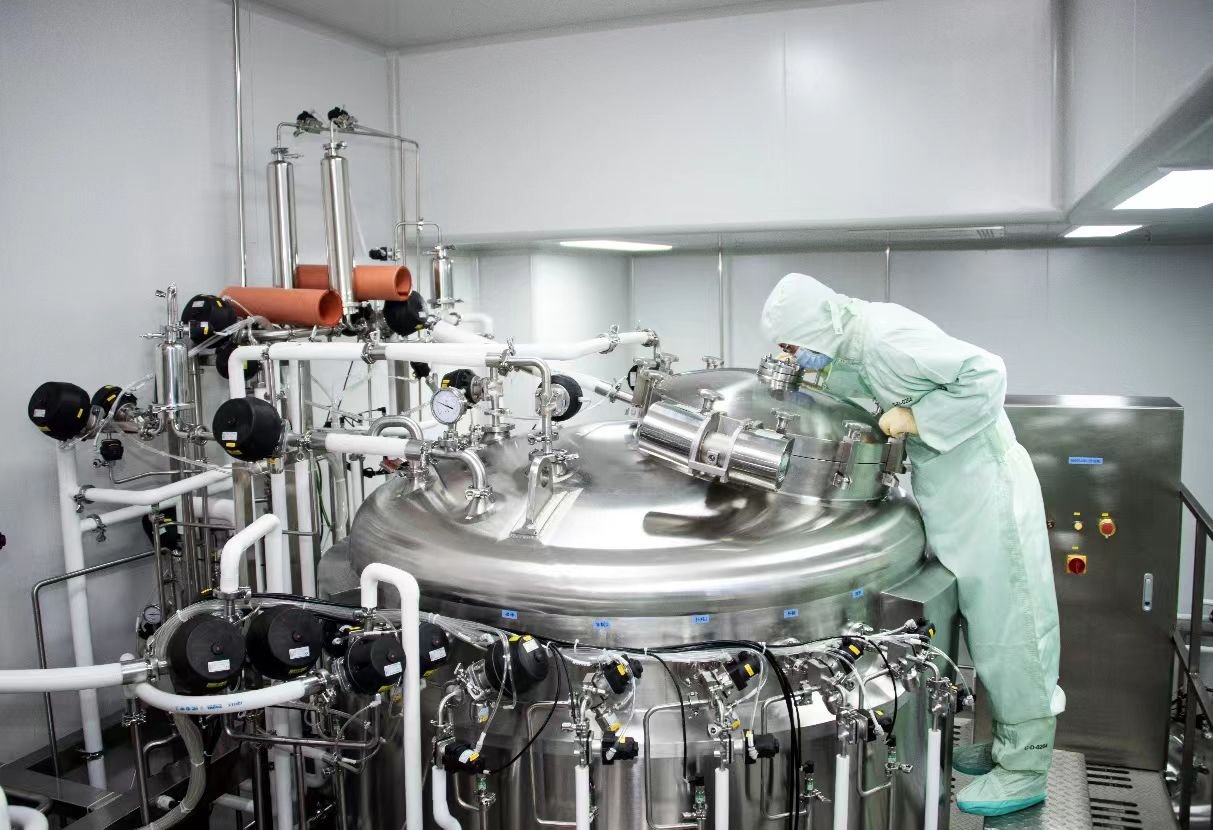
Fermentation scale-up from laboratory bench to industrial bioreactors is a critical step in biomanufacturing for pharmaceuticals, biofuels, and biochemical production. However, excessive foaming and cross-contamination remain two predominant technical bottlenecks that compromise process stability, product yield, and batch consistency during scale-up operations.
Foam accumulation triggered by intensified aeration, agitation, and metabolite secretion can cause medium overflow, exhaust filter clogging, and impaired oxygen mass transfer, while cross-contamination arising from non-aseptic operation, equipment defects, and environmental failures leads to microbial impurity and complete batch failure in severe cases.
This article systematically analyzes the formation mechanisms of foaming and cross-contamination in scaled-up fermentation processes, summarizes multi-dimensional prevention strategies covering process parameter optimization, mechanical auxiliary control, chemical regulation, and aseptic system management, and proposes integrated technical solutions suitable for industrial scale-up scenarios. The findings provide practical technical guidance for stable, efficient, and sterile operation of large-scale fermentation production systems.
1.Introduction
Microbial fermentation scale-up aims to replicate high-efficiency laboratory culture conditions in large-volume bioreactors while maximizing economic benefits of bioproduction. Unlike small-scale bench fermentation, industrial scale-up faces amplified process heterogeneities, including uneven gas-liquid mixing, enhanced shear force, and increased medium surfactant concentration, which significantly exacerbate foam generation. Meanwhile, the expanded equipment pipeline system, prolonged production cycle, and increased manual intervention links greatly elevate the risk of microbial cross-contamination.
Uncontrolled foaming not only reduces effective bioreactor working volume but also blocks exhaust air filters, causes internal pressure accumulation, and disrupts sterile closed-loop operation. In addition, foam carrying microbial metabolites and culture medium may adhere to pipeline inner walls, forming residual dirt that induces secondary contamination in subsequent batches. Cross-contamination, on the other hand, introduces heterologous microorganisms that compete with engineered strains for nutrients, secrete harmful by-products, and degrade product purity, resulting in massive economic losses in industrial production. Therefore, precise foam control and rigorous cross-contamination prevention are core prerequisites for reliable scale-up fermentation.
2.Mechanisms and Hazards of Foaming in Scale-Up Fermentation
2.1 Formation Mechanism of Fermentation Foam
Fermentation foam is a stable gas-liquid dispersion system formed by the combination of gaseous phase (aeration gas, microbial respiratory gas) and liquid phase (culture medium) under mechanical agitation. In scale-up processes, three key factors synergistically promote foam formation and accumulation. First, large-scale bioreactors adopt high-intensity aeration and agitation to ensure sufficient oxygen mass transfer, which generates a large number of tiny bubbles and increases gas-liquid contact area. Second, common fermentation media contain surfactants such as proteins, polysaccharides, and fatty acids secreted by microbial cells, which reduce liquid surface tension and stabilize bubble structures, preventing bubble natural rupture. Third, the prolonged fermentation cycle in industrial production leads to continuous accumulation of microbial metabolites and cell debris, further enhancing foam stability and causing persistent foam overflow.
2.2 Industrial Hazards of Excessive Foaming
Excessive foaming triggers a series of chain risks in scaled-up fermentation. First, foam overflow reduces effective medium volume and microbial biomass, directly lowering product yield. Second, foam residue clogs 0.2 μm sterile exhaust filters, resulting in bioreactor pressure buildup, insufficient aeration, and inhibited microbial growth and metabolism. Third, overflowing foam contacts non-sterile equipment surfaces and workshop environments, breaking the closed aseptic system and indirectly inducing cross-contamination. Moreover, irregular foam control relying on excessive defoamer addition may inhibit microbial activity and interfere with downstream product separation and purification.
3.Foam Prevention and Control Technologies for Scale-Up Fermentation
To address foam-related problems in scale-up fermentation, a hierarchical control strategy of “prevention first, supplemented by elimination” is adopted, combining process optimization, mechanical defoaming, and scientific defoamer application to achieve stable foam management.
3.1 Process Parameter Optimization (Fundamental Prevention)
Reasonable regulation of fermentation process parameters is the most economical and effective way to reduce foam formation from the source. In the scale-up process, aeration rate and agitation speed should be matched dynamically according to strain oxygen demand and fermentation stage. In the early growth stage of microorganisms, low aeration and low agitation parameters are adopted to avoid excessive bubble generation, as cell density and metabolite content are low with weak foam-forming ability. In the logarithmic growth stage with vigorous metabolism, aeration and agitation are gradually increased to meet oxygen demand, while avoiding sudden parameter fluctuations that cause instantaneous foam surge.
In addition, medium formulation optimization can reduce surfactant content. Properly adjusting the concentration of peptone, yeast extract, and other high-protein raw materials, and replacing partial macromolecular surfactants with low-foam synthetic nutrients can significantly weaken foam stability. Fed-batch fermentation strategy is also recommended to avoid excessive accumulation of nutrients and metabolites caused by one-time feeding, thereby reducing persistent foam generation.
3.2 Mechanical Defoaming Technology (Physical Control)
Mechanical foam breakers are widely used in industrial bioreactors as a physical defoaming method without chemical residue. Common configurations include top-mounted rotary foam breakers and centrifugal defoaming devices. The high-speed rotating blades of the foam breaker shear and break foam bubbles on the liquid surface, and the centrifugal force separates gas and liquid to realize in-situ foam elimination. For large-scale bioreactors prone to severe foaming, an ex-situ foam collection and recovery system can be installed to collect overflowing foam, separate gas and liquid through decompression and filtration, and return the qualified medium to the bioreactor, avoiding medium loss and waste.
Auxiliary physical control methods such as temperature and ultrasound treatment can also assist foam elimination. Appropriate increase of fermentation temperature reduces liquid viscosity and bubble stability, while high-frequency ultrasound can destroy the molecular structure of foam film and accelerate bubble rupture, which is suitable for foam control in specific biofuel and biochemical fermentation scenarios.
3.3 Scientific Application of Defoamers (Chemical Control)
Defoamers and antifoams are essential auxiliary means for rapid foam suppression in industrial fermentation. Antifoams are added in advance to prevent foam formation, while defoamers are used to eliminate existing accumulated foam. For microbial fermentation, low-toxicity, high-efficiency, and biosoluble defoamers such as polyether and silicone-based defoamers are preferred, which will not inhibit strain growth or affect downstream product purification.
The key to defoamer application is precise dosage and timing. Excessive addition will reduce oxygen mass transfer efficiency and inhibit microbial metabolism, while insufficient dosage fails to control foam. Industrial production usually adopts automatic proportional feeding according to foam height monitoring data, realizing real-time and quantitative foam regulation. It is necessary to screen defoamer types based on strain characteristics, fermentation medium properties, and product requirements to balance defoaming effect, process stability, and production economy.
4.Cross-Contamination Prevention Strategies for Scale-Up Fermentation
Cross-contamination in scaled-up fermentation is mainly derived from equipment pipeline defects, incomplete sterilization, non-standard aseptic operation, and environmental microbial pollution. A full-process sterile management system covering equipment design, sterilization verification, operation specification, and environmental monitoring is required to block contamination risks.
4.1 Hygienic Equipment Design and Transformation
Industrial bioreactors and supporting pipelines must adopt hygienic zero-dead-leg design to avoid medium residue and microbial breeding in dead corners. The equipment interior is electro-polished with 316L stainless steel to reduce surface roughness and prevent microbial adhesion. All inoculation ports, sampling ports, feeding ports, and exhaust ports are equipped with sterilizable sealed structures and 0.2 μm sterile hydrophobic filters to block external microbial intrusion. Magnetic stirring devices are used instead of traditional mechanical stirring to eliminate shaft seal leakage risks, which is a key measure to prevent air-borne contamination.
4.2 Standardized SIP and CIP Sterilization System
Steam-in-place (SIP) and clean-in-place (CIP) automated systems are the core of industrial fermentation sterile assurance. Before each fermentation batch, the bioreactor, pipelines, and auxiliary systems must complete validated SIP sterilization procedures, with strict control of sterilization temperature, pressure, and holding time to ensure thorough elimination of residual microorganisms and spores. After batch completion, CIP automatic cleaning is carried out to remove medium residue, cell debris, and metabolite dirt in the equipment and pipelines, avoiding cross-contamination between batches caused by residual pollutants.
Regular verification and replacement of sterile filters are required. The exhaust and intake filters shall be subjected to integrity testing periodically, and failed filters shall be replaced in a timely manner to prevent filter failure from causing sterile system breakdown.
4.3 Aseptic Operation Specification and Human Factor Management
Most cross-contamination accidents in industrial production are caused by non-standard manual operation. All feeding, inoculation, sampling, and pipeline connection operations must be completed in a closed aseptic state to reduce manual exposure links. Operators must pass aseptic training and wear standardized cleanroom protective clothing to avoid human-borne microbial pollution. The number of manual interventions in the fermentation process is minimized, and automatic closed-loop feeding and sampling systems are adopted to replace traditional open operation modes.
4.4 Cleanroom Environment and Real-Time Monitoring
Large-scale fermentation production must be carried out in graded cleanrooms. Regular maintenance and testing of HEPA filtration systems are performed to ensure cleanroom air cleanliness, temperature, humidity, and positive pressure difference meet production standards, preventing external microbial intrusion caused by air convection. A real-time environmental monitoring system is deployed to track particle concentration and microbial load in the workshop, and early warning and disposal are carried out for potential pollution risks to reduce contamination probability to the minimum.
5.Integrated Optimization Scheme for Industrial Scale-Up Fermentation
In actual industrial scale-up production, foaming and cross-contamination are mutually induced. Uncontrolled foaming breaks the closed sterile system and triggers contamination, while residual dirt caused by incomplete defoaming and cleaning aggravates cross-batch pollution risks. Therefore, an integrated management scheme must be established to coordinate foam control and sterile prevention.
First, build a real-time monitoring system integrating foam height, tank pressure, dissolved oxygen, and microbial load, realizing dynamic linkage regulation of process parameters. Second, formulate standardized batch production SOPs, unifying parameter regulation, defoamer feeding, sterilization procedures, and operation specifications to eliminate process differences. Third, establish regular equipment maintenance and validation mechanisms, including filter integrity detection, SIP/CIP effect verification, and pipeline dead-angle inspection, to ensure long-term stable operation of the sterile system. Finally, strengthen strain bank management and raw material quality inspection to eliminate pollution sources from the front end of production.
6.Conclusion
Foaming and cross-contamination are key restrictive factors for stable and high-yield production in scale-up fermentation. Foam problems are essentially process adaptation issues caused by amplified aeration and agitation effects, which can be effectively controlled through source parameter optimization, physical mechanical defoaming, and scientific chemical regulation. Cross-contamination risks run through the whole fermentation process, requiring systematic prevention from equipment design, sterilization verification, operation specification, and environmental monitoring. The integrated strategy of “process optimization + physical and chemical foam control + full-process sterile management” can effectively solve the dual problems of foaming and cross-contamination in industrial scale-up fermentation, ensure batch stability and product purity of biomanufacturing, and provide reliable technical support for the large-scale industrial application of microbial fermentation technology.