




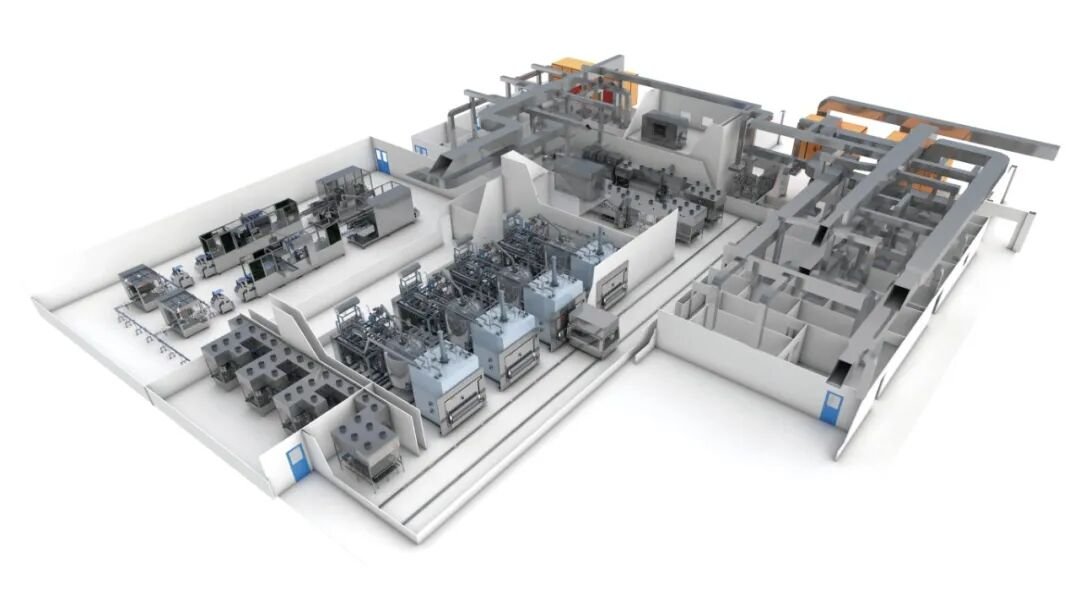

Antibody-drug conjugates (ADCs) represent one of the defining therapeutic modalities advancing precision oncology. As engineered biotherapeutics, ADCs leverage the antigen-recognition specificity of monoclonal antibodies (mAbs) in synergy with potent cytotoxic small-molecule payloads to achieve spatially targeted delivery of therapeutic moieties. Monoclonal antibodies selectively bind cognate antigens overexpressed on malignant cell surfaces, mediating intracellular trafficking of conjugated cytotoxic warheads into tumor cells. This mechanism of action augments anti-neoplastic potency while attenuating off-target toxicities to healthy tissues, a limitation inherent to conventional chemotherapy. Such differentiated pharmacological attributes have unlocked broad clinical utility for ADCs across breast carcinoma, lymphoma, gastric adenocarcinoma and a diverse spectrum of solid malignancies, elevating ADC process development and industrialization to a high-priority strategic focus within the global biopharmaceutical ecosystem.
Relative to conventional monoclonal antibody products, ADC manufacturing exhibits heightened complexity and imposes stringent quality control mandates. Given the intrinsic high cytotoxicity of ADC payloads, production workflows must concurrently satisfy requirements for product quality, safety and efficacy, alongside robust risk mitigation for operational personnel, manufacturing infrastructure and environmental containment. Accordingly, establishing fully cGMP-aligned manufacturing systems constitutes a critical translational bottleneck as ADC candidates progress from laboratory-scale research to commercial supply.
Three core unit operation domains demand rigorous governance throughout ADC fabrication:
1. Contained handling of high-potency active pharmaceutical ingredients (HPAPIs) The potent cytotoxic profile of ADC payloads necessitates closed processing architectures, containment engineering and comprehensive exposure control measures to mitigate occupational hazards.
2. Robust control of multi-step manufacturing workflows ADC production encompasses mAb upstream bioprocessing, bioconjugation, purification, filtration and aseptic fill-finish. Sustained control of critical process parameters (CPPs) across all unit operations is mandatory to preserve inter-batch quality consistency.
3. Aseptic manufacturing and contamination control As parenteral biologic products, ADCs are subject to rigorous sterility assurance requirements. Material selection, equipment interconnection design and fluid transfer regimes must undergo holistic evaluation at the facility and process design stage.
With an ever-expanding ADC clinical pipeline and escalating commercial demand, legacy manufacturing paradigms demonstrate inherent limitations in operational flexibility, occupational containment and throughput capacity. Single-use technologies (SUTs) provide a compelling technical enabler for ADC production. Implementation of single-use mixing/storage assemblies, process tubing, filtration modules and closed material transfer systems mitigates cross-contamination risk between batches, enhances operational agility and reduces hazards associated with HPAPI manipulation.
This manuscript delineates critical challenges within cGMP-compliant ADC manufacturing workflows, dissects core requirements for HPAPI production, occupational containment, sterility assurance and in-process control, and explores integrated manufacturing strategies built upon advanced single-use platforms to establish safer, more productive and modular ADC production ecosystems. Such frameworks underpin seamless translation of novel ADC entities from preclinical research to large-scale commercial supply.
ADC Manufacturing: Inherent Complexity Arising from Multi-Component Synergistic Architecture
The differentiated therapeutic profile of ADCs originates from synergistic interactions among discrete functional modules. ADCs are not single-component active pharmaceutical ingredients; rather, they are rationally engineered molecular constructs assembled via site-specific bioconjugation chemistry, comprising three indispensable building blocks: a monoclonal antibody scaffold, a potent cytotoxic payload and a biostable linker. The mAb moiety mediates selective recognition of tumor-associated antigens to enable targeted delivery; the payload exerts potent tumoricidal activity to eradicate neoplastic cells; the linker maintains stable covalent conjugation between antibody and payload during systemic circulation and triggers conditional payload release following intracellular internalization within target cells.
By coupling mAb targeting specificity with the cytotoxic potency of small-molecule warheads, ADCs drive preferential drug accumulation within tumor lesions and alleviate non-specific tissue injury induced by conventional chemotherapeutics. Nevertheless, this multi-component molecular architecture substantially complicates manufacturing, imposing distinct process hurdles and quality control imperatives at every unit operation.
Fabrication and analytical characterization of mAbs form the technical foundation for ADC production. As structurally complex glycoproteins, mAbs must retain native tertiary conformation and high-affinity antigen-binding capacity to guarantee accurate payload delivery to target cells. Protein therapeutics are susceptible to process-derived stressors, including temperature excursions, hydrodynamic shear and adventitious contamination during manufacturing, storage and handling, which may induce protein degradation, aggregation or loss of biological activity. Reliable mAb production therefore relies on well-characterized cell culture platforms, stringent in-process controls and scalable equipment infrastructure.
Beyond the antibody backbone, payload and payload-linker conjugate development represents another critical pillar of ADC industrialization. Owing to the extreme cytotoxicity of small-molecule warheads deployed in ADCs, their synthesis and handling require enhanced containment safeguards. Furthermore, the bioconjugation reaction between payload moieties and antibody scaffolds involves sophisticated chemical transformation, requiring tight regulation of reaction conditions, conjugation efficiency and drug-to-antibody ratio (DAR) — a critical quality attribute (CQA) that governs molecular uniformity and biological performance of the final ADC product. End-to-end optimization and formal validation of process parameters, analytical test methods and quality control strategies are prerequisites prior to ADC commercial authorization.
Unlike conventional biologics, ADC manufacturing inherently requires cross-disciplinary collaboration across multiple specialized partners, covering mAb bioproduction, small-molecule synthesis, bioconjugation, purification analytics and aseptic fill-finish. In practice, discrete unit operations may be executed at geographically separated sites by specialized manufacturers. This segmented supply chain architecture means ADC drug substance is frequently subjected to inter-site transportation.
To preserve product integrity throughout transit and long-term storage, three risk categories require systematic mitigation:
Package integrity risk: Prevention of product loss or microbial contamination resulting from packaging breach.
Cryogenic transportation risk: Maintenance of validated temperature control during ultra-low-temperature shipment to prevent temperature excursions that compromise molecular stability.
Supply chain continuity risk: Deployment of qualified logistics governance to minimize manufacturing and supply disruptions.
Given ADC molecular complexity and the thermolability of certain constructs, many ADC drug substances require storage and transport under −80 °C ultra-low-temperature conditions to preserve structural integrity and bioactivity. End-to-end product lifecycle governance spanning manufacturing, warehousing and cold-chain logistics is therefore indispensable for successful ADC commercialization.
Core Challenges in cGMP ADC Manufacturing: Reconciling Occupational Safety, Product Quality and Scalability
ADC manufacturing must establish a balanced paradigm between therapeutic performance, product safety, quality consistency and commercial-scale operability. Comprising monoclonal antibodies, highly cytotoxic payloads and linker chemistries, ADC production inherits conventional biomanufacturing challenges while introducing unique requirements for HPAPI containment, sterility assurance, process scale-up and supply chain risk management aligned with ICH Q9 risk-based principles.
Primary technical and operational challenges include:
1. Preservation of favorable efficacy-safety profiles: Retention of mAb targeting capability, payload bioactivity and conjugate structural stability, coupled with minimization of off-target tissue exposure.
2. Attenuation of HPAPI exposure risks: Deployment of closed manufacturing systems and minimization of manual intervention to protect personnel and the surrounding environment.
3. Process scalability and technology transfer: Establishment of modular, scale-invariant production platforms to enable robust process translation from laboratory to commercial scale.
4. Reduction of product loss and productivity enhancement: ADC raw materials and intermediates carry high intrinsic value; residual hold-up, transfer losses and operational deviations directly inflate cost of goods sold (COGS).
5. Contamination control: As parenteral biologic products, sterility assurance and microbial contamination mitigation constitute non-negotiable quality obligations for ADC manufacturing.
Adherence to current good manufacturing practice (cGMP) forms the foundational framework for standardized ADC production. Implementation of comprehensive quality management systems (QMS) and in-process control strategies ensures full regulatory compliance across the entire workflow, from raw material qualification and bioconjugation to final formulation and fill-finish.
cGMP-Compliant ADC Fabrication: End-to-End Quality Control and Risk-Based Management
Given the presence of highly cytotoxic constituents, ADC production shall be performed under rigorously controlled conditions to safeguard operators, environmental compartments and patient safety. cGMP mandates qualified facility and equipment design while endorsing holistic quality risk management to maintain a state-of-control across all manufacturing stages.
Key quality control checkpoints within ADC workflows:
1. Production, molecular engineering and purification of monoclonal antibodies: Assurance of correct protein folding and sustained antigen-binding functionality.
2. Handling and bioconjugation of potent cytotoxic payloads: Control of payload loading and conjugation efficiency to secure product homogeneity.
3. Linker-enabled stable bioconjugation: Maintenance of antibody-payload linkage stability in systemic circulation and conditional payload release upon intracellular internalization.
4. Precision DAR regulation: DAR directly modulates ADC efficacy, safety profile and product heterogeneity.
Aseptic manufacturing serves as a cornerstone of ADC quality assurance. Since ADCs are predominantly administered via parenteral routes, any contamination event poses substantial patient safety hazards. Rigorous contamination control strategies must be embedded within equipment design, material transfer, filtration and fill-finish operations. Most ADC products require defined thermal conditions for storage and distribution; accordingly, controlled freeze-thaw technology acts as an essential enabler for sustained product stability. Optimized freeze-thaw regimes mitigate protein conformational perturbations, reduce product losses and improve overall manufacturing throughput.
Controlled Freeze-Thaw: A Critical Enabler for ADC Stability Assurance
ADCs exhibit intricate molecular architectures and marked thermosensitivity, rendering freeze-thaw governance throughout manufacturing a paramount consideration. Conventional freezing modalities often yield heterogeneous thermal distribution, triggering freeze concentration, protein denaturation and differential pressure buildup within bulk solutions, which detrimentally impact ADC critical quality attributes.
Controlled freezing technology utilizes conductive heat transfer via plate freezers on both sides of the container to achieve uniform cooling of bulk material. This approach effectively mitigates:
1. Molecular structural perturbation risks;
2. Compositional heterogeneity induced by freeze concentration;
3. Localized pressure or vacuum formation within liquid matrices.
Furthermore, single-use vessels for freezing and storage enhance safety during material handling and permit freeze-thaw profiles to be customized according to product-specific characteristics. Single-use containers also deliver ancillary benefits including flexible storage layout, improved space utilization and reduced cleaning validation workload, elevating overall ADC manufacturing performance.
Aseptic Fill-Finish: Contamination Mitigation and Occupational Safety Enhancement
Aseptic fill-finish represents the critical interface between bulk drug substance processing and finished drug product, serving as a core node for quality oversight. ADCs combine the inherent lability of protein therapeutics with the occupational hazards of cytotoxic agents; fill-finish operations must therefore concurrently satisfy sterility assurance and HPAPI containment requirements.
Conventional open operations elevate both microbial contamination probability and operator exposure risk. Automated workflows integrated within closed single-use systems substantially enhance fill-finish robustness.
Closed aseptic filling systems deliver the following merits:
Minimization of high-value product losses associated with system hold-up volume;
Reduction of contamination and human error risks arising from manual handling;
Preservation of product integrity within a classified aseptic environment;
Enhanced operator protection.
By eliminating open processing steps, ADC manufacturing aligns with modern cGMP expectations for sterility, automation and risk-based control.
Cost and Scalable Manufacturing: Strategic Barriers to ADC Commercialization
Beyond safety and quality imperatives, cost of goods constitutes another primary consideration for large-scale ADC production. ADC workflows integrate sophisticated biomanufacturing, chemical bioconjugation, HPAPI handling and exhaustive analytical testing, resulting in extended production timelines, elevated technical complexity and generally higher COGS relative to conventional monoclonal antibody products.
As the ADC pipeline expands and commercial demand intensifies, enhancement of process productivity and COGS reduction have become strategic priorities for the industry. Single-use technologies offer viable mitigation pathways. Such platforms empower manufacturers to streamline ADC workflows, curtail product losses, expand operational flexibility and lower capital and operational expenditure associated with equipment cleaning, validation and maintenance. A growing cohort of CMO/CDMO providers are adopting single-use manufacturing ecosystems to accelerate ADC translation from preclinical development through clinical and commercial supply.
Single-use technologies reduce open process interfaces, mitigate contamination hazards and improve process adaptability, delivering robust technical solutions for ADC fabrication. Closed single-use manufacturing architectures cover multiple core ADC unit operations, including secure storage and transfer of high-value materials, low-loss aseptic fill-finish, reproducible controlled freeze-thaw, and temperature-controlled warehousing and cold-chain logistics.
Further integration and automation of ADC manufacturing workflows can strengthen product quality consistency, attenuate operational risks and meet future demand for large-volume commercial supply. Advances in single-use technologies will remain a key enabler for continuous evolution of cGMP-compliant ADC manufacturing systems.
Conclusion
ADCs provide transformative therapeutic modalities for oncology through tumor-selective targeting and potent cytotoxic activity. Nonetheless, their intricate molecular topology and high-potency payload moieties impose stringent requirements on cGMP manufacturing. Holistic quality management and risk-based controls must be implemented across the entire product lifecycle, covering raw material qualification, bioconjugation, aseptic fill-finish and cold-chain logistics. Optimized process design, closed containment operations, deployment of single-use technologies and robust stability management frameworks collectively reduce contamination likelihood, occupational exposure risks and product losses, while improving manufacturing productivity and commercial viability. As an increasing number of ADC candidates progress through clinical development and achieve marketing authorization, safe, modular, high-efficiency cGMP manufacturing paradigms will underpin sustainable expansion of the ADC industry.
