





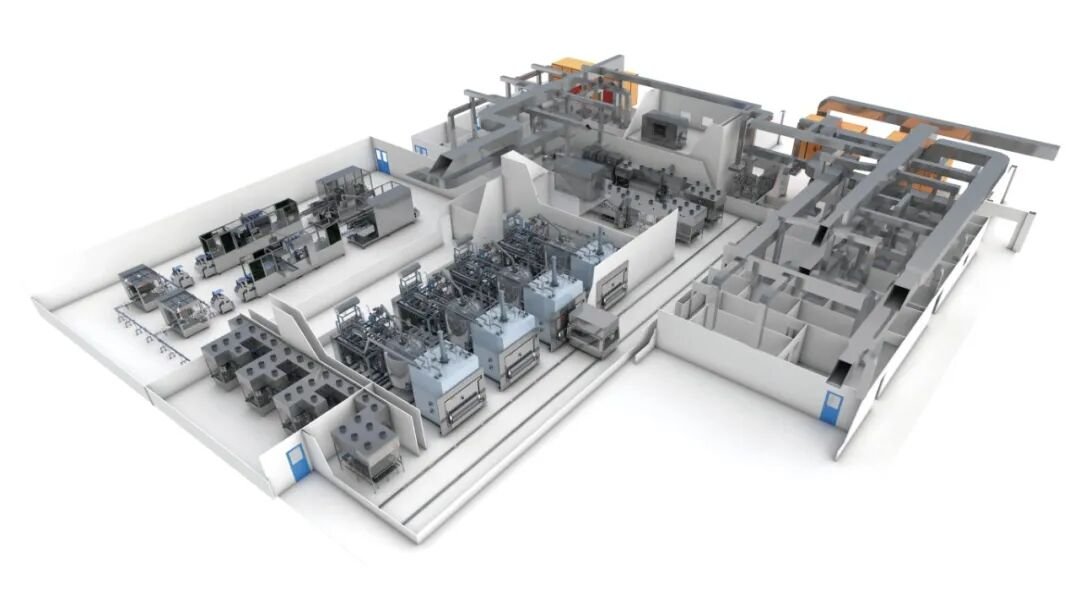
Lyophilization (freeze-drying) is an indispensable core process in the manufacturing of sterile pharmaceutical products, whose contamination control performance fundamentally determines the final sterility assurance level (SAL) of drug products. According to ISPE statistical data, lyophilization accounts for approximately 30% of all aseptic process-related contamination risks, ranking second only to sterile filling operations. The revised EU GMP Annex 1 mandates that pharmaceutical facilities establish and implement a plant-wide Contamination Control Strategy (CCS). This strategy adopts systematic design specifications, engineering control measures, standardized operational procedures and organizational management mechanisms to continuously identify, evaluate and mitigate microbial and particulate contamination risks throughout the product lifecycle.
This article systematically elaborates on the CCS-based design philosophy for lyophilization equipment in alignment with the latest EU GMP Annex 1 regulatory requirements. Combined with engineering development and practical aseptic production verification experience, this paper defines six core compliant design dimensions for lyophilizer contamination control: sterile access door design, integrated CIP/SIP system optimization, in-situ gas filter integrity testing, vacuum tightness performance verification, exogenous contamination risk mitigation, and automated sterile loading/unloading systems.
1. Sterile Loading/Unloading Access Door Design
1.1 Regulatory Basis and Risk Assessment
Clause 4.6 of EU GMP Annex 1 stipulates that ledges, cabinets and process equipment with sliding structures are not recommended for deployment in classified clean areas, to sustain long-term verified cleaning and sanitization efficacy. All lyophilizer loading and unloading operations must be performed under unidirectional Class A laminar air protection, making the structural design of equipment access doors a critical regulatory compliance item.
Conventional vertically lifting access doors widely applied in the industry present inherent aseptic design flaws and persistent contamination risks: Firstly, the recessed sliding rail structure forms irreversible cleaning dead zones, which cannot be completely eliminated via routine CIP and manual sanitization. Secondly, the lifting bellows assembly is prone to adsorbing and accumulating particulates and microorganisms, severely compromising the uniformity and effectiveness of VHP sterilization and residual gas elimination. Thirdly, the complex concave-convex structure renders full-coverage sterile wiping unachievable, resulting in persistent hidden dangers for aseptic environment maintenance.
1.2 Optimized Tilt-type Access Door Solution
To resolve the non-compliance risks of traditional door structures and meet the stringent aseptic control requirements of the new Annex 1 regulation, Sino Bioengineering has developed a proprietary full-tilt sterile access door for lyophilizers, achieving comprehensive upgrading of structural sterility and controllability:
Dead-zone-free sterile structure: The innovative tilting opening mechanism completely eliminates structural grooves and hidden gaps of traditional sliding/lifting doors, enabling full-dimensional, repeatable cleaning, sanitization and visual verification.
High-reliability sterile sealing: The vulnerable contamination-prone lifting bellows are completely removed, replaced with precision mechanical latch locking structure. This design delivers stable, durable sealing performance without any cleaning dead corners, fundamentally avoiding microbial colonization.
Pure electric sterile drive: A full-electric actuation system is adopted to completely eliminate particulate shedding, oil leakage and secondary contamination risks derived from traditional pneumatic and hydraulic drive systems.
The optimized tilt-type access door effectively minimizes environmental exposure risks during material transfer, fully complying with the latest sterile design specifications of EU GMP Annex 1.
2. Integrated CIP and SIP System Design
Clean-in-Place (CIP) and Sterilize-in-Place (SIP) systems constitute the core engineering foundation for establishing and maintaining the validated sterile state of lyophilizer process chambers. The rationality of system design and the completeness of verification directly determine the stability of equipment aseptic performance.
Sino Bioengineering adopts an integrated CIP/SIP collaborative design, sharing unified piping networks, control valves and precision instrumentation. This linkage design of cleaning followed by in-situ sterilization realizes closed-loop contamination control, which is the mainstream and most reliable technical scheme for current high-grade sterile lyophilization equipment. The core compliant design criteria cover the following key modules:
Material selection adopts pharmaceutical-grade sanitary stainless steel and high-temperature, corrosion-resistant sanitary sealing components to avoid material precipitation and microbial adhesion. Surface treatment implements full weld pickling and passivation, mirror polishing and precise roughness control to reduce surface adsorption of contaminants. Piping design applies orbital automatic welding, sanitary clamp-free connection, self-draining gradient layout and zero dead-leg configuration to eliminate residual medium accumulation. Key process components include sanitary diaphragm valves, high-precision sanitary pressure sensors and gauges, and full-chamber rounded-corner transition structure. The spray cleaning system is equipped with optimized spray balls and multi-angle nozzles, with standardized cleaning procedures and reserved sampling ports, supporting full-coverage cleaning verification and data traceability.
To stabilize CIP medium supply pressure and flow rate, a dedicated external cleaning skid is configured independently. The skid itself possesses integrated CIP/SIP functions, supporting real-time temperature regulation of cleaning water and customizable acid-base cleaning cycles for special toxic and high-residue drug products.
EU GMP Annex 1 Clause 8.122 clearly requires full validation of all sterilization processes. Common SIP failure risks include non-compliant materials, uneliminated cold spots and condensed water accumulation. On the basis of unified CIP/SIP structural design, the system is equipped with a vacuum pulsation preheating function to effectively remove condensed water and non-condensable gases, eliminating sterilization dead spots.
In accordance with Annex 1 Clause 8.50, the SIP system is configured with dual Class A PT100 platinum resistance thermometers, realizing independent temperature control and real-time monitoring redundancy. The system supports batch-based sterilization data query, with downloadable and traceable electronic reports and temperature curve records. Thermal distribution mapping is performed to verify cold spot layout, ensuring that the F₀ value of theoretical cold spots meets or exceeds 15 for overkill sterilization standards. Biological Indicator (BI) challenge tests are adopted to quantitatively verify sterilization efficacy. The post-sterilization holding time is validated via Aseptic Process Simulation (APS/Media Fill) to confirm the sustainable sterile state of the equipment before formal production. Sino Bioengineering’s self-developed standardized media fill procedure provides reliable technical support for holding time verification. All SIP cycle parameters are formulated based on automated material transfer configuration and completed with full lifecycle validation.
Pursuant to Annex 1 Clause 8.63, the sterile state of sterilized equipment must be continuously maintained. The proprietary micro positive pressure protection program developed by Sino Bioengineering can sustain a stable positive pressure environment inside the lyophilizer after SIP, effectively preventing external microbial and particulate ingress. Meanwhile, anti-backflow devices are installed at all exhaust terminals to avoid secondary contamination caused by gas and liquid backflow.
3. In-Situ Integrity Testing of Gas Sterile Filters
EU GMP Annex 1 Clause 8.87 formally introduces the PUPSIT (Pre-Use Post-Sterilization Integrity Test) concept, raising mandatory and standardized requirements for filter integrity verification. Regulatory interpretation confirms that the PUPSIT principle applies to both liquid and gas sterile filters; for lyophilization equipment without liquid filter assemblies, gas filter PUPSIT compliance becomes a core audit item.
Traditional external filter integrity testers cannot realize full-loop in-situ sterilization and integrated testing, failing to meet the closed-loop compliance requirements of the new regulation. To address this technical pain point, Sino Bioengineering has developed a fully automated in-situ gas filter sterilization and integrity testing system. Equipped with high-sensitivity built-in sensors and dedicated control software, the system automatically completes full-process PUPSIT without external testing equipment, generating standardized, traceable electronic records and reports. This design fully satisfies the regulatory requirement of dual verification for sterile gas filters post-sterilization and pre-use.
In compliance with Annex 1 Clause 8.92, the mainstream design adopts a primary filter plus redundant backup filter dual-stage filtration system, which significantly improves the fault tolerance and sterile guarantee level of the gas purification system, realizing layered risk prevention and control.
4. Vacuum Leak Rate Performance Verification
EU GMP Annex 1 Clause 8.124 explicitly puts forward mandatory vacuum leak rate testing requirements for lyophilizers, regarding vacuum tightness as a core indicator for evaluating equipment structural integrity and aseptic environmental stability.
Equipment chamber structural rigidity and overall system tightness are the key guarantees for qualified leak rate indicators. Optimized design measures include the adoption of high-temperature and abrasion-resistant sterile sealing gaskets, full welded connection for process valves, and minimized pipeline clamp connections to reduce potential leakage points.
Vacuum leak rate testing must be carried out under a dry chamber environment with no residual water vapor. Testing immediately after SIP is prohibited, as post-sterilization temperature drop will cause pressure fluctuation and interfere with test accuracy. Sino Bioengineering’s automated vacuum leak detection program supports one-click standardized testing, with automatic generation of test curves and compliant reports to ensure operational standardization and data traceability.
The acceptance criterion refers to the ASME BPE industry standard, defining the qualified lyophilizer vacuum leak rate as ≤2 Pa·L/s. Based on multi-batch verification data from 14 leading global pharmaceutical manufacturers published in authoritative Elsevier journals, this threshold is scientifically proven to fully meet the risk control requirements of sterile lyophilization processes. Overly stringent indicators will lead to unnecessary cost increases, while loose standards will compromise aseptic safety; therefore, the 2 Pa·L/s threshold is the optimal balance between regulatory compliance, production economy and process safety.
Per regulatory provisions, vacuum leak testing is theoretically required before each lyophilization batch. Considering production economy and risk probability, the industry’s optimal practice is to align the test frequency with the SIP cycle, i.e., performing vacuum leak detection after each sterilization and before production. This strategy targets the high leakage risk window after high-temperature sterilization, realizing precise risk control while avoiding excessive invalid testing.
5. Exogenous Contamination Risk Prevention and Control
In accordance with multiple clauses of the new Annex 1 regulation, targeted structural optimization and monitoring technologies are adopted to eliminate key exogenous contamination risks of lyophilizers:
Drainage backflow prevention (Annex 1 Clause 4.9): An air break structure combining imported one-way valves and height-difference water seals is installed at the drainage terminal to completely prevent sewage backflow and microbial retrograde contamination. Meanwhile, the CCS system formulates standardized periodic cleaning and disinfection protocols for floor drains to maintain long-term sanitary conditions.
Silicone oil leakage traceability monitoring: Traditional manual visual inspection and oil paper detection are subject to strong subjectivity and low sensitivity. Sino Bioengineering innovatively equips a high-precision mass spectrometry detection system, which can accurately distinguish trace leakage of shelf heat-conducting silicone oil, hydraulic oil and other lubricants through characteristic mass spectrum mapping, realizing precise contamination source tracing. This technology eliminates missed detection and misjudgment of manual inspection, providing objective, accurate and traceable data support for cleaning verification, aseptic process validation and quality deviation investigation.
6. Automated Sterile Loading and Unloading System
EU GMP Annex 1 Clause 8.9 prioritizes and recommends isolator-based barrier technology and fully automated material handling systems for lyophilization processes. Combined with Clause 8.122 and 8.123, the form of material loading/unloading directly determines the frequency of equipment sterilization and integrity verification, constituting a key factor affecting production compliance and operational cost.
Lyophilizers with fully manual material transfer must perform mandatory SIP before each batch production, which greatly increases production costs and operational risks for sterile drug manufacturers. In contrast, equipment equipped with automated isolation loading/unloading systems can scientifically extend the sterilization cycle through systematic CCS optimization and APS verification, balancing compliance safety and production efficiency.
Since 2008, Sino Bioengineering has independently developed a series of compliant automated lyophilizer loading/unloading systems, covering multiple technical forms to adapt to diverse production scenarios and regulatory requirements:
6.1 Fixed Robotic Loading/Unloading System (RBR)
The fixed robotic system realizes row-by-row automatic feeding of filled vials into lyophilizer shelves and sequential discharging of finished products after lyophilization, which is widely applicable to large-scale production of vaccines, antibody drugs, blood products and other high-value sterile preparations. It features stable operation, low capital investment and compact cleanroom footprint, achieving high-cost-performance automated aseptic production.
6.2 AGV-based Mobile Loading/Unloading System
The system consists of a feeding station, automatic guided vehicle (AGV) and discharging station. The AGV realizes precise docking with process stations and lyophilizer shelves, completing full-batch material transfer in a single cycle. It is suitable for high-volume batch production of antibiotics and bulk APIs, with the advantages of fast production rhythm and large single-batch capacity, applicable to large-scale industrial production scenarios.
6.3 Wireless Charging Shuttle Loading/Unloading System
The wireless charging shuttle system adopts an advanced forward-in and forward-out layout, with flexible docking and compact structural design. Compared with traditional fixed robotic systems, it further reduces sterile area occupation and lowers long-term operational costs. The whole system can be integrated inside RABS or isolator barrier systems, realizing ultra-low human intervention management and significantly upgrading the aseptic control level of the production environment.
All automated material handling solutions aim to eliminate manual operation intervention, reduce human-induced contamination risks, and build stable, verifiable and sustainable aseptic production conditions.
7. Conclusion: Building a Solid Aseptic Process Foundation via Compliance-Driven Design
The compliant design of modern sterile lyophilizers must take the revised EU GMP Annex 1 as the core benchmark, and take CCS as the systematic guidance to integrate full-dimensional control of material selection, structural design, cleaning and sterilization, anti-contamination performance and automated operation. Combined with risk-based assessment and full-process validation including CIP/SIP qualification, vacuum tightness verification and filter integrity testing, a closed-loop sterility assurance system featuring “standardized design, engineered control and full verification” is established.
Automated material handling and barrier isolation technologies are the core means to reduce human-induced contamination risks. All control measures must meet the requirements of full-process verifiability, data traceability and continuous improvement via periodic quality review. Sino Bioengineering keeps pace with international regulatory upgrades, continuously innovates lyophilization equipment technology and compliant design schemes, and provides pharmaceutical manufacturers with high-reliability sterile lyophilization equipment and systematic contamination control solutions. This effectively supports enterprises in meeting stringent international GMP compliance requirements, stabilizing product quality, and safeguarding drug safety for end patients.
